It’s a cold winter evening in Ontario. The lights flicker, then go out. Your heating system stops, the fridge goes silent, and suddenly your home normally a place of comfort feels vulnerable. A few hours later, power returns, but the experience leaves you thinking: there has to be a better way.
Or maybe your situation is different. You’ve installed solar panels, you’re generating clean electricity during the day, but you’re still relying heavily on the grid at night. You wonder: why can’t I just store my own energy and use it when I need it?
That’s where home battery storage systems come in. But are they actually worth the investment for Canadian homeowners especially in Ontario?
This guide walks you through the reality: how these systems work, what they cost, where they make sense, and where they don’t.
What Is a Home Battery Storage System?
At its core, a home battery system stores electricity for later use. It can draw power from:
- Solar panels
- The electrical grid (often during off-peak hours)
- A combination of both
Instead of sending excess solar energy back to the grid, you store it and use it later typically in the evening or during outages.
How It Works in a Typical Home
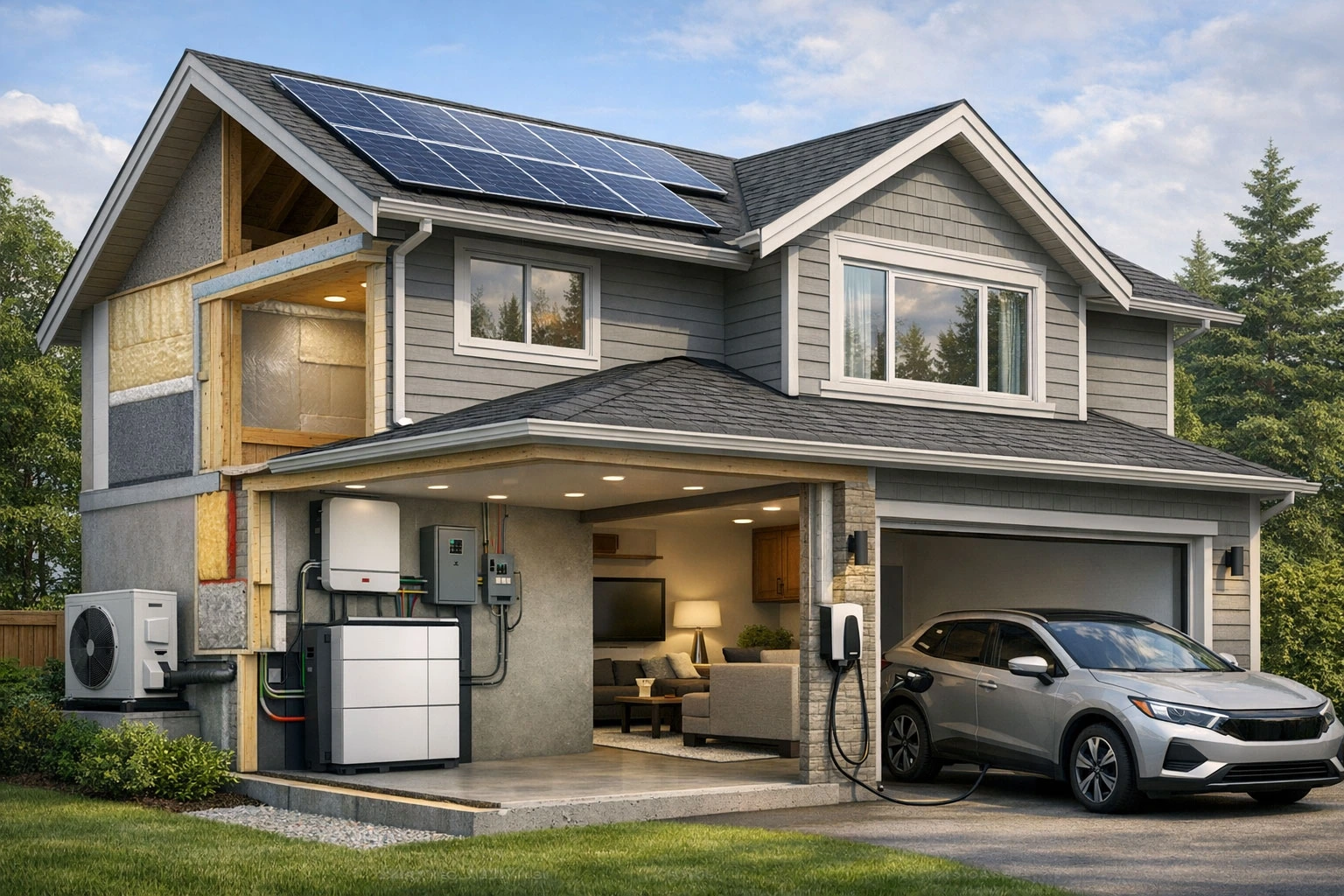
A standard setup includes:
- Battery unit (usually lithium-ion)
- Inverter (converts electricity between AC and DC)
- Energy management system (controls when to store and release energy)
During the day:
- Solar panels power your home
- Excess energy charges the battery
At night or during outages:
- The battery supplies electricity to your home
This reduces reliance on the grid and increases energy independence.
Cost Considerations in Canada
Battery storage systems are still a significant investment, especially in Canada where installation costs can be higher due to labor, permitting, and climate considerations.
Typical Cost Range
For Ontario homeowners, expect:
- Battery system: $10,000 – $20,000+
- Installation and electrical upgrades: $3,000 – $8,000
- Total system cost: $15,000 – $30,000+
Costs vary based on:
- Battery capacity (kWh)
- Number of batteries
- Integration with solar panels
- Backup capability (partial vs whole home)
Additional Considerations
- Cold climate performance (battery efficiency drops in low temperatures)
- Indoor vs outdoor installation requirements
- Electrical panel upgrades (common in older homes)
While prices are gradually declining, batteries remain one of the more expensive home energy upgrades.
Energy Savings and Return on Investment
This is where expectations need to be realistic.
Do Batteries Save You Money?
In Ontario, savings are often modest, not dramatic. Why?
- Electricity rates are regulated and relatively stable
- Net metering allows solar users to “bank” energy credits
- Time-of-use pricing differences are not large enough to create huge arbitrage opportunities
Where Savings Come From
You may see financial benefits through:
- Peak shaving: Using stored energy during higher rate periods
- Self-consumption: Using your own solar power instead of exporting it
- Avoided outages: Preventing food spoilage or productivity loss
Typical ROI Timeline
- Without incentives: 10–20+ years
- With incentives: potentially shorter, but still long compared to other upgrades
For comparison, insulation or heat pumps often deliver faster payback.
Common Mistakes Homeowners Make
Battery systems are often misunderstood. Here are the most common pitfalls:
1. Expecting Large Financial Returns
Many homeowners assume batteries will drastically reduce bills. In Ontario, they usually don’t.
2. Oversizing the System
Buying more storage than you actually need increases cost without proportional benefit.
3. Ignoring Usage Patterns
Your energy habits matter. If most of your consumption is already daytime, a battery adds less value.
4. Skipping Load Prioritization
Not all appliances need backup. A well-designed system focuses on:
- Heating systems
- Refrigeration
- Lighting
- Internet and essential circuits
5. Not Integrating with a Broader Plan
A battery alone won’t make your home energy-efficient. It works best as part of a larger strategy.
Step-by-Step: How to Decide If It’s Right for You
Making the right decision requires a structured approach.
Step 1: Assess Your Goals
Ask yourself:
- Do I want backup power during outages?
- Am I trying to reduce bills?
- Am I aiming for energy independence?
Your primary goal will shape the decision.
Step 2: Review Your Energy Usage
Look at:
- Monthly consumption patterns
- Peak vs off-peak usage
- Seasonal variations
Step 3: Evaluate Solar Integration
Battery storage makes more sense if you:
- Already have solar panels
- Are planning to install them
Without solar, value is more limited.
Step 4: Consider Your Home’s Infrastructure
- Electrical panel capacity
- Available space for installation
- Heating system compatibility
Step 5: Explore Incentives
Check for:
- Federal energy programs
- Provincial rebates
- Utility-based incentives
While battery-specific rebates are limited, programs evolve.
Step 6: Get a Professional Assessment
A qualified energy consultant can:
- Model your energy usage
- Estimate ROI
- Recommend optimal system size
Incentives and Rebates in Ontario and Canada
Canada has been actively supporting home energy upgrades through various programs.
What to Expect
While battery-specific rebates are less common than for insulation or heat pumps, homeowners may benefit from:
- Federal energy efficiency programs
- Greener Homes initiatives
- Low-interest financing options
- Utility pilot programs
These programs can:
- Reduce upfront costs
- Improve overall project economics
- Encourage integration with solar systems
Always verify current availability, as programs change frequently.
When Battery Storage Makes Sense
Battery systems are not for everyone. But in certain situations, they are highly valuable.
Strong Use Cases
- Frequent power outages
Rural or storm-prone areas benefit significantly from backup power. - Solar-heavy homes
If you generate excess solar energy, storage increases self-use. - Time-of-use optimization
Homes with higher peak usage can shift consumption. - Energy independence goals
For homeowners prioritizing resilience and autonomy. - Electric vehicle integration
Batteries can help manage increased electricity demand.
When It May Not Be Worth It
There are also clear cases where battery storage is not the best investment.
Limited Value Scenarios
- No solar panels
Benefits are reduced without self-generated energy. - Low outage risk
Urban areas with stable grids may not justify backup systems. - Tight budgets
Other upgrades often deliver better returns. - Short-term ownership plans
ROI may not be realized before selling the home.
How Battery Storage Fits Into a Net Zero Roadmap
Think of battery storage as one piece of a larger puzzle.
Priority Order for Most Homes
- Air sealing and insulation
- High-efficiency heating (heat pumps)
- Energy-efficient windows and doors
- Solar panel installation
- Battery storage (optional, strategic)
Why this order?
Because reducing energy demand comes first. Then you generate clean energy. Only after that does it make sense to store it.
The Bigger Picture
A well-designed Net Zero strategy focuses on:
- Lowering consumption
- Electrifying systems
- Generating renewable energy
- Enhancing resilience
Battery storage supports the last two but doesn’t replace the first two.
Conclusion: A Strategic Upgrade, Not a Universal One
Home battery storage systems offer clear benefits but they’re not a one-size-fits-all solution.
For some homeowners, especially those with solar panels and frequent outages, they provide peace of mind and greater control over energy use. For others, the financial case may not justify the investment at least not yet.
The key is to approach this decision as part of a broader home energy strategy, not an isolated upgrade.
Ready to Explore Your Options?
Every home is different. The best way to determine whether battery storage makes sense for you is through a personalized assessment.
Book a consultation with Net Zero Homes Consulting to get a customized upgrade roadmap tailored to your home, your goals, and your budget.