
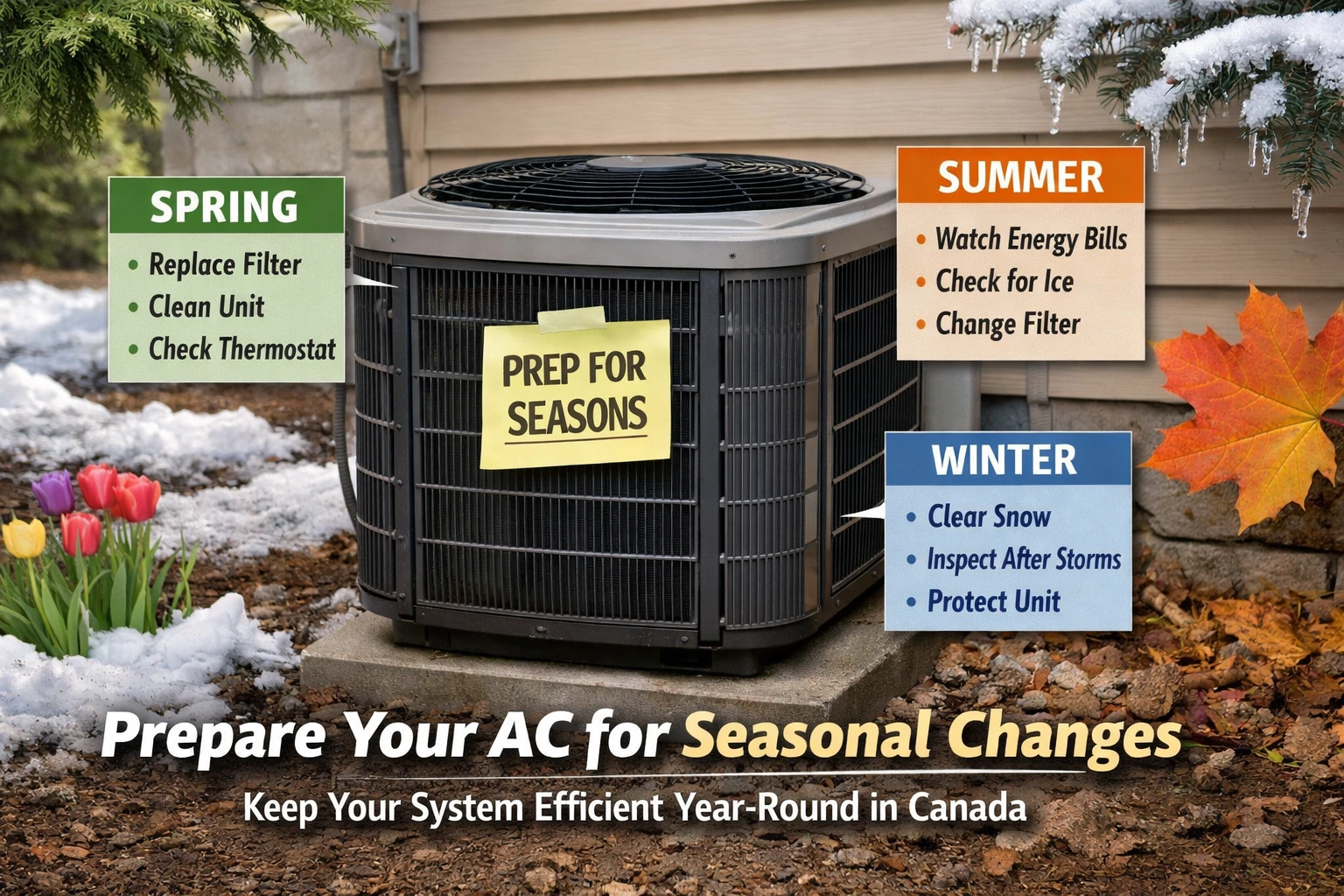
When the seasons shift in Canada, your air conditioner feels it too. One week it’s cool and damp, the next it’s humid and scorching. Many homeowners only think about their AC when the first heatwave hits but by then, hidden issues may already be costing you money.
Dust buildup, clogged filters, blocked outdoor units, low airflow, and worn components can quietly reduce performance long before your home feels warm.
At Net Zero Homes, we believe your HVAC system should work smarter, last longer, and waste less energy. That starts with seasonal AC maintenance.
This guide explains how to prepare your air conditioner for spring, summer, fall, and winter, while reducing repair costs, improving energy efficiency, and extending system life.
Why Seasonal AC Maintenance Matters
Your central air conditioner or ductless mini-split works through changing weather, humidity swings, pollen, debris, and long idle periods. Without routine maintenance, common problems can include:
- Higher hydro bills
- Weak airflow
- AC not cooling properly
- Frozen evaporator coils
- Strange noises
- Shorter equipment lifespan
- Expensive emergency repairs
- Poor indoor air quality
Even simple maintenance like changing filters and clearing debris can improve efficiency and reduce strain on the system.
Spring AC Maintenance Checklist
Spring is the best time to prepare your AC before hot weather arrives.
During winter, systems often collect dust, moisture, and debris. A spring startup helps avoid breakdowns during the first hot days of summer.
What To Do:
Indoor System
- Replace or clean furnace/AC filter
- Test thermostat cooling mode
- Check vents are open and unobstructed
- Listen for unusual sounds when system starts
- Inspect for musty smells or moisture
Outdoor Condenser Unit
- Remove leaves, branches, and dirt
- Ensure 2 feet of airflow clearance around unit
- Inspect visible wiring or damage
- Wash condenser fins gently if dirty
Performance Check
Lower thermostat a few degrees and run the AC for 10–15 minutes. If airflow is weak or cooling is slow, schedule service.
Summer AC Maintenance Tips
Summer is peak season. Your AC may run for hours daily, especially during Ontario and Alberta heatwaves.
What To Watch For:
- Warm air from vents
- Uneven cooling upstairs/downstairs
- Rising electricity bills
- Constant running cycles
- Ice on refrigerant lines
- Water leaks near unit
Summer Efficiency Tips:
- Keep blinds closed during hottest hours
- Use ceiling fans to reduce AC load
- Change dirty filters monthly if needed
- Keep outdoor unit shaded (but unobstructed)
- Avoid setting thermostat extremely low
A dirty filter alone can significantly increase system strain and energy use.
Fall AC Maintenance Checklist
As temperatures cool, many homeowners forget the AC completely. Fall is actually the perfect time to protect it before winter.
What To Do:
- Clean outdoor condenser unit
- Remove leaves from around equipment
- Inspect refrigerant line insulation
- Replace filter before heating season
- Switch thermostat to heat mode
- Schedule furnace or heat pump tune-up
If you use a heat pump, fall maintenance is even more important because the same system may heat your home through winter.
Winter AC Protection Tips
Your central AC condenser sits outside year-round. Snow, ice, and debris can shorten lifespan if ignored.
Winter Best Practices:
- Keep heavy snow cleared around unit
- Remove branches or ice buildup carefully
- Keep gutters draining away from equipment
- Do not stack items against unit
- Inspect after major storms
Many outdoor AC units are built for winter exposure, so full covers can trap moisture and promote rust or pests.
Warning Signs Your AC Needs Service
Call a professional if you notice:
AC Not Cooling
Possible causes:
- Dirty filter
- Refrigerant issue
- Frozen coil
- Compressor problem
Strange Noises
Possible causes:
- Loose parts
- Fan motor issues
- Electrical components
Water Leaks
Possible causes:
- Blocked condensate drain
- Frozen coil thawing
- Pump failure
High Hydro Bills
Possible causes:
- Dirty coils
- Low efficiency
- Air leaks in home
- Aging AC unit
Want Lower Cooling Bills? Improve the Whole Home
Your AC is only one part of home efficiency.
At Net Zero Homes, we help homeowners reduce cooling and heating costs by looking at the entire house:
- Insulation upgrades
- Air sealing
- Smart thermostats
- Heat pumps
- Solar energy
- Window upgrades
- Energy audits
A well-sealed, efficient home reduces AC workload and lowers monthly bills.
Final Thoughts
Your air conditioner doesn’t fail overnight. Most breakdowns start with small maintenance issues that build over time.
A few seasonal checkups each year can mean:
- Lower energy bills
- Better cooling comfort
- Cleaner indoor air
- Fewer emergency repairs
- Longer system lifespan
If your AC is aging, inefficient, or struggling to keep up, Net Zero Homes can help you plan smarter upgrades for long-term savings.
Need help improving home comfort and efficiency?
Book a consultation with Net Zero Homes today.