Canadian winters are long, cold, and expensive. Many homeowners face the same dilemma: their gas furnace is still working, but energy bills keep climbing and the push toward home electrification grows stronger every year. Replacing everything feels risky. Doing nothing feels costly.
That is why hybrid heating systems have become one of the smartest middle ground options for Canadian homes in 2026. A hybrid system lets you keep your existing furnace while adding a cold climate heat pump. The heat pump handles most of the heating load efficiently. The furnace steps in only on the coldest days. You get lower energy costs, better comfort, cooling in summer, and a clear path toward lower carbon emissions without abandoning the reliability you already trust.
This guide walks you through exactly how hybrid heating systems work, what they cost in Canada, real savings numbers, pros and cons, and whether keeping your furnace with a heat pump makes sense for your home.
Short Answer
A hybrid heating system pairs a cold climate heat pump with your existing gas furnace. The heat pump provides highly efficient heating and cooling for most of the year. The furnace automatically takes over only when temperatures drop below a set balance point, typically between 5°C and –15°C. For many Ontario and Canadian homes with a furnace under 10–12 years old, this approach delivers 30–50% lower gas use, solid energy savings, and reliable comfort without full electrification risk
What Is a Hybrid Heating System?
A hybrid heating system (also called a dual-fuel system) combines two heating sources that share the same ducts and thermostat:
- An electric air-source heat pump (usually a cold climate model)
- A gas, propane or oil furnace
The system uses a smart control or thermostat that decides which source runs based on outdoor temperature, energy prices or homeowner preference. In milder weather the heat pump does the work. When it gets very cold or when gas becomes the cheaper option, the furnace takes over.
Think of it like a hybrid car. The electric motor handles everyday driving efficiently. The gasoline engine engages when extra power is needed. You get the best of both without relying solely on one.
The heat pump also provides air conditioning in summer, often more efficiently than a traditional central air conditioner. This means one outdoor unit can replace your old AC while adding heating capability.
Why This Matters for Canadian Homeowners in 2026
Canadian climates create unique challenges. In much of Ontario, the Prairies, and Atlantic Canada, outdoor temperatures swing from mild shoulder seasons to deep freezes below –20°C or –30°C. Older heat pumps struggled in extreme cold. Modern cold climate heat pumps perform far better, but many homeowners still want a proven backup.
Energy costs are another driver. Natural gas prices have risen and remain subject to carbon pricing and market swings. Electricity rates vary by province and time-of-use plans, but heat pumps deliver far more heat per unit of energy than a furnace (often a COP of 2–4, meaning 200–400% efficiency under good conditions).
Many Canadian homes still rely on aging furnaces and central air conditioners that are 12–20 years old. Replacing both at once is expensive. Adding a heat pump while keeping a relatively young furnace spreads the investment and captures rebates immediately.
Government direction is clear. Federal and provincial programs support home electrification and net-zero pathways. Hybrid systems reduce natural gas use substantially (often 30–65% in monitored Canadian homes) while keeping peak electricity demand lower than full heat-pump-only conversions. This makes hybrids attractive for both homeowners and the grid.
How Hybrid Heating Systems Work
The Basic Operating Cycle
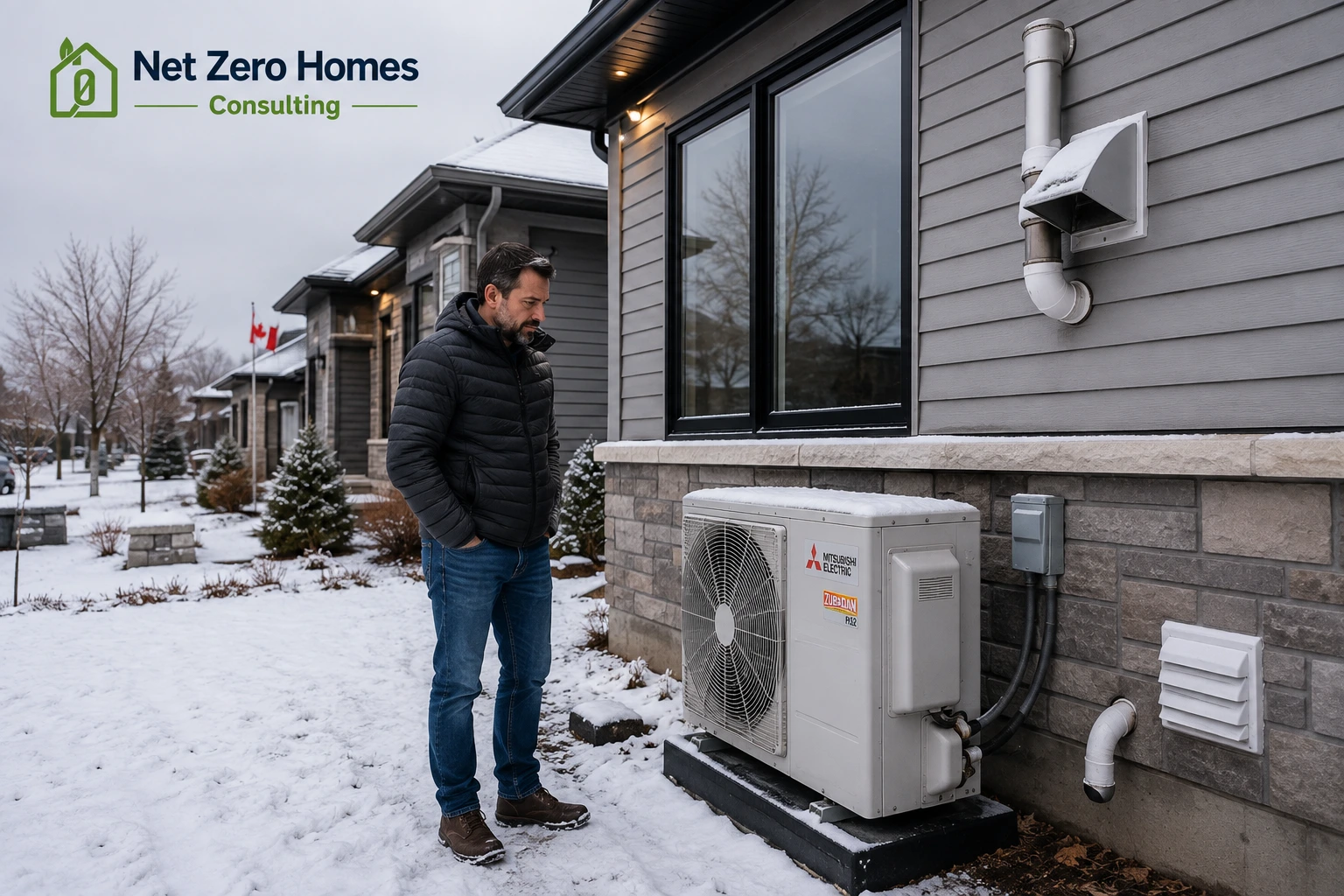
On a mild fall or spring day (say +5°C to +10°C), the outdoor heat pump unit extracts heat from the air and moves it indoors through the refrigerant cycle. Even cool outdoor air contains usable heat energy. The indoor coil (often mounted on or integrated with the furnace) transfers that heat into the air stream, and the furnace blower distributes it through the ducts.
As temperatures fall, the heat pump continues working, but its capacity and efficiency decline. At a programmed balance or switchover point (commonly –5°C to –15°C depending on local rates and equipment), the controls lock out the heat pump and start the furnace. The furnace burner ignites and delivers full heating capacity quickly.
In summer the heat pump reverses and acts as a high-efficiency air conditioner.
Efficiency Ratings Homeowners Should Know
Modern systems use updated metrics:
- SEER2 – Seasonal Energy Efficiency Ratio 2 (cooling efficiency). Higher is better.
- HSPF2 – Heating Seasonal Performance Factor 2 (heating efficiency). Cold climate models score well.
- COP – Coefficient of Performance. A COP of 3 means the system delivers three units of heat for every unit of electricity consumed.
Cold climate heat pumps are specifically tested to maintain useful capacity at –15°C or lower. Many maintain strong performance down to –25°C or beyond.
Refrigerant Technology
Many current models use R32 refrigerant. It has lower global warming potential than older refrigerants and supports efficient operation in cold conditions. Installers follow strict handling and safety procedures. For homeowners the main points are that certified technicians manage the refrigerant and the systems are designed to modern safety standards.
Installation Considerations
Most hybrid setups use existing ductwork. Key checks include:
- Furnace blower compatibility (variable-speed blowers work best)
- Proper indoor coil matching and sizing
- Electrical capacity (a new 240V circuit for the outdoor unit is usually needed)
- Thermostat and control wiring that allows seamless switching
- Outdoor unit placement with good airflow and drainage
An experienced Canadian HVAC contractor will perform a heat loss calculation rather than simply matching the old equipment size. Oversizing or undersizing reduces efficiency and comfort.
Cost Breakdown for Hybrid Heating Systems in Canada
Costs vary by province, home size, equipment tier, and whether the furnace is new or existing. Approximate ranges for a typical 1,800–2,200 sq ft home (2026 figures, before tax and rebates):
Equipment and Installation
- Adding a cold climate heat pump to an existing compatible furnace: often $5,000–$12,000 installed
- Full hybrid package (new heat pump + new high-efficiency furnace): $12,000–$20,000+
- Electrical upgrades (panel, circuit, wiring): $500–$2,500 if needed
- Smart dual-fuel thermostat and controls: usually included or $200–$600 extra
Maintenance Annual service for both the heat pump and furnace is recommended. Expect $200–$400 per year combined once the system is running. Heat pumps generally need filter changes, coil cleaning, and outdoor unit checks. Furnaces need burner and heat exchanger inspection.
Rebates Ontario’s Home Renovation Savings Program offers:
- Up to $2,000 for heat pumps in natural-gas heated homes ($500 per ton)
- Up to $7,500 for homes currently heated by electricity, oil, propane, or wood ($1,250 per ton)
- Higher amounts possible for geothermal
Other provinces have their own incentives (CleanBC, Efficiency Nova Scotia, etc.). Federal support has shifted over time, so always verify active programs with a qualified contractor who handles the paperwork.
Long-Term Savings Monitored Canadian projects and utility analyses show hybrid systems commonly reduce natural gas use for space heating by 30–65%. Annual dollar savings of $400–$900+ are realistic for many Ontario homes, depending on rates, home envelope, and how aggressively the heat pump is prioritized. Savings grow if gas prices rise or if the homeowner uses time-of-use or ultra-low overnight electricity rates.
Payback periods typically fall in the 5–12 year range after rebates, shorter when replacing an aging air conditioner at the same time.
Real-Life Example: 2,000 sq ft Ontario Home
Consider a typical two-storey home in the Greater Toronto Area or Ottawa region. The existing system is a 12-year-old mid-efficiency gas furnace and a 15-year-old central air conditioner. Annual heating gas use is roughly $1,800–$2,200. Cooling costs another $300–$500.
After hybrid upgrade:
- A properly sized cold climate heat pump (R32, strong HSPF2/SEER2 ratings) is installed with a matching indoor coil.
- The existing furnace remains as backup.
- Switchover temperature set around –8°C to –12°C based on local rates.
- Ductwork is sealed and filters upgraded during installation.
- A dual-fuel smart thermostat manages switching.
Results (realistic range based on Canadian case studies):
- Gas consumption for space heating drops 40–55%.
- Annual energy cost savings: $600–$1,000 depending on electricity rates and weather.
- Summer cooling is quieter and more even.
- Comfort improves because the heat pump runs longer at lower capacity, reducing temperature swings.
- The home is better prepared for future electrification or carbon pricing.
- Simple payback after rebates often lands in the 6–9 year window. The system also increases resale appeal as buyers look for efficient, dual-source homes.
Insulation and air-sealing upgrades done at the same time further improve results and can unlock additional rebate stacking.
Pros and Cons of Hybrid Heating Systems
| Aspect | Pros | Cons |
|---|---|---|
| Reliability | Furnace backup for extreme cold | Two systems to maintain |
| Efficiency & Savings | Heat pump handles most of the year | Higher upfront cost than furnace alone |
| Comfort | Even temperatures, better humidity control | Proper design and setup required |
| Cooling | High-efficiency AC included | Outdoor unit needs space and clearance |
| Carbon & Future-Proofing | Significant gas reduction, path to net zero | Still uses some fossil fuel |
| Rebates | Qualifies for heat pump incentives | Rebate amounts lower for gas homes in some programs |
| Complexity | Automatic switching | Needs knowledgeable installer |
Hybrid systems shine for homeowners who want meaningful progress on energy costs and emissions without giving up the security of a gas furnace.
Common Homeowner Questions
Are heat pumps worth it in Canada?
Yes for many homes, especially when paired in a hybrid setup or when the home envelope is improved. Cold climate models perform well in most populated regions.
Can a heat pump work below –20°C?
Modern cold climate units continue to deliver heat well below –20°C, though capacity is reduced. That is exactly why hybrid systems keep the furnace available.
Is R32 refrigerant safe?
When installed and serviced by certified technicians following code, R32 systems meet safety standards. It has lower global warming potential than previous refrigerants.
Do heat pumps replace furnaces?
They can in milder climates or with electric backup. In colder Canadian regions many homeowners prefer the hybrid approach for maximum reliability.
How long does a heat pump last?
Typical lifespan is 12–20 years with proper maintenance. Furnaces often last 15–25 years. Hybrid ownership spreads wear across both systems.
What is the balance point or switchover temperature?
It is the outdoor temperature at which the system changes from heat pump to furnace. It can be set for lowest cost, lowest emissions, or maximum comfort.
Will a hybrid system work with my existing ducts?
Most of the time yes, provided the ducts are reasonably sized and sealed. A contractor will assess airflow.
How much can I save with a hybrid system?
Many Ontario homes see 30–50%+ reduction in gas use for heating and hundreds of dollars in annual savings after the system is optimized.
Do I need electrical upgrades?
Often a dedicated circuit for the outdoor unit is required. Panel capacity is checked during the quote process.
What about noise?
Newer inverter-driven heat pumps are quiet. Outdoor sound levels are typically comparable to or quieter than older central air units.
Can I get rebates for a hybrid system?
Yes. The heat pump portion usually qualifies under current provincial programs. Amounts differ for gas versus non-gas homes.
Is a hybrid system good for net-zero goals?
It is a practical intermediate step that cuts emissions substantially while keeping options open for further electrification later.
Should I replace my furnace at the same time?
If the furnace is older than 12–15 years or inefficient, replacing both together can be cost-effective. If it is relatively new and high-efficiency, keep it.
How do I choose the right contractor?
Look for experience with cold climate heat pumps, dual-fuel controls, heat loss calculations, and rebate paperwork. Ask for references from similar Canadian homes.
Is a Heat Pump Right for Your Home?
Every home is different. Climate zone, existing equipment age, duct condition, insulation levels, electricity and gas rates, and your long-term plans all matter. A hybrid heating system is often the most practical way for Canadian homeowners to capture the efficiency of a cold climate heat pump while retaining the reliability of a furnace.
The best next step is a professional energy assessment or detailed HVAC evaluation. A qualified advisor can model expected savings for your specific home, confirm rebate eligibility, and recommend equipment that matches both your comfort needs and budget.
Net Zero Homes Consulting helps Canadian homeowners navigate exactly these decisions. We focus on practical, data-driven recommendations that improve comfort, lower operating costs, and move homes toward higher efficiency and lower carbon impact without unnecessary complexity.
If you are researching hybrid heating systems or considering keeping your furnace with a heat pump, reach out for a consultation. A clear, customized plan will show you the real numbers for your house and the timeline that makes sense for your family.