Why Insulation Choices Matter More Than You Think
It’s a typical January morning in Ontario. The thermostat reads 22°C, but the living room still feels cold. Your furnace seems to run constantly, and yet, there’s a noticeable chill near the windows and floors.
This is a scenario many Canadian homeowners face. The issue often isn’t the heating system it’s the insulation.
In cold climates like Ontario, insulation is not just about comfort. It directly affects your energy bills, indoor air quality, and long-term durability of your home. Choosing the right insulation type can feel overwhelming, especially with so many materials, performance claims, and cost considerations.
This guide breaks it down clearly. You’ll learn how different insulation types perform in cold climates, their pros and cons, and how to make the right decision for your home.
Understanding Insulation in Cold Climates
At its core, insulation slows down heat transfer. In winter, it keeps warm air inside; in summer, it helps keep heat out. But in colder regions like Canada, the focus is heavily on retaining heat efficiently and preventing air leakage.
Two key factors matter:
- R-value: Measures thermal resistance (higher = better insulation)
- Air sealing: Prevents drafts and heat loss through gaps
Here’s the critical insight:
Even high R-value insulation underperforms if air leakage isn’t addressed.
That’s why modern insulation strategies combine thermal resistance + air barrier performance.
Best Insulation Types for Cold Climates (Pros and Cons)
1. Fiberglass Insulation (Batts and Blown-In)
Common use: Walls, attics, floors
Pros:
- Affordable and widely available
- Easy to install (especially batts)
- Non-combustible
Cons:
- Poor air sealing (allows drafts if not installed perfectly)
- Performance drops if compressed or wet
- Gaps are common in older homes
Best for:
Budget-conscious upgrades, attic top-ups
Real example:
A homeowner in Mississauga added blown-in fiberglass to their attic, increasing insulation from R-20 to R-50. Heating costs dropped, but noticeable drafts remained later traced to air leaks, not insulation thickness.
2. Spray Foam Insulation (Closed-Cell & Open-Cell)
Common use: Basements, walls, attics, rim joists
Pros:
- Excellent air sealing (acts as both insulation and air barrier)
- High R-value (especially closed-cell)
- Moisture resistant (closed-cell)
Cons:
- Higher upfront cost
- Requires professional installation
- Can make future renovations more complex
Best for:
Air sealing problem areas, basements, older homes with leakage issues
Key insight:
In cold climates, closed-cell spray foam is often preferred due to its higher R-value and moisture resistance.
3. Rigid Foam Board (XPS, EPS, Polyiso)
Common use: Exterior walls, basements, under slabs
Pros:
- Continuous insulation reduces thermal bridging
- Good moisture resistance
- High compressive strength
Cons:
- More expensive than fiberglass
- Requires careful installation and sealing
- Environmental concerns (varies by type)
Best for:
Exterior insulation retrofits, foundation walls
Why it matters in Canada:
Rigid foam helps eliminate thermal bridging through wood studs one of the biggest hidden energy losses in homes.
4. Mineral Wool (Rockwool)
Common use: Walls, basements, exterior insulation
Pros:
- Fire-resistant
- Water-resistant (does not absorb moisture easily)
- Maintains shape and performance over time
- Good soundproofing
Cons:
- Slightly more expensive than fiberglass
- Lower air sealing compared to spray foam
Best for:
Homeowners prioritizing durability and fire resistance
5. Cellulose Insulation
Common use: Attics, dense-pack walls
Pros:
- Made from recycled materials
- Better air resistance than fiberglass
- Fills gaps more effectively
Cons:
- Can settle over time if not installed properly
- Sensitive to moisture
Best for:
Eco-conscious homeowners and retrofit wall insulation
Cost Considerations (Ontario Context)
Costs vary depending on home size, accessibility, and labor, but here’s a general comparison:
- Fiberglass: $ (lowest cost)
- Cellulose: $$
- Mineral Wool: $$–$$$
- Rigid Foam: $$$
- Spray Foam: $$$$ (highest upfront cost)
Important perspective:
The cheapest option upfront is rarely the most cost-effective long term.
For example, upgrading attic insulation might cost a few thousand dollars, while spray foam for a basement could be significantly higher. But if that spray foam eliminates major air leaks, the energy savings and comfort improvement can justify the investment.
Energy Savings and Return on Investment
Insulation upgrades typically offer some of the best ROI in home energy improvements.
In cold climates:
- Heat loss through attic: up to 25%
- Walls: ~20%
- Basement and foundation: ~15–20%
Proper insulation can:
- Reduce heating bills by 15–40%
- Improve indoor comfort immediately
- Reduce strain on HVAC systems
- Increase home resale value
Payback period:
- Attic insulation: often 2–5 years
- Basement or full-envelope upgrades: longer, but higher comfort gains
Common Mistakes Homeowners Make
Avoid these pitfalls:
1. Focusing Only on R-Value
Higher R-value doesn’t fix air leaks. Without air sealing, performance suffers.
2. Ignoring the Attic
The attic is usually the biggest heat loss area and often the easiest upgrade.
3. Skipping Air Sealing
Gaps around vents, wiring, and rim joists can undo insulation improvements.
4. Mixing Materials Incorrectly
Some combinations can trap moisture and cause mold issues.
5. DIY Without Understanding Building Science
Improper installation can reduce effectiveness or create long-term problems.
Step-by-Step: How to Choose the Right Insulation
Step 1: Identify Problem Areas
- Cold rooms?
- Drafts?
- Ice dams?
- High energy bills?
Step 2: Start with an Energy Audit
A professional audit (often subsidized in Canada) identifies where heat loss occurs.
Step 3: Prioritize High-Impact Areas
Typically:
- Attic
- Air sealing
- Basement
- Walls (if accessible)
Step 4: Match Material to Application
- Attic: Blown-in fiberglass or cellulose
- Basement: Spray foam or rigid board
- Walls: Dense-pack cellulose or mineral wool
- Exterior retrofit: Rigid foam board
Step 5: Consider Budget vs Long-Term Goals
Think in terms of:
- Immediate savings
- Comfort
- Future upgrades (heat pump, solar)
Rebates and Incentives in Ontario and Canada
Homeowners in Ontario can access various rebate programs for insulation upgrades through federal and provincial initiatives.
These programs typically:
- Require an energy audit before and after upgrades
- Offer rebates for attic, wall, and basement insulation
- Encourage whole-home efficiency improvements
While amounts vary, these incentives can significantly reduce upfront costs and improve ROI.
When Insulation Upgrades Make Sense (and When They Don’t)
Makes Sense When:
- Your home feels drafty or unevenly heated
- Energy bills are rising
- You’re planning HVAC upgrades (like a heat pump)
- Your home is older or under-insulated
May Not Make Sense When:
- Insulation is already up to modern standards
- Major structural issues exist (fix those first)
- You’re planning a full renovation soon (better to integrate upgrades)
Insulation and the Net Zero Roadmap
If your goal is a Net Zero home, insulation is foundational.
Before adding solar panels or upgrading to a heat pump, your home must:
- Minimize heat loss
- Maintain stable indoor temperatures
- Reduce overall energy demand
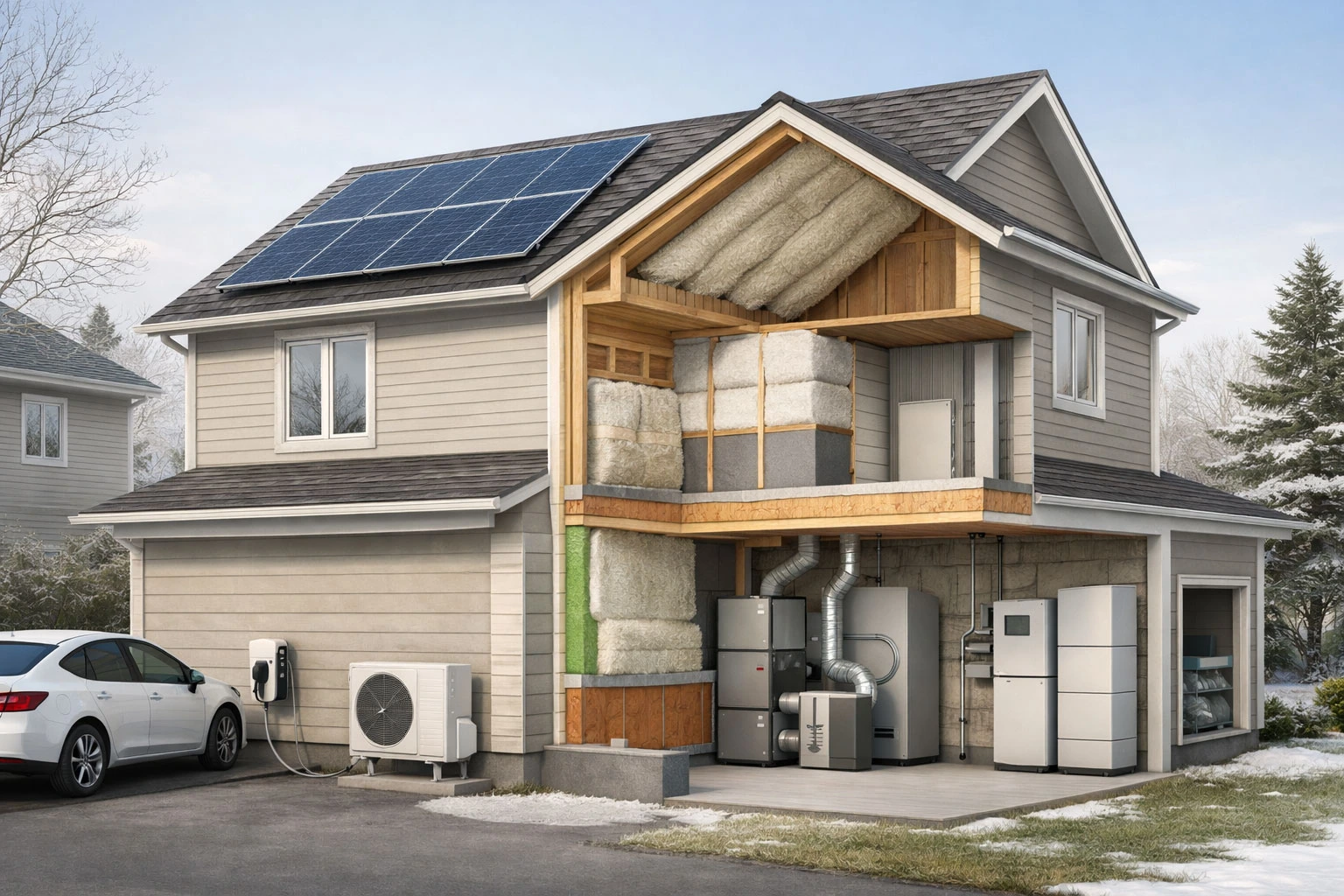
Think of insulation as the first step in a larger system:
Skipping insulation leads to oversized systems and wasted energy.
Conclusion: Make the Right Choice for Your Home
Choosing the best insulation for a cold climate isn’t about picking the most expensive or highest R-value option. It’s about using the right material in the right place, combined with proper air sealing.
A thoughtful approach can lower your energy bills, improve comfort, and prepare your home for future upgrades.
Every home is different. What works for a newer suburban house in Ontario may not apply to an older home with unique challenges.
Ready to Take the Next Step?
If you’re unsure where to start, the best first move is a professional assessment.
Book a consultation with Net Zero Homes Consulting to get a customized insulation and energy upgrade roadmap tailored to your home, budget, and long-term goals.