Picture this: It’s a freezing January night in Ontario. An ice storm hits, and suddenly your neighbourhood goes dark. Your furnace stops, the fridge warms, and your family huddles under blankets wondering how long the outage will last. For thousands of Canadian homeowners, this scenario is all too real.
Power outages are becoming more frequent due to extreme weather, aging infrastructure, and growing demand. Whether you’re in the GTA, Ottawa, or rural Ontario, having reliable backup power isn’t just nice, it’s smart protection for your family, comfort, and finances.
Today, the two main options are traditional standby generators and modern home battery storage systems. Which one makes more sense for Canadian homeowners in 2026? Let’s break it down with clear, practical insights tailored to Ontario realities.
Why Backup Power Matters More Than Ever in Ontario
Ontario’s electricity grid faces real pressures. Ice storms, wind events, and heavy snow regularly knock out power for days. In one recent major ice storm, hundreds of thousands of customers lost electricity, with some waiting five days or more for restoration.
Many homes rely on electric systems for heating (or gas furnaces that need electricity for blowers), medical devices, sump pumps, and refrigeration. Without backup, even a short outage can cause thousands in spoiled food, water damage, or health risks.
A good backup system gives you peace of mind—and potentially big savings when the lights are on.
Generator vs Battery Backup: Side-by-Side Comparison
Here’s how the two options stack up for a typical Ontario home:
Upfront Costs (Installed):
- Standby Generator (e.g., 10-20 kW): $8,000–$18,000+
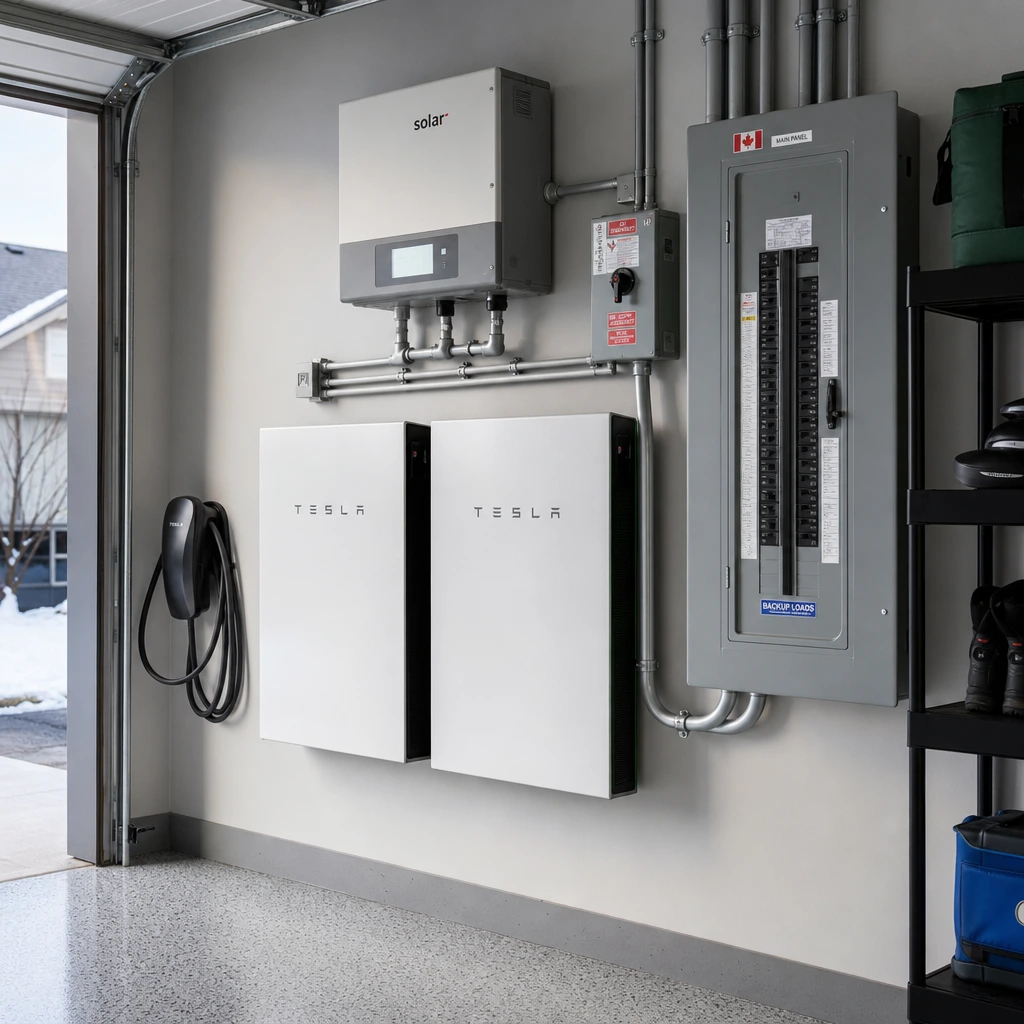
- Home Battery System (e.g., 13.5 kWh like Powerwall): $13,000–$21,000 (before rebates)
Rebates and Incentives:
Batteries shine here. Ontario’s Home Renovation Savings Program (HRSP) offers rebates for solar and battery storage (up to $5,000+ for battery, often combined with solar incentives), significantly lowering net cost. Generators typically get no provincial rebates.
Ongoing Costs:
- Generator: $300–$650/year maintenance + fuel ($3–$8/hour during use).
- Battery: Near-zero maintenance, no fuel. Can actually save money daily through rate arbitrage.
Performance During Outages:
- Generator: Runs indefinitely with fuel supply; 10–30 second startup delay. Noisy (60-70 dB).
- Battery: Instant, silent switchover (milliseconds). Provides 12–48+ hours for essential loads (extendable with solar).
Other Factors:
- Noise & Emissions: Batteries are silent and emission-free. Generators produce noise and exhaust (requiring outdoor placement with setbacks).
- Lifespan: Both around 15+ years with proper care.
- Permits: Both need ESA approval in Ontario; generators often require additional gas/utility permits.
The Hidden Cost: What Happens Between Outages?
This is where most comparisons fall short. A generator sits idle 99% of the time—pure insurance with no daily benefit.
A home battery paired with solar (or even standalone on ULO rates) works every day. Ontario’s Ultra-Low Overnight (ULO) plan charges as low as 3.9¢/kWh overnight and peaks at 39.1¢/kWh. A battery can shift usage to save $600–$2,400+ annually depending on your home’s consumption and setup.
Over 15–20 years, these daily savings often make the battery system far cheaper overall—and it still delivers backup power.
20-Year Total Cost of Ownership Example
(Approximate for a typical Ontario home; actuals vary by usage, rates, and system size.)
- Generator: Higher cumulative fuel + maintenance; net cost with little to no return.
- Battery + Solar: Upfront investment offset by rebates, daily savings, and potential property value boost (often 3-4% for solar + battery homes).
Batteries frequently deliver a net positive return while providing cleaner, quieter protection.
When a Generator Might Still Make Sense
Batteries aren’t perfect for every situation. Consider a generator (or hybrid) if:
- You need multi-day backup for a very large home with high loads.
- You’re in a remote area with frequent long outages and limited solar in winter.
- Budget is tight and you prioritize indefinite runtime with fuel access.
- You already have reliable natural gas infrastructure.
When Battery Backup (Especially with Solar) Wins
Most Ontario homeowners benefit more from batteries when:
- You want daily energy bill savings on ULO or TOU rates.
- Safety, silence, and zero emissions matter (kids, elderly, respiratory concerns).
- You’re adding or have solar—batteries maximize self-consumption and resilience.
- You qualify for HRSP or other rebates.
- You value instant, seamless power with smart features like storm pre-charging.
Safety First: A Critical Difference
Carbon monoxide poisoning from generators contributes to hundreds of incidents annually across Canada. Proper installation and outdoor use are essential, but risks remain during emergencies.
Batteries eliminate combustion risks entirely—clean, safe indoor or garage installation.
Maintenance and Long-Term Considerations
Generators need regular servicing, oil changes, fuel stabilization, and testing. Batteries are largely set-it-and-forget-it, with warranties covering many years. Winter performance is strong for both, but batteries benefit from smart pre-charging features.
Environmental Impact: Batteries support cleaner energy, especially paired with solar, reducing your carbon footprint.
Actionable Takeaways for Ontario Homeowners
- Get a professional home energy audit to assess your loads and needs.
- Review your electricity rate plan—switching to ULO can amplify battery savings.
- Size your system correctly: Focus on essential circuits first for best value.
- Combine upgrades (insulation, air sealing, heat pumps, windows) for maximum efficiency and rebates.
- Test your backup system regularly and have a family emergency plan
Cost Considerations in 2026
Prices fluctuate with incentives and material costs. Factor in financing options, property value uplift, and long-term energy price trends. Net Zero Homes can provide customized quotes including current HRSP eligibility
Benefits and Drawbacks Summary
Batteries: Quiet, low-maintenance, daily savings, eco-friendly, seamless, rebate-eligible. Drawback: Limited runtime without solar/fuel alternative for extreme multi-day events. Generators: Proven for long runtimes, potentially lower initial cost in some cases. Drawbacks: Noisy, polluting, high ongoing costs, safety considerations.
Common Mistakes to Avoid
- Choosing based only on upfront price.
- Skipping professional sizing and permitting.
- Neglecting whole-home efficiency upgrades that reduce backup needs.
- Installing without considering integration with solar, EV chargers, or heat pumps.
- Poor maintenance or unsafe generator placement.
Frequently Asked Questions
Can I combine a battery and generator? Yes—many homeowners use a battery for daily savings/short outages and a smaller generator for extended backup.
How long does a battery last in a winter outage? A single well-sized battery typically covers essentials for 12–36+ hours. Solar recharging extends this significantly during daylight.
Is a battery worth it without solar? Often yes, especially on ULO rates for arbitrage savings. Solar makes it even better for outage resilience.
What about portable generators? They’re affordable for basic needs but manual, limited, and carry higher safety risks. Not ideal for whole-home or automatic backup.
Do rebates still apply in 2026? Check current HRSP and utility programs eligibility and amounts can change. Net Zero Homes stays up-to-date on incentives
How do I know what’s right for my home? A site assessment considering your usage, location, and goals is the best next step.
Final Thoughts
For most Canadian homeowners in Ontario, a home battery storage system ideally paired with solar and efficiency upgrades offers superior long-term value, safety, and convenience compared to a traditional generator. It doesn’t just protect you during outages; it saves money every single day while supporting a cleaner, more resilient home.
The best choice depends on your specific situation. Don’t guess, get expert guidance.
Ready to explore the right backup solution for your Ontario home? Net Zero Homes specializes in personalized energy upgrades including home battery storage, solar panels, heat pumps, insulation, air sealing, high-performance windows, EV chargers, and full net zero retrofits. Our team handles audits, rebates, permits, and seamless installations.
Book a free consultation or home energy audit today to get a custom comparison and start saving. Protect your home, lower your bills, and build toward energy independence. Contact Net Zero Homes now, your future self (and your wallet) will thank you.