It is late October in a typical Canadian suburb. The first hard frost has settled in, the furnace has kicked on, and you are staring at your aging gasoline SUV wondering whether it will survive another winter of -25 °C mornings, salted roads, and long highway runs to the cottage. You have heard the stories: electric vehicles lose half their range in the cold, public chargers freeze, and “EVs just don’t work in Canada.”
Yet more Canadian homeowners every year are quietly making the switch and many are combining the new vehicle with home charging, solar panels, a heat pump, and battery storage to create a far more resilient and lower-cost energy system. This guide is written for those homeowners. It answers the practical questions that matter when the temperature drops: which EVs retain the most range below -15 °C, which have the best heat pumps and preconditioning, what your electrical panel needs, how solar and home batteries change the economics, and how an EV fits into a true Net Zero Home.
We draw on Canadian winter testing (including the CAA’s real-world Ottawa-to-Mont-Tremblant range and charge tests), current federal and provincial incentives as of 2026, electricity rates by province, and the latest vehicle specifications. The goal is simple: help you choose a vehicle that works in Canadian winters and a home energy strategy that makes the switch pay off for years
Quick Answer
The best overall electric vehicles for Canadian winters in 2026 balance real cold-weather range retention, all-wheel drive, efficient cabin heating (ideally a heat pump), fast preconditioning, strong DC fast-charging performance when cold, and practical home-charging integration. Standouts from Canadian winter testing and market data include the Tesla Model 3 and Model Y (strong real-world range and charging), Chevrolet Silverado EV (excellent range retention and capacity), Polestar 2 (minimal percentage loss), Kia EV9 and Hyundai IONIQ 5/6 family (spacious, heat-pump-equipped options), and Ford F-150 Lightning (for truck buyers needing V2H capability).
No EV is immune to cold-weather range loss (typically 14–39 % in Canadian tests at -7 to -15 °C), but modern models with heat pumps, battery preconditioning, and larger packs make daily driving and most winter road trips practical especially when paired with Level 2 home charging. The real multiplier for Canadian homeowners is integrating the EV with solar, home batteries, heat pumps, and smart energy management to slash operating costs and improve resilience.
Why Canadians Are Buying More Electric Vehicles
Fuel costs remain a major driver. Even with fluctuating gasoline prices, the energy cost per kilometre for an efficient EV is typically far lower than gasoline when charged at home, especially in low-rate provinces such as Quebec and Manitoba or on off-peak time-of-use rates in Ontario.
Government support continues in 2026 through the federal Electric Vehicle Affordability Program (EVAP), offering up to $5,000 for eligible battery-electric vehicles (generally those with a final transaction value of $50,000 or less, with exceptions for Canadian-made vehicles) and up to $2,500 for plug-in hybrids. Provincial programs vary: Quebec’s Roulez vert still provides reduced incentives (around $2,000 for many new BEVs) through the end of 2026 along with charger support, while British Columbia’s passenger vehicle rebate has been paused and Ontario offers no provincial purchase rebate. Always verify current eligibility, as programs and price caps change.
Additional reasons include lower maintenance (no oil changes, fewer brake jobs thanks to regenerative braking), quiet operation, strong instant torque for winter acceleration and hill starts, and the convenience of waking up to a full “tank” every morning with home charging. Environmental benefits matter to many households, and pairing an EV with rooftop solar further reduces the carbon intensity of driving. For business owners, contractors, and rural drivers, electric trucks and larger SUVs now offer usable towing and payload while enabling Vehicle-to-Home backup in supported models.
Winter Performance: What Really Happens in the Cold
Cold weather affects EVs in several predictable ways:
- Battery chemistry slows, reducing available energy and power.
- Cabin heating draws significant energy resistive heaters are less efficient than heat pumps.
- Regenerative braking can be limited when the battery is very cold until it warms.
- Charging speed drops until the battery is preconditioned.
- Tire choice and rolling resistance matter more because of vehicle weight.
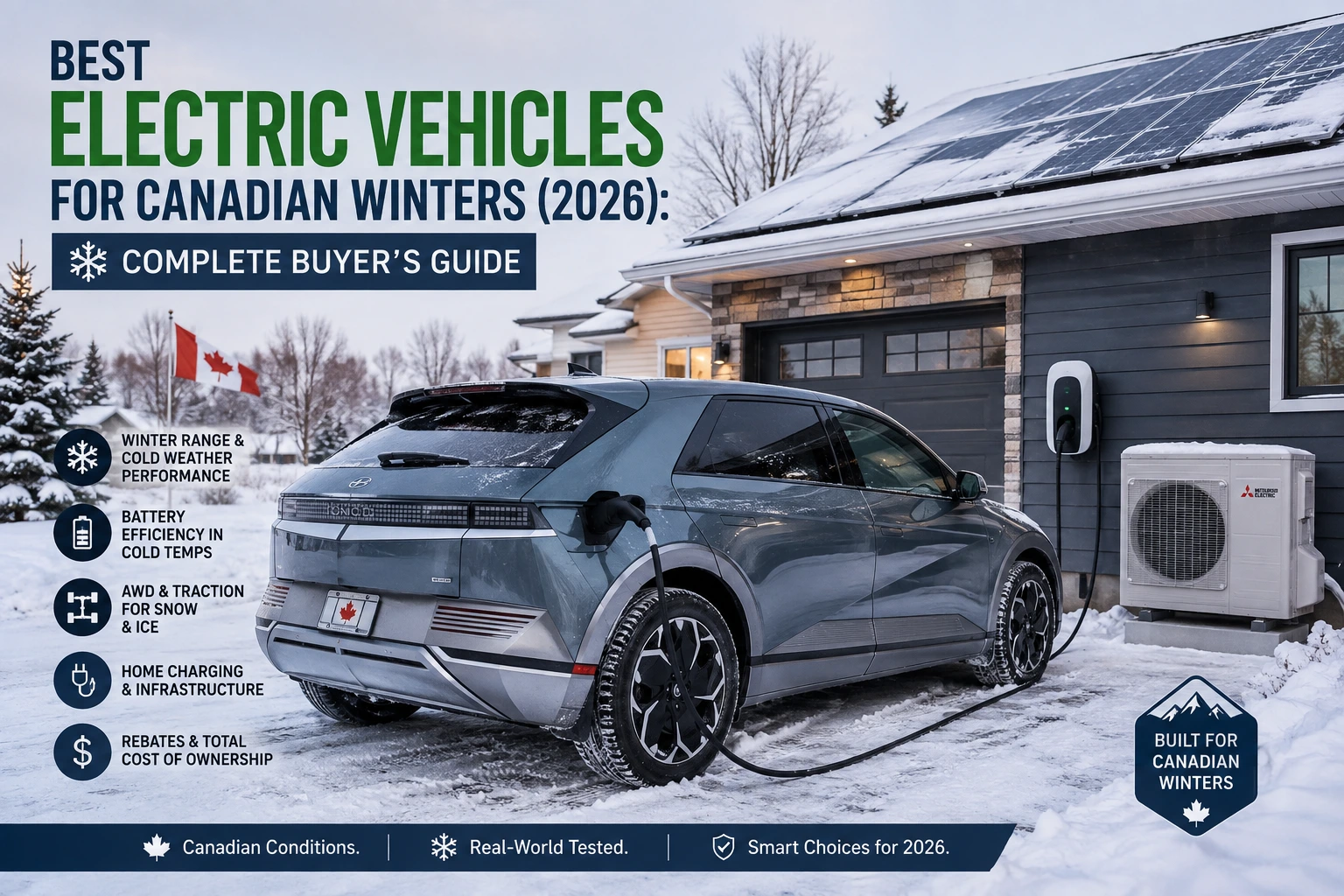
Canadian real world testing provides the clearest picture. In the CAA EV Winter Test (vehicles driven from Ottawa toward Mont Tremblant in temperatures roughly -7 to -15 °C until depletion), range losses versus official NRCan figures ranged from about 14 % to 39 %. Top performers by percentage retention included the Chevrolet Silverado EV and Polestar 2 (around 14 % loss). The Tesla Model 3 delivered strong absolute winter range (around 410 km in the test conditions). Charging performance also varied widely; the Tesla Model 3 added the most range in a 15-minute DC session in the test conditions.
Practical strategies that consistently help:
- Precondition the cabin and battery while plugged in (schedule departure times).
- Prefer heated seats and steering wheel over full cabin heat when possible.
- Use winter or dedicated EV winter tires.
- Park in a garage or sheltered area when feasible.
- Keep the battery in a moderate state of charge for daily driving and plan longer trips with more frequent, shorter DC stops rather than one deep charge.
Heat-pump equipped models generally lose less range to cabin heating than pure resistive systems. Battery preconditioning (especially Tesla’s navigation-linked system and similar features on Hyundai/Kia and others) is critical for restoring DC fast-charging speed on cold days.
Vehicle Comparison for Canadian Conditions
Detailed analysis of key models available or relevant in the Canadian market (specifications evolve; always confirm current NRCan figures, warranty, and Canadian pricing/incentives):
Tesla Model 3 and Model Y Strong real-world efficiency and winter range in testing, excellent Supercharger network access in Canada, effective preconditioning, and heat pump on recent versions. Model Y remains a top family and all-weather choice with good cargo space and AWD. Cybertruck offers unique capability and potential bidirectional features depending on supporting equipment, but higher price and availability considerations apply.
Ford Mustang Mach-E and F-150 Lightning Mach-E provides competent AWD crossover performance. The Lightning stands out for truck buyers with high towing capability (when properly equipped), large battery options, and commercially available Vehicle-to-Home / Intelligent Backup Power systems that can power a home during outages valuable for rural and cottage owners.
Hyundai IONIQ 5 (and larger IONIQ family) / Kia EV6 and EV9 Popular for design, interior space, heat pumps, and dual 400/800-volt architecture that enables fast charging when the battery is warm. EV9 offers three-row family practicality. Good real-world winter feedback once preconditioned.
Chevrolet Equinox EV, Blazer EV, Silverado EV / GMC Sierra EV and Hummer EV Equinox EV has been a volume seller with competitive pricing and AWD options. Silverado EV showed excellent cold-weather range retention and charging speed in CAA testing relevant for buyers needing truck utility and maximum winter kilometres.
Toyota bZ4X and RAV4 Plug-in Hybrid bZ4X has faced range and charging challenges in some cold-weather tests; the RAV4 PHEV remains a pragmatic bridge for drivers who want electric commuting with gasoline backup for extreme cold or remote travel.
Honda Prologue, Nissan Ariya, Volkswagen ID.4, Volvo EX30/EX90, Polestar 2, BMW i4/iX, Mercedes EQE SUV, Audi Q6 e-tron equivalents, Rivian R1S/R1T, Lucid Air These cover a spectrum from accessible crossovers to luxury and adventure oriented vehicles. Polestar 2 performed well on percentage range retention. Rivian and Lucid emphasize long-range capability and off-road or luxury attributes. Availability, service networks, and Canadian warranty support vary important for rural buyers.
Key comparison factors for winter buyers Prioritize: tested winter range retention, presence of a heat pump, AWD, ground clearance and snow performance, DC fast-charging curve when cold, battery warranty (typically 8 years/160,000+ km with capacity guarantees), cargo and towing needs, and resale/insurance data in your province. Reliability and software update support also matter long-term.
Home Charging: The Foundation of EV Ownership in Canada
Most Canadian EV driving happens on home charging.
- Level 1 (standard 120 V outlet): Slow (often 5–8 km of range per hour). Fine for low daily mileage or as backup.
- Level 2 (240 V): The practical standard. Adds 30–50+ km per hour depending on charger and vehicle. Most owners install a 40–48 A or higher circuit.
- DC Fast Charging: Public network use for road trips; speeds drop in extreme cold until the battery is warm.
Typical Level 2 installation costs in Canada range from roughly $1,000–$3,000 for a straightforward garage install (charger + labour + permit) and can rise significantly with long cable runs, outdoor weatherproofing, or electrical panel/service upgrades. Panel upgrades (100 A to 200 A service is common) often cost several thousand dollars depending on the utility and home. Many provinces or utilities have offered charger rebates historically check current programs.
Smart chargers that support scheduling, load management, and utility demand-response programs help avoid peak rates and panel overload. Time-of-use (TOU) rates in Ontario and similar structures elsewhere make overnight charging especially economical. For homes with limited panel capacity, load-management devices or smart panels can often avoid a full service upgrade.
Solar + EV: Offsetting Your Driving Energy
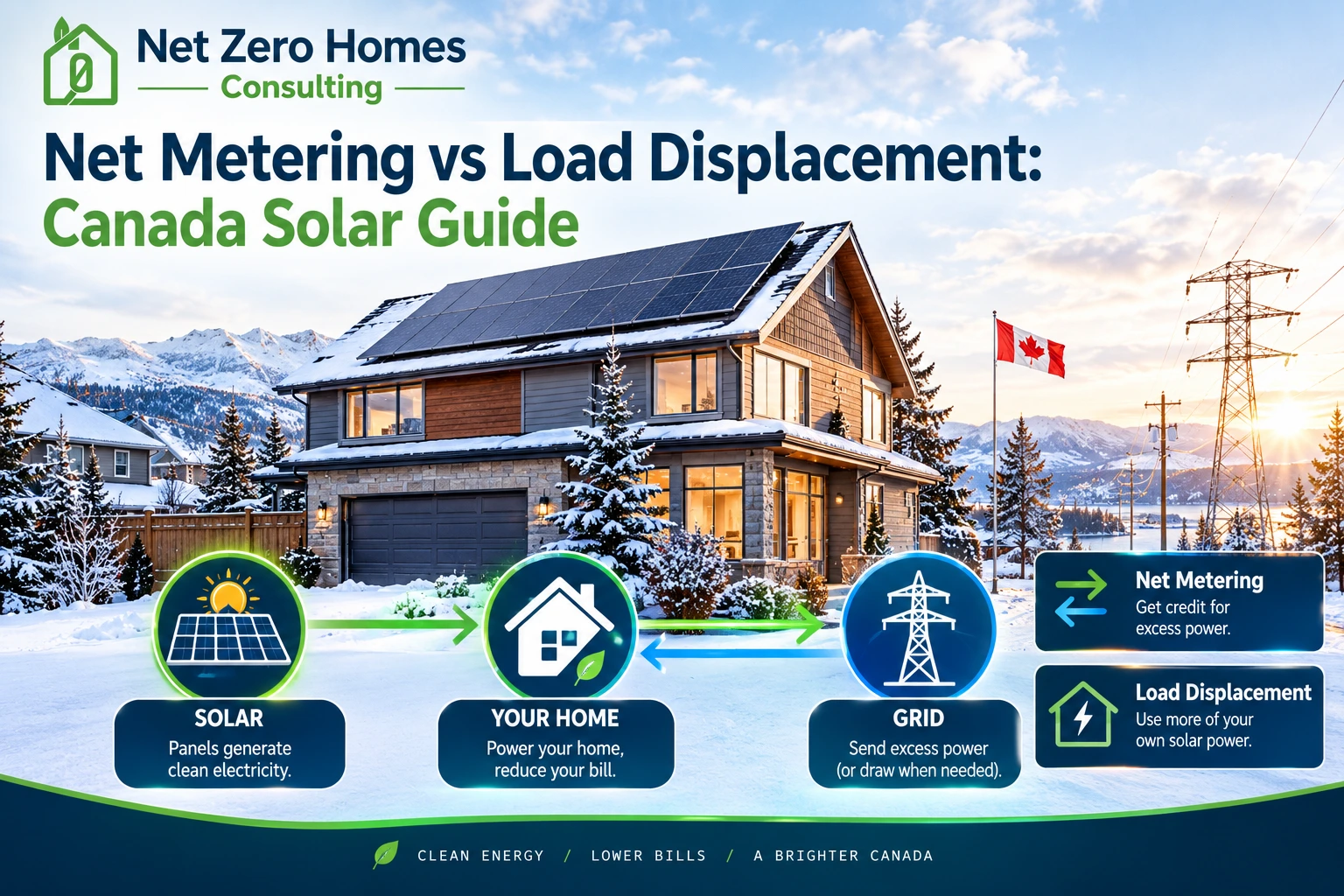
An average Canadian EV might consume 2,500–4,000+ kWh per year depending on driving distance, climate, and efficiency. Rooftop solar can offset a large portion or all of that consumption in many regions, especially with net metering.
Payback depends heavily on provincial electricity rates, net-metering rules, solar resource, and any incentives or financing. Low-rate hydro provinces (Quebec, Manitoba) have longer solar paybacks but still benefit from energy independence and future rate protection. Higher-rate or TOU provinces see faster returns. Pairing solar with an EV charger (and ideally a home battery) maximizes self-consumption and resilience. A properly sized system can cover household loads plus EV charging for much of the year in many Canadian locations.
Home Battery Storage Comparison
Home batteries turn solar into evening and overnight power, provide backup during outages, and enable time-of-use arbitrage. Leading options relevant to Canadian homes include:
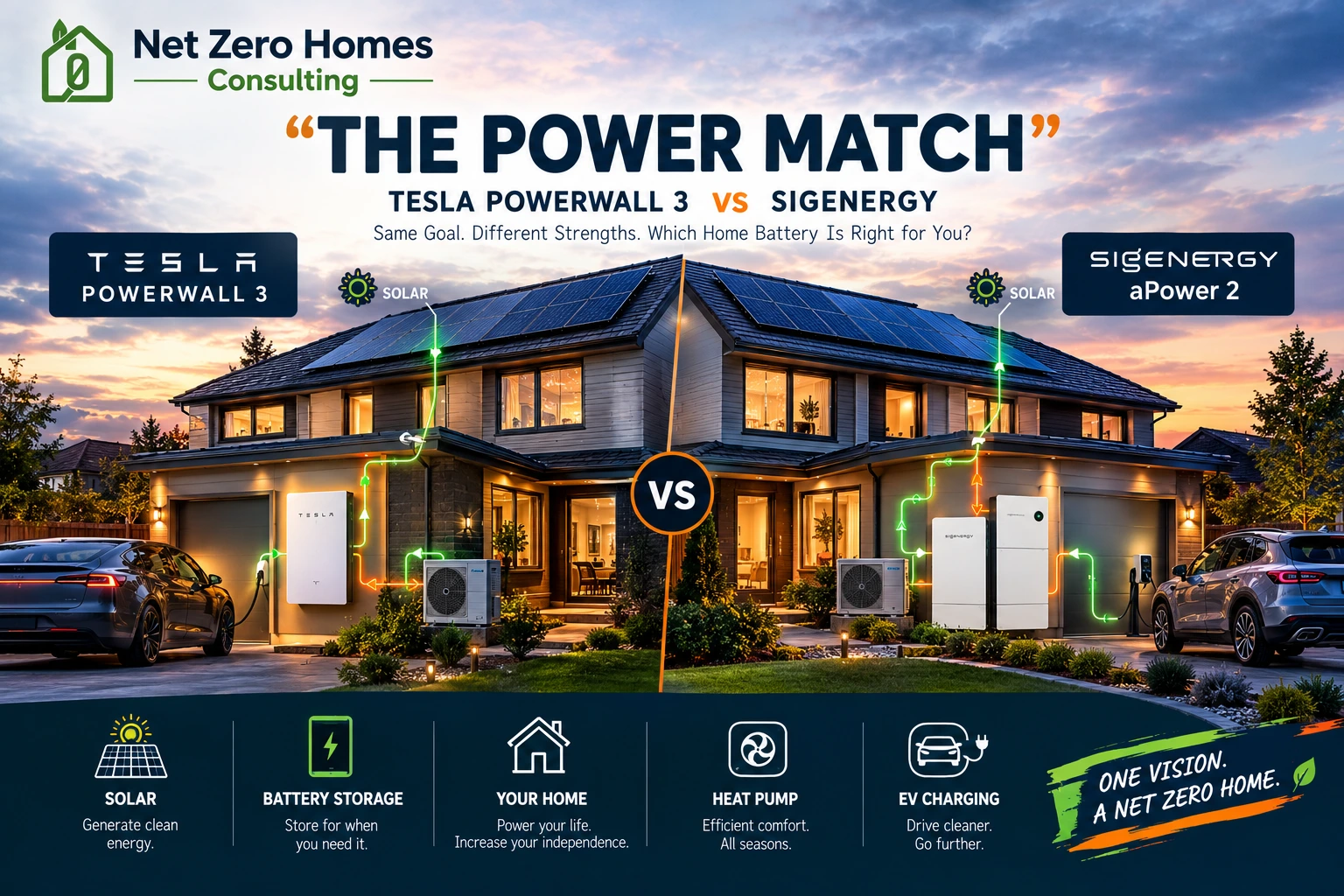
- Tesla Powerwall (including Powerwall 3 generations): Strong whole-home backup capability, polished app/ecosystem, good solar integration, and proven track record.
- Sigenergy SigenStor: Highly modular, scalable capacity, strong power output options, and notable EV integration features (including DC charging pathways in some configurations). Attractive for expandable systems and advanced energy management.
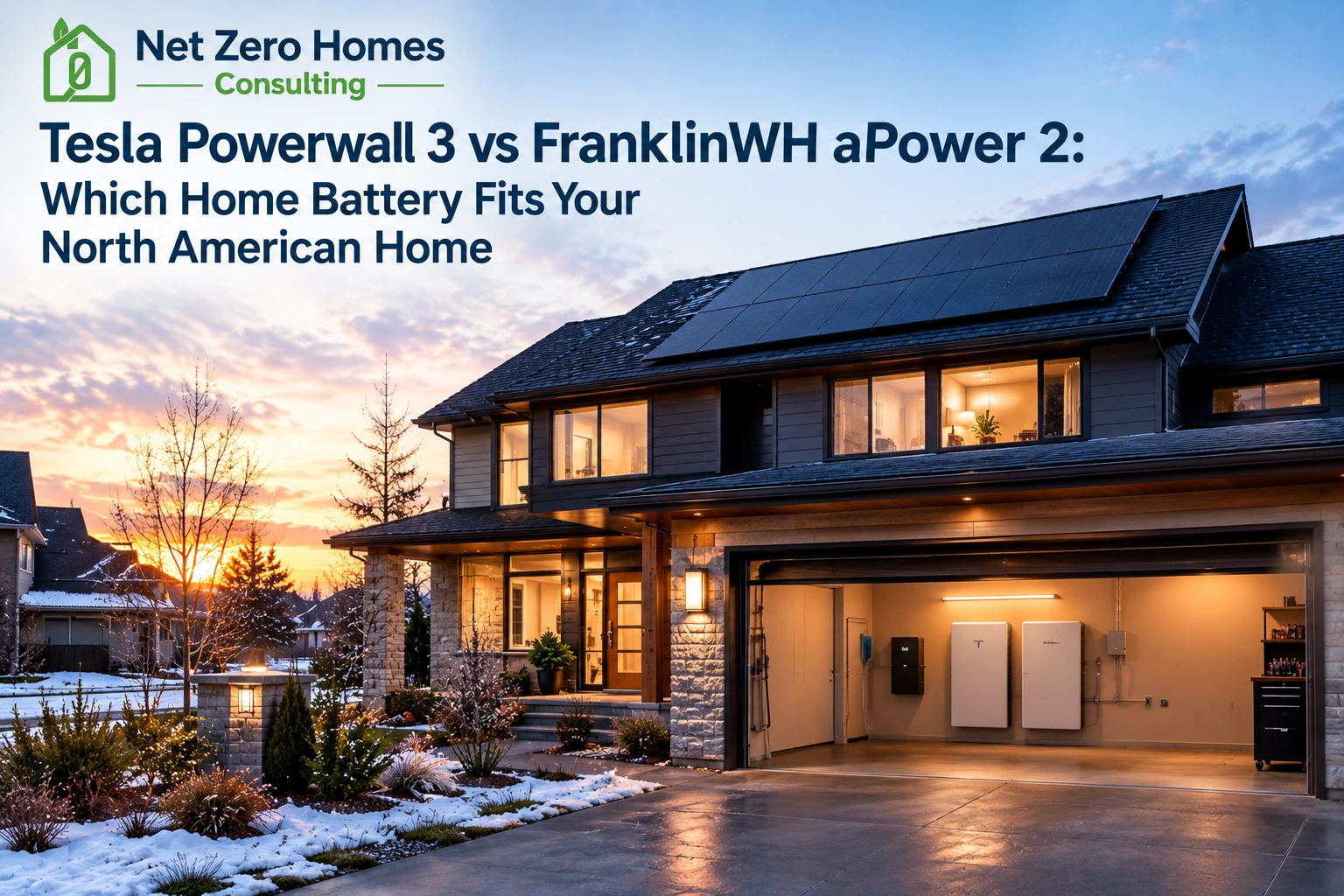
- FranklinWH: Focus on whole-home backup and intelligent energy management.
- Enphase IQ Battery: Modular microinverter ecosystem, strong warranty in many cases, and excellent for panel-level solar optimization.
Compare on usable capacity, continuous and peak power (critical for heat pumps and EV chargers during backup), scalability, warranty length and throughput, software/AI energy management, solar and EV integration depth, and installed cost in your market. Whole-home backup usually requires a transfer switch or compatible gateway and careful load prioritization. Costs vary widely by size and installation complexity; expect five-figure investments for meaningful whole-home capability, offset by bill savings, incentives where available, and resilience value. Distinguish current commercial features from roadmap announcements.
Vehicle-to-Home (V2H) and Bidirectional Charging
Vehicle-to-Home allows a compatible EV to power household loads during outages or for bill management. Vehicle-to-Grid extends this to the broader electricity system.
Commercially available examples include the Ford F-150 Lightning with its Intelligent Backup Power system (requires the appropriate home integration hardware). Other manufacturers (Hyundai, Kia, GM, Tesla with Cybertruck and supporting equipment, Nissan in certain markets) have announced or begun rolling out bidirectional capabilities, but availability, charger requirements, power levels, and utility interconnection rules vary significantly by model year and province.
Always confirm what is actually shipping and certified for Canadian use versus future software or hardware promises. For many homeowners, a dedicated home battery remains the more flexible daily solution, with V2H as valuable supplemental backup when available.
The Net Zero Home Connection
An EV is one major electrified load in a larger system. A high-performance Net Zero or near Net Zero home typically combines:
- Excellent airtightness and insulation (attic, walls, basement/crawlspace)
- High-performance windows and doors
- Cold-climate heat pump(s) for heating and cooling (and ideally heat-pump water heating)
- Rooftop or on-site solar sized to annual needs
- Home battery storage for self-consumption and backup
- Smart controls, monitoring, and efficient appliances
- Right-sized electrical service and EV charging
- Thoughtful load management
The EV then becomes both a mobility asset and a potential flexible load or storage resource. Upgrading the electrical panel, adding solar and storage, and installing a heat pump often make more economic and comfort sense together than in isolation. An energy audit is the practical starting point for most existing homes.
Cost Analysis
Vehicle prices span a wide range from more accessible models that may qualify for the full federal EVAP incentive to premium and truck options well above $100,000 before incentives. Factor in delivery, taxes, and any remaining provincial support.
Operating costs: Home charging at provincial residential rates is usually dramatically cheaper per kilometre than gasoline. Maintenance savings accumulate (no oil, fewer brake interventions). Insurance can be higher for some EVs; obtain quotes early.
Over 5–15 years the total cost of ownership often favours the EV when home charging, incentives, and lower maintenance are included especially if solar offsets a large share of electricity. Electrical upgrades, charger, solar, and battery are additional capital costs that should be evaluated as a system with their own paybacks and resilience benefits. Run personalized numbers using your annual kilometres, local electricity rates, and gasoline price assumptions.
Buyer Decision Guide
- Best Budget / Value: Look at models that maximize federal EVAP eligibility and strong efficiency (certain Equinox EV, base Tesla, or similar accessible options).
- Best Family: Tesla Model Y, Kia EV9, Hyundai IONIQ 5, larger three-row options.
- Best Luxury: BMW iX/i4, Mercedes EQE, Lucid, higher Polestar/Volvo trims.
- Best Electric Truck: Ford F-150 Lightning or Chevrolet Silverado EV / GMC Sierra EV depending on priorities (V2H vs. range retention).
- Best Winter Performer: Models with proven cold-range retention, heat pumps, and strong preconditioning (Silverado EV, Tesla, Polestar 2, well-equipped Hyundai/Kia).
- Best Range / Long-Distance: Highest-capacity packs from Tesla, Lucid, Rivian, Silverado EV, etc.
- Best Commuter / Urban: Efficient smaller models with good home-charging convenience.
- Best Rural / Cottage: Higher-clearance AWD, long range, and preferably V2H or home-battery pairing (Lightning, Rivian, capable SUVs).
- Best Overall / Editor’s Perspective for Most Canadian Homeowners: A heat-pump-equipped AWD crossover or SUV with solid real-world winter data, strong charging network access or home-charging focus, and a plan to pair it with Level 2 charging plus solar/battery where feasible—frequently the Tesla Model Y or equivalent Hyundai/Kia/GM offerings depending on specific needs and local service.
Actionable Takeaways
- Calculate your real winter driving needs (daily + occasional long trips) and add a buffer.
- Get your electrical panel assessed early—many homes need upgrades for Level 2 + heat pump + future loads.
- Prioritize models with heat pumps and proven preconditioning.
- Install Level 2 charging (smart if possible) before or at delivery.
- Model solar + battery economics for your province’s rates and net-metering rules.
- Check current federal EVAP eligibility and any remaining provincial/charger incentives.
- Test-drive in cold weather if possible and review owner forums for Canadian winter experiences.
- Consider the whole-home picture: an energy audit can reveal insulation and airtightness opportunities that reduce both heating and EV related electricity demand.
Choosing the right electric vehicle is only half the decision. The bigger opportunity for Canadian homeowners is aligning that vehicle with a smarter, more resilient home energy system efficient electrification, solar, storage, and intelligent controls that work together through the coldest months.
Book a Virtual Net Zero Homes Consultation to receive personalized, vendor-neutral guidance on EV selection for your climate and driving patterns, home charging and electrical panel assessment, solar feasibility, battery storage options, heat pump integration, and a practical whole home electrification roadmap. Get independent advice tailored to your house, your province’s rates and incentives, and your long-term energy goals.
The best EV for Canadian winters is the one that fits your life and strengthens your home’s energy future. Start the conversation today.