Basement That Never Feels Quite Right
You’ve sealed the windows, upgraded the thermostat, maybe even replaced the furnace. Yet every winter, the same thing happens. The main floor feels comfortable, but the basement? Cold. Slightly damp. Not quite usable.
For many Canadian homeowners especially in Ontario this is a familiar story. Basements are often the biggest source of heat loss in a home, but they’re also one of the most misunderstood areas when it comes to insulation.
The good news: fixing basement insulation can significantly improve comfort, reduce energy bills, and move your home closer to long-term efficiency goals. The challenge is knowing what actually works in a Canadian climate.
This guide breaks it down in practical terms.
Why Basement Insulation Matters in Canada
Basements in Canada face unique conditions:
- Long, cold winters
- High moisture exposure from soil
- Temperature differences between indoor and below-grade surfaces
- Older construction methods (especially pre-2000 homes)
Concrete foundation walls are not insulators. In fact, they conduct heat. Without proper insulation, your basement constantly pulls warmth out of your home.
This leads to:
- Higher heating costs
- Cold floors above the basement
- Drafts and uneven temperatures
- Moisture and mold risk
Proper basement insulation addresses all of these at once but only if done correctly.
Understanding Basement Insulation Basics
Before choosing materials, it helps to understand how basements behave differently from above-grade walls.
Key Concepts
1. Heat Loss Direction
Heat moves from warm to cold. In winter, your basement walls and slab are colder than indoor air, so heat continuously escapes.
2. Moisture Movement
Concrete absorbs moisture from surrounding soil. This moisture can move inward, even if there are no visible leaks.
3. Air Leakage
Small gaps around rim joists, penetrations, and framing allow cold air in and warm air out.
What This Means for Insulation
Basement insulation must:
- Resist heat flow (R-value)
- Control moisture
- Air seal effectively
Not all insulation materials do all three equally well.
Best Basement Insulation Options for Canadian Homes
1. Spray Foam Insulation (Closed-Cell)
Best for: Maximum performance, air sealing, complex areas
Closed-cell spray foam is widely considered the most effective basement insulation option in cold climates.
Pros:
- High R-value per inch
- Acts as an air barrier
- Acts as a moisture barrier
- Excellent for rim joists and irregular surfaces
Cons:
- Higher upfront cost
- Requires professional installation
Real example:
A homeowner in Ottawa insulated their unfinished basement with spray foam along the walls and rim joists. Result: noticeably warmer floors upstairs and reduced furnace runtime.
2. Rigid Foam Board (XPS or EPS)
Best for: Cost-effective, DIY-friendly installations
Rigid foam boards are installed directly against foundation walls.
Pros:
- Good moisture resistance
- Continuous insulation (fewer thermal bridges)
- Lower cost than spray foam
Cons:
- Requires careful sealing at joints
- Lower air sealing performance unless detailed properly
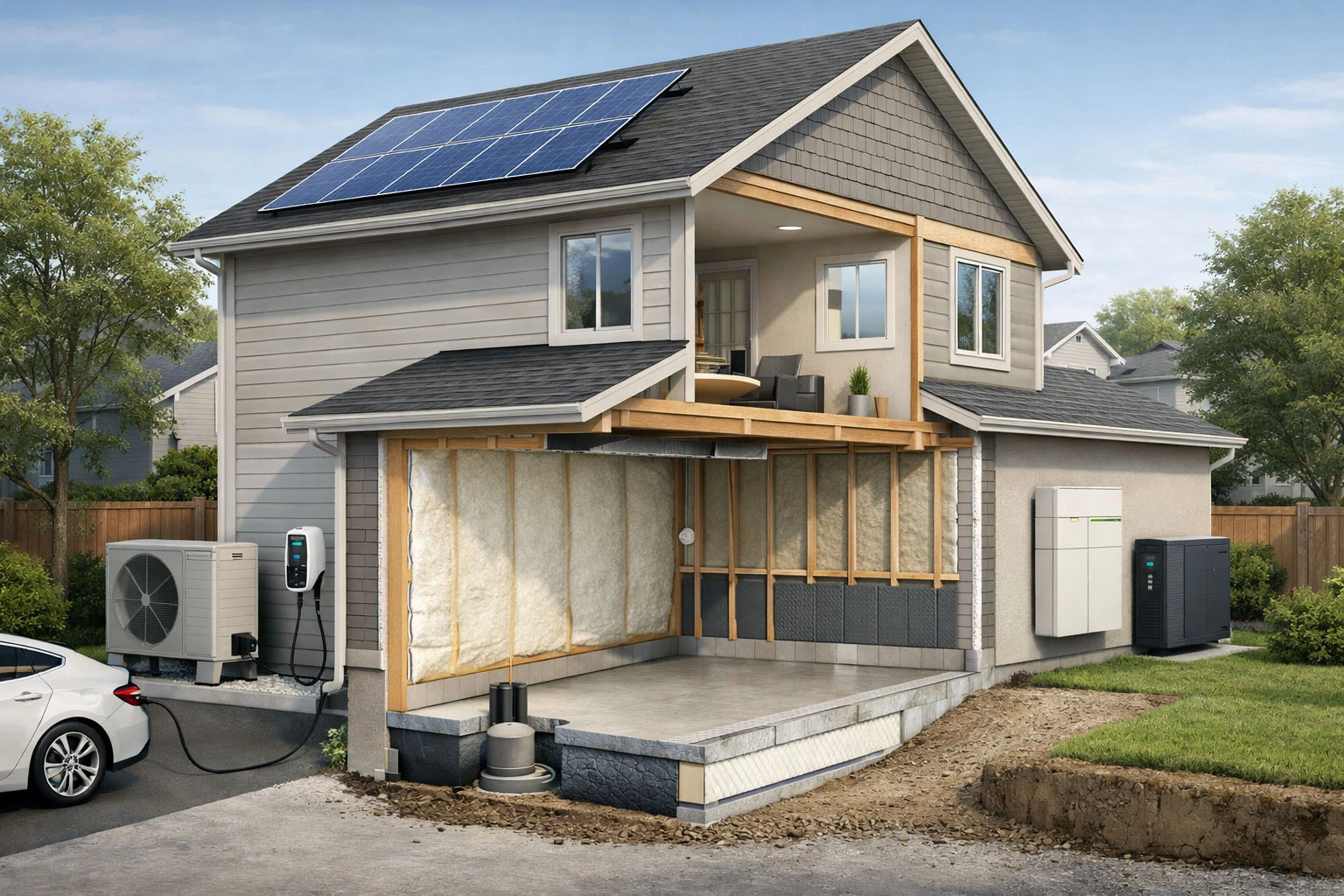
Common approach:
- Foam board against concrete
- Framed wall in front
- Optional batt insulation in cavities
3. Mineral Wool (Rockwool)
Best for: Interior framed walls where moisture is managed
Mineral wool is moisture-resistant and fire-resistant.
Pros:
- Does not absorb water easily
- Mold-resistant
- Easy to install in stud cavities
Cons:
- Not an air barrier
- Needs a proper vapor control strategy
4. Fiberglass Batts (Use with Caution)
Best for: Budget projects (with proper detailing)
Fiberglass is common but often misused in basements.
Pros:
- Low cost
- Widely available
Cons:
- Poor moisture resistance
- Can trap moisture against concrete
- Loses effectiveness if damp
Important:
Fiberglass should never be installed directly against foundation walls without a moisture barrier strategy.
Cost Considerations in Ontario
Basement insulation costs vary depending on size, method, and existing conditions.
Typical Cost Ranges (Ontario)
- Spray foam: $4–$8 per sq. ft.
- Rigid foam + framing: $3–$6 per sq. ft.
- Batt insulation systems: $2–$4 per sq. ft.
Factors that affect cost:
- Basement size and layout
- Finished vs unfinished space
- Moisture issues (repairs may be needed first)
- Accessibility
While spray foam has the highest upfront cost, it often delivers the best long-term value due to energy savings and durability.
Energy Savings and ROI
Basement insulation is not just about comfort it directly impacts your energy use.
Potential Benefits:
- 10–30% reduction in heating energy (depending on current condition)
- More stable indoor temperatures
- Reduced strain on HVAC systems
Payback Period
In Ontario, many homeowners see a return on investment within:
- 5–10 years (typical range)
Faster if:
- The basement was previously uninsulated
- Combined with air sealing upgrades
- Paired with heat pump installation
Common Basement Insulation Mistakes
This is where many projects go wrong.
1. Insulating Without Addressing Moisture
If there’s water intrusion or high humidity, insulation alone won’t fix it. It can make things worse.
2. Using Fiberglass Against Concrete
This traps moisture and can lead to mold and odor issues.
3. Skipping Rim Joists
Rim joists are one of the biggest sources of air leakage. Ignoring them reduces overall effectiveness.
4. Poor Air Sealing
Even high-quality insulation fails if air leaks are not sealed.
5. Overbuilding Without a Plan
Adding insulation without considering ventilation, HVAC, and overall home performance can create imbalances.
Step-by-Step: How to Choose the Right Approach
If you’re unsure where to start, follow this simple framework.
Step 1: Assess Your Basement
- Is it finished or unfinished?
- Any signs of moisture or leaks?
- How cold does it feel in winter?
Step 2: Define Your Goal
- Comfort improvement
- Energy savings
- Finishing the basement
- Preparing for future upgrades
Step 3: Choose Insulation Type
- High performance: Spray foam
- Balanced cost/performance: Rigid foam + batt
- Budget: Batt (with proper detailing only)
Step 4: Include Air Sealing
- Rim joists
- Penetrations
- Joints and seams
Step 5: Plan for Moisture Control
- Vapor barriers (as needed)
- Drainage improvements
- Dehumidification
Step 6: Think System-Wide
Basement insulation works best when combined with:
- Attic insulation
- Air sealing
- Efficient heating systems
Rebates and Incentives in Ontario
Canadian homeowners may be eligible for energy efficiency incentives when upgrading insulation.
Programs often include:
- Federal initiatives (e.g., Greener Homes programs)
- Provincial programs (Ontario-specific energy incentives)
- Utility-based rebates
While exact amounts vary and change over time, basement insulation is commonly included as part of whole-home upgrade packages.
Important note:
Many programs require an energy audit before and after upgrades.
When Basement Insulation Makes Sense and When It Doesn’t
It Makes Sense If:
- Your basement is cold or underused
- Energy bills are higher than expected
- You’re planning to finish the basement
- Your home lacks modern insulation
It May Not Be a Priority If:
- You already have high-performance insulation
- The basement is rarely used and isolated
- Major moisture issues haven’t been resolved yet
In some cases, addressing attic insulation or air sealing first may deliver faster results.
How Basement Insulation Fits Into a Net Zero Roadmap
If your long-term goal is a high-performance or Net Zero home, basement insulation is a foundational step.
Here’s how it fits:
- Reduce heat loss (insulation + air sealing)
- Upgrade heating (heat pump systems)
- Add renewable energy (solar panels)
- Optimize energy use (smart controls, storage)
Without proper insulation, even the most efficient heating systems will struggle.
Think of basement insulation as part of the building envelope the layer that separates indoor comfort from outdoor conditions.
Conclusion: A Practical Upgrade With Long-Term Impact
Basement insulation is not the most visible upgrade, but it’s one of the most impactful.
Done right, it improves comfort immediately. Over time, it reduces energy costs and supports future upgrades like heat pumps and solar systems.
The key is not just adding insulation but choosing the right system for your home, climate, and goals.
Ready to Take the Next Step?
Every home is different. The best insulation approach depends on your current setup, budget, and long-term plans.
Book a consultation with Net Zero Homes Consulting to get a customized upgrade roadmap tailored to your home and energy goals.