When Comfort Doesn’t Feel Right
You’ve done your research. You’ve invested thousands into a new heat pump to lower your energy bills, reduce your carbon footprint, and future-proof your home. Installation day comes and goes. Everything seems fine until winter arrives.
Rooms feel unevenly heated. Your energy bill is higher than expected. The system runs constantly but never quite reaches the temperature you set. You start to wonder: Was this worth it?
This scenario is more common than many homeowners in Ontario realize. Heat pumps are highly efficient but only when they’re installed correctly. Unlike traditional furnaces, they are far less forgiving of design or installation mistakes.
This article breaks down exactly what happens when a heat pump is installed incorrectly, how it impacts your comfort and costs, and how to avoid these issues in the first place.
Understanding the Problem: Why Installation Matters So Much
A heat pump doesn’t just “plug and play.” It’s part of a larger system that includes:
- Your home’s insulation and air sealing
- Ductwork or distribution system
- Electrical capacity
- Climate conditions
- System sizing and placement
If any one of these elements is misjudged or poorly executed, performance suffers.
Common Installation Errors
Incorrect installation usually falls into a few key categories:
1. Improper Sizing
Bigger is not better and smaller is not cheaper in the long run.
- Oversized systems cycle on and off too frequently, reducing efficiency and lifespan.
- Undersized systems run constantly, struggling to keep up in cold Ontario winters.
2. Poor Placement of Outdoor Unit
The outdoor unit must be positioned with care:
- Too close to walls → restricted airflow
- Installed in snow-prone areas → blocked operation
- Improper elevation → drainage and freezing issues
3. Faulty Refrigerant Charge
Too much or too little refrigerant disrupts heat transfer efficiency and can damage the compressor over time.
4. Ductwork Problems
Existing ducts designed for a furnace may not work well with a heat pump:
- Airflow may be insufficient
- Leaks reduce efficiency
- Poor balancing leads to uneven temperatures
5. Lack of Home Assessment
Skipping a proper heat load calculation is one of the biggest mistakes. Without it, everything else becomes guesswork.
The Real Consequences of a Bad Installation
When a heat pump is installed incorrectly, the issues aren’t always obvious right away. But over time, they show up in ways that directly affect your comfort and wallet.
1. Higher Energy Bills
A poorly installed system often uses more electricity than expected.
Instead of achieving efficient operation, it may:
- Run longer cycles
- Use backup heating more often
- Operate outside optimal efficiency ranges
For Ontario homeowners, where electricity costs are a concern, this can erase expected savings.
2. Inconsistent Comfort
You may notice:
- Hot and cold spots between rooms
- Difficulty maintaining set temperature
- Drafty or stuffy conditions
This is often caused by airflow issues or incorrect sizing.
3. Increased Wear and Tear
Improper installation puts stress on key components:
- Compressors wear out faster
- Fans and motors overwork
- System lifespan shortens
What should last 15–20 years might fail much earlier.
4. Noise and Operational Issues
A properly installed heat pump is quiet. A poorly installed one may:
- Vibrate excessively
- Produce unusual noises
- Cycle frequently
These are early warning signs that something isn’t right.
5. Reduced Cold-Weather Performance
In colder climates like Ontario, proper setup is critical.
A bad installation can result in:
- Over-reliance on backup electric heating
- Reduced efficiency in sub-zero temperatures
- Failure to meet heating demand during cold snaps
Cost Considerations: Fixing Mistakes Isn’t Cheap
Correcting a bad installation can be costly and frustrating.
Potential Costs Include:
- Re-sizing or replacing the unit
- Ductwork modifications or sealing
- Reinstalling outdoor components
- Additional electrical upgrades
In many cases, homeowners end up paying twice: once for the original installation, and again to fix it.
Energy Savings and ROI: How Installation Impacts Payback
Heat pumps are often promoted for their long-term savings but those savings depend heavily on proper installation.
With Correct Installation:
- Lower energy bills
- Predictable performance
- Strong return on investment
With Incorrect Installation:
- Minimal or no savings
- Higher operating costs
- Extended payback period
In some cases, homeowners may not see a return at all.
Common Mistakes Homeowners Make
Even with good intentions, homeowners sometimes contribute to poor outcomes.
Watch out for these pitfalls:
- Choosing the lowest quote without evaluating expertise
- Skipping a detailed home energy assessment
- Assuming all contractors have equal experience with heat pumps
- Not asking about cold-climate performance
- Ignoring ductwork limitations
A heat pump is not just an appliance it’s part of a system.
Step-by-Step: How to Get It Right
If you’re considering a heat pump, here’s how to avoid costly mistakes.
Step 1: Start with a Home Energy Assessment
This identifies:
- Heat loss areas
- Insulation gaps
- Air leakage
It ensures your system is sized correctly.
Step 2: Demand Proper Load Calculations
Ask your contractor for:
- Heat loss and heat gain calculations
- Justification for system size
Avoid rules of thumb or guesswork.
Step 3: Evaluate Ductwork (If Applicable)
Make sure your system can handle:
- Required airflow
- Proper distribution
Upgrades may be necessary.
Step 4: Choose Cold-Climate Equipment
Not all heat pumps are designed for Canadian winters. Ensure the system is rated for low temperatures.
Step 5: Verify Installation Details
Before installation begins, confirm:
- Outdoor unit placement
- Drainage plan
- Electrical requirements
Step 6: Commissioning and Testing
A professional installation includes:
- System testing
- Airflow balancing
- Refrigerant verification
This step is often overlooked but it’s critical.
Rebates and Incentives in Ontario
Ontario homeowners can access various programs that support energy-efficient upgrades, including heat pumps.
While specific amounts change over time, programs typically require:
- Certified installation
- Pre- and post-upgrade assessments
- Approved equipment
Improper installation may disqualify you from rebates or lead to clawbacks.
When a Heat Pump Makes Sense (And When It Doesn’t)
It Makes Sense If:
- Your home is reasonably well insulated
- You’re planning long-term energy savings
- You want to reduce carbon emissions
- You’re upgrading an aging heating system
It May Not Be Ideal If:
- Your home has significant insulation or air leakage issues
- You’re not ready to invest in system upgrades
- You expect instant savings without addressing underlying problems
In some cases, improving insulation and air sealing first delivers better results.
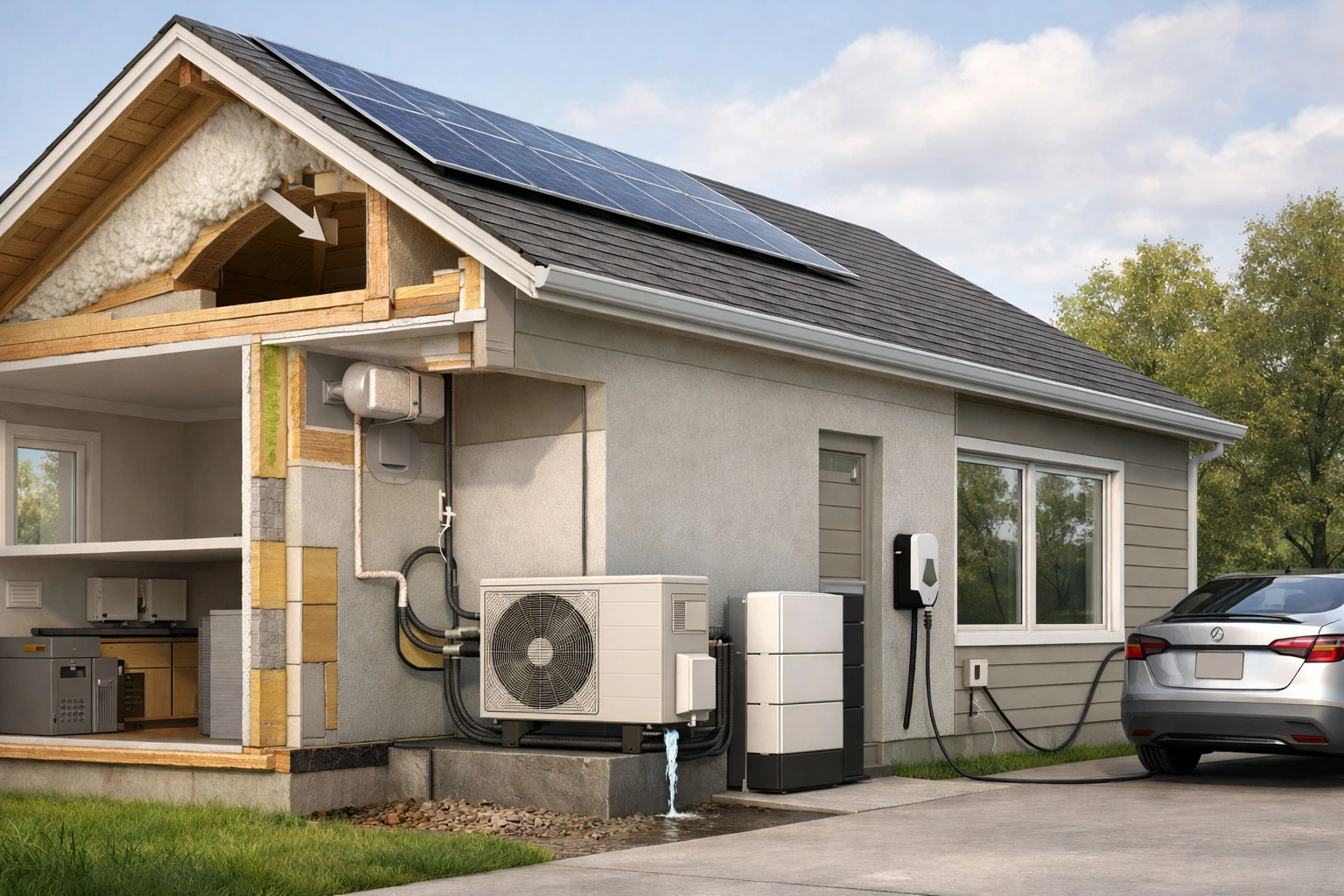
Heat Pumps and the Net Zero Roadmap
A heat pump is often a key step toward a Net Zero home but it’s not the first step.
A typical roadmap includes:
- Air sealing and insulation upgrades
- High-performance windows (if needed)
- Heat pump installation
- Solar panel integration
- Battery storage (optional)
If installed correctly, a heat pump becomes the backbone of an efficient, low-carbon home.
If installed incorrectly, it becomes a costly obstacle.
Conclusion: Installation Is Everything
A heat pump can transform your home’s comfort and energy performance but only if it’s installed properly.
The difference between a high-performing system and a disappointing one often comes down to:
- Proper design
- Skilled installation
- Whole-home thinking
Rushing the process or cutting corners can undo the very benefits you’re investing in.
Ready to Get It Right?
If you’re considering a heat pump or want to make sure your current system is performing as it should professional guidance makes all the difference.
Book a consultation with Net Zero Homes Consulting to get a customized upgrade roadmap tailored to your home, your climate, and your long-term energy goals.