When the Power Goes Out
It usually happens at the worst time. A winter storm rolls through Southern Ontario overnight. You wake up to a cold house, no lights, and a silent furnace. The fridge is warming, the sump pump isn’t running, and you’re checking your phone battery like it’s a lifeline.
For many Canadian homeowners, power outages are no longer rare events. Aging grid infrastructure, extreme weather, and rising electricity demand are making resilience a priority not a luxury.
That’s where home battery backup systems come in. They offer more than just emergency power. When designed properly, they can reduce energy bills, improve comfort, and support a long-term path toward a Net Zero home.
This guide breaks down what homeowners in Ontario (and across Canada) need to know without overcomplicating the decision.
What Is a Home Battery Backup System?
At its core, a home battery backup system stores electricity for later use. Think of it as a reserve tank for your home’s power supply.
How it works
A typical system includes:
- Battery storage unit (usually lithium-ion)
- Inverter/charger (converts electricity between AC and DC)
- Critical load panel (powers essential circuits during outages)
- Optional: Solar panels for renewable charging
When the grid is up, the battery can:
- Store excess solar energy
- Charge during off-peak electricity rates
- Sit ready as backup
When the grid goes down:
- The system automatically switches over
- Essential circuits continue running (lights, fridge, internet, furnace fan, sump pump)
This is why many homeowners refer to it as a “solar backup system” even though batteries can function with or without solar panels.
Types of Energy Storage Solutions for Homes
Not all systems are built the same. Choosing the right setup depends on your goals.
1. Backup-only systems
- Designed purely for outages
- Lower upfront cost
- Limited daily savings potential
2. Solar + battery systems
- Store excess solar production
- Reduce grid reliance
- Provide backup during outages
3. Time-of-use optimization systems
- Charge when electricity is cheap
- Discharge during peak pricing
- Ideal in provinces with variable rates like Ontario
Most modern installations combine all three functions to some degree.
Cost of Home Battery Backup in Canada
Let’s talk numbers because this is where most homeowners hesitate.
Typical price range (Ontario context)
- Battery system only: $10,000 – $18,000
- Solar + battery system: $25,000 – $45,000+
- Installation & electrical upgrades: $3,000 – $8,000
Costs vary depending on:
- Battery capacity (kWh)
- Brand and warranty
- Home electrical complexity
- Backup coverage (partial vs whole-home)
What affects solar backup system cost in Ontario?
- Older homes may require panel upgrades
- Larger homes need more storage
- Adding EV chargers or heat pumps increases demand
While the upfront investment is significant, the value isn’t just financial it’s also about reliability and control.
Energy Savings and ROI: What to Expect
A common misconception is that batteries alone will dramatically cut electricity bills. That’s not always true.
Where savings come from
- Time-of-use shifting
- Solar self-consumption (using your own generated power instead of exporting it)
- Avoiding peak electricity rates
What batteries don’t do well
- They don’t generate energy (without solar)
- They won’t eliminate your hydro bill
Realistic ROI outlook
- Without solar: longer payback (10–15+ years)
- With solar: improved ROI (7–12 years depending on usage)
For many homeowners, the decision is not purely financial. It’s about:
- Peace of mind
- Protection from outages
- Future energy flexibility
Common Mistakes Homeowners Make
This is where projects often go wrong not because of the technology, but because of planning.
1. Oversizing or undersizing the battery
Too small, and it won’t last through outages. Too large, and you overpay for unused capacity.
2. Trying to power the entire home
Whole-home backup sounds appealing, but it’s expensive and often unnecessary. Prioritizing critical loads is usually smarter.
3. Ignoring heating systems
In Ontario winters, your heating system matters most. If your furnace or heat pump isn’t connected to the backup system, the battery loses much of its value.
4. Skipping electrical upgrades
Older panels or wiring can limit what your system can safely support.
5. Not planning for future upgrades
A battery installed today should still work if you add:
- Solar panels later
- An EV charger
- A heat pump
Step-by-Step: How to Choose the Right System
If you’re feeling overwhelmed, you’re not alone. Here’s a practical way to approach it.
Step 1: Define your goal
Ask yourself:
- Is this for outages, savings, or both?
- How important is energy independence to me?
Step 2: Identify critical loads
List what must stay on during an outage:
- Fridge
- Internet/router
- Furnace fan or boiler
- Sump pump
- Essential lighting
Step 3: Evaluate your current energy use
Look at your hydro bills:
- Monthly kWh usage
- Peak vs off-peak patterns
Step 4: Decide on solar integration
Even if you don’t install solar now, choose a battery that supports it later.
Step 5: Get a professional assessment
A proper load calculation and electrical inspection are essential. This is not a DIY-friendly upgrade.
Rebates and Incentives in Ontario and Canada
Programs change frequently, but homeowners should be aware of available support.
Common types of incentives
- Federal energy efficiency programs
- Provincial rebates for solar and electrification
- Utility-based incentives
- Financing programs with low interest rates
While battery-specific rebates are less common than solar incentives, bundled systems (solar + storage) often qualify for broader programs.
Working with an experienced consultant helps identify what’s available at the time of installation.
When a Home Battery Backup Makes Sense
This upgrade is not for everyone. It works best in certain scenarios.
Good fit for:
- Homes with frequent power outages
- Rural or semi-rural properties
- Homeowners installing solar panels
- Families working from home
- Homes with sump pumps or critical medical equipment
Less ideal for:
- Homes with very low electricity usage
- Urban areas with highly reliable grids
- Homeowners focused strictly on short-term ROI
- Properties planning major renovations soon (better to bundle upgrades)
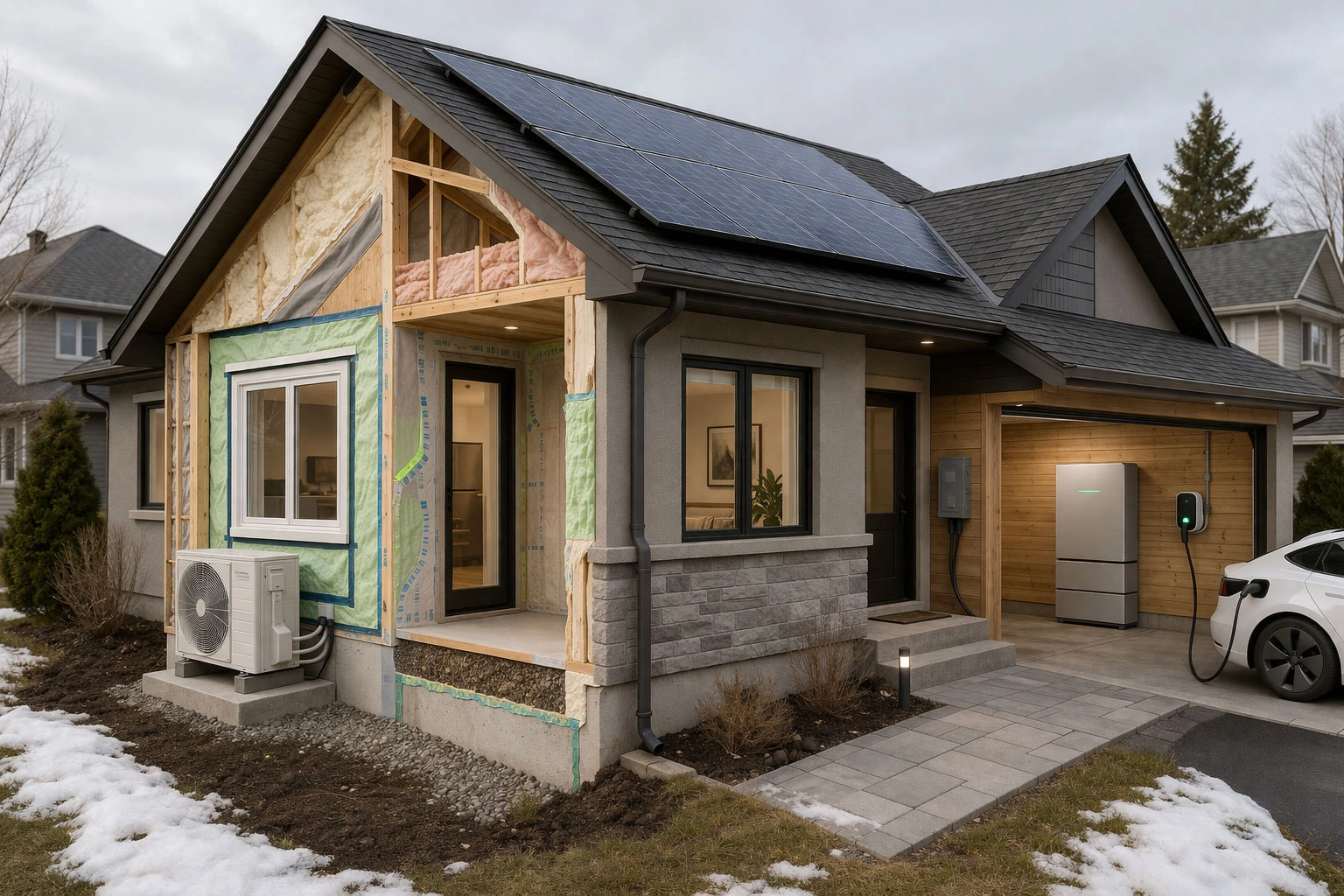
How It Fits Into a Net Zero Roadmap
A home battery system is rarely the first step but it’s an important one.
Typical upgrade sequence:
- Air sealing and insulation improvements
- High-efficiency HVAC (heat pump)
- Solar panel installation
- Battery storage integration
Why this order?
- You reduce energy demand first
- Then generate clean energy
- Then store and optimize it
Batteries act as the “control center” of a Net Zero-ready home helping you use energy more intelligently.
Real-World Example
Consider a homeowner in Ontario with:
- A 2,000 sq ft detached home
- A sump pump and gas furnace
- Frequent winter outages
They install:
- A mid-sized battery system (10–13 kWh)
- Backup for critical circuits only
- Solar panels one year later
Result:
- Outages no longer disrupt daily life
- Reduced reliance on peak electricity rates
- Gradual path toward energy independence
Not perfect, not instant but practical and effective.
Final Thoughts
Home battery backup systems in Canada are no longer niche. They’re becoming part of a broader shift toward smarter, more resilient homes.
Still, they require careful planning. The right system depends on your home, your goals, and your long-term energy strategy.
If you approach it thoughtfully, a battery system can do more than keep the lights on it can future proof your home in a changing energy landscape.
Ready to Plan Your Upgrade?
If you’re considering a home battery backup or exploring energy storage solutions, the best next step is a tailored plan.
Book a consultation with Net Zero Homes Consulting to get a customized roadmap based on your home, budget, and long-term goals.