It’s the middle of a cold January morning in Canada. Your furnace has been running almost non-stop overnight. You glance at your thermostat, then at your rising utility bills, and wonder if there’s a better way to heat your home without sacrificing comfort.
You’ve likely heard about heat pumps efficient, electric systems that can both heat and cool your home. But one question keeps coming up: what does a heat pump actually cost in Canada and is it worth it?
This guide breaks it down clearly. No vague estimates. No hype. Just practical insight to help you decide whether a heat pump fits your home, your budget, and your long-term plans.
What Is a Heat Pump (and Why It Matters in Canada)?
A heat pump doesn’t generate heat the way a furnace does. Instead, it transfers heat pulling it from the outside air (even in cold temperatures) and moving it indoors. In summer, it reverses the process to cool your home.
Modern cold climate systems are specifically designed for Canadian winters. They operate efficiently even when temperatures drop well below freezing.
For Canadian homeowners, this matters for three reasons:
- Rising energy costs
- Increasing focus on electrification
- Long-term home value and efficiency
Heat Pump Cost in Canada: What to Expect in 2026
When homeowners search for heat pump cost in Canada, they often get a wide range of numbers. That’s because pricing depends heavily on the type of system and the condition of your home.
Here’s a realistic breakdown for 2026:
1. Ductless Mini-Split Systems
Best for: Homes without ductwork, additions, or targeted upgrades
- Cost range: $4,000 – $12,000 per zone
- Typical total: $8,000 – $18,000
These systems use wall-mounted indoor units. They’re flexible and relatively quick to install, but covering an entire home can require multiple units.
2. Ducted Cold Climate Heat Pumps
Best for: Homes with existing ductwork
- Cost range: $12,000 – $20,000
- With upgrades: $18,000 – $30,000+
This is the most common full-home solution. It replaces or works alongside your furnace and uses your existing air distribution system.
3. Hybrid (Dual-Fuel) Systems
Best for: Homes keeping a gas furnace as backup
- Cost range: $15,000 – $25,000
A hybrid system uses a heat pump for most of the year and switches to a furnace during extreme cold. It balances efficiency with reliability.
4. Ground Source (Geothermal)
Best for: Long-term homeowners with suitable land
- Cost range: $30,000 – $60,000+
These systems are highly efficient but involve significant upfront investment due to ground loop installation.
What Affects the Final Price?
Two homes on the same street can have very different installation costs. Key factors include:
- Home size and layout
- Insulation quality
- Existing HVAC system
- Electrical capacity (panel upgrades may be required)
- Installation complexity
- Brand and system efficiency rating
A poorly insulated home, for example, may need a larger system or better yet, envelope upgrades before installation.
Cold Climate Heat Pump Price: Why It’s Higher (and Worth It)
Not all heat pumps are equal. In Ontario, you need a system rated for cold climates.
These units:
- Maintain capacity at lower temperatures
- Use advanced compressors and controls
- Reduce reliance on backup heating
This is why the cold climate heat pump price is higher than standard models. But the trade-off is consistent comfort and lower operating costs during winter.
Energy Savings and Return on Investment
Let’s talk about the part homeowners care about most: savings.
Monthly Energy Savings
Compared to electric resistance heating or oil systems, heat pumps can significantly reduce energy use. Compared to natural gas, savings depend on:
- Electricity rates
- Gas prices
- System efficiency
- Home insulation
In many Ontario homes, switching from older systems can lead to noticeable monthly reductions, especially when paired with envelope improvements.
ROI Timeline
Typical payback periods range from:
- 5–10 years (with rebates and high energy usage)
- 10–15 years (without major incentives)
But ROI isn’t just financial. It includes:
- Improved comfort (more even temperatures)
- Air conditioning included
- Reduced carbon footprint
- Increased home resale appeal
Heat Pump Rebates in Ontario
Rebates play a major role in reducing upfront costs.
While programs change over time, Ontario homeowners can typically access:
- Federal energy efficiency programs
- Provincial incentives
- Utility-based rebates
These often require:
- Pre- and post-installation energy audits
- Approved equipment
- Certified installers
When researching heat pump rebate Ontario, focus on eligibility rather than headline numbers. The actual rebate depends on your home’s current efficiency and the improvements made.
Common Mistakes Homeowners Make
Many homeowners jump into heat pump installations without a clear plan. Here are the most common pitfalls:
1. Skipping Insulation Upgrades
Installing a high-efficiency system in a leaky home limits performance. Heat pumps work best in well-sealed, well-insulated spaces.
2. Choosing the Wrong System Size
Bigger isn’t always better. Oversized systems cycle inefficiently, while undersized ones struggle in cold weather.
3. Ignoring Electrical Capacity
Some homes require panel upgrades to handle a heat pump system. This can add unexpected costs if not planned early.
4. Focusing Only on Upfront Cost
The cheapest option often leads to higher operating costs or comfort issues later.
5. Not Considering Hybrid Options
In some Ontario homes, especially older ones, a dual-fuel system is a more practical transition than going fully electric immediately.
Step-by-Step: How to Decide If a Heat Pump Is Right for You
If you’re feeling overwhelmed, break the decision into manageable steps:
Step 1: Assess Your Home
- How old is your home?
- How well insulated is it?
- Are there drafts or uneven temperatures?
Step 2: Review Your Current Energy Use
Look at your past 12 months of energy bills. This gives a baseline for potential savings.
Step 3: Get an Energy Audit
This is often required for rebates and provides a clear upgrade roadmap.
Step 4: Explore System Options
Compare:
- Ducted vs. ductless
- Full electric vs. hybrid
- Standard vs. cold climate systems
Step 5: Plan for Electrical and Structural Needs
Confirm if your panel, ductwork, or layout needs upgrades.
Step 6: Factor in Rebates and Incentives
Include these in your financial planning, but don’t rely solely on them.
Step 7: Think Long-Term
Ask yourself:
- How long will I stay in this home?
- Am I planning other upgrades (windows, insulation, solar)?
When a Heat Pump Makes Sense
A heat pump is a strong choice if:
- Your current system is aging or inefficient
- You want to reduce reliance on fossil fuels
- You plan to stay in your home long-term
- Your home has (or will have) good insulation
- You want both heating and cooling in one system
When It May Not Be the Right Fit (Yet)
There are situations where a heat pump may not be ideal immediately:
- Poor insulation with no upgrade plans
- Limited electrical capacity with high upgrade costs
- Very short-term ownership plans
- Recently installed high-efficiency furnace
In these cases, a phased approach starting with insulation or hybrid systems can make more sense.
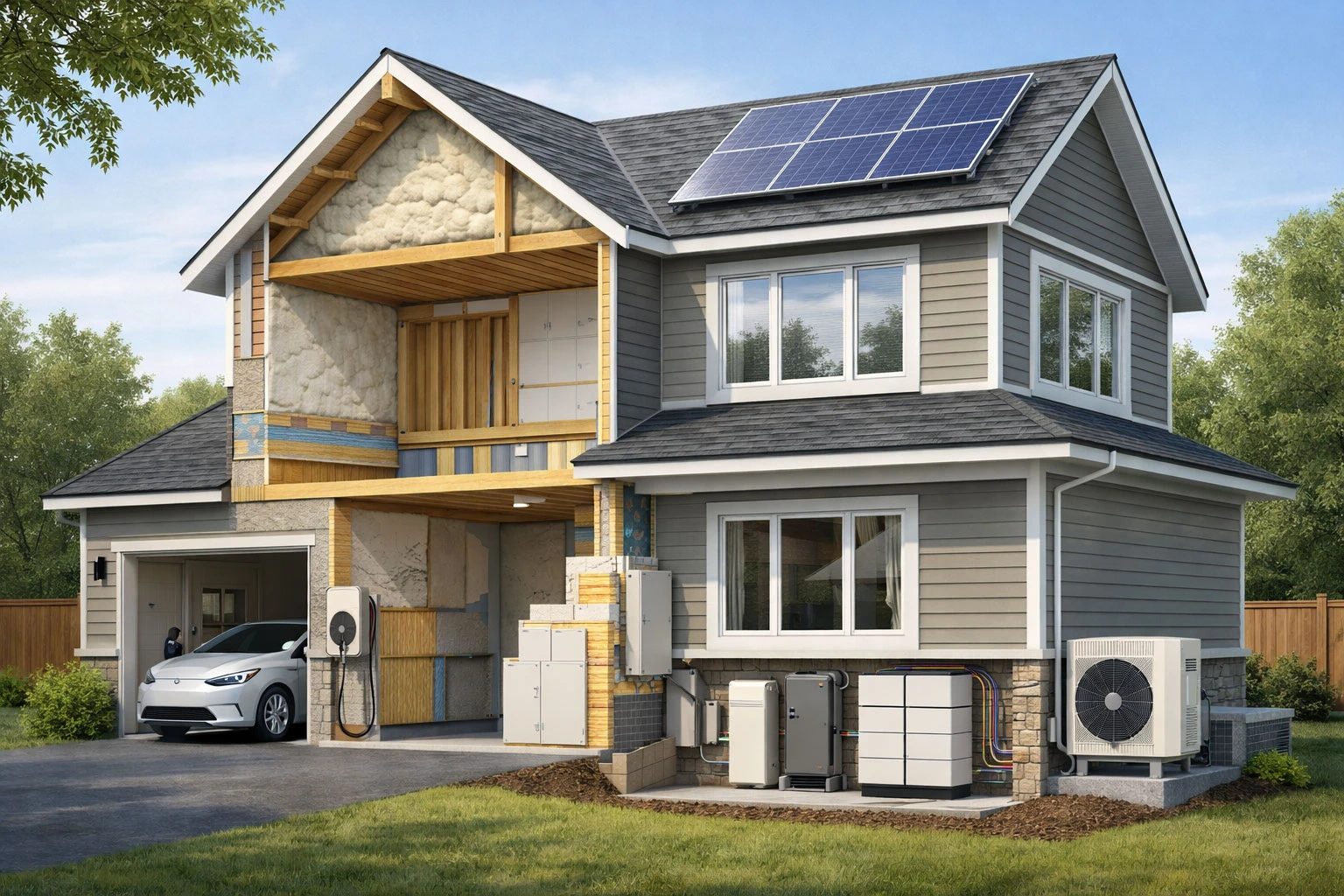
How Heat Pumps Fit Into a Net Zero Roadmap
Heat pumps are often a cornerstone of a Net Zero strategy.
A typical progression looks like this:
- Air sealing and insulation upgrades
- High-performance windows (if needed)
- Heat pump installation
- Solar panel integration
- Battery storage and EV charging
The goal is to reduce energy demand first, then electrify efficiently.
Installing a heat pump without improving the building envelope is like upgrading your engine without fixing the leaks in your fuel tank.
Conclusion: Making a Confident, Informed Decision
Understanding heat pump cost Ontario isn’t just about the price tag. It’s about how that investment fits into your home, your comfort, and your long-term plans.
For some homeowners, a heat pump is an immediate upgrade. For others, it’s part of a larger roadmap that starts with insulation or electrical improvements.
The key is not to rush the decision. Take the time to assess your home properly, understand your options, and plan strategically.
Ready to Take the Next Step?
If you want a clear, personalized plan not just generic advice you can book a consultation with Net Zero Homes Consulting.
We’ll help you understand what makes sense for your specific home, map out the right upgrades, and ensure your investment delivers real, long-term value.