
Why Many Ontario Homeowners Start Thinking About Windows
It usually starts during winter.
You’re sitting near the living room window on a cold January evening in Ontario. The thermostat says 22°C, but the room still feels chilly. When you place your hand near the glass, you feel a subtle draft.
Many homeowners assume the furnace is the problem. Others turn up the heat and accept the higher utility bill.
But often, the real issue is the windows.
Older or inefficient windows allow heat to escape during winter and let excess heat enter during summer. In Canada’s climate, that inefficiency adds up quickly. This is why more homeowners are researching energy efficient windows cost Ontario and trying to understand whether replacing their windows is worth the investment.
This guide breaks down the real costs, energy savings, and decision-making process so you can evaluate whether upgrading your windows makes sense for your home.
What Makes a Window “Energy Efficient”?
Energy-efficient windows are designed to reduce heat transfer between the inside and outside of your home. In colder climates like Ontario, this primarily means keeping heat inside during winter.
Several components work together to improve performance:
Multiple Panes of Glass
Modern windows typically use two or three panes of glass.
Double-pane windows have two layers of glass with gas in between.
Triple-pane windows add a third layer for improved insulation.
Triple pane windows price is higher, but they often perform better in colder climates.
Gas Fills
The space between glass panes is usually filled with argon or krypton gas. These gases slow heat transfer better than air.
Low-E Coatings
Low-emissivity (Low-E) coatings reflect heat back into the home during winter and help block solar heat during summer.
Insulated Frames
Frames made from vinyl, fiberglass, or composite materials help prevent thermal bridging.
Together, these features significantly reduce heat loss compared to older single-pane or early double-pane windows.
Energy Efficient Windows Cost Ontario (2026)
One of the biggest questions homeowners ask is simple:
How much do new windows actually cost in Ontario?
The short answer: it varies widely depending on window type, size, installation complexity, and materials.
Average Window Replacement Cost Canada
Typical costs for homeowners in Ontario:
Standard Double-Pane Window Installed
$800 – $1,500 per window
Triple-Pane Energy Efficient Window Installed
$1,200 – $2,200 per window
Large Picture Windows or Custom Sizes
$2,000 – $4,000+
These ranges include installation but not major structural changes.
Full Home Window Replacement
For a typical Canadian home with 10–15 windows:
Lower range: $12,000 – $18,000
Mid-range: $18,000 – $30,000
Higher-end upgrades: $30,000+
These numbers explain why homeowners often hesitate before committing to a full replacement project.
However, cost alone doesn’t tell the full story.
How Much Energy Can You Actually Save?
Windows are one of the largest sources of heat loss in older homes.
According to building science estimates, 20–30% of a home’s heating energy can be lost through inefficient windows and doors.
But replacing windows alone rarely cuts energy bills by that full percentage.
More realistic expectations for Ontario homeowners:
5–15% reduction in heating costs
Improved indoor comfort
Fewer drafts
Better temperature consistency
For example:
A homeowner in Ottawa spending $2,400 per year on heating might save:
$120 – $360 annually
Energy savings alone rarely justify the project purely from a financial perspective. Comfort, durability, and home value also play important roles.
Triple Pane Windows Price: Are They Worth It?
Triple-pane windows are becoming increasingly common in Canada because of our colder climate.
Advantages
Better insulation (lower U-value)
Reduced condensation
Improved sound insulation
Better comfort near windows
Downsides
Higher upfront cost
Heavier frames
Slightly reduced solar heat gain
In most Ontario homes, the price difference between double and triple pane windows is typically:
$200–$400 more per window
For north-facing windows or very exposed homes, triple pane is often worth the upgrade.
Common Mistakes Homeowners Make When Replacing Windows
Window replacement projects can go wrong when homeowners focus on the wrong factors.
1. Replacing Windows Before Air Sealing
Air leaks in walls, attics, and basements can cause larger heat losses than windows.
Upgrading windows before addressing air leakage sometimes leads to disappointing energy savings.
2. Choosing Windows Based Only on Price
The lowest quote often means compromises in:
Installation quality
Frame durability
Glass performance
Poor installation can negate the efficiency benefits of a good window.
3. Replacing All Windows at Once Without Evaluation
Some windows in the home may still perform reasonably well.
Strategic replacement can sometimes make more sense than full replacement.
4. Ignoring Orientation
South-facing windows can actually provide passive solar heat in winter.
Replacing them with overly restrictive glazing may reduce that benefit.
How to Decide if Your Windows Need Replacement
Not every home needs new windows immediately.
Here are signs it may be time to consider an upgrade:
Clear Indicators
Condensation between glass panes
Noticeable drafts
Difficulty opening or closing
Rotting or damaged frames
Single-pane windows in older homes
Less Obvious Indicators
Cold spots near windows
High heating bills despite insulation upgrades
Noise issues from outside
If several of these apply, it may be worth investigating replacement options.
A Step-by-Step Approach to Making the Right Decision
For many homeowners, the key challenge isn’t knowing what to upgrade it’s knowing when to upgrade it.
A structured approach helps avoid expensive mistakes.
Step 1: Start With an Energy Assessment
A professional home energy audit identifies:
This helps prioritize upgrades.
Step 2: Address Air Sealing First
Sealing attic leaks, rim joists, and penetrations often provides the fastest return on investment.
Many homeowners see immediate comfort improvements.
Step 3: Evaluate Window Condition
Determine whether windows need:
Full replacement
Glass unit replacement
Weatherstripping upgrades
Not all windows require full replacement.
Step 4: Compare Double vs Triple Pane Options
In Ontario’s climate, triple pane windows are often recommended, especially for:
Bedrooms
North-facing walls
Homes exposed to wind
Step 5: Plan Installation Timing
Window replacement can happen year-round, but spring and fall often offer the most comfortable installation conditions.
Rebates and Incentives in Ontario
Government programs sometimes help offset the window replacement cost Canada homeowners face.
Programs vary over time but may include:
These programs typically require:
Certified installers
Approved window performance ratings
Because programs change frequently, it’s best to confirm current eligibility before starting a project.
When Window Replacement Makes Sense
Window upgrades are most beneficial when several factors align.
Ideal Situations
Windows are 20–30+ years old
Single-pane or early double-pane units
Frames are damaged or rotting
Major renovations are already planned
Comfort problems are significant
In these cases, replacement can deliver both comfort and efficiency improvements.
When It Might Not Be the Best Investment
In some homes, window replacement provides limited value.
Examples include:
Windows installed within the past 10–15 years
Minor draft issues that can be sealed
Homes with larger insulation problems
Limited renovation budgets
In these cases, insulation upgrades or air sealing may provide better returns.
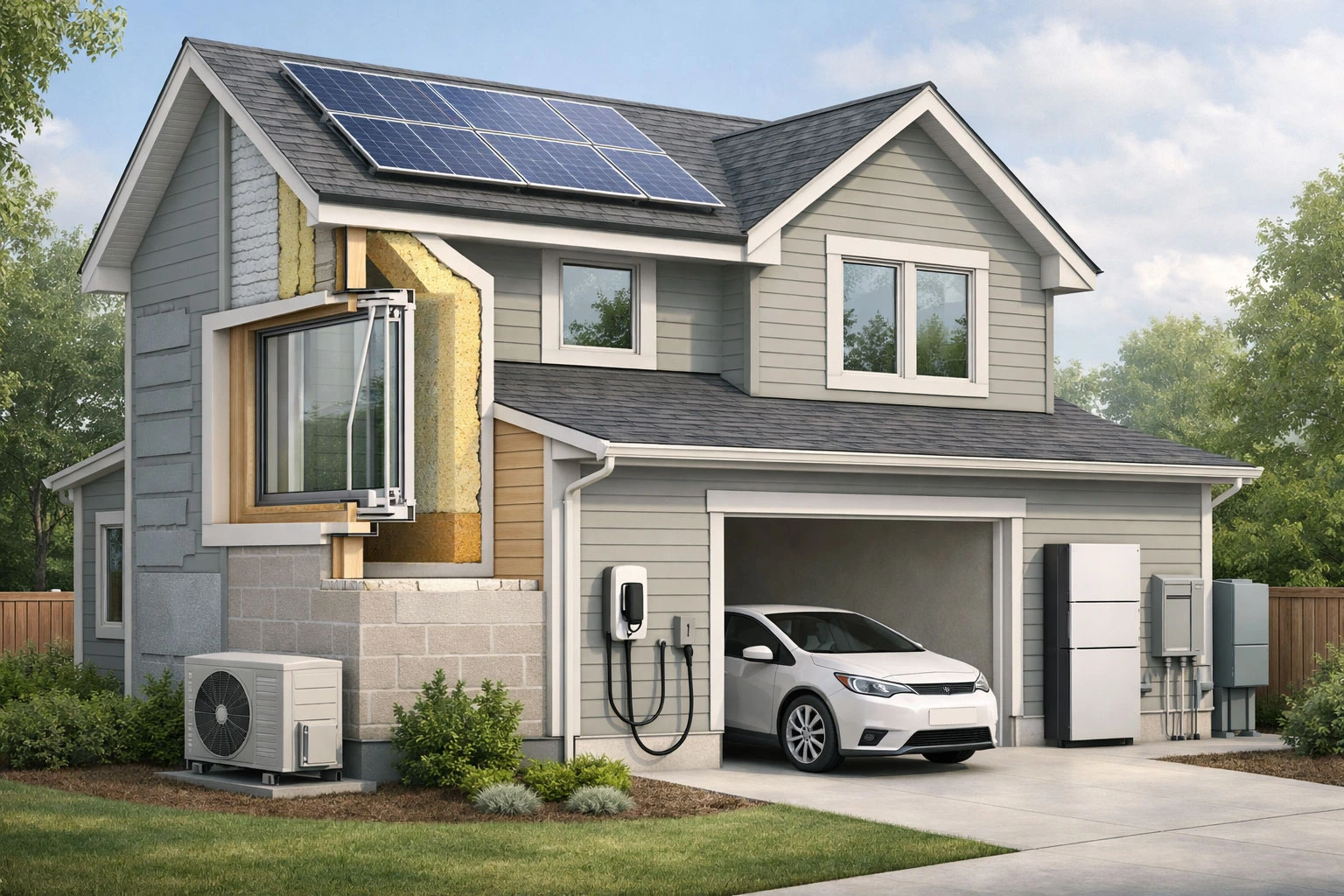
How Windows Fit Into a Net Zero Home Roadmap
For homeowners thinking long-term, window upgrades are part of a broader energy strategy.
A typical Net Zero roadmap often looks like this:
Air sealing improvements
Attic insulation upgrades
Window and door upgrades
Heat pump installation
Solar panel system
Battery storage and EV integration
Energy-efficient windows improve the building envelope, which helps heat pumps operate more efficiently later.
This step-by-step approach prevents oversizing equipment and reduces overall upgrade costs.
Final Thoughts
Replacing windows is a significant investment, and it’s easy to feel overwhelmed by the choices.
Understanding energy efficient windows cost Ontario, the realistic savings, and how window upgrades fit into a larger home efficiency plan helps homeowners make better decisions.
In many cases, the best approach isn’t simply replacing windows it’s creating a coordinated upgrade plan that improves comfort, efficiency, and long-term home value.
Book a Consultation
If you’re considering window upgrades and want to understand the best approach for your home, Net Zero Homes Consulting can help.
Book a consultation to receive a customized home upgrade roadmap that prioritizes the most effective improvements for comfort, energy savings, and long-term performance.