The Winter Comfort Problem Many Homeowners Recognize
It’s January in Ontario. The furnace seems to run constantly, yet the upstairs bedrooms feel colder than the main floor. You notice small drafts near ceiling fixtures, and the heating bill has climbed again this winter.
Many Canadian homeowners assume their heating system is the problem. In reality, the issue is often much simpler: the attic.
Heat naturally rises. Without proper insulation above your ceiling, that heat escapes into the attic and eventually outdoors. The result is a home that feels uneven in temperature, costs more to heat, and places unnecessary strain on your HVAC system.
Upgrading attic insulation is one of the most common energy improvements in Canada. But homeowners frequently ask the same questions:
What is the attic insulation cost in Canada?
Which insulation type is best?
How long does it take to recover the investment?
Are there insulation rebates in Ontario?
This guide walks through the real costs, expected savings, and practical decisions homeowners should consider in 2026.
Why Attic Insulation Matters in Canadian Homes
Canada’s climate makes insulation especially important. In provinces like Ontario, winter temperatures regularly drop below freezing for months at a time.
Without adequate attic insulation:
Heat escapes through the ceiling
Ice dams can form on the roof
HVAC systems work harder
Indoor comfort becomes inconsistent
The attic is often the largest single source of heat loss in older homes.
Many houses built before the 1990s have attic insulation levels far below modern standards. Even homes built in the early 2000s may not meet today’s recommended levels.
In Ontario, the typical target is an attic R-value between R-50 and R-60, depending on the home and retrofit program guidelines.
Increasing insulation to that level significantly reduces heat loss through the roof.
Types of Attic Insulation Used in Canada
Before discussing cost, it helps to understand the main insulation options used in Canadian homes.
Blown-In Fiberglass or Cellulose
This is the most common attic retrofit solution.
Material is blown into the attic floor using specialized equipment, creating a thick insulating blanket.
Advantages:
Quick installation
Cost-effective
Excellent coverage around obstacles
Ideal for topping up existing insulation
This method is typically used when homeowners ask about blown-in insulation price.
Batt Insulation
Fiberglass batts are pre-cut insulation panels placed between joists.
Advantages:
Easy to install during construction
Works well in unfinished attic spaces
However, batts are less common for retrofits because they do not seal gaps as effectively as blown-in insulation.
Spray Foam Insulation
Spray foam is sometimes used in attic roof assemblies rather than the attic floor.
Advantages:
Excellent air sealing
High insulation value
Converts attic to conditioned space
Drawbacks:
Much higher cost
Not necessary for most attic upgrades
Most Canadian homes achieve excellent performance with blown-in insulation combined with proper air sealing.
Attic Insulation Cost in Canada (2026)
The attic insulation cost in Canada depends on several factors:
Size of the attic
Existing insulation levels
Accessibility
Air sealing work required
Type of insulation installed
For most homes, contractors price the work per square foot.
Typical Cost Ranges
For Ontario homes in 2026, homeowners often see:
Blown-in insulation top-up
$2.50 – $4.50 per square foot
Full attic insulation upgrade
$3.50 – $6.00 per square foot
Spray foam attic conversion
$10 – $18+ per square foot
Real Homeowner Example
Consider a typical detached home in Ontario with a 1,200 sq ft attic.
If the home currently has R-20 insulation and needs upgrading to R-60:
Estimated cost range:
$3,000 – $6,000 for blown-in insulation and air sealing
Homes requiring additional preparation such as ventilation fixes or attic hatch improvements may cost more.
While that range varies by contractor and region, it reflects common pricing homeowners encounter.
Factors That Influence Blown-In Insulation Price
Two houses with the same square footage can have very different project costs.
Key factors include:
1. Existing Insulation Level
If the attic already has moderate insulation, contractors may simply add more material.
This reduces labor and cost.
2. Air Sealing Work
Before adding insulation, professionals often seal air leaks around:
Pot lights
Bathroom fans
Wiring penetrations
Attic hatches
Air sealing improves performance but adds modest cost.
3. Attic Accessibility
Attics with tight access points or complex framing require more installation time.
4. Ventilation Adjustments
Proper attic ventilation prevents moisture buildup and ice dams.
Installers may add:
Baffles
Vent chutes
Soffit improvements
These adjustments improve durability but slightly increase the project cost.
Energy Savings and Return on Investment
Attic insulation upgrades are widely considered one of the highest ROI energy improvements available.
Typical benefits include:
10–25% reduction in heating costs
More consistent indoor temperatures
Reduced strain on HVAC equipment
Improved home resale appeal
Example Scenario
A homeowner spending $4,500 on attic insulation may reduce annual heating costs by:
$300 – $700 per year
That means the upgrade could pay for itself in 6–12 years, depending on energy prices and existing insulation levels.
The comfort improvements are usually noticeable immediately.
Insulation Rebates in Ontario
Government programs often support insulation upgrades.
Homeowners frequently ask about insulation rebate Ontario programs when planning attic improvements.
These incentives typically require:
A pre-retrofit energy assessment
A post-retrofit assessment
Upgrading insulation to recommended levels
While rebate structures change over time, they often prioritize:
Attic insulation upgrades
Air sealing improvements
Heat pump installations
Window replacements
Energy advisors can help determine which programs apply to your home.
Common Mistakes Homeowners Make
Attic insulation projects are straightforward, but several mistakes can reduce their effectiveness.
Ignoring Air Sealing
Adding insulation without sealing air leaks allows warm air to escape underneath the insulation layer.
Air sealing is essential.
Blocking Ventilation
Improper installation can block soffit vents.
This leads to moisture issues and roof damage.
Professional installers use ventilation baffles to prevent this problem.
Assuming All Insulation Performs the Same
Insulation effectiveness depends on proper installation depth and coverage.
Uneven coverage creates thermal weak points.
Skipping an Energy Assessment
Without evaluating the entire home, homeowners may miss more impactful upgrades.
Attic insulation is important, but it should be part of a broader energy strategy.
Step-by-Step Decision Guide for Homeowners
If you’re considering attic insulation, the following process helps simplify the decision.
Step 1: Determine Current Attic R-Value
Many homes in Ontario still have:
R-12 to R-30 insulation
Modern recommendations aim for R-50 to R-60.
Step 2: Conduct an Energy Audit
An energy assessment identifies:
Heat loss areas
Air leakage points
Insulation gaps
This step also determines eligibility for rebates.
Step 3: Evaluate Upgrade Options
Your consultant or contractor will recommend:
Insulation type
Target R-value
Air sealing improvements
Step 4: Compare Quotes
Ask contractors to specify:
Insulation depth
Air sealing scope
Ventilation improvements
Comparing details prevents misunderstandings later.
Step 5: Plan the Work
Most attic insulation upgrades take one day or less to complete.
Homeowners usually experience minimal disruption.
When an Attic Insulation Upgrade Makes Sense
Attic insulation upgrades are particularly worthwhile when:
The home has high heating bills
Upstairs rooms feel colder in winter
The attic has less than R-40 insulation
Ice dams form along the roof edge
Renovations expose attic access
In these situations, improving attic insulation is often one of the first upgrades recommended.
When It May Not Be the Priority
There are cases where attic insulation should not be the first step.
Examples include:
Homes with major air leakage problems
Poorly sealed ductwork
Extremely outdated HVAC systems
Moisture issues in the attic
Addressing these issues first ensures insulation performs as expected.
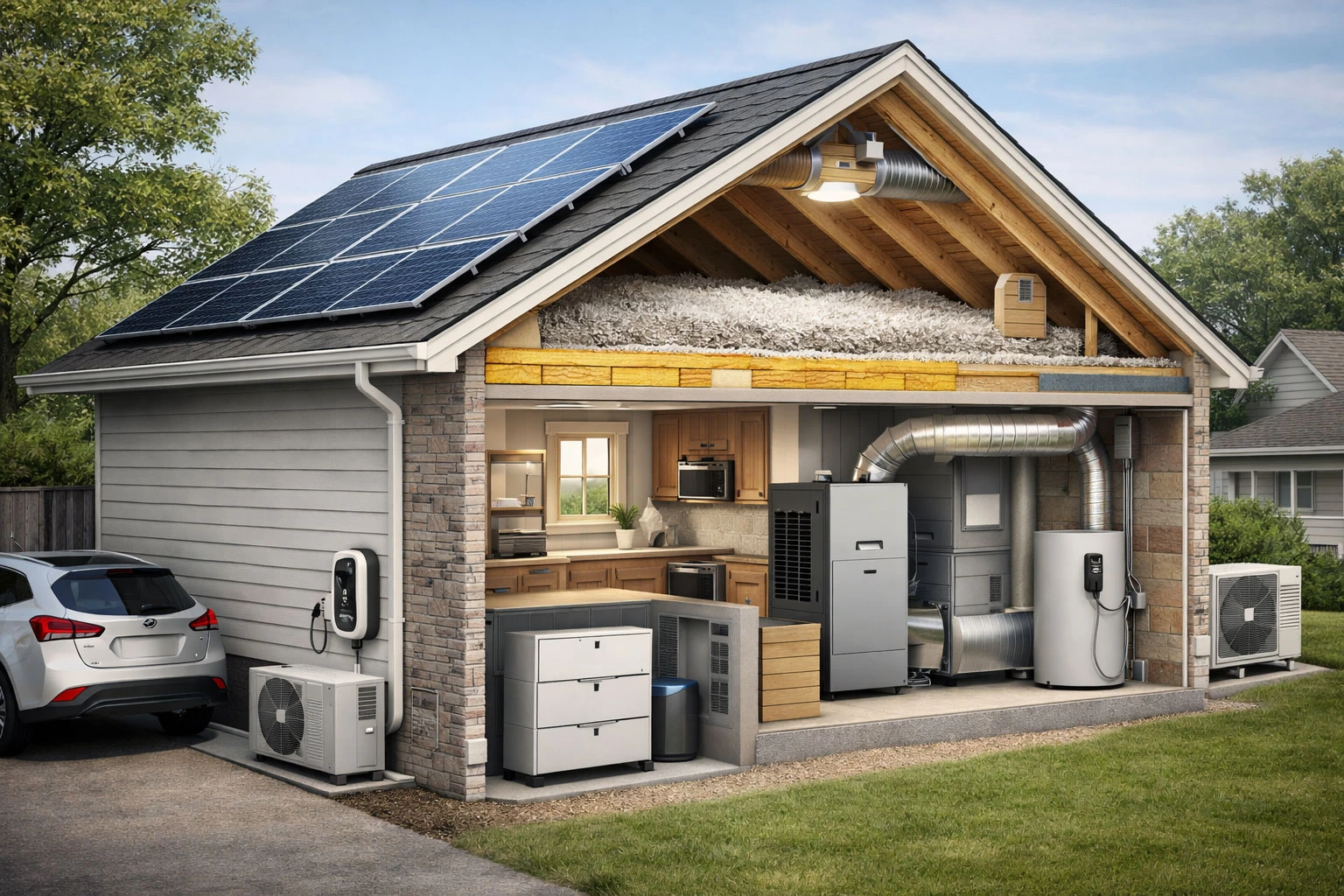
How Attic Insulation Fits Into a Net Zero Roadmap
Homeowners interested in net-zero energy homes often start with insulation upgrades.
The logic is simple: reduce energy demand before adding new technology.
A typical roadmap might include:
Air sealing improvements
Attic insulation upgrade
High-efficiency heat pump
Window improvements
Solar panels and battery storage
Without sufficient insulation, renewable energy systems must work harder to maintain comfort.
Attic insulation therefore plays a foundational role in long-term energy planning.
Conclusion
For many Canadian homeowners, attic insulation is a practical and cost-effective upgrade.
The attic insulation cost in Canada typically ranges between a few thousand dollars and moderate retrofit costs, depending on attic size and existing insulation levels. In return, homeowners often gain:
Lower heating bills
Improved winter comfort
Reduced strain on heating systems
Better long-term energy performance
When combined with proper air sealing and ventilation, attic insulation upgrades deliver reliable energy savings in Canada’s cold climate.
For homeowners planning larger energy improvements, it also serves as a crucial first step toward a more efficient and resilient home.
Book a Consultation
If you’re considering attic insulation or planning broader energy upgrades, a professional assessment can help you prioritize the right improvements.
Book a consultation with Net Zero Homes Consulting to receive a customized home energy upgrade roadmap tailored to your property, budget, and long-term efficiency goals.