A Familiar Winter Scenario for Canadian Homeowners
It’s a clear February morning in Ontario. The temperature sits well below freezing, snow blankets the yard, and the furnace has been running steadily all night. You open your latest electricity and heating bill and wonder the same thing many Canadian homeowners do every winter: Is there a smarter way to power my home?
Solar energy often comes up in that conversation. But many homeowners hesitate because of one question:
Do solar panels actually work in cold climates like Canada?
The short answer is yes often better than many people expect. In fact, modern cold climate solar panels can perform very efficiently in Canadian conditions when designed and installed correctly.
However, not all panels perform equally in winter environments. Snow load, temperature fluctuations, daylight hours, and efficiency ratings all play a role in determining which systems work best.
This guide explains how solar panels perform in cold climates, what features to look for, the costs and savings involved in Canada, and how solar fits into a long-term Net Zero home strategy.
How Solar Panels Perform in Cold Climates
Many people assume solar panels need hot weather to generate electricity. In reality, solar panels work from sunlight, not heat.
Cold temperatures can actually improve panel efficiency.
Here are the key factors affecting solar snow performance in Canada:
1. Cold Temperatures Improve Efficiency
Solar panels operate more efficiently in cooler conditions. Excessive heat can reduce output, which means Canadian climates can actually support high efficiency solar panels during clear winter days.
2. Snow Reflects Sunlight
Snow-covered ground reflects sunlight back toward the panels, increasing available solar radiation. This reflection effect, called albedo, can boost winter energy generation.
3. Panels Shed Snow Naturally
Most systems are installed at a tilted angle. Once sunlight warms the glass surface slightly, snow typically slides off. Panels with smooth glass surfaces and darker cells help speed this process.
4. Shorter Days Matter More Than Cold
The main seasonal challenge in Canada is reduced daylight hours, not temperature. Solar systems are designed to produce excess power in summer months to balance winter output through net metering.
What Makes a Solar Panel Suitable for Canadian Winters?
When selecting the best solar panels Canada homeowners should consider, several technical features matter more in colder regions.
High Efficiency Ratings
High efficiency panels convert more sunlight into electricity, which is valuable when daylight hours are limited.
Look for efficiency ratings around 20% or higher.
Low Temperature Coefficient
The temperature coefficient measures how much panel performance drops when temperatures rise.
A lower value means better performance stability.
Strong Snow Load Rating
Canadian panels must withstand heavy snow loads. Most reputable panels are rated between 5,400–8,000 pascals, which ensures structural durability during winter storms.
Durable Glass and Frames
Cold climates require panels designed for:
Ice formation
Freeze-thaw cycles
High wind loads
Heavy snow accumulation
Monocrystalline Cell Technology
Most high efficiency solar panels used in Canada rely on monocrystalline cells because they deliver stronger performance in low-light conditions.
Typical Solar Installation Costs in Canada
Solar pricing varies across provinces, but the general cost range for residential systems in Canada follows similar patterns.
For a typical Ontario home:
Average residential solar system size:
5–10 kW
Estimated installed cost:
$15,000 – $35,000 before incentives
Costs depend on factors such as:
Roof size and orientation
Electrical panel upgrades
Roof condition
Snow load structural requirements
While the upfront investment may seem significant, most homeowners evaluate solar based on lifetime energy savings.
Energy Savings and Long-Term ROI
Solar systems in Canada typically operate for 25–30 years.
Over that time, homeowners can offset a substantial portion of their electricity use.
Key financial factors include:
Net Metering
Many provinces allow homeowners to send excess power back to the grid in summer and receive credits for winter usage.
This helps balance seasonal production differences.
Rising Electricity Prices
Electricity rates in many Canadian regions have steadily increased over time. Solar locks in a portion of your energy costs.
Long-Term Payback
Typical solar payback periods in Canada range between:
8–15 years depending on system size and incentives.
After that point, most energy produced is effectively free.
Rebates and Incentives in Ontario and Canada
Several programs can help reduce the upfront cost of solar systems.
While incentive programs change over time, homeowners often benefit from:
Federal energy efficiency programs
Provincial renewable energy initiatives
Utility-based net metering programs
Municipal sustainability incentives
Because eligibility varies, homeowners should review programs available in their specific province.
An energy consultant can often help identify stacked incentives that reduce project costs.
Common Mistakes Homeowners Make with Solar
Solar installations work best when integrated into a broader home energy strategy. Unfortunately, some homeowners jump into the process without proper planning.
Here are common mistakes to avoid.
Installing Solar Before Improving Efficiency
If a home has major energy losses poor insulation, air leaks, inefficient heating solar panels may end up compensating for wasted energy.
Improving efficiency first often reduces system size requirements.
Choosing Panels Based Only on Price
Lower-cost panels may have lower efficiency or weaker durability ratings, which matters in Canadian climates.
Ignoring Roof Orientation
South-facing roofs typically perform best, but east-west systems can still work well depending on design.
Overlooking Electrical Panel Capacity
Some homes require electrical upgrades to support solar installations.
Not Planning for Future Electrification
If you plan to install an EV charger or heat pump later, your solar system should be sized accordingly.
How to Choose the Best Solar Panels for Your Home
Choosing the best solar panels Canada homeowners should install involves several practical steps.
Step 1: Evaluate Your Roof
A professional assessment should review:
Roof orientation
Roof angle
Shading from trees or nearby buildings
Structural capacity for snow loads
Step 2: Review Your Energy Use
Look at 12–24 months of electricity bills to understand annual consumption patterns.
Step 3: Improve Home Efficiency First
Before installing solar, consider upgrades such as:
These steps reduce the solar system size needed.
Step 4: Compare Panel Technologies
Focus on panels with:
High efficiency
Strong warranty coverage
Good cold-weather performance ratings
Step 5: Evaluate Battery Storage
Battery systems can store excess energy and provide backup power during outages.
However, batteries increase system cost and may not always be necessary depending on grid reliability.
When Solar Panels Make Sense in Canada
Solar panels work best in certain situations.
Solar is a strong investment when:
Your roof has good sunlight exposure
Electricity costs are relatively high
You plan to stay in the home long-term
You want to electrify heating or transportation
Your home already has good insulation and efficiency
Many Ontario homeowners pursuing Net Zero energy goals include solar as a core component of their strategy.
When Solar May Not Be the Best First Step
Solar isn’t always the right starting point.
It may make sense to delay installation if:
Your roof needs replacement soon
Major efficiency upgrades are still needed
The home has heavy tree shading
Electricity use is already extremely low
In these cases, improving building performance first usually produces better long-term results.
Solar’s Role in a Net Zero Home Roadmap
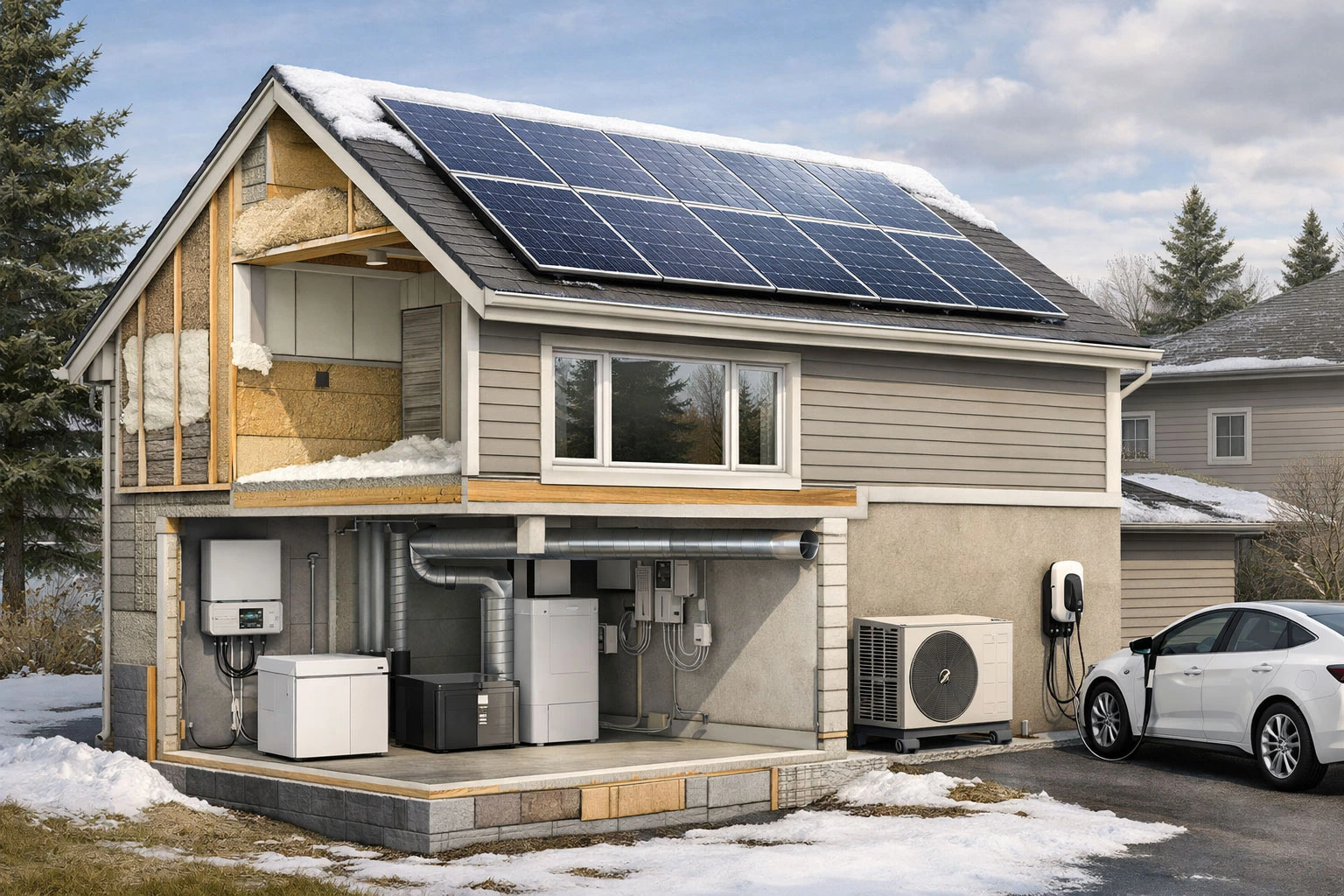
Solar panels rarely operate in isolation. They are usually part of a broader home energy transition.
A typical Net Zero home roadmap may include:
Solar then offsets the electricity required by electrified heating, cooling, and transportation.
When properly designed, this system dramatically reduces a home’s carbon footprint while stabilizing long-term energy costs.
Conclusion
Solar energy in Canada has matured significantly over the past decade. Modern cold climate solar panels are built to handle snow, freezing temperatures, and variable daylight conditions.
For many homeowners, solar offers a practical path toward lower energy bills, increased home resilience, and long-term sustainability.
However, the most successful solar projects begin with a clear plan one that considers insulation, heating systems, roof conditions, and future electrification.
Solar is not just a technology upgrade. It’s part of a larger strategy to create a more efficient and future-ready home.
Ready to Explore Solar for Your Home?
Every home is different, and the best solar solution depends on your building, energy use, and long-term goals.
Book a consultation with Net Zero Homes Consulting to receive a customized upgrade roadmap that shows how solar, efficiency improvements, and electrification can work together for your home.