When Power Outages Hit Home
Imagine it’s a chilly winter evening in Ontario. The temperature outside has dipped well below freezing, your heat pump is working overtime, and suddenly everything goes dark. No lights, no furnace, no internet, no way to charge your EV. For homeowners, these unexpected blackouts aren’t just inconvenient they can be costly and uncomfortable.
This is where home battery backup systems step in. Think of them as your home’s personal energy safety net, storing electricity for when the grid goes down, for peak usage periods, or even to complement solar panels. In Canada, and particularly in Ontario, interest in home battery systems is growing rapidly, fueled by rising electricity costs, extreme weather events, and the shift toward net-zero energy homes.
What Is a Home Battery Backup System?
A home battery backup system is an energy storage solution that stores electricity for use when it’s most needed. Typically paired with renewable energy sources like solar panels, these systems can also draw from the grid during off-peak hours to reduce costs.
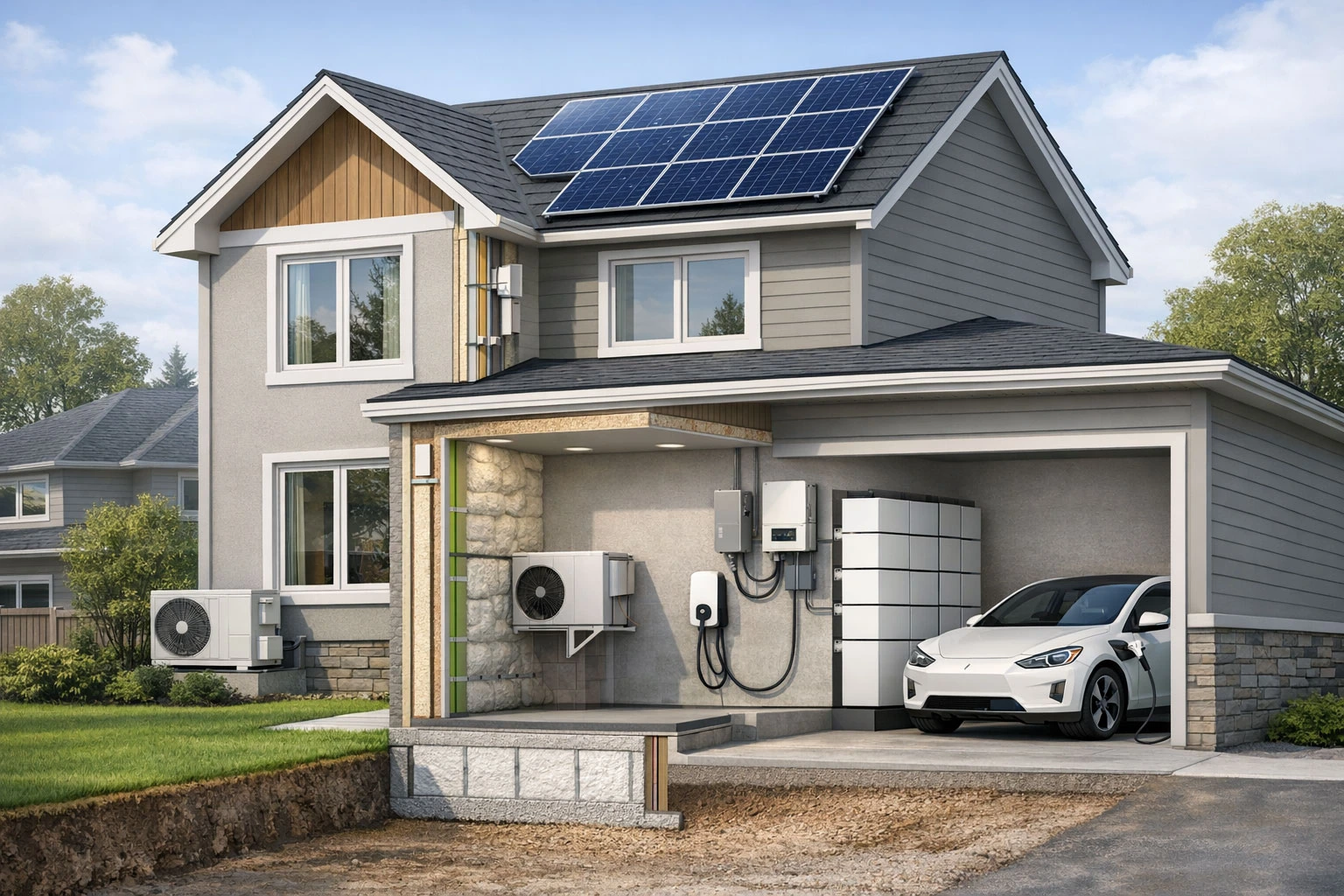
Key components include:
Battery modules – Lithium-ion or advanced lead-acid batteries that store energy.
Inverter – Converts stored DC power into AC power for your home.
Energy management system – Optimizes when energy is stored or used.
Integration with solar panels (optional) – Allows surplus solar energy to be stored for night-time use.
How It Works in Daily Life
During the day, solar panels generate electricity for your home.
Excess energy is stored in the battery.
At night, or during a grid outage, the home draws power from the battery, ensuring continuous operation of critical systems like heating, refrigeration, and lighting.
For homeowners, the system is largely “set and forget,” but it provides peace of mind that power outages won’t disrupt daily life.
Cost Considerations in Canada
Understanding the financial investment is crucial. In Canada, costs vary based on battery capacity, brand, and whether it’s integrated with solar. Typical ranges for a medium-sized Ontario home include:
Home battery systems: CAD 10,000–25,000 installed.
Solar backup system cost Ontario: CAD 15,000–35,000 for a combined solar + battery setup.
Maintenance: Minimal for modern lithium-ion systems, usually CAD 100–200 per year for monitoring and checks.
Factors that influence cost:
Home energy demand (size of battery required)
Integration with existing solar panels
Brand and warranty coverage
Installation complexity (e.g., multi-storey homes or detached garages)
While the upfront investment is significant, it’s important to view this as a long-term energy strategy, not just an emergency tool.
Energy Savings and ROI
Home batteries are not just about outages they can also save you money.
Ways you can save:
Time-of-use optimization: Store energy when electricity rates are low and use it when rates are high.
Peak shaving: Reduce peak electricity consumption to avoid high demand charges.
Solar self-consumption: Maximize the use of your own solar energy instead of exporting to the grid.
Real-life example:
A suburban Ontario household with a 10 kWh battery and moderate solar production could see annual energy savings of CAD 400–800. Depending on usage patterns, the return on investment can range from 7–12 years, shorter if combined with solar and government incentives.
Common Mistakes Homeowners Make
Even motivated homeowners can make errors when choosing or installing a battery system. Some common pitfalls include:
Oversizing or undersizing the battery buying too large increases costs unnecessarily, too small limits backup hours.
Ignoring future needs planning for today’s energy use but not accounting for EVs or additional appliances.
Poor integration with solar or home automation can reduce efficiency and ROI.
Not considering warranties and lifespan most lithium-ion batteries last 10–15 years; check replacement costs.
DIY installation these are complex systems; professional design and installation are critical for safety and optimal performance.
Step-by-Step Decision Guidance
Step 1: Evaluate Your Energy Usage
Start by reviewing your monthly electricity bills and identify essential loads furnace, fridge, lights, EV charging. This will guide the battery size you need.
Step 2: Assess Your Roof and Solar Potential
If you have or plan to install solar, ensure roof orientation, shading, and structural integrity are suitable. Even without solar, batteries can draw from off-peak grid electricity.
Step 3: Compare Battery Types and Brands
Lithium-ion is most common due to high energy density and longer lifespan. Other options include lead-acid or emerging solid-state batteries. Compare warranties, efficiency, and service support.
Step 4: Calculate Cost vs. Savings
Use estimated energy savings and potential incentives to project payback time. Consider solar backup system cost Ontario in this analysis.
Step 5: Plan Installation Location
Batteries require space, usually in a garage or utility room. Ensure proper ventilation and accessibility for maintenance.
Step 6: Apply for Incentives
Check Ontario and Canada rebates for energy storage and solar integration. Programs evolve annually, so confirm eligibility before committing.
Step 7: Professional Installation and Setup
Work with certified installers to ensure safety, compliance with local codes, and optimal system performance.
Ontario/Canada Rebates and Incentives
Canada offers several programs that can reduce upfront costs:
Net-zero energy home incentives – support energy storage and renewable integration.
Local utility rebates – some Ontario utilities provide incentives for demand-response or battery storage.
Federal energy efficiency programs – can cover portions of installation for energy-efficient homes.
Even if these incentives don’t cover full costs, they can meaningfully shorten ROI timelines.
When This Upgrade Makes Sense and When It Doesn’t
Ideal scenarios:
You live in areas prone to blackouts or extreme weather.
You have or plan to install solar panels.
You want to optimize electricity bills using time-of-use rates.
You’re pursuing a Net Zero roadmap, including energy storage and electrification of heating or transport.
Less ideal scenarios:
You rarely experience outages and your grid electricity is cheap.
Your home energy consumption is minimal, making battery payback long.
You cannot accommodate installation space or structural modifications.
How Home Batteries Fit into a Net Zero Roadmap
For Canadian homeowners aiming for net-zero, battery storage is a key piece:
Electrification – Supports electric heat pumps, EVs, and appliances.
Renewable energy integration – Maximizes self-consumption of solar and wind.
Grid resilience – Reduces reliance on fossil-fuel-based peak power.
Load management – Shifts energy consumption to match production, lowering emissions.
Home batteries are not just backup they are central to an energy-smart, carbon-conscious home.
Conclusion
Investing in a home battery backup system in Canada can transform how you manage energy, protect your home, and plan for the future. For Ontario homeowners, the combination of rising electricity costs, grid reliability concerns, and growing solar adoption makes this a practical and strategic upgrade.
When designed properly, a battery system improves comfort, reduces costs, and positions your home for a net-zero future.
Next Step: For a personalized evaluation of your home’s energy needs and a roadmap for integration, book a consultation with Net Zero Homes Consulting. Let’s design a solution tailored to your lifestyle, budget, and long-term sustainability goals.