You’ve heard the stories. A neighbour installed a heat pump and spent a freezing January night under three blankets. Or a contractor told you “heat pumps don’t work in real Canadian winters.” That advice was reasonable a decade ago. It is not accurate in 2026.
Canadian winters still deliver stretches of -20°C to -30°C, especially outside the mildest coastal pockets. Homeowners facing rising natural gas prices, aging furnaces, and the push toward home electrification and net-zero renovations need clear answers. Modern cold climate heat pumps are engineered exactly for these conditions. They maintain useful heating capacity and better-than-resistance efficiency down to -25°C and, in many models, lower.
This guide walks through how the technology actually works, what the efficiency numbers mean for your bills, realistic costs after Ontario rebates, a real-world home example, and the practical questions homeowners ask most. The goal is straightforward: give you the facts so you can decide whether a cold climate heat pump belongs in your home’s energy future.
Short Answer
Yes. Properly selected and installed cold climate heat pumps (ENERGY STAR Cold Climate certified) deliver meaningful heat at -25°C. Capacity drops compared with milder weather, but many units still produce 50–70% of rated output with a COP around 1.5–1.8. That is still more efficient than electric resistance heat. Seasonal average COPs of 2.4–2.9 are common across Canadian climates when systems are sized correctly. Backup heat handles the rare extreme hours.
What Is a Cold Climate Heat Pump?
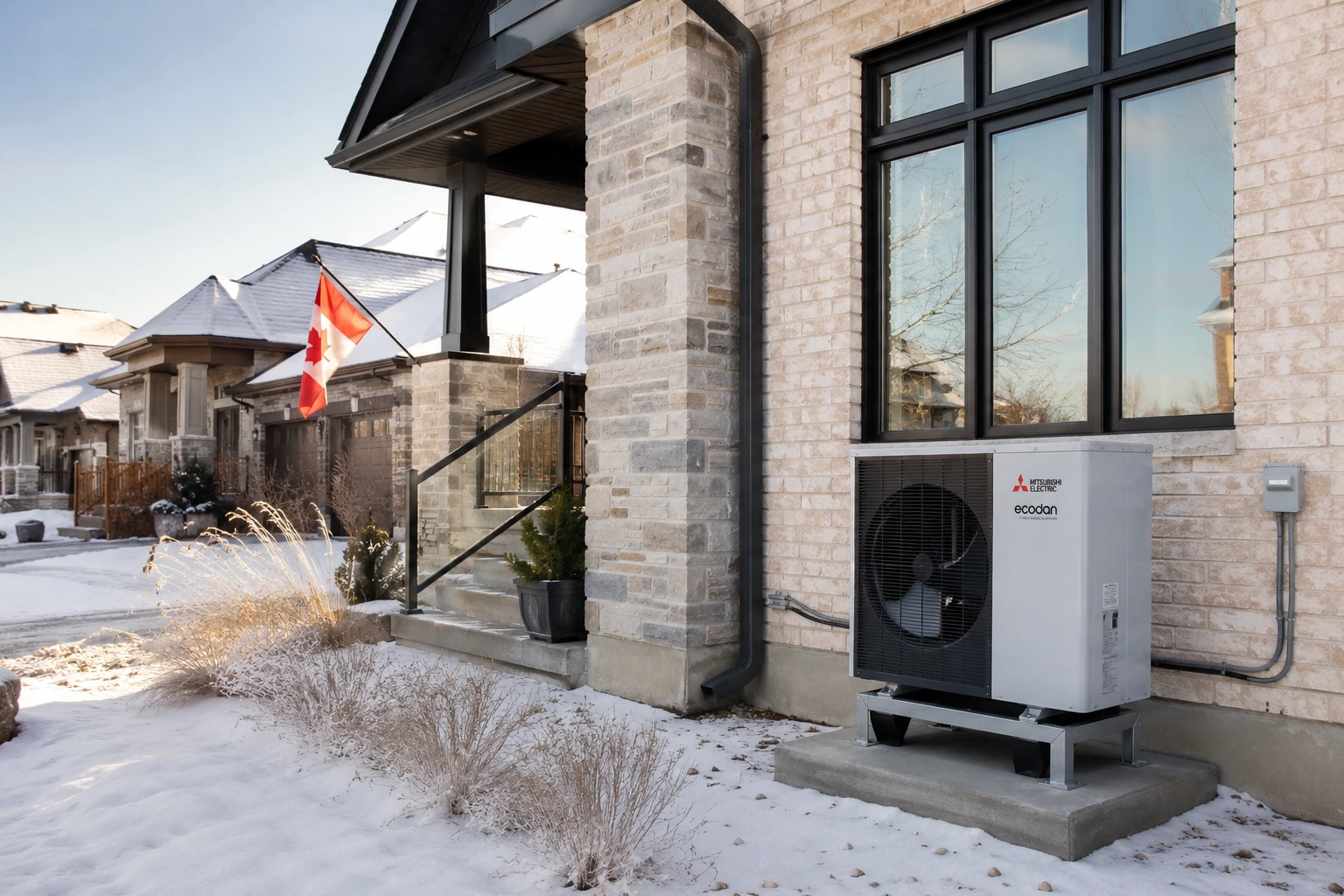
A heat pump moves heat rather than creating it by burning fuel. In heating mode it extracts thermal energy from outdoor air and delivers it indoors. Even at -25°C there is still usable heat energy in the air; the challenge is extracting it efficiently.
Standard air source heat pumps lose capacity quickly once temperatures fall below freezing. Cold climate models solve this with several engineering advances:
- Variable speed inverter compressors that adjust output continuously instead of cycling on and off.
- Enhanced vapour injection or flash-injection technology that keeps refrigerant pressures and temperatures workable in deep cold.
- Optimized coil and fan designs plus base-pan heaters that manage frost and defrost cycles without long interruptions.
- Refrigerants such as R-32 (and increasingly R-454B) that perform better at low ambient temperatures and carry lower global-warming potential than older options.
These features allow certified cold climate units to operate continuously down to -25°C or -30°C while retaining a large share of their rated heating capacity. Natural Resources Canada and ENERGY STAR Canada set clear performance thresholds: capacity retention of at least 70% at -15°C and a COP of at least 1.75 at that temperature for many listed models. Top units exceed these marks.
Why This Matters for Canadian Homeowners in 2026
Canadian winters are long and energy prices remain a real household concern. Many homes still run 15- to 25-year-old gas or oil furnaces paired with aging central air conditioners. Replacing both with one dual-purpose system is often the practical next step.
Climate realities vary. Southern Ontario design temperatures sit near -18°C to -20°C in many locations; Ottawa and northern regions go colder. Extreme lows below -25°C occur, but the number of hours is limited in the most populated areas. A system that handles the bulk of the heating season efficiently and relies on modest backup only on the coldest nights delivers both comfort and lower operating costs.
Government direction is clear. Federal and provincial programs continue to support home electrification and carbon reduction. Ontario’s Home Renovation Savings Program, federal Oil to Heat Pump Affordability support for qualifying oil homes, and the Canada Greener Homes Loan make the upfront investment more manageable. Pairing a cold climate heat pump with better insulation, air sealing, and eventually rooftop solar moves a home meaningfully toward net-zero performance.
Aging HVAC systems create another driver. When a furnace or air conditioner fails, the replacement decision is the right moment to evaluate a heat pump that provides both heating and cooling.
How Cold Climate Heat Pumps Work in Deep Cold
Think of the outdoor unit as a refrigerator running in reverse. A refrigerant absorbs heat from outdoor air (even very cold air), the compressor raises the temperature and pressure of that refrigerant, and the indoor coil releases the heat into your home’s air or duct system.
At milder temperatures the process is highly efficient COP values of 3.0–4.0 are routine. As outdoor temperature falls, the temperature difference the system must overcome increases, so both capacity and efficiency decline. The key difference with cold climate models is how far that decline is delayed.
Representative performance data for a modern cold climate unit (approximate values drawn from manufacturer and utility monitoring):
| Outdoor Temperature | Relative Heating Capacity | Approximate COP |
|---|---|---|
| +8°C | 100% | 3.5–3.8 |
| 0°C | 90–95% | 3.0–3.2 |
| -10°C | 75–85% | 2.4–2.6 |
| -15°C | 70–100% (model dependent) | 2.0–2.4 |
| -20°C | 60–85% | 1.7–2.2 |
| -25°C | 50–70% | 1.5–1.8 |
| -30°C | 45–55% | 1.5 |
Even at -25°C a COP of 1.7 means the system delivers 1.7 units of heat for every unit of electricity consumed still better than electric baseboards or resistance heat strips (COP of 1.0). Across a full Canadian heating season, independent monitoring by utilities and NRCan programs shows seasonal average COPs clustering between 2.4 and 2.9 for correctly sized systems.
Efficiency ratings you will see on equipment labels:
- HSPF2 (Heating Seasonal Performance Factor 2) – seasonal heating efficiency under the updated test procedure. Good cold climate ducted units often score 8.5–10+; ductless models can reach higher.
- SEER2 – seasonal cooling efficiency. Most cold climate models deliver strong cooling as well (15–23 SEER2 range).
- COP – instantaneous efficiency at a specific outdoor temperature. Always look at published low-temperature COP and capacity data, not just the mild-weather rating.
R-32 refrigerant is widely used because of its favourable thermodynamic properties in cold conditions and lower GWP compared with older HFC blends. It is mildly flammable (A2L classification), so installations follow updated safety codes; this is standard practice for trained Canadian contractors in 2026.
Installation considerations matter. Proper load calculation (CSA F280 or equivalent), correct refrigerant charge, adequate outdoor clearances for snow and airflow, and electrical service capacity are essential. Undersizing or poor installation is the most common reason for disappointing performance.
Cost Breakdown: Equipment, Installation, Rebates and Savings
Installed costs for cold climate systems in Ontario in 2026 typically fall in these ranges before incentives:
- Ducted cold climate air-source (existing ducts): $7,000–$14,000
- Premium brands or complex installs: $10,000–$16,000+
- Multi-zone ductless: $8,000–$18,000 depending on number of heads
- Dual-fuel (heat pump + gas furnace backup): often $10,000–$18,000
- Electrical panel upgrade (if required): add $2,500–$5,000
- Duct modifications: add $2,000–$6,000 when needed
Annual maintenance is similar to a conventional central system filter changes, outdoor coil cleaning, and a professional check of refrigerant and electrical connections. Expect $150–$300 per year.
Ontario rebates through the Home Renovation Savings Program (as of mid-2026 data) are significant:
- Non-gas homes (electric, oil, propane, wood): up to $1,250 per ton, maximum $7,500 for air-source cold climate systems
- Natural gas homes: lower amounts, typically $500 per ton up to $2,000
- Ground-source systems: higher caps (up to $12,000 in some cases)
- Oil-to-heat-pump pathways and income-qualified programs can stack additional federal support
- Canada Greener Homes Loan: interest free financing up to $40,000 for eligible retrofits
After rebates, many homeowners see net costs comparable to or only modestly higher than a high efficiency furnace replacement especially when the heat pump also replaces an aging air conditioner.
Long-term operating savings depend on your current fuel, electricity rates, home efficiency, and local climate. Switching from oil or electric resistance often produces the largest bill reductions. Gas-to-heat-pump savings are more modest in regions with very low gas prices but still positive when cooling benefits and carbon reduction are considered. Typical heating cost reductions of 30–50% appear in utility and contractor case data when systems are properly applied.
Real-Life Example: 2,000 sq ft Ontario Home
Consider a typical 2,000 square foot detached home in the Greater Toronto or Ottawa area with average insulation and existing forced-air ductwork. Before the upgrade the home used a mid efficiency gas furnace and a 12-year-old central air conditioner. Annual heating gas cost ran approximately $1,800–$2,300 depending on the winter; cooling added another $300–$500 in electricity.
The homeowner installed a 3-ton cold climate ducted heat pump rated to -25°C (HSPF2 around 9.5–10, strong capacity retention at -15°C). A modest electric resistance backup stage was included for the coldest hours; the existing gas furnace was removed. Total installed cost before incentives was roughly $11,000–$13,000. After Home Renovation Savings Program rebates the net cost landed near $5,000–$8,000 (exact figure depends on eligibility and tonnage).
Post-install results over a full heating season:
- Heating electricity cost: approximately $1,000–$1,400 (depending on rates and weather)
- Cooling cost essentially unchanged or slightly lower thanks to higher SEER2
- Indoor comfort improved—more even temperatures and better humidity control in shoulder seasons
- The heat pump carried the load down through most -15°C to -20°C periods; backup engaged only on the coldest nights
- Simple payback on the incremental investment often falls in the 5–8 year range when energy savings, avoided furnace/AC replacements, and available incentives are combined
Comfort feedback from similar homes is consistent: steady heat without the temperature swings of older single-stage furnaces, quiet operation, and reliable performance once the system is commissioned correctly.
Pros and Cons of Cold Climate Heat Pumps
| Aspect | Advantages | Considerations |
|---|---|---|
| Efficiency & Operating Cost | 2–3× more efficient than resistance heat; strong seasonal COP | Efficiency drops in extreme cold; electricity rates matter |
| Comfort | Even temperatures, dehumidification in summer, quiet | Defrost cycles can create brief temperature dips if not managed well |
| Climate Performance | Reliable to -25°C / -30°C with proper models | Backup heat recommended for design temperatures below unit rating |
| Upfront Cost | Rebates bring net cost close to furnace replacement | Higher sticker price before incentives; panel upgrades possible |
| Environmental Impact | Zero on-site combustion emissions; lower carbon with cleaner grid | Refrigerant management and end-of-life recycling required |
| System Longevity | 12–20 years typical with good maintenance | Outdoor unit exposed to weather; snow and clearance planning needed |
| Dual Function | Heating + cooling in one system | Best results when paired with air sealing and insulation upgrades |
Common Homeowner Questions
Are heat pumps worth it in Canada? Yes for most homes when a cold climate model is chosen, sized correctly, and incentives are applied. The combination of lower operating costs, dual heating/cooling, and available rebates makes the economics favourable in 2026, especially versus oil, propane, or electric resistance.
Can a heat pump work below -20°C? Yes. Certified cold climate units operate and deliver heat at -25°C and often -30°C. Capacity and efficiency are lower than at milder temperatures, so supplemental heat is typically planned for the coldest design hours.
Is R-32 refrigerant safe? R-32 is widely used and accepted under Canadian codes. It is classified as mildly flammable (A2L) but has a strong safety record when installed by trained technicians following manufacturer and code requirements. It offers better efficiency and lower GWP than many older refrigerants.
Do heat pumps replace furnaces? They can fully replace furnaces in many southern and moderate Canadian climates when sized for the design load and paired with appropriate backup. In colder regions or larger homes, dual-fuel (heat pump + gas furnace) or electric resistance backup remains common for maximum reliability.
How long does a heat pump last? Typical service life is 12–20 years. Outdoor units face more weather exposure than indoor furnaces, so regular maintenance and proper placement extend life.
What size heat pump do I need? A proper heating load calculation is essential. Rules of thumb based on square footage alone often lead to oversizing or undersizing. Ask for a CSA F280-based calculation that accounts for your home’s insulation, air leakage, windows, and local design temperature.
Will a heat pump work with my existing ducts? Many do. Existing ductwork is often adequate or needs only minor modifications. Restricted or leaky ducts should be addressed for best performance and efficiency.
How noisy are cold climate heat pumps? Modern inverter driven units are quiet often comparable to or quieter than older air conditioners. Outdoor sound levels are typically in the 45–60 dB range depending on model and speed.
What happens during a power outage? Like any electric system, the heat pump stops. Homes with existing gas furnaces that retain a dual-fuel setup can still heat on gas (if the furnace has battery or generator support for controls). Whole home backup generators or battery systems are separate considerations.
Do I need a new electrical panel? Not always. Many 100-amp or 200-amp services can accommodate a heat pump. An electrician should verify capacity, especially if electric resistance backup or other large loads are added.
Are there Ontario rebates for heat pumps in 2026? Yes. The Home Renovation Savings Program provides significant incentives that vary by existing fuel type. Federal loan and oil-conversion pathways may also apply. Confirm current amounts and eligibility with a participating contractor, as programs evolve.
Can I combine a heat pump with solar panels? Yes. A heat pump is one of the highest value loads to pair with rooftop solar because it runs year-round. The combination accelerates progress toward a net zero home.
What maintenance is required? Keep outdoor coils clear of snow and debris, change or clean filters regularly, and schedule annual professional service to check refrigerant charge, electrical connections, and defrost operation.
Will my home still be comfortable on the coldest nights? With correct sizing and a planned backup strategy, yes. The heat pump handles the large majority of hours; backup covers the extremes without comfort compromise.
Is a Heat Pump Right for Your Home?
Cold climate heat pumps have moved from experimental technology to proven, mainstream equipment across much of Canada. They deliver reliable heat at -25°C, strong seasonal efficiency, and the convenience of year round comfort from a single system. When combined with Ontario rebates, air sealing, and insulation improvements, they form a practical cornerstone of home electrification and net zero renovations.
Every house is different. Climate zone, existing equipment, ductwork condition, electrical service, insulation levels, and your comfort priorities all influence the best solution. A professional energy assessment and detailed load calculation remove the guesswork.
Net Zero Homes Consulting helps Canadian homeowners evaluate options, navigate incentives, and design systems that perform in real winters. Reach out for a consultation or energy assessment tailored to your home. The right cold climate heat pump can keep you warm, lower your bills, and move your house closer to a lower-carbon future starting this winter.