Living in New York means dealing with cold, windy winters that drive up heating bills and humid summers that make your air conditioning work overtime. Proper insulation is one of the smartest investments you can make in your home’s building envelope.
It boosts comfort, cuts energy waste, improves indoor air quality, and pairs perfectly with upgrades like heat pumps, smart thermostats, or solar and battery storage.
In this comprehensive guide, we’ll compare the three most popular options for New York homes: spray foam, fiberglass, and cellulose. You’ll learn exactly what works best for typical NYC brownstones, Queens row houses, Staten Island colonials, or upstate-style homes in the metro area, considering local climate challenges, building codes, utility costs, and available rebates.
Whether you’re planning a full home energy audit, attic upgrade, or whole-house weatherization, this article will help you choose wisely and maximize your return on investment. Let’s dive in.
New York Climate and Insulation Needs
New York City and surrounding areas fall primarily in Climate Zone 5 (with some Zone 4 influences), featuring about 5,000–6,000 heating degree days and hot, humid summers. Winters bring freezing temperatures, nor’easters, and high winds that punish air leakage. Summers bring humidity that can lead to moisture issues in poorly sealed homes.
Key challenges for New York homes:
- Older construction (pre-1970s) with poor air sealing and minimal original insulation.
- High electricity and gas rates—Con Edison and other utilities make energy savings especially valuable.
- Dense urban settings with noise from streets and neighbors.
- Moisture from coastal humidity and rain.
- Building codes now require higher R-values (e.g., attic R-49, walls R-20+ or equivalents) for new work or major renovations.
A strong building envelope reduces the load on your HVAC system, making heat pumps more effective and lowering overall utility bills.
Understanding R-Value and Building Science Basics
R-value measures resistance to heat flowhigher is better. But real-world performance also depends on air sealing, moisture management, and installation quality. Gaps and compression kill performance more than material choice alone.
In New York, focus on the whole building envelope: walls, attic, basement, rim joists, and air sealing. This supports better indoor air quality, reduces allergens, and prevents ice dams or mold.
Fiberglass Insulation: The Budget Workhorse
Fiberglass comes in batts (blankets) or blown-in loose fill. It’s made from recycled glass and is widely available.
Pros:
- Lowest upfront cost.
- Excellent fire resistance (non-combustible).
- Good moisture resistance (doesn’t absorb water easily).
- Easy to install in open attics or new walls.
- Long lifespan when protected.
Cons:
- Lower R-value per inch (R-2.2–3.7 depending on type).
- Prone to gaps, compression, and settling in batt form.
- Poor air sealing without additional caulking.
- Can irritate skin/lungs during installation.
- Less effective soundproofing.
Best for: New construction, accessible attics, or budget-conscious homeowners doing DIY or simple retrofits.
Cellulose Insulation: Eco-Friendly Performer
Cellulose is made from 80–85% recycled paper, treated with borates for fire, mold, and pest resistance. It’s usually blown-in as loose fill or dense-packed.
Pros:
- Higher R-value per inch (3.5–3.8+).
- Excellent at filling irregular cavities in older New York homes.
- Superior air sealing when dense-packed (reduces drafts significantly).
- Great soundproofing—ideal for attached homes.
- Eco-friendly and lower embodied energy.
Cons:
- Can absorb moisture if not properly managed (though it dries and regains performance).
- Some settling over time (10–20% in attics).
- Requires professional installation for best results.
- Slightly higher cost than basic fiberglass.
Best for: Attic top-ups, dense-pack wall retrofits, and homeowners prioritizing green options and comfort.
Spray Foam Insulation: Premium Air Sealer
Spray foam (open-cell or closed-cell polyurethane) expands to fill every gap.
- Open-cell: Softer, better sound control, vapor permeable, lower cost.
- Closed-cell: Higher R-value (6–7 per inch), acts as vapor barrier and adds structural strength, excellent moisture resistance.
Pros:
- Superior air sealing and highest effective performance.
- Moisture barrier (closed-cell).
- High R-value in less space—great for tight NYC areas.
- Long lifespan.
Cons:
- Highest cost.
- Requires professional installers and proper ventilation during application.
- Closed-cell needs a thermal barrier (e.g., drywall) for fire safety.
- Less eco-friendly due to blowing agents.
Best for: Rim joists, basements, crawl spaces, cathedral ceilings, or whole-home high-performance upgrades.
Head-to-Head Comparison
| Feature | Fiberglass | Cellulose | Spray Foam (Closed-Cell) |
|---|---|---|---|
| R-Value per Inch | 2.2–3.7 | 3.5–3.8 | 6–7 |
| Installed Cost/sq ft (NY) | $0.30–$1.50 | $0.60–$2.30 | $1.50–$5+ |
| Air Sealing | Poor | Good (dense-pack) | Excellent |
| Soundproofing | Fair | Excellent | Good |
| Moisture Handling | Good | Moderate (dries out) | Excellent (barrier) |
| Eco-Friendliness | Moderate | Excellent (recycled) | Lower |
| Lifespan | 20–30+ years | 20–30+ years | 30+ years |
| Best NYC Applications | Attics (new) | Attics/walls (retrofit) | Rim joists/basements |
Costs in New York (2026 Estimates)
Expect 20–40% higher labor/material costs in the NYC metro area due to access and regulations.
- Fiberglass attic (1,000 sq ft): $1,500–$3,500 installed.
- Cellulose attic: $2,000–$4,500.
- Spray foam (closed-cell, smaller areas): $3,000–$8,000+ for typical projects.
Whole-home projects range from $5,000–$25,000+ before incentives. Always get multiple bids.
Installation Processes
Fiberglass batts: Measure, cut, friction-fit. DIY possible but precision matters.
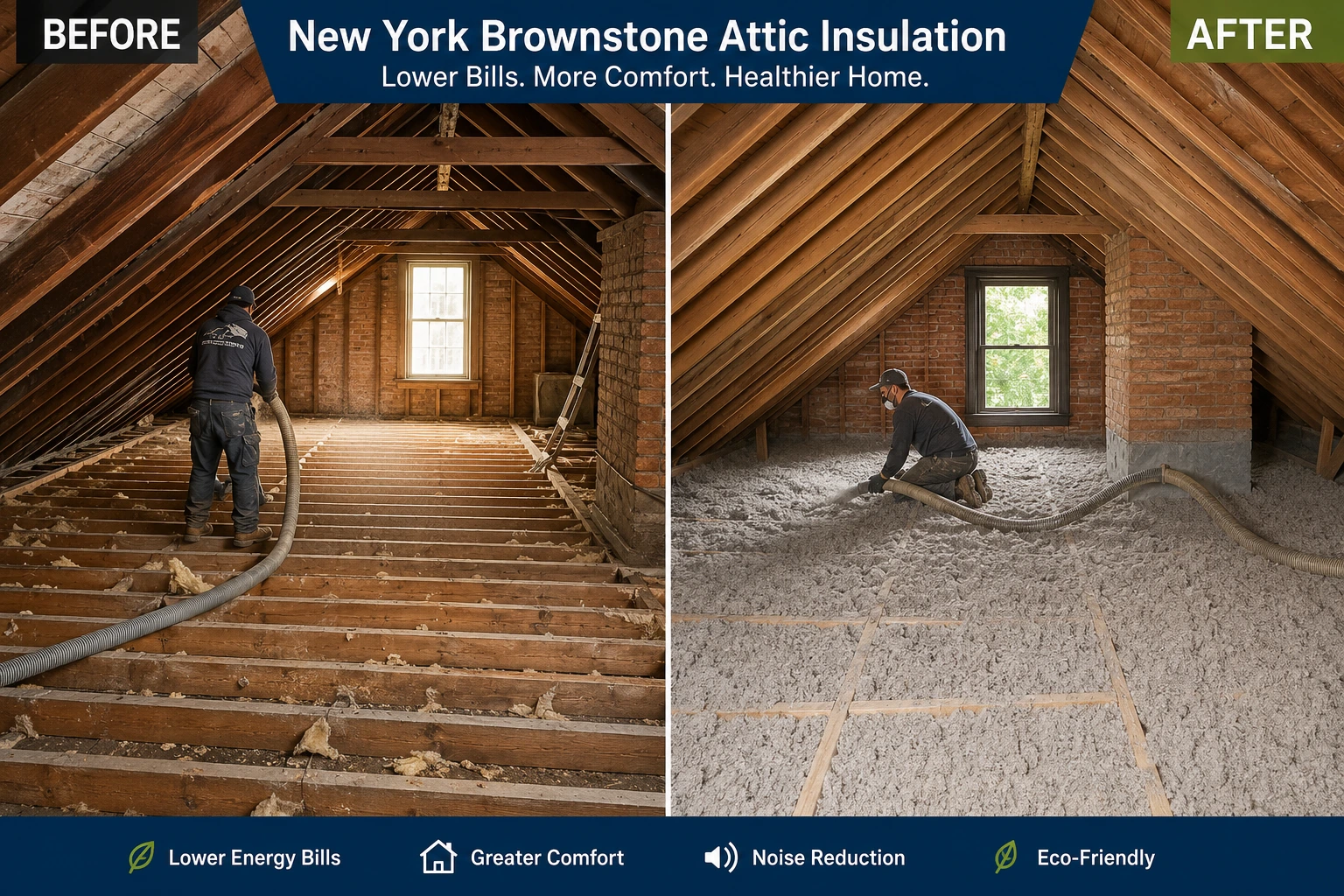
Blown-in (cellulose/fiberglass): Professionals use machines to blow material; drill-and-fill for walls.
Spray foam: Specialized equipment; requires prep, PPE, and curing time. Pros only.
Energy Savings and Payback
Proper insulation + air sealing can cut heating/cooling bills 20–50% in New York homes. Payback often 3–8 years, faster with rebates. Pair with heat pumps for even bigger savings.
Rebates, Tax Credits, and Incentives
New York offers strong programs via NYSERDA, EmPower+, utility rebates (Con Ed, etc.), and federal options. Insulation + air sealing packages can get $2,000–$3,000+ in incentives, with more for low/moderate-income households (up to full coverage in some cases). Stack with heat pump rebates.
Start with a free or low-cost home energy assessment.
Best Applications by Home Area
- Attic: Cellulose or fiberglass blown-in (target R-49+).
- Walls: Dense-pack cellulose or spray foam.
- Basement/Rim Joists: Closed-cell spray foam.
- Crawl Spaces: Spray foam or rigid board.
Pros, Cons, and Common Mistakes
Common mistakes: Skipping air sealing, poor installation, ignoring moisture, or choosing based only on price.
Decision Tree
- Budget tight + accessible attic? → Fiberglass or cellulose blown-in.
- Older home with gaps/noise? → Cellulose dense-pack.
- High-performance/moisture issues? → Spray foam (targeted).
- Full upgrade? → Energy audit first.
Maintenance and Longevity
All types need little maintenance if installed correctly. Inspect attics periodically for pests or moisture.
Pairing with HVAC, Heat Pumps, and More
Better insulation lets you right-size HVAC systems, improves heat pump efficiency, and enhances indoor air quality with better ventilation.
Expert Tips
- Always combine insulation with comprehensive air sealing.
- Hire BPI-certified or NYSERDA contractors.
- Get a professional energy audit before major work.
- Consider whole-home performance for maximum savings.
Key Takeaways
- Cellulose often wins for most New York retrofits due to performance and value.
- Spray foam excels in high-impact areas.
- Fiberglass suits simple, budget jobs.
- Incentives make now a great time to act.
Frequently Asked Questions
1. What is the best insulation for New York homes? Cellulose for most attics and walls; spray foam for targeted high-performance spots.
2. How much does attic insulation cost in NYC? $1,500–$7,000+ depending on type and size, before rebates.
3. Does spray foam qualify for New York rebates? Yes, especially when part of a package with air sealing.
4. Can I install insulation myself in New York? Batts or blown-in in accessible areas—yes. Spray foam and dense-pack—no.
Conclusion
Choosing the best insulation for New York homes—whether spray foam, fiberglass, or cellulose—depends on your specific house, budget, and goals. In most cases, a combination approach with professional guidance delivers the biggest energy savings, comfort improvements, and long-term value. Don’t leave money on the table with high utility bills or missed rebates.
Ready to make your home more energy efficient? Net0Homes USA helps homeowners make informed decisions about HVAC upgrades, insulation, heat pumps, solar energy, windows, air sealing, and home performance improvements. Whether you’re replacing an aging HVAC system, lowering your utility bills, or planning a complete home energy upgrade, our experts can help you understand your options before you invest. Book your personalized Net0Homes USA Energy Consultation today and start building a more comfortable, efficient, and cost-effective home.