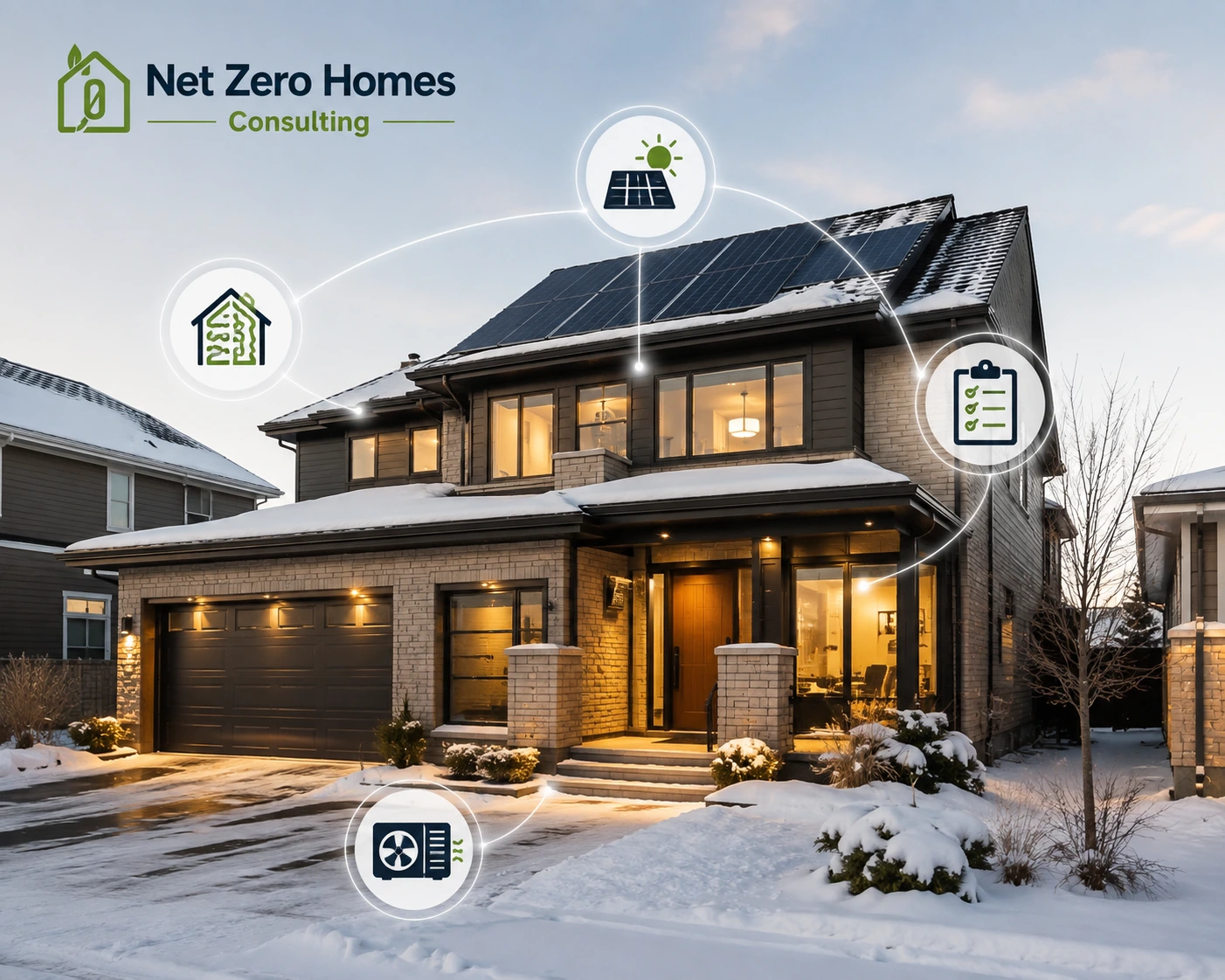

Imagine finally taking the leap to solar power watching your electricity bills drop, knowing you’re generating clean energy for your family, and doing your part for Ontario’s cleaner future. Then, a nagging question hits: “What if something happens to those panels? Is my home insurance even going to cover them?
For thousands of Ontario homeowners, this is a very real concern. The short answer is yes, most standard home insurance policies in Ontario will cover rooftop solar panels. But coverage isn’t automatic, and skipping a few key steps can leave you underinsured or facing unexpected premium hikes.
As energy efficiency experts at Net Zero Homes, we’ve helped hundreds of Ontario families navigate solar installations alongside insurance, rebates, and full-home upgrades. In this guide, we’ll walk you through exactly how insurance works with solar in 2026, what to watch out for, real homeowner stories, and practical steps to protect your investment.
How Solar Panels Fit Into Your Ontario Home Insurance Policy
Ontario home insurance policies treat permanently attached rooftop solar panels as part of your home’s structure—much like a new roof, windows, or addition. They typically fall under Dwelling Coverage (often called Coverage A).
This means your panels are protected against common perils such as:
- Fire
- Lightning and electrical surges
- Wind damage
- Theft and vandalism
- Weight of snow or ice (common in Ontario winters)
Ground-mounted or freestanding systems are usually covered under Other Structures coverage (Coverage B), which is often limited to 10% of your dwelling limit. For example, on a $500,000 dwelling policy, you might only have $50,000 for everything from sheds to ground-mounted solar.
Real homeowner scenario: Sarah from Kitchener installed a 10 kW rooftop system on her 20-year-old bungalow. She notified her insurer early, increased her dwelling coverage by the system’s replacement value, and slept easy. When a severe windstorm damaged a few panels the following winter, her claim was handled smoothly.
What’s Typically Covered vs. What’s Not
Standard policies provide solid protection for sudden, accidental damage, but they have important gaps:
Covered under most policies:
- Damage from covered perils (fire, lightning, wind, etc.)
- Liability if panels cause damage to others’ property
- Theft of panels (especially rooftop)
Usually not covered (without endorsements):
- Equipment breakdown (e.g., inverter failure from internal issues)
- Normal wear and tear or gradual panel degradation
- Damage from faulty installation
- Lost income from net metering credits during downtime
- Certain hail events (check your policy—Ontario sees occasional hail)
Manufacturer warranties (often 25 years for performance) cover degradation, while your installer’s liability insurance handles installation issues. For equipment breakdown and business interruption (lost net metering revenue), you may need a specific endorsement. Some insurers like Aviva offer green energy add-ons tailored for solar and battery systems.
The Insurance Notification Process: A Simple 5-Step Checklist
Don’t wait until after installation. Here’s what to do before your solar project begins:
- Contact your insurer or broker in writing — Share details about the system size, value, installer credentials, and whether you’re adding battery storage.
- Update your dwelling coverage limit — Add the full replacement cost of the solar system (typically $17,000–$35,000+ installed in 2026, before rebates).
- Ask about specific perils and exclusions — Confirm hail, wind, and equipment breakdown coverage.
- Discuss battery storage — Lithium iron phosphate (LiFePO4) batteries are often viewed more favourably due to better safety profiles.
- Request and file your ESA Certificate — Ontario’s Electrical Safety Authority inspection provides proof of code-compliant work that insurers appreciate.
Net Zero Homes provides ESA documentation and works with homeowners to make this process seamless.
How Much Will Solar Increase Your Insurance Premium?
Expect a modest increase—typically $75 to $150 per year for a standard residential system. This reflects the higher replacement value of your home
Some insurers apply a small flat surcharge for the added electrical components. The good news? Your solar system can save $1,500–$2,500+ annually on electricity bills (depending on system size, usage, and rates), making the insurance bump negligible over time.
ROI example: A $25,000 system (after rebates) might add $100/year to insurance but generate $2,000/year in savings. Payback remains strong, often under 7–10 years with incentives.
Cost breakdown considerations (2026 Ontario averages):
- Rooftop system replacement value: $2.50–$3.50 per watt installed
- Battery addition: Extra $10,000–$20,000+ to insurable value
- Premium impact: Varies by insurer, roof condition, location, and claims history
Shop around—some providers are more solar-friendly than others. A good broker can compare options quickly.
Benefits and Potential Drawbacks
Benefits:
- Increased home value and appeal to buyers
- Protection against rising electricity rates
- Environmental impact: Reduced carbon footprint
- Eligibility for programs like Canada Greener Homes initiatives
- Potential for bundled efficiency upgrades (insulation, heat pumps, air sealing) that further lower energy use and may qualify for discounts
Drawbacks:
- Upfront communication effort required
- Possible premium increase
- Need to verify roof condition (older roofs may require repairs first)
- Limited options with some insurers for very large systems or net metering setups
Overall, the long-term financial and environmental upsides far outweigh the manageable insurance adjustments for most families
Common Mistakes Ontario Homeowners Make
- Installing first and notifying the insurer later (risk of coverage denial)
- Forgetting to increase dwelling limits, leading to underinsurance
- Assuming manufacturer warranties replace home insurance
- Ignoring roof age or structural readiness
- Not asking about battery or net metering specifics
Actionable Takeaways
- Get a professional home energy audit early—it reveals synergies with solar, insulation, heat pumps, and more.
- Choose an experienced, licensed installer (ECRA/ESA certified) like Net Zero Homes.
- Bundle upgrades: Solar + high-performance windows + air sealing + EV charger for maximum efficiency and potential incentives.
- Review your policy annually after installation.
- Maintain your system: Annual inspections keep everything in top shape and support claims.
Cost Considerations and Incentives
In 2026, Ontario homeowners benefit from federal and provincial supports via Natural Resources Canada’s Canada Greener Homes resources, Ontario programs, and utility incentives through IESO. These don’t reduce your insurable replacement value but help offset upfront costs significantly.
Always insure based on full replacement cost, not net after rebates.
Frequently Asked Questions
Does home insurance cover solar panels on a rental property or condo in Ontario? Rooftop panels on owner-occupied homes are straightforward. Rentals or condos often require different considerations—check strata rules and landlord/tenant policies.
Will adding solar panels make it harder to get or renew home insurance? Most insurers are comfortable with solar, especially with proper notification and documentation. A few may be more cautious with very large systems or older homes—shopping multiple quotes helps.
Are ground-mounted solar panels covered differently? Yes, usually under other structures with lower limits. Discuss options like endorsements with your insurer.
Does solar affect my home’s resale value and insurance? Solar generally boosts value. Disclose it to future buyers and ensure documentation transfers smoothly.
What about combined solar + battery + heat pump upgrades? These are increasingly popular for net-zero paths. Notify your insurer of the full scope; some offer green home discounts or specialized endorsements.
How do I find a solar-friendly insurer in Ontario? Work with a broker experienced in renewable energy. Ask Net Zero Homes for local recommendations based on client feedback.
Do I need separate insurance for my solar system? Usually not for rooftop systems, but endorsements can fill gaps.
Will insurance cover damage if my panels cause a roof leak? Resulting water damage from a covered peril is often covered, but confirm installation quality and roof readiness.
Final Thoughts
Solar panels are a smart, future-proof investment for Ontario homeowners. With the right preparation, they integrate smoothly into your home insurance without major headaches. The key is proactive communication, accurate valuation, and partnering with trusted experts.
At Net Zero Homes, we don’t just install solar panels—we help you build a more comfortable, efficient, and resilient home through heat pumps, insulation, air sealing, high-performance windows, home battery storage, EV chargers, and full net-zero solutions. Our team understands the full picture, including insurance, rebates, and long-term performance.
Ready to make your home more energy independent? Contact Net Zero Homes today for a no-obligation consultation, home energy audit, or personalized solar assessment. Let’s turn your energy goals into reality while protecting your investment every step of the way.
Sources:
https://natural-resources.canada.ca/