As more Ontario homeowners consider transitioning to electric vehicles (EVs), the question of installing a home charging station becomes increasingly relevant. Imagine this: it’s a chilly winter evening in Toronto, and after a long day, you pull into your driveway, plug in your EV, and know it will be fully charged by morning no stops at public stations, no waiting in line, just seamless convenience. But before you get there, understanding the EV charger installation cost in Ontario and the factors affecting it is essential.
This guide walks you through the costs, savings, common pitfalls, rebates, and decision-making steps so you can confidently plan your home EV charging setup.
Understanding Home EV Chargers
Home EV chargers are generally classified into two types: Level 1 and Level 2.
Level 1 Chargers: These use a standard 120V outlet. They’re inexpensive but very slow usually adding 5–8 km of range per hour of charging. For most daily drivers, Level 1 is only suitable if you have short commutes and long overnight charging periods.
Level 2 Chargers: These operate on a 240V circuit, similar to what electric dryers use, and can provide 30–60 km of range per hour of charging. They are the industry standard for residential EV charging and the focus of most installation projects in Ontario.
For the purposes of this guide, when we refer to home EV charging station cost, we are primarily discussing Level 2 chargers.
EV Charger Installation Cost in Ontario: What to Expect
The total EV charger installation cost in Ontario varies based on multiple factors:
1. Equipment Cost
Level 2 Charger Price Canada: The charger itself usually ranges between $800–$1,500. High-end models with smart features like Wi-Fi, scheduling, and energy monitoring can exceed $2,000.
2. Electrical Work
Your home’s electrical panel may need an upgrade to handle the additional load. A licensed electrician may charge $500–$2,500 depending on complexity.
Running new wiring from the panel to the garage or parking area also contributes to costs.
3. Installation Complexity
Simple installations garage next to electrical panel, minimal trenching can be completed in a few hours.
Complex installations charging outside the home, long wiring runs, panel upgrades, or requiring permits can double or triple labor costs.
Typical total range in Ontario: $1,500–$5,000 CAD.
High-end or complex setups, including integrated home energy systems, can exceed $7,000 CAD.
Energy Savings and ROI
Home EV charging can save significant money compared to gasoline. Consider an average EV in Ontario:
Average daily commute: 40 km
Electricity cost: $0.17/kWh
EV efficiency: 18 kWh/100 km
Daily charging cost: 7.2 kWh × $0.17 = ~$1.22
Compare this to a gas vehicle using 8 L/100 km at $1.50/L: 3.2 L × $1.50 = ~$4.80
Over a year, home charging can save $1,200–$1,500 compared to a gasoline vehicle, making the initial installation a solid long-term investment. ROI improves further when combined with solar panels or time-of-use electricity plans.
Common Mistakes Homeowners Make
Underestimating Electrical Upgrades: Many homeowners assume any garage can host a Level 2 charger. Older homes often require panel upgrades or additional circuits.
Ignoring Charger Compatibility: Not all chargers are compatible with every EV; check your EV’s recommended charging speed.
Skipping Rebates: Federal and provincial rebates can offset costs, but many homeowners overlook the application process.
DIY Installation Risks: Improper installation can void warranties and pose safety risks. Always hire a licensed electrician.
Step-by-Step Decision Guidance
Evaluate Your Home’s Electrical Capacity: Determine whether your panel can handle the additional load.
Choose the Right Charger: Consider speed, smart features, and EV compatibility.
Get Multiple Quotes: Licensed electricians can vary significantly in pricing; get at least three estimates.
Consider Rebates Early: Apply for federal and Ontario EV charger incentives before paying in full.
Plan for the Future: If you anticipate adding more EVs or home energy systems, design with capacity in mind.
Ontario and Canada EV Charger Rebates
Homeowners in Ontario may qualify for incentives under federal and provincial programs. While amounts can vary, rebates typically cover:
Purchase of Level 2 home chargers
Installation costs when performed by a licensed electrician
Integration with home renewable energy systems (e.g., solar panels)
Checking updated eligibility and application deadlines ensures you maximize savings.
When This Upgrade Makes Sense (and When It Doesn’t)
Good candidates for a home EV charger:
Daily commute exceeds 30 km
Own or plan to buy a Level 2 EV
Want to avoid public charging infrastructure
Planning home energy upgrades or solar integration
When it may not make sense:
Rarely drive long distances
Short-term EV ownership (e.g., planning to move soon)
Existing Level 1 charging meets all needs
For many Ontario homeowners, the convenience, savings, and future-proofing of Level 2 charging outweigh the upfront investment.
How It Fits Into a Net Zero Roadmap
Installing a home EV charger is more than just convenience it’s a critical step in moving toward a Net Zero energy home:
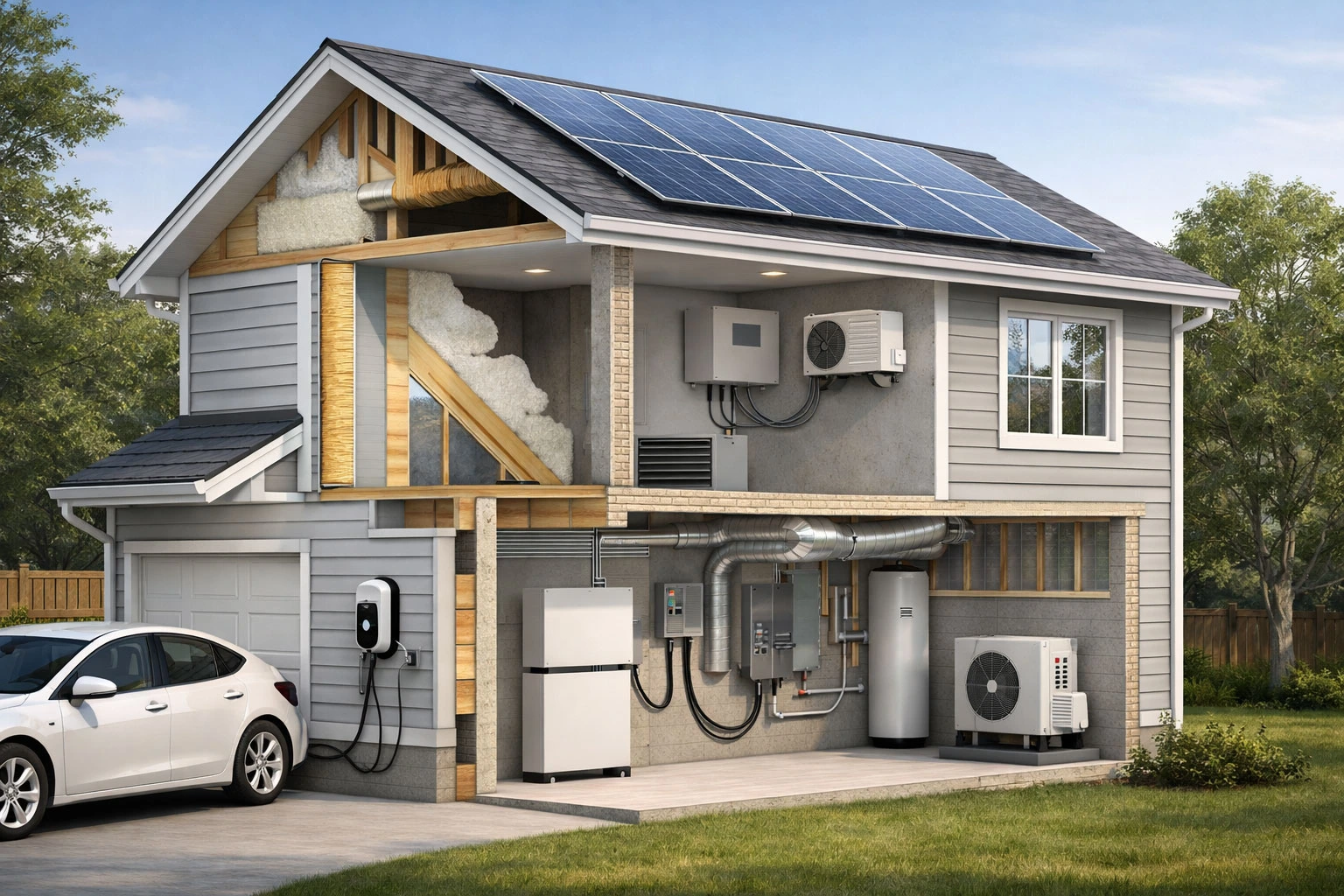
Integrates seamlessly with solar PV systems for zero-carbon charging
Works with home batteries to maximize self-consumption
Supports electrification of transportation, reducing fossil fuel dependence
Prepares your home for future smart grid and energy management solutions
EV charger installation is part of a broader strategy, complementing heat pumps, energy-efficient windows, insulation upgrades, and air sealing improvements.
Conclusion
Investing in a home EV charging station in Ontario offers convenience, cost savings, and a clear path toward a sustainable, Net Zero-ready home. While costs vary based on equipment, installation complexity, and electrical capacity, careful planning and understanding rebates can optimize your investment.
For homeowners considering this step, professional guidance ensures the charger is safe, efficient, and future-proofed.
Take the next step: Book a consultation with Net Zero Homes Consulting for a customized EV charging and energy upgrade roadmap tailored to your home and lifestyle.