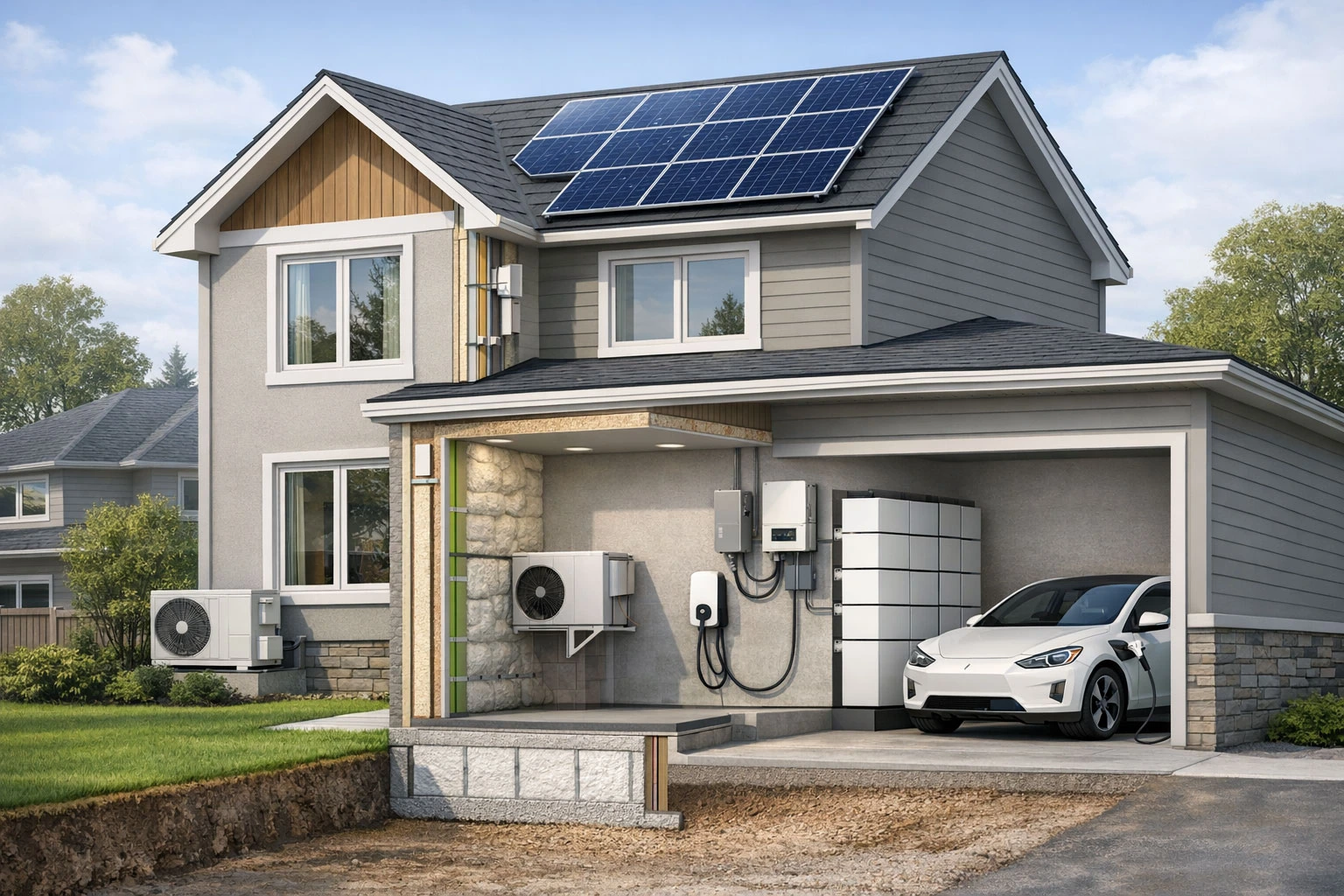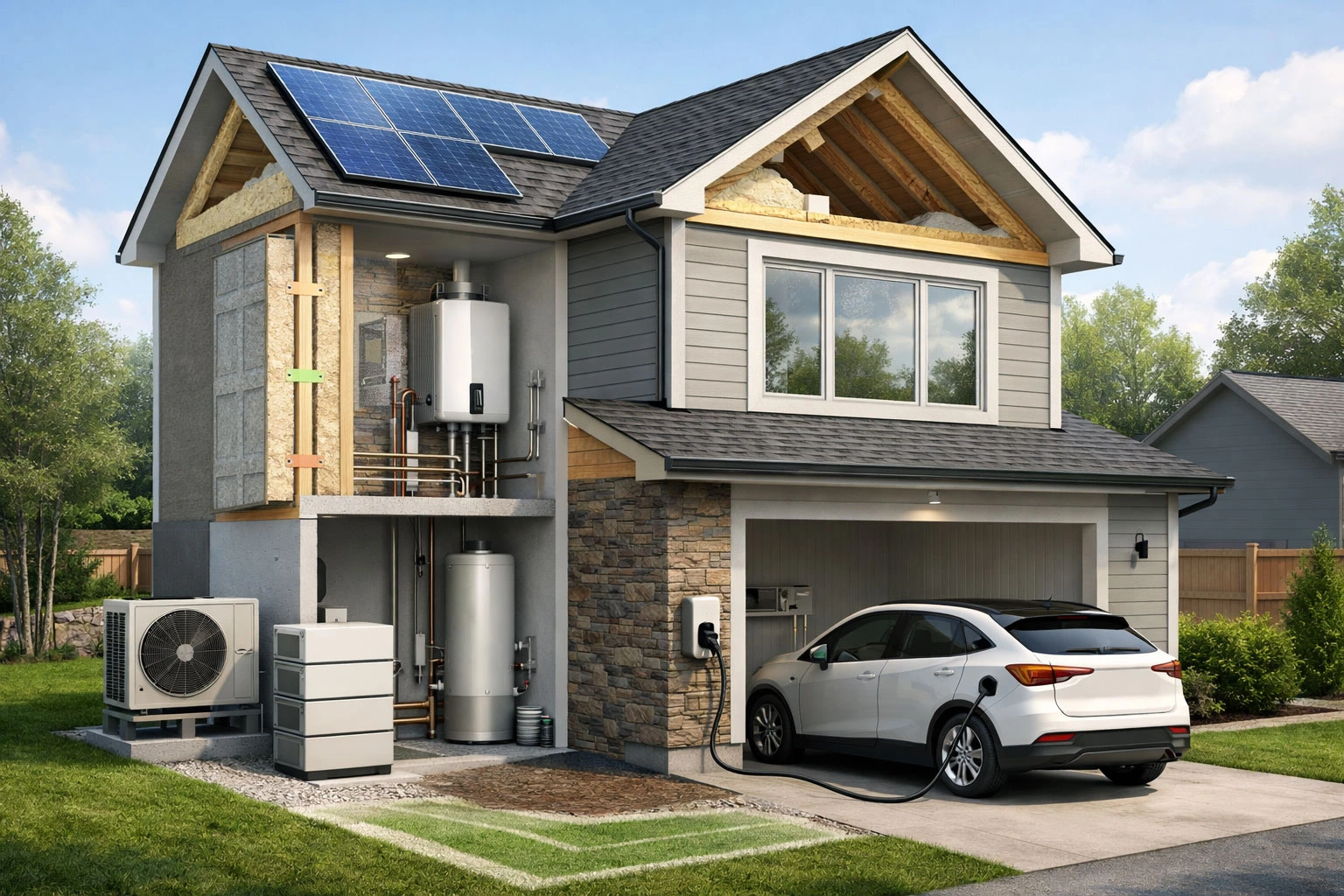
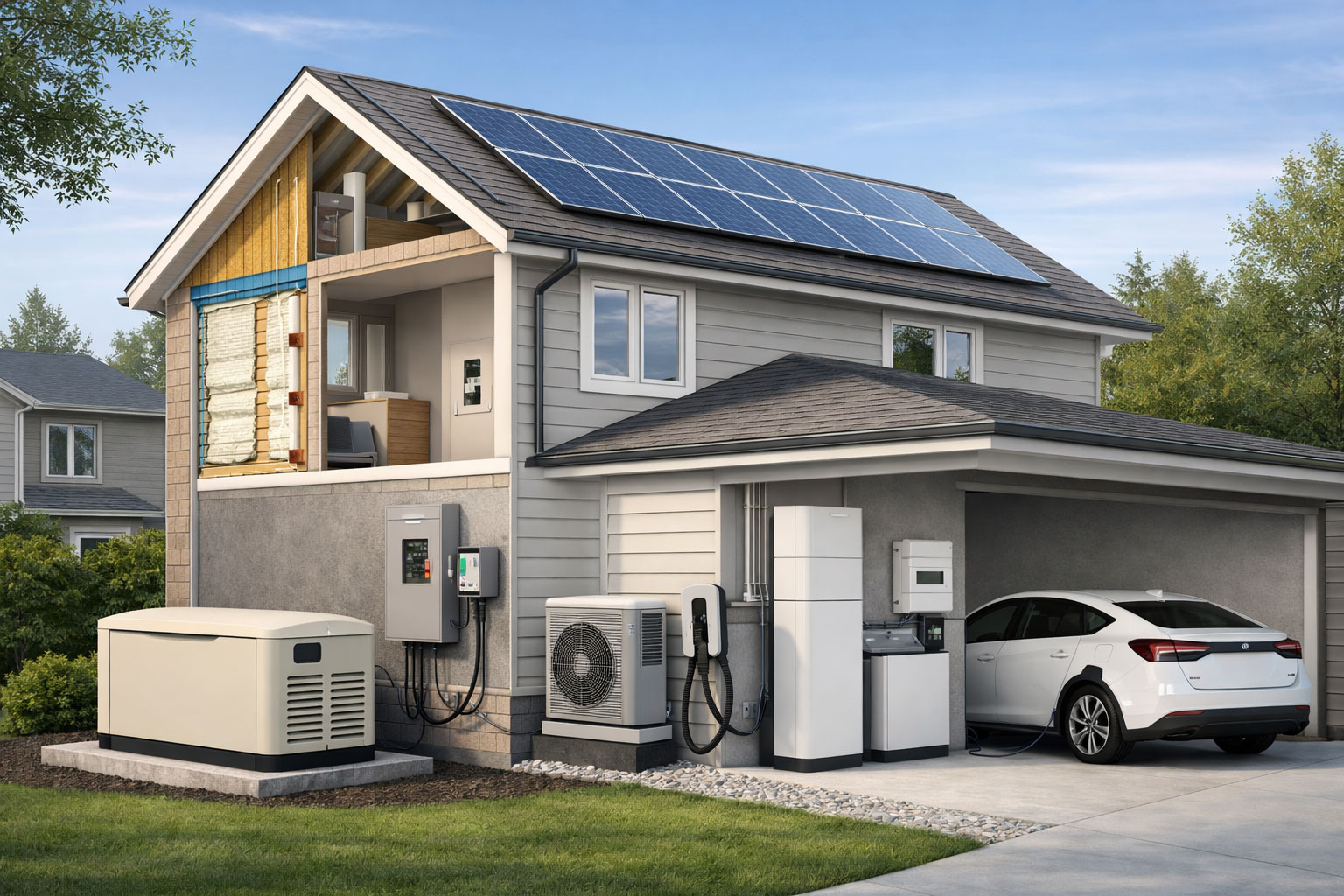

Power outages are more than just a minor inconvenience they can disrupt work, spoil food, and leave your home in the dark for hours or even days. Imagine a cold winter evening in Ontario: the wind is howling, the temperature is dropping, and suddenly your lights go out. Your family huddles around candles, the fridge stops working, and your electric heat pump shuts down. At this moment, many homeowners start asking: “Should I invest in a whole home generator or a battery backup system?”
Choosing between these two options isn’t simple. Each has unique benefits, costs, and applications. This guide breaks down the key differences, financial considerations, and practical decision-making steps for Canadian homeowners, with a focus on Ontario but relevant globally.
Understanding the Basics: Whole Home Generators and Battery Backups
Whole Home Generators
A whole home generator is a permanent system, typically powered by natural gas, propane, or diesel, that automatically kicks in during a power outage. It can power an entire home including appliances, HVAC systems, and electronics for hours or even days, depending on fuel availability.
Key Features:
Automatic operation: Starts immediately when power fails.
Fuel-powered: Runs on natural gas, propane, or diesel.
High capacity: Can handle heavy loads like furnaces, water heaters, and multiple appliances simultaneously.
Long-term backup: Ideal for extended outages or homes with critical energy needs.
Battery Backup Systems
Battery backup systems store electricity, often sourced from your home’s electrical grid or paired with solar panels. When the power goes out, the system provides energy from stored electricity. Most residential systems use lithium-ion batteries, with varying capacities.
Key Features:
Clean and quiet: No fuel storage or exhaust fumes.
Scalable: Batteries can be added to increase storage capacity.
Integration with renewables: Pairs well with solar panels and can reduce grid dependence.
Limited duration: Provides power for a few hours to a day, depending on battery size and home load.
Cost Considerations: What Canadian Homeowners Should Know
When comparing whole home generators and battery backups, cost is a major factor, especially in Ontario.
Whole Home Generator Costs Ontario
Installation: $5,000 – $15,000, depending on size and fuel type.
Fuel: Natural gas is often cheaper than propane or diesel, but costs fluctuate.
Maintenance: Annual servicing is essential, adding $200–$500 per year.
Longevity: Typically lasts 15–20 years with proper maintenance.
Battery Backup Costs Canada
Battery system: $10,000 – $25,000 for a medium-to-large system.
Installation: $2,000 – $5,000, depending on complexity.
Maintenance: Minimal, mostly software updates and monitoring.
Lifespan: 10–15 years for lithium-ion systems.
While battery systems often have higher upfront costs, they can integrate with solar panels, potentially offsetting electricity bills over time.
Energy Savings and ROI
Whole Home Generators
Primarily provide emergency backup, not energy savings.
ROI is measured in avoided disruption and protection of critical systems, rather than monthly energy savings.
Battery Backup Systems
Can reduce peak electricity use by storing energy when rates are low and using it during peak hours.
If paired with solar, can store excess generation and increase self-consumption, reducing reliance on the grid.
ROI depends on energy consumption patterns, solar production, and utility rates.
Common Mistakes Homeowners Make
Underestimating power needs
Choosing a system that doesn’t cover essential loads leads to frustration when critical appliances remain offline.Ignoring maintenance
Generators require regular testing, fuel management, and servicing to remain reliable.Overlooking integration
Battery systems work best when paired with solar panels or energy-efficient home upgrades.Neglecting incentives
Many Canadian programs and utility rebates exist for clean energy upgrades missing them can increase overall cost.
Step-by-Step Decision Guidance
Evaluate your needs
How long do you typically experience outages?
Which systems must stay operational (fridge, heat, security, medical devices)?
Consider home size and energy consumption
Large homes or high-demand appliances favor generators.
Smaller loads or partial backup needs may be better served by a battery system.
Assess fuel availability
Natural gas or propane pipelines are ideal for generators.
Remote locations may benefit from a battery system, especially with solar.
Factor in long-term energy goals
Homeowners aiming for Net Zero energy may prefer batteries integrated with solar and heat pumps.
Budget realistically
Include installation, maintenance, fuel, and possible expansion costs.
Ontario and Canada Rebates
Canada offers several rebate and incentive programs to encourage backup and clean energy systems:
Canada Greener Homes Grant: Supports home energy retrofits including battery storage and solar integration.
Local utility rebates: Some Ontario utilities provide credits or incentives for energy storage and grid-interactive systems.
Renewable energy incentives: Programs often cover partial costs for battery systems paired with solar panels.
While rebates vary, they can significantly reduce upfront costs, especially for battery storage solutions.
When This Upgrade Makes Sense and When It Does Not
Whole Home Generator
Makes sense if:
You face frequent or extended outages.
You need to power your entire home, including HVAC and major appliances.
You require a reliable emergency system for medical or business reasons.
May not be ideal if:
You want a sustainable, low-emission solution.
You are looking to reduce monthly energy bills.
You have limited space for fuel storage.
Battery Backup
Makes sense if:
You have solar panels or plan to install them.
You want to reduce grid dependence and cut peak energy costs.
You need silent, clean power for essential loads.
May not be ideal if:
You require backup for long, multi-day outages.
Your energy demand exceeds typical residential battery capacities.
Fitting Backup Power into a Net Zero Roadmap
For homeowners pursuing Net Zero, both systems can play a role:
Generators: Ensure resilience during outages but rely on fossil fuels unless paired with green fuels.
Battery systems: Store clean energy, integrate with solar, and complement energy-efficient upgrades like insulation, heat pumps, and LED lighting.
A hybrid approach is possible: a small generator for extended outages combined with a battery system for daily backup and renewable integration.
Conclusion
Choosing between a whole home generator and a battery backup system is a nuanced decision. It depends on outage frequency, energy needs, environmental goals, and budget. For Ontario homeowners, considering rebates, integration with solar panels, and long-term energy strategies is critical.
By carefully evaluating your home’s needs and planning upgrades in line with a Net Zero roadmap, you can ensure reliable, sustainable, and cost-effective backup power.
For personalized guidance and a customized upgrade plan for your home, book a consultation with Net Zero Homes Consulting and explore the solutions that fit your energy goals.