

When Mark and Priya bought their 1990s home in Mississauga, they expected higher energy bills. What they didn’t expect was how uneven the house would feel. Cold bedrooms in January. A drafty main floor. An overworked furnace running constantly.
After upgrading windows and sealing obvious gaps, comfort improved but not enough. Their energy advisor pointed to the real issue: underperforming insulation.
If you’re weighing spray foam vs fiberglass insulation, you’re not alone. For Canadian homeowners especially in Ontario this decision affects comfort, energy bills, moisture control, and long-term home value. Let’s break it down clearly and practically so you can make the right call for your home.
Understanding the Basics: Spray Foam vs Fiberglass Insulation
Before comparing cost and performance, it helps to understand how these materials work.
Fiberglass Insulation
Fiberglass is the most common insulation in Canadian homes. It typically comes in batts (pink or yellow rolls) or loose fill blown into attics.
It works by trapping air within fine glass fibers, slowing heat transfer.
Pros:
Lower upfront cost
Widely available
Easy to install in open framing
Non-combustible
Limitations:
Does not air seal
Performance depends heavily on installation quality
Can lose effectiveness if compressed or exposed to moisture
Spray Foam Insulation
Spray foam is a two-part chemical mixture that expands and hardens after application. It comes in:
Open-cell spray foam (softer, lighter)
Closed-cell spray foam (denser, higher R-value, vapor resistant)
It insulates and air seals at the same time.
Pros:
Excellent air sealing
Higher R-value per inch
Adds structural rigidity (closed-cell)
Moisture resistance (closed-cell)
Limitations:
Higher upfront cost
Professional installation required
Harder to modify later
R-Value Comparison: What Matters in Canada
In any insulation comparison Canada, R-value always comes up. R-value measures resistance to heat flow the higher the number, the better the insulation.
Typical R-values per inch:
Fiberglass batts: R-3 to R-3.5
Open-cell spray foam: R-3.5 to R-4
Closed-cell spray foam: R-6 to R-7
But here’s the key insight: R-value alone does not determine performance.
In Ontario’s climate, air leakage can account for 25–40% of heat loss. Fiberglass does not stop air movement. Spray foam does.
That’s why in real world conditions, spray foam often outperforms fiberglass beyond what R-value numbers suggest.
Cost Considerations in Ontario and Canada
Upfront cost is usually the deciding factor.
Fiberglass Costs
Lower material and labour cost
Common choice for:
Attics
New builds
Budget-conscious retrofits
For a typical Ontario home:
Attic top-up: relatively affordable
Full wall replacement: moderate
Spray Foam Costs
2–3 times more expensive than fiberglass per square foot
Higher labour and equipment cost
Most often used in:
Basements
Rim joists
Crawlspaces
New high-performance builds
Closed-cell foam costs more than open-cell, but also performs better in cold climates.
Energy Savings and ROI
Homeowners often ask: “Will spray foam pay for itself?”
The answer depends on:
How leaky your home is
Your heating fuel (gas, electric, oil)
Whether you combine insulation with air sealing
Your long-term plans
Real-World Example
A drafty 1970s Ontario home:
Upgrading attic fiberglass alone improves comfort
But adding spray foam in rim joists and basement significantly reduces drafts
Energy savings tend to be strongest when spray foam addresses air leakage areas not just thermal resistance.
In many Ontario homes:
Fiberglass attic upgrades have solid ROI
Spray foam delivers greater comfort and durability benefits
Best results come from strategic hybrid use
Common Mistakes Homeowners Make
Focusing only on R-value
Ignoring air sealing
Insulating before fixing moisture issues
Over-insulating the attic but ignoring the basement
Choosing materials without an energy audit
Insulation works as part of a system. Your attic, walls, basement, windows, and HVAC all interact.
Step-by-Step Decision Guidance
If you’re unsure which insulation type is right, follow this approach:
Step 1: Get an Energy Assessment
In Ontario, a home energy evaluation helps identify:
Air leakage points
Insulation gaps
Moisture risks
Upgrade priorities
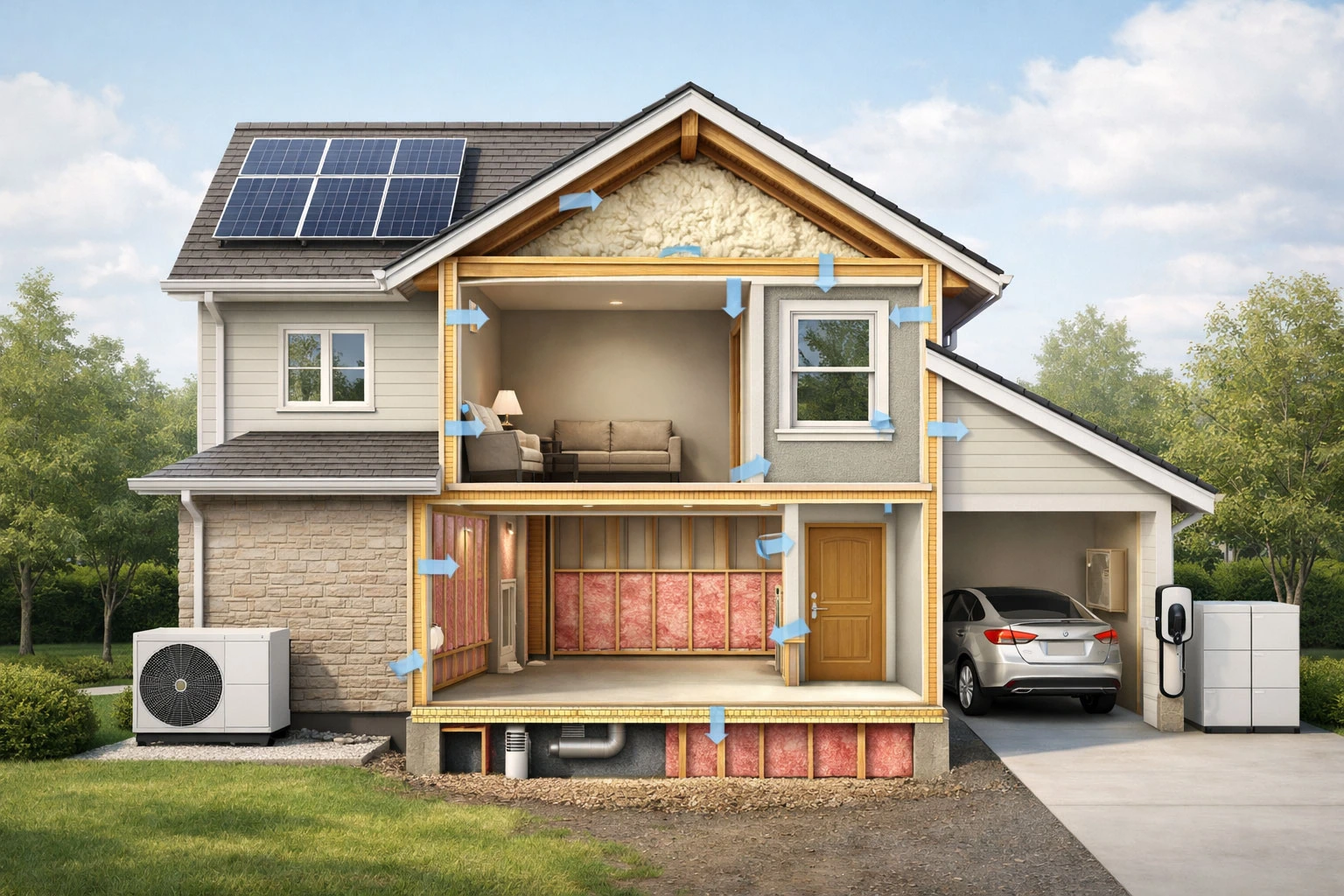
Step 2: Identify the Problem Area
Attic upgrade?
Fiberglass or blown cellulose is often cost-effective.
Basement or crawlspace?
Closed-cell spray foam may perform better due to moisture resistance.
Rim joists?
Spray foam is typically superior because it seals complex framing gaps.
Step 3: Consider Hybrid Solutions
Many high-performance homes use:
Spray foam for air sealing
Fiberglass or cellulose for bulk insulation
This balances cost and performance.
Ontario and Canada Rebate Programs
Canadian homeowners may qualify for insulation upgrades through federal and provincial programs.
These programs often:
Require pre and post energy evaluations
Prioritize attic and basement insulation
Encourage whole home efficiency improvements
Rather than choosing materials in isolation, rebates typically reward measurable performance gains.
This reinforces the idea: strategy matters more than material alone.
When Spray Foam Makes Sense
Spray foam is often the right choice when:
You’re renovating walls down to the studs
You have persistent draft issues
Moisture control is critical
You’re building toward Net Zero performance
You want maximum air sealing in limited space
Closed-cell foam is particularly valuable in cold Canadian climates where vapor control matters.
When Fiberglass Makes Sense
Fiberglass remains a strong option when:
Budget is tight
You’re topping up attic insulation
Air sealing has already been addressed
Framing cavities are standard and accessible
In many Ontario homes, blown-in attic insulation offers one of the best cost-to-benefit ratios.
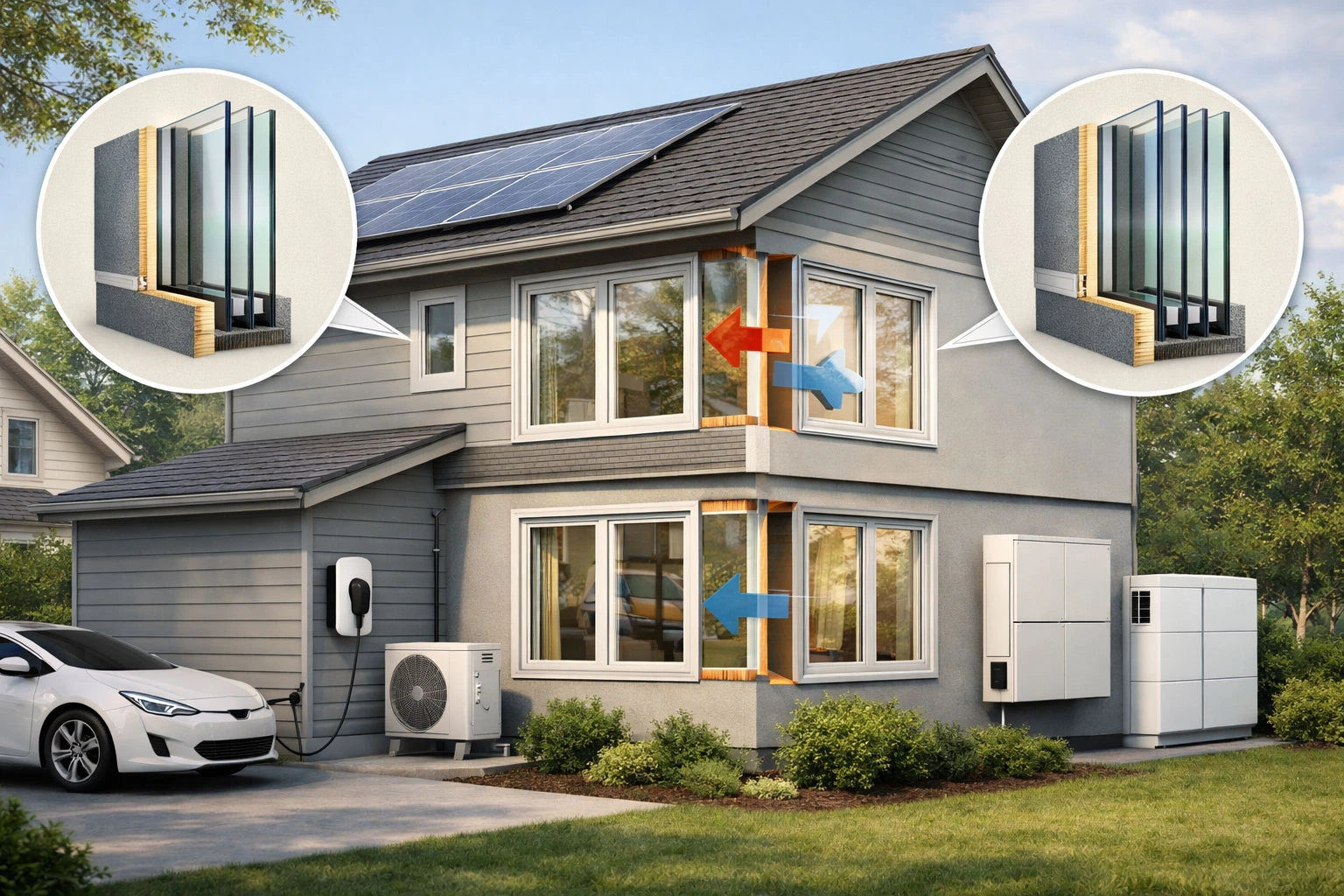
How This Fits Into a Net Zero Roadmap
If your long-term goal is reducing carbon footprint or moving toward Net Zero, insulation is foundational.
Before adding:
Solar panels
Heat pumps
Battery systems
EV chargers
You must reduce heat loss.
A properly insulated and air-sealed home:
Requires a smaller heat pump
Uses less electricity
Improves comfort year-round
Makes renewable systems more affordable
In that roadmap:
Air sealing
Insulation upgrades
High-performance windows (if needed)
Heat pump
Solar
Skipping insulation first often leads to oversized mechanical systems and higher long-term costs.
Performance Beyond Energy Bills
Homeowners often underestimate non-financial benefits.
Comfort
Fewer drafts
More stable room temperatures
Reduced cold floors
Moisture Control
Lower risk of condensation
Reduced mold potential
Sound Control
Spray foam and dense insulation improve acoustic performance
Comfort improvements are often felt immediately long before full ROI is achieved.
Spray Foam vs Fiberglass Insulation: Final Thoughts
There is no universal winner.
For many Canadian homes, the smartest strategy is not choosing one over the other but using each where it performs best.
Fiberglass: cost-effective thermal layer
Spray foam: air sealing and moisture control specialist
The right solution depends on your house, your budget, and your long-term energy goals.
If you’re feeling overwhelmed, that’s normal. Insulation decisions affect comfort, resale value, and future upgrades. It’s worth getting expert guidance rather than guessing.
Ready for a Customized Upgrade Plan?
If you’re considering insulation upgrades and want clarity on the best path forward, book a consultation with Net Zero Homes Consulting.
We’ll assess your home, review rebate eligibility, and create a practical, step-by-step upgrade roadmap tailored to your goals.