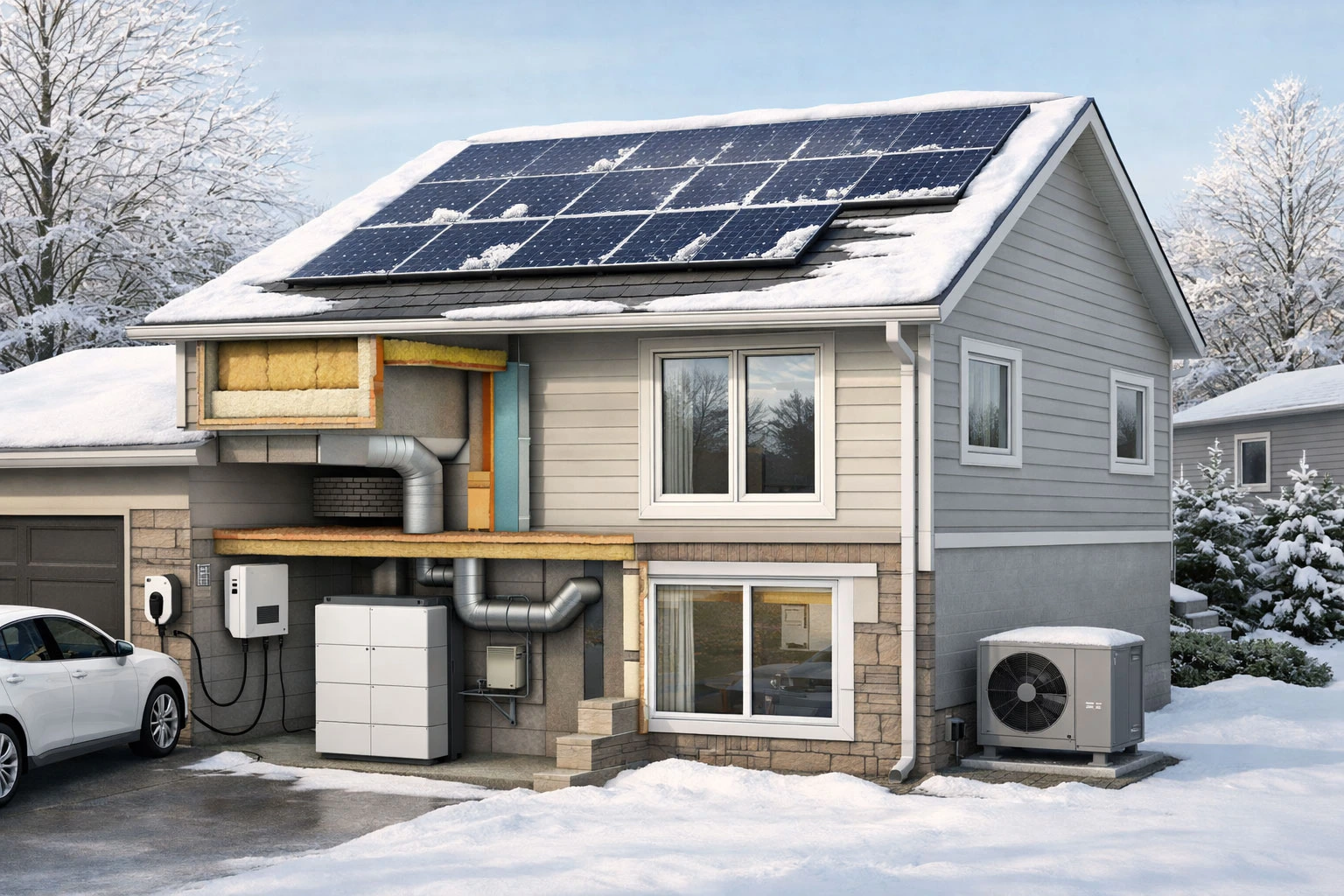

Winter arrives in Ontario with shorter days, snow-covered rooftops, and a natural question for homeowners considering solar: Do solar panels actually work in winter?
If you’ve ever looked out at your snow-covered roof and assumed your system would stop producing electricity for months, you’re not alone. Many homeowners hesitate to invest in solar because of this exact concern.
The reality is more nuanced and more encouraging.
How Solar Panels Perform in Cold Climates
Solar panels don’t rely on heat. They rely on sunlight.
That distinction matters.
In fact, solar panels often perform more efficiently in colder temperatures than in hot climates. Heat can reduce electrical efficiency, while cold air helps panels operate closer to optimal conditions.
What changes in winter?
Three key factors affect solar panel performance during Canadian winters:
1. Reduced daylight hours
Ontario winters mean fewer daylight hours and a lower sun angle. This reduces total energy production compared to summer.
2. Snow coverage
Snow can temporarily block sunlight if panels are fully covered. However:
- Panels are typically installed at an angle, allowing snow to slide off
- Dark panel surfaces absorb heat and help melt snow faster
- Wind often clears panels naturally
3. Reflection boost (albedo effect)
Snow reflects sunlight. This can actually increase solar generation on clear winter days, especially when panels are not covered.
Real-world takeaway
Solar systems in Ontario typically produce:
- 60–70% of annual energy from spring to summer
- 30–40% from fall to winter
Winter production is lower but not zero. Your system is still working, just at a reduced output.
Do Solar Panels Work in Snow?
Yes, but not always continuously.
A light dusting of snow may melt quickly or allow some sunlight through. Heavy accumulation, however, can temporarily stop production.
That said, most systems are designed with this in mind:
- Tilted panels shed snow faster than flat surfaces
- Smooth glass surfaces prevent snow buildup from sticking long-term
- Production often resumes within hours or days without intervention
Important: Climbing onto your roof to clear snow is not recommended. It’s unsafe and usually unnecessary.
Cost Considerations in Canada
The cost of installing solar panels in Ontario depends on system size, roof complexity, and equipment quality.
Typical investment range:
- $15,000 to $35,000 for most residential systems before incentives
Winter performance is already factored into system design. Installers use annual production estimates, not peak summer output, when calculating system size and return.
Additional winter-related considerations:
- Snow load ratings for panels and mounting systems
- Inverter placement (indoor vs outdoor)
- Potential need for monitoring systems to track performance
These are standard in Canadian installations and do not typically add major costs.
Energy Savings and Return on Investment
Even with lower winter output, solar panels can still deliver strong long-term value.
How ROI works in Ontario
Solar systems are designed to offset annual electricity usage, not monthly usage.
In summer:
- You generate surplus electricity
- Excess power is sent to the grid (through net metering)
In winter:
- You draw more electricity from the grid
- You use the credits earned in summer
This seasonal balancing is key.
What homeowners can expect:
- Payback period: typically 8–15 years
- System lifespan: 25+ years
- Long-term energy savings: significant, especially as electricity rates rise
Winter does not eliminate savings it simply shifts when they occur.
Common Mistakes Homeowners Make
Understanding winter performance helps avoid costly or frustrating decisions.
1. Oversizing based on winter expectations
Some homeowners want systems sized to fully cover winter usage. This often leads to overproduction in summer and unnecessary upfront costs.
2. Worrying too much about snow
Snow is temporary. Designing your system around worst-case snow scenarios usually isn’t necessary.
3. Ignoring roof angle and orientation
Roof pitch and direction affect snow shedding and sunlight exposure. South-facing roofs with moderate slopes perform best year-round.
4. Skipping monitoring systems
Without monitoring, it’s hard to know if your system is underperforming or simply experiencing seasonal variation.
5. Expecting consistent monthly output
Solar is seasonal by nature. Expecting flat production year-round leads to unrealistic expectations.
Step-by-Step: How to Decide if Solar Makes Sense
If you’re considering solar in a cold climate like Ontario, a structured approach helps.
Step 1: Review your energy usage
Look at your past 12 months of electricity bills. Annual consumption is what matters most.
Step 2: Evaluate your roof
Consider:
- Direction (south, east, west)
- Pitch (steeper roofs shed snow better)
- Shading from trees or nearby buildings
Step 3: Understand your utility setup
Net metering policies allow you to balance seasonal production. This is essential in winter climates.
Step 4: Get a professional assessment
A proper design will factor in:
- Winter sunlight conditions
- Snow patterns
- Annual production modeling
Step 5: Compare costs vs long-term savings
Look beyond upfront costs. Focus on:
- Payback timeline
- Energy independence
- Protection against rising electricity rates
Rebates and Incentives in Ontario
While specific programs change over time, Canadian homeowners may benefit from:
- Federal energy efficiency programs
- Provincial incentives tied to electrification and clean energy
- Low-interest financing options
- Municipal or utility-based support programs
Solar often pairs well with other upgrades that qualify for incentives, such as:
- Heat pumps
- Home insulation improvements
- Air sealing upgrades
A coordinated approach can improve both comfort and financial returns.
When Solar Panels Make Sense (and When They Don’t)
Solar makes sense if:
- You have a suitable roof with good sun exposure
- You plan to stay in your home long-term
- You want to reduce reliance on grid electricity
- You’re already considering other energy upgrades
Solar may not be ideal if:
- Your roof is heavily shaded year-round
- You plan to move within a few years
- Your electricity usage is already very low
- Your roof needs replacement soon
Winter performance alone is rarely the deciding factor. It’s one piece of a larger picture.
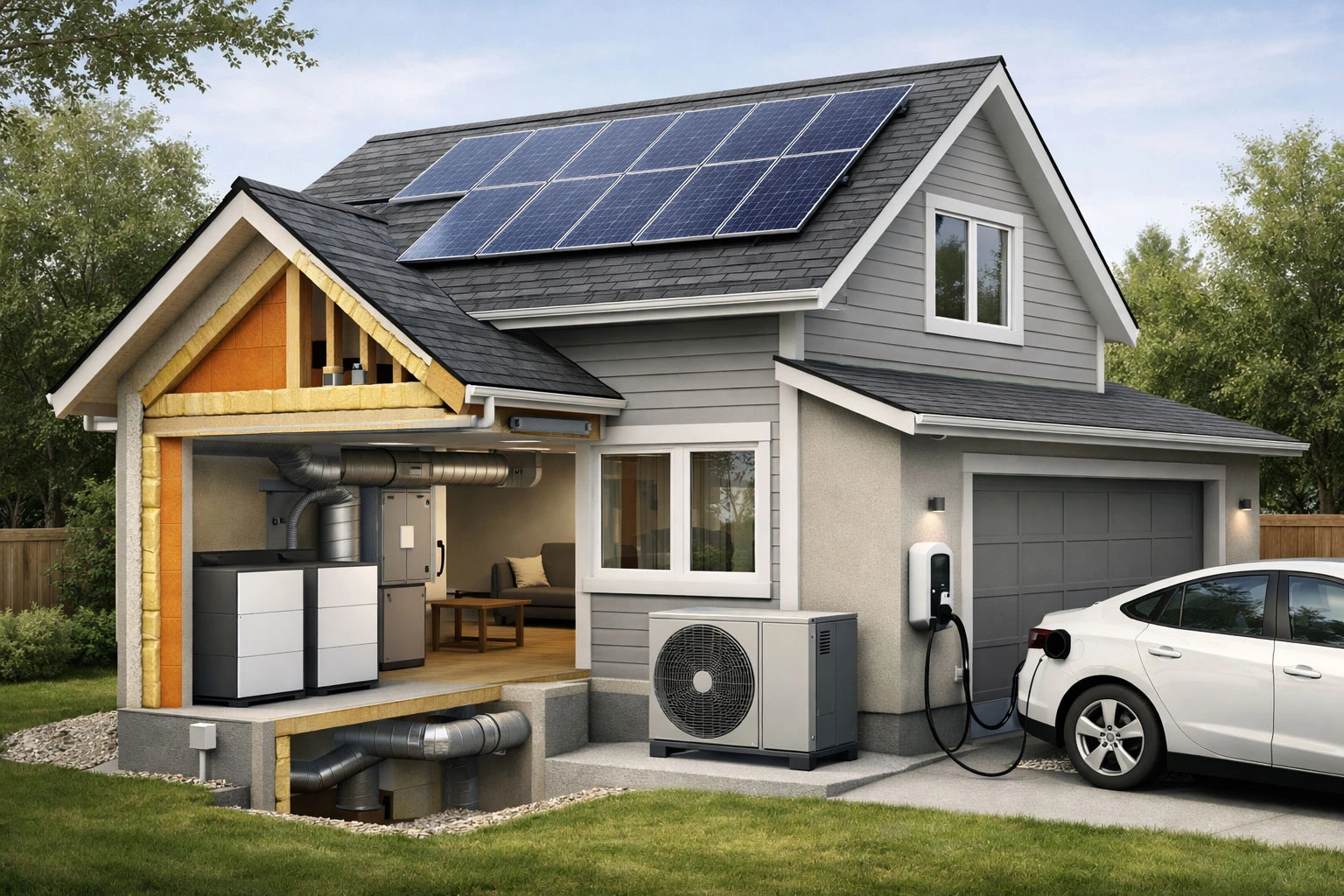
How Solar Fits into a Net Zero Roadmap
Solar panels are often part of a broader strategy not a standalone solution.
In a Net Zero home plan, solar works alongside:
- High-performance insulation
- Air sealing to reduce heat loss
- Energy-efficient windows
- Heat pumps for heating and cooling
- Smart energy management systems
- Battery storage (optional, for backup and load shifting)
Winter highlights the importance of this integrated approach.
For example:
- Better insulation reduces winter electricity demand
- Efficient heating systems lower the load solar needs to offset
- Smart design ensures your system performs well year-round
Solar alone won’t solve everything but it becomes far more effective when combined with other upgrades.
Final Thoughts
Solar panels absolutely work in winter even in cold, snowy climates like Ontario.
Yes, production drops compared to summer. But systems are designed around annual performance, not seasonal peaks. With net metering, summer surplus balances winter demand, making solar a practical and reliable investment.
The key is realistic expectations and proper system design.
If you’re thinking about solar, don’t let winter concerns hold you back. Instead, use them as a starting point for better planning.
Ready to Explore Your Options?
Every home is different. Roof design, energy usage, and long-term goals all play a role in determining whether solar is the right fit.
Book a consultation with Net Zero Homes Consulting to get a customized upgrade roadmap tailored to your home, your budget, and your long-term energy goals.