
Introduction: A Familiar Situation for Ontario Homeowners
You open your hydro bill and pause for a second. It’s higher than last month again. Between rising electricity rates, heating costs, and the growing number of devices in your home, it feels like you’re constantly playing catch-up.
At the same time, you’ve probably noticed more homes in your neighbourhood installing solar panels. Maybe your neighbour mentioned their system, or you’ve seen contractors working on nearby roofs. Naturally, the question comes up:
What does solar actually cost in Ontario and is it worth it?
This guide is designed to give you a clear, practical understanding of solar panel cost in Ontario in 2026, how pricing works, what kind of savings to expect, and how to decide if it’s the right move for your home.
Solar Panel Cost in Ontario (2026 Overview)
Let’s get straight to the numbers.
For most Ontario homes, the solar installation price in 2026 typically falls within:
- $15,000 to $30,000 for a standard residential system (before incentives)
- Larger homes or higher energy usage can push costs beyond this range
What Drives the Cost?
Solar isn’t a one-size-fits-all purchase. The final price depends on several factors:
1. System Size (kW)
The bigger your system, the higher the cost but also the greater the energy production.
- Small system (5 kW): Lower upfront cost, covers partial usage
- Medium system (8–10 kW): Most common for Ontario homes
- Large system (12+ kW): For high consumption households
2. Roof Type and Condition
- Asphalt shingle roofs are straightforward
- Metal or flat roofs may increase installation complexity
- Older roofs may need replacement before installation
3. Equipment Quality
Not all solar panels and inverters are equal. Higher-efficiency systems cost more upfront but often deliver better long-term value.
4. Installation Complexity
- Roof angle and orientation
- Shading from trees or nearby buildings
- Electrical panel upgrades
5. Add-ons (Optional)
- Battery storage systems
- EV charger integration
- Smart energy monitoring
Solar Rebates and Incentives in Ontario
When evaluating solar panel cost in Ontario, it’s important to factor in available incentives.
While programs change over time, homeowners in 2026 may benefit from:
- Federal energy efficiency programs
- Financing options with low-interest or interest-free terms
- Local or utility-based incentives
- Net metering credits (ongoing savings rather than upfront rebates)
Rather than focusing on exact rebate amounts, the key takeaway is this:
Incentives reduce your upfront cost and improve your payback period but they shouldn’t be the only reason you go solar.
Energy Savings and Solar ROI in Canada
Now the real question: Does solar actually save money?
What You Can Expect
A well-designed system in Ontario can typically:
- Offset 50% to 100% of your annual electricity usage
- Reduce monthly hydro bills significantly
- Provide long-term protection against rising energy costs
Payback Period
Most homeowners see a payback period of 8 to 14 years, depending on:
- System size
- Electricity usage
- Installation cost
- Incentives received
After that, your system continues generating electricity for 10–15+ additional years.
Real Example
Consider a homeowner in the Greater Toronto Area:
- Annual electricity bill: $2,400
- Solar system covers 75% of usage
- Annual savings: ~$1,800
Over time, those savings add up especially as electricity rates increase.
Common Mistakes Homeowners Make
Solar is a smart investment but only when done correctly. Here are some of the most common pitfalls:
1. Oversizing or Undersizing the System
Bigger isn’t always better. A system should match your actual energy usage and future plans.
2. Ignoring the Building Envelope
If your home is poorly insulated or drafty, solar panels won’t fix the underlying inefficiency.
Example:
A homeowner installs solar but still struggles with high winter bills due to air leakage and poor insulation.
3. Choosing Based on Price Alone
The cheapest quote often means compromises in equipment, design, or installation quality.
4. Skipping Electrical Upgrades
Older homes may need panel upgrades. Ignoring this can delay installation or increase costs later.
5. Not Planning for Future Needs
If you’re considering an EV or heat pump, your energy demand will increase. Your solar system should account for that.
Step-by-Step: How to Decide if Solar Is Right for You
If you’re feeling unsure, here’s a practical way to approach the decision.
Step 1: Review Your Energy Usage
Look at your last 12 months of electricity bills. This helps determine the right system size.
Step 2: Evaluate Your Roof
- South-facing roofs are ideal, but east/west can still work
- Minimal shading is important
- Roof condition should be solid
Step 3: Consider Your Long-Term Plans
Are you planning to:
- Install a heat pump?
- Buy an EV?
- Stay in your home long-term?
These factors directly impact solar ROI in Canada.
Step 4: Improve Efficiency First
Before installing solar, consider:
- Air sealing
- Insulation upgrades
- High-efficiency HVAC systems
This reduces the size (and cost) of your solar system.
Step 5: Get a Professional Assessment
A proper evaluation includes:
- Energy modeling
- Roof analysis
- Financial projections
Avoid making decisions based solely on quick quotes.
When Solar Makes Sense (And When It Doesn’t)
Solar Makes Sense If:
- You plan to stay in your home for 8+ years
- Your roof gets good sunlight exposure
- Your electricity usage is moderate to high
- You want predictable, long-term energy costs
- You’re working toward a more energy-efficient home
Solar May Not Be Ideal If:
- Your roof is heavily shaded
- You’re planning to move soon
- Your home has major efficiency issues not yet addressed
- Your electricity usage is already very low
Solar works best as part of a broader strategy not as a standalone fix.
How Solar Fits Into a Net Zero Roadmap
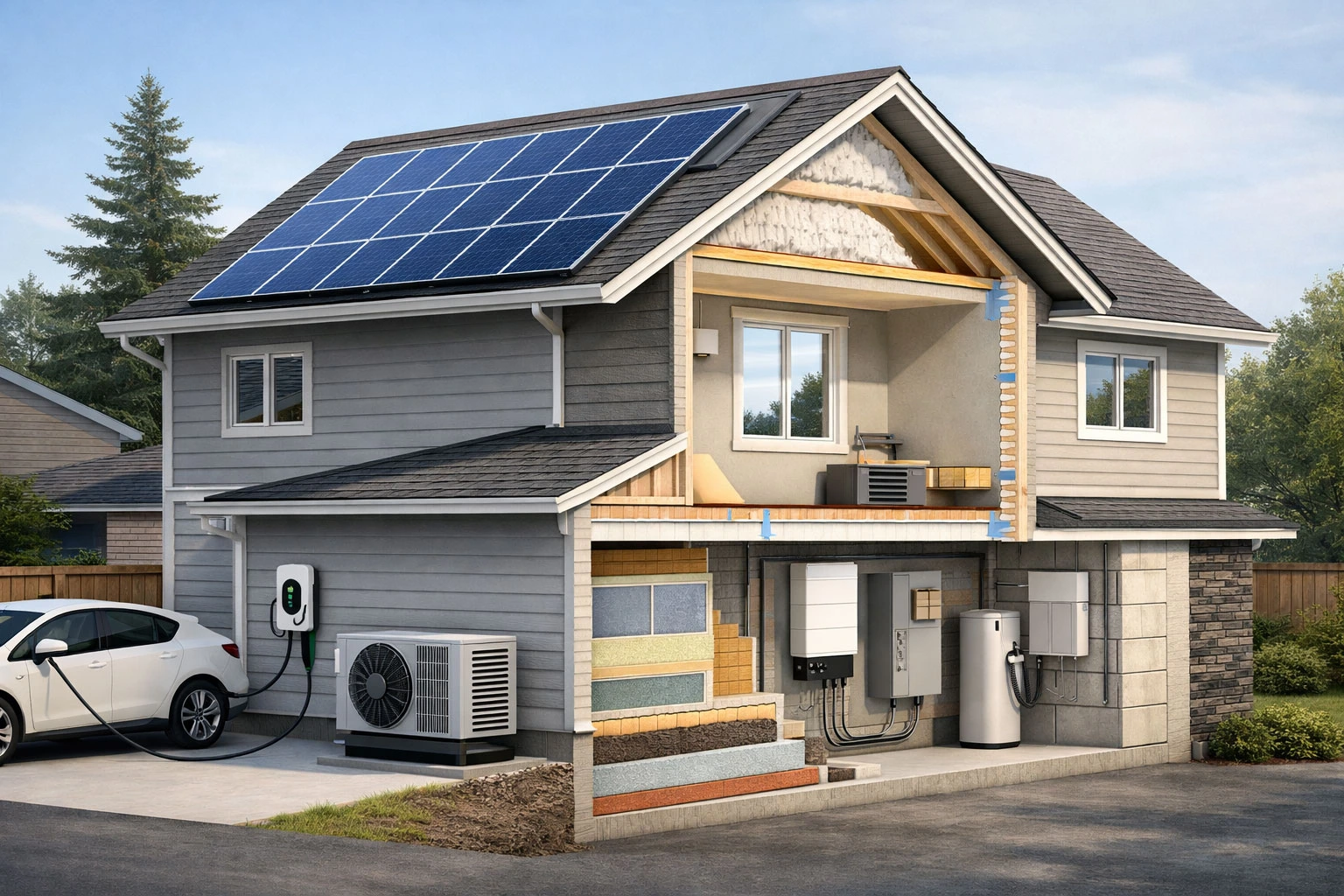
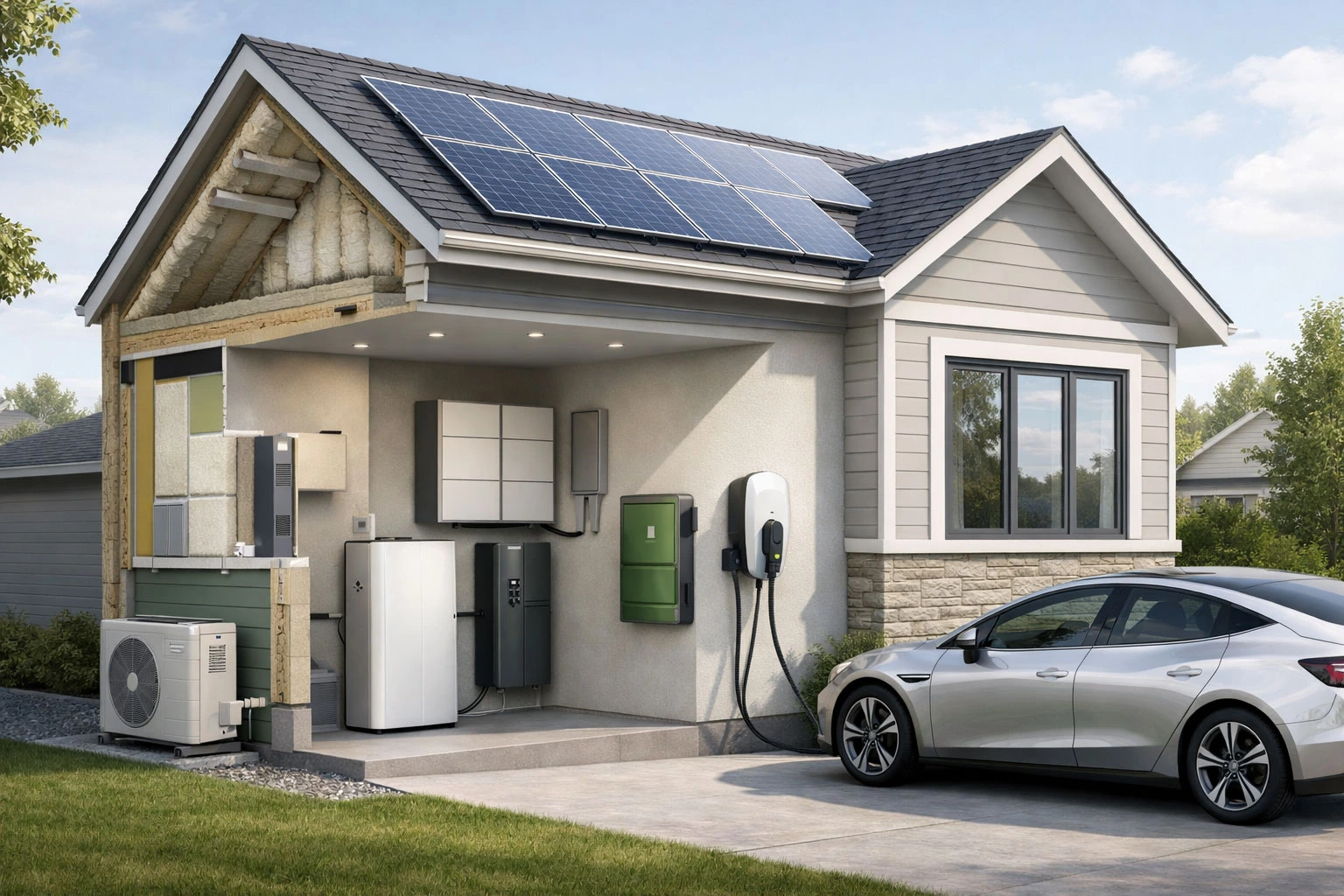
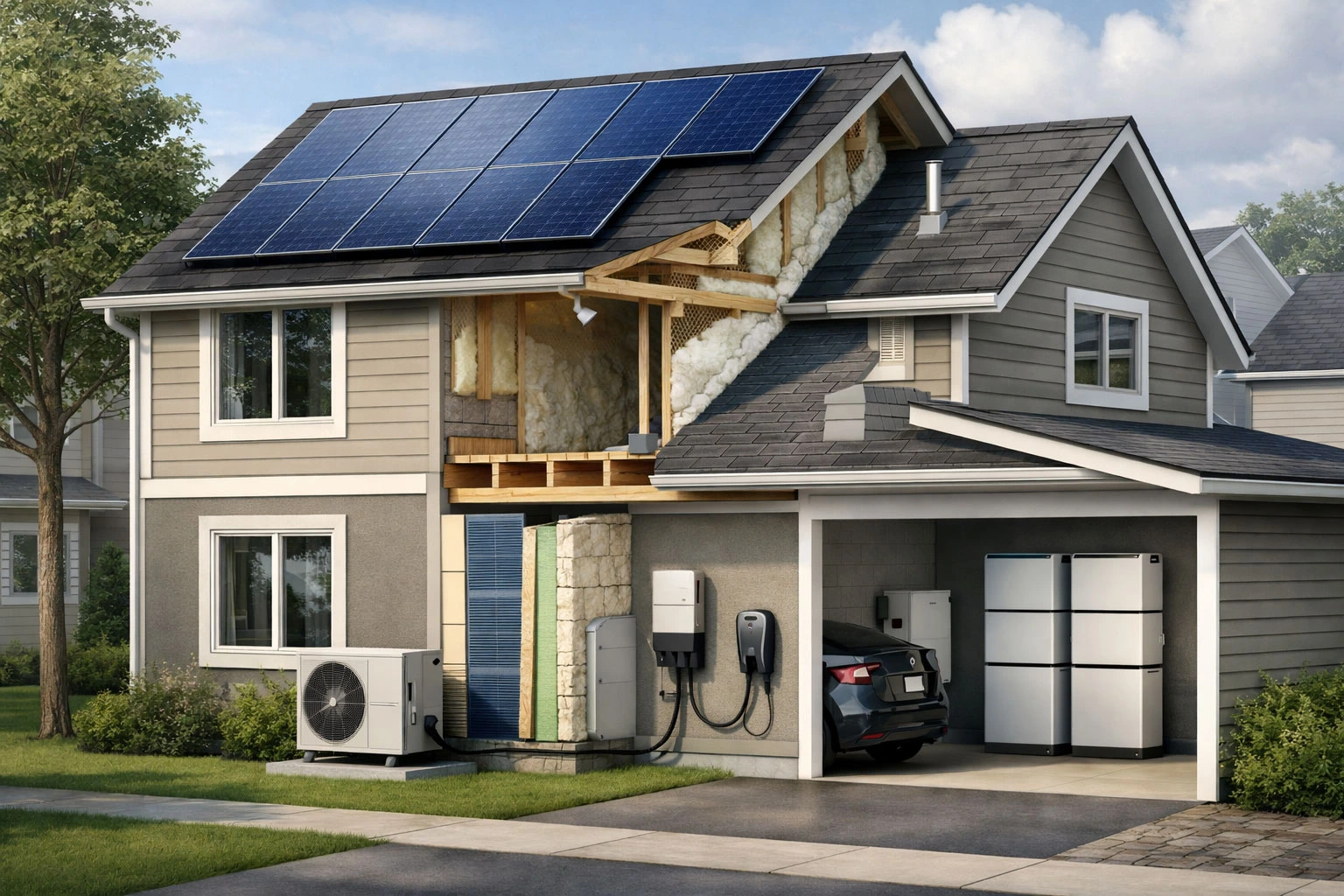
Solar panels are often seen as the centerpiece of a Net Zero home but they’re just one piece of the puzzle.
A typical roadmap looks like this:
- Reduce energy demand
- Insulation
- Air sealing
- Efficient windows
- Upgrade heating and cooling
- Heat pumps
- Smart controls
- Electrify major systems
- Water heating
- Transportation (EVs)
- Add solar generation
- Offset remaining electricity use
- Optional: Add battery storage
- Backup power
- Energy independence
This sequence matters. Installing solar before improving efficiency often leads to oversized systems and higher costs.
Final Thoughts: A Smart Investment When Done Right
Solar panel cost in Ontario in 2026 is significant but so is the long-term value.
Done correctly, solar can:
- Lower your energy bills
- Increase your home’s resilience
- Reduce your environmental impact
- Future-proof your property
But it’s not a decision to rush. The best outcomes come from thoughtful planning, proper system design, and a clear understanding of how solar fits into your overall home strategy.
Ready to Take the Next Step?
If you’re considering solar but want a clear, personalized plan before making any decisions, that’s where guidance makes the difference.
Book a consultation with Net Zero Homes Consulting to get a customized upgrade roadmap tailored to your home, your energy usage, and your long-term goals.