
A Familiar Situation for Many Ontario Homeowners
Electricity bills arrive every month, and they rarely go down. For many homeowners in Ontario, the conversation around the dinner table often sounds the same: Why are our energy costs still climbing?
Maybe you recently installed an EV charger in the garage. Perhaps you’re thinking about upgrading to a heat pump or improving insulation. As homes become more electrified, energy consumption tends to rise.
At some point, solar panels enter the conversation.
A neighbor installs them. A contractor mentions them during a renovation. Or you start wondering whether producing your own electricity could help stabilize long-term costs.
But then the questions begin:
What is the solar panel cost in Ontario today?
How much does a full solar installation price actually run?
Do solar panels still make financial sense in Canada’s climate?
And what kind of solar ROI Canada homeowners can realistically expect?
This guide breaks down the real considerations behind residential solar in Ontario—costs, savings, rebates, and when the investment truly makes sense.
Understanding How Residential Solar Works in Ontario
A home solar system is relatively straightforward in concept.
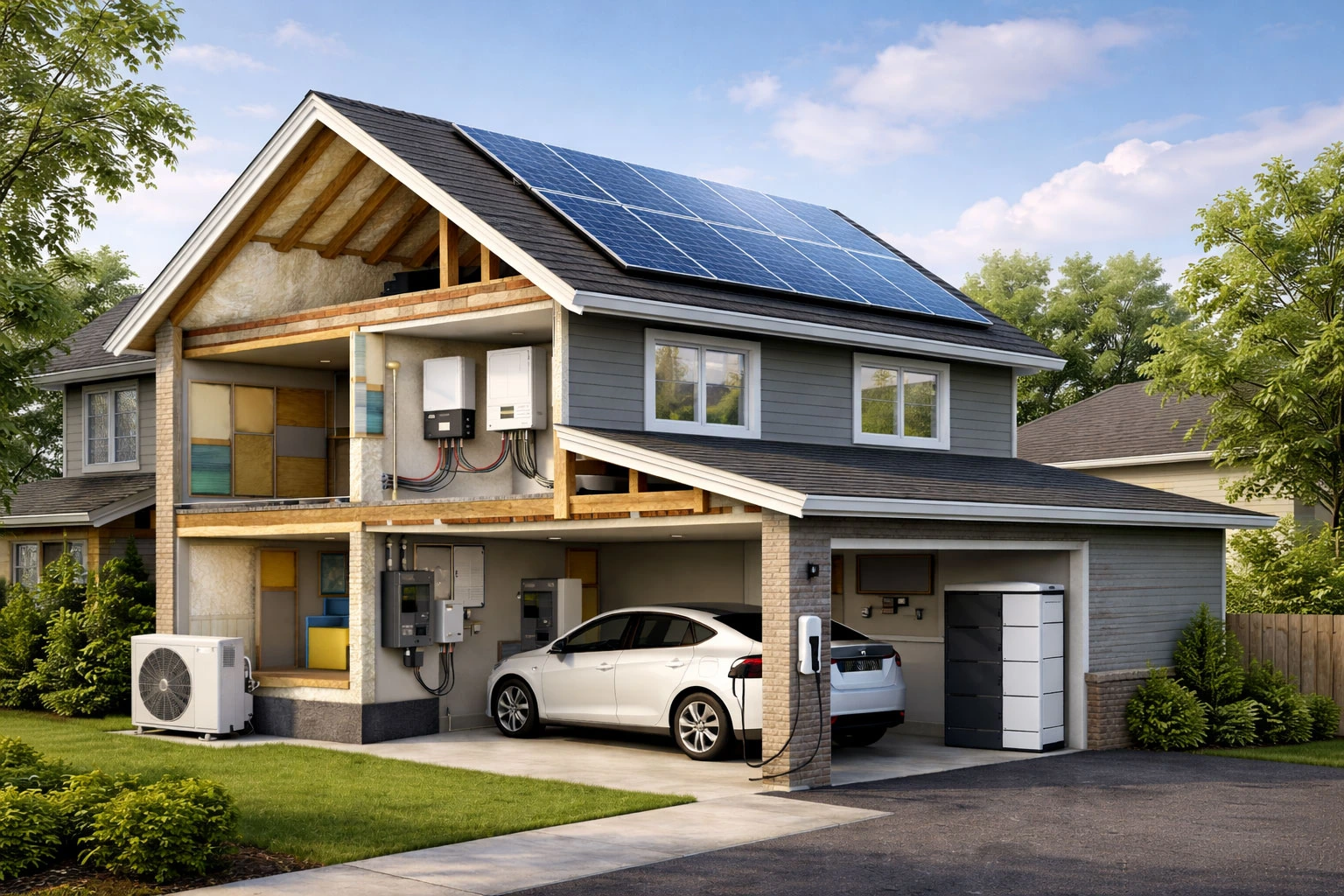
Solar panels mounted on your roof convert sunlight into electricity. That electricity flows through an inverter and powers your home. When the system produces more energy than you’re using, the excess is exported to the grid.
In Ontario, most homeowners rely on net metering, which allows them to receive credit for surplus electricity sent back to the grid.
A typical residential solar setup includes:
Solar panels mounted on the roof
Inverter system converting DC electricity to usable AC power
Mounting hardware and wiring
Electrical integration with the home panel
Optional battery storage
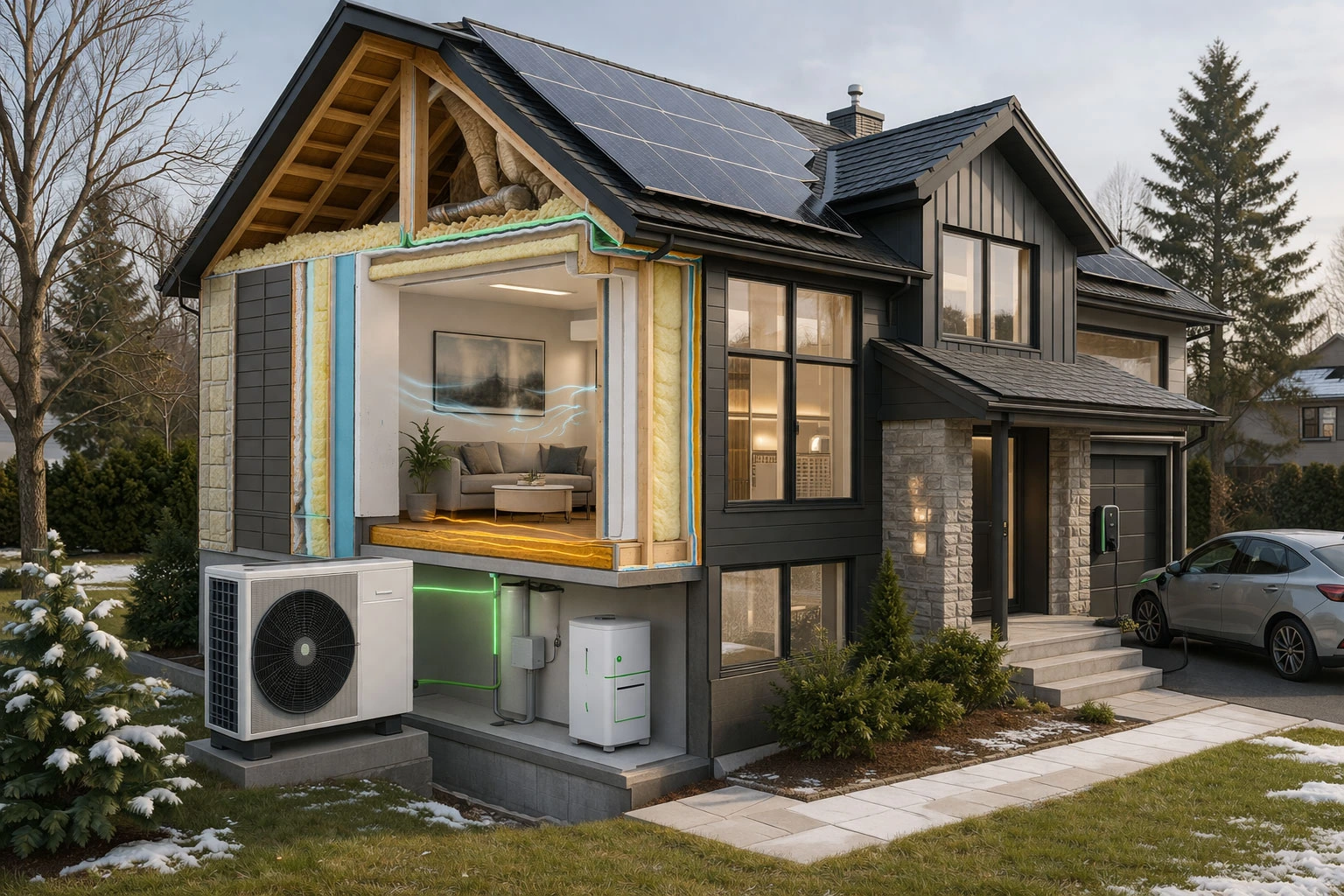
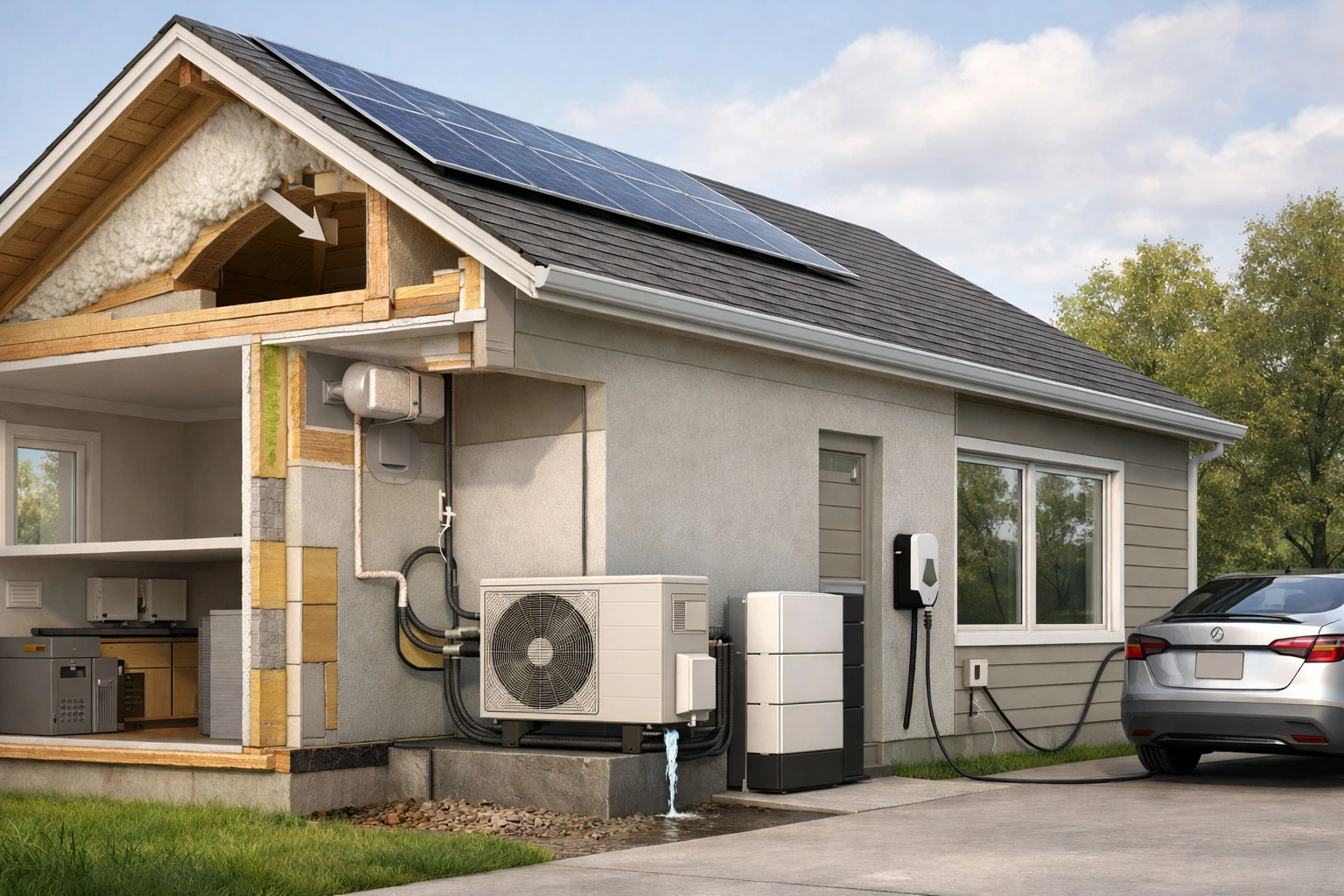
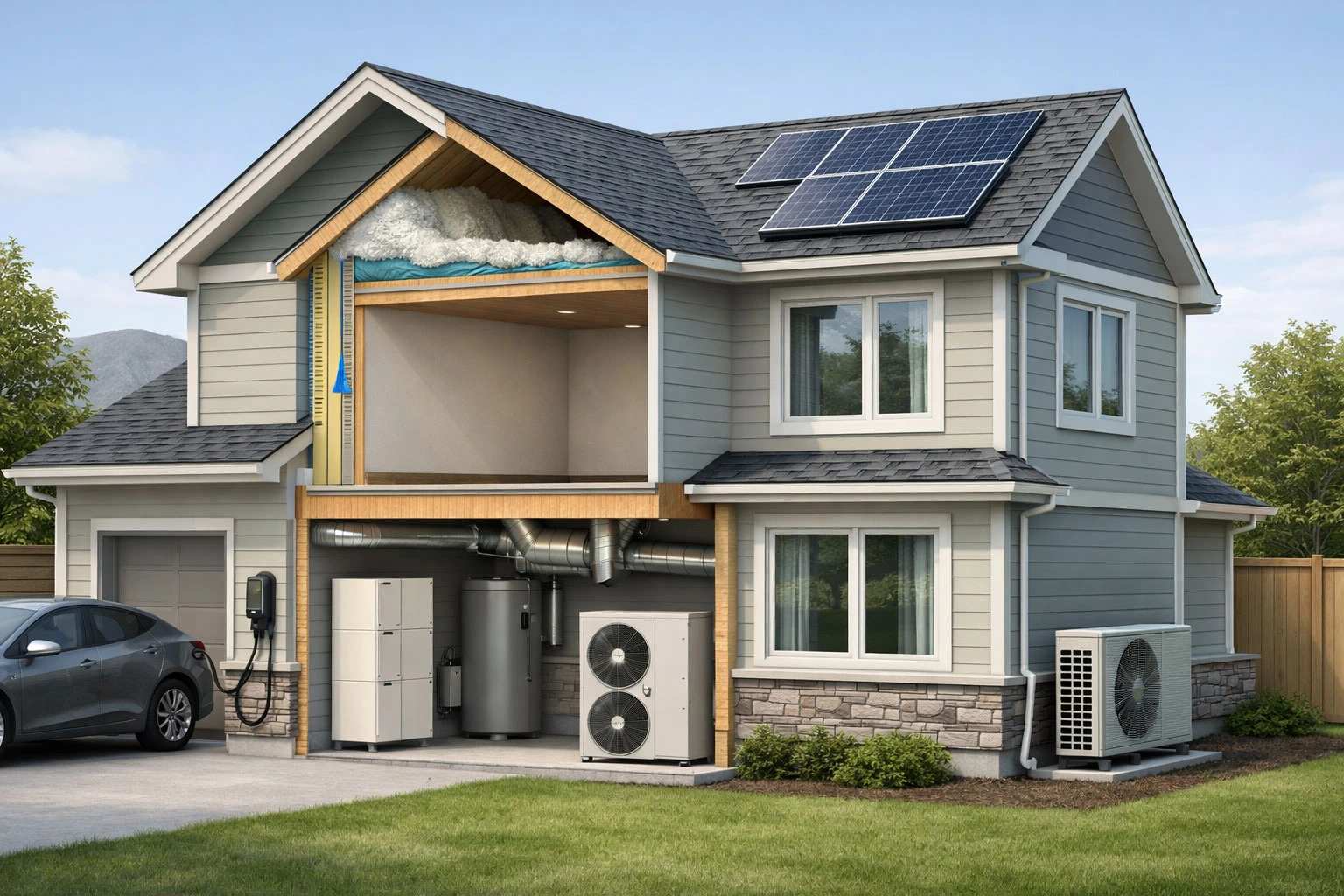
For many homes, solar panels become one component of a larger energy efficiency strategy that might also include:
High-efficiency heat pumps
Improved insulation and air sealing
Smart energy management systems
Solar is most powerful when integrated into this broader approach.
Solar Panel Cost in Ontario (2026)
The biggest question homeowners ask is simple: How much does solar actually cost?
While prices vary by home size and system design, most Ontario installations fall into a predictable range.
Typical Residential Solar Installation Price
For a standard detached home in Ontario:
| System Size | Approximate Cost Range |
|---|---|
| 5 kW system | $15,000 – $20,000 |
| 8 kW system | $20,000 – $28,000 |
| 10 kW system | $25,000 – $35,000 |
These figures represent installed system costs before incentives.
Several factors influence the final price.
Key Factors Affecting Solar Installation Cost
1. Roof size and orientation
South-facing roofs capture the most sunlight, but east and west orientations can still work well.
2. Roof complexity
Dormers, skylights, and steep roof pitches can increase installation labor.
3. Electrical upgrades
Older homes may require panel upgrades or wiring improvements.
4. System size
Larger systems cost more upfront but may produce greater long-term savings.
5. Battery storage
Adding a battery significantly increases the total system cost.
Solar Rebates and Incentives in Ontario
Solar economics often depend on available incentives.
Ontario has historically supported energy upgrades through a combination of federal and provincial programs.
While specific incentive amounts change over time, homeowners may encounter programs that include:
Energy efficiency grants
Low-interest retrofit loans
Net metering credits
Local municipal incentives
These programs reduce the effective solar panel cost Ontario homeowners pay and shorten the payback period.
A qualified energy advisor or consultant can help determine which programs apply to your home.
Energy Savings and Solar ROI in Canada
One of the most important questions homeowners ask is whether solar actually pays off.
The answer depends on several variables.
Electricity Rates
Ontario electricity rates have gradually increased over the past decade. When grid electricity becomes more expensive, solar becomes more valuable.
System Production
A well-designed residential solar system in Ontario can produce between 900 and 1,200 kWh per installed kilowatt each year.
For example:
An 8 kW system may generate around 8,000–9,500 kWh annually.
Estimated Payback Period
Most homeowners see a solar ROI Canada range of 10–15 years, depending on system size, incentives, and electricity rates.
After that point, the electricity generated by the system is essentially free aside from minimal maintenance.
Given that solar panels often last 25–30 years, many homeowners benefit from more than a decade of net savings.
Common Mistakes Homeowners Make With Solar
Solar technology is reliable, but planning mistakes can reduce its value.
Here are some of the most common issues consultants see.
Installing Solar Before Improving Efficiency
If your home leaks heat or relies on outdated appliances, you may oversize the solar system unnecessarily.
Efficiency upgrades often reduce required system size.
Ignoring Roof Condition
Solar panels last decades. Installing them on a roof that will need replacement in 5–10 years can create unnecessary costs.
Oversizing the System
Net metering rules often limit how much electricity you can offset. Designing a system far larger than your consumption may not increase financial returns.
Choosing Based Only on Price
The lowest solar installation price isn’t always the best value.
Quality of equipment, installer experience, and system design all matter.
Step-by-Step Guide to Deciding if Solar Is Right for Your Home
If you’re considering solar panels, a structured approach helps reduce uncertainty.
Step 1: Review Your Energy Consumption
Look at the last 12 months of electricity bills.
Important questions include:
How much electricity does your household use annually?
Are you planning to add a heat pump or EV charger?
Future electrification often increases electricity demand.
Step 2: Evaluate Roof Suitability
Solar performs best when:
Roof surfaces face south, east, or west
Minimal shading from trees or buildings
Adequate roof space exists
A professional solar assessment usually includes shading analysis.
Step 3: Improve Efficiency First
Before installing solar, consider upgrades such as:
Reducing energy demand may allow a smaller solar system.
Step 4: Explore Incentives
Research available solar rebate Ontario programs and federal retrofit initiatives.
Financial incentives can significantly change payback timelines.
Step 5: Compare Multiple System Designs
Request proposals that include:
System size
Estimated annual production
Total installation cost
Warranty coverage
Payback estimate
Comparing multiple designs helps identify the most practical solution.
When Solar Panels Make the Most Sense
Solar is not the right solution for every home.
However, it often works well under certain conditions.
Solar Makes Sense When:
Your roof receives good sunlight exposure
Electricity consumption is moderate to high
You plan to stay in the home 10+ years
The roof is relatively new
You’re pursuing home electrification
Homes installing EV chargers or switching to heat pumps often see strong solar value.
When Solar May Not Be the Best Investment
In some cases, other upgrades deliver better returns first.
Solar may not make sense when:
Roof shading is severe
Electricity usage is extremely low
The roof will need replacement soon
Budget is limited and efficiency upgrades are still pending
For example, improving insulation or upgrading heating systems may reduce energy costs more effectively than solar in some homes.
Solar’s Role in a Net Zero Home Strategy
Many homeowners exploring solar are also thinking about net zero energy homes.
A net zero home produces as much energy annually as it consumes.
Solar panels play a key role in achieving this goal, but they are rarely the first step.
A typical Net Zero roadmap looks like this:
Air sealing and insulation improvements
High-efficiency heating and cooling (heat pumps)
Energy-efficient appliances and lighting
Smart electrical systems
Solar panel installation
Optional battery storage
By reducing energy demand first, homeowners can install a smaller, more cost-effective solar system.
This approach improves both financial return and environmental impact.
A Realistic Example
Consider a typical Ontario suburban home.
The homeowner installs:
A cold-climate heat pump
An EV charger
Improved attic insulation
Electricity consumption rises to around 11,000 kWh per year.
Instead of relying entirely on grid power, the homeowner installs a 9 kW solar system.
The system generates roughly 9,000–10,000 kWh annually, offsetting most household electricity needs.
Over time, the homeowner benefits from:
Lower electricity bills
Reduced carbon emissions
Protection from rising energy costs
Conclusion: Solar as Part of a Smarter Energy Strategy
Solar panels are no longer a niche technology in Ontario. They’ve become a practical option for many homeowners looking to stabilize energy costs and reduce environmental impact.
Still, solar works best when approached thoughtfully.
Understanding solar panel cost Ontario, evaluating roof suitability, and improving efficiency first can significantly improve financial outcomes.
For homeowners considering electrification, EV charging, or long-term energy upgrades, solar often becomes an important part of the overall plan.
The key is designing the right system for your home—not simply installing panels.