
If your electricity bills have been climbing year after year, you’re not alone.
Many Ontario homeowners are opening their hydro bills and wondering how long this trend will continue. Add rising carbon pricing, increasing demand on the grid, and conversations about electrification and EV charging—and suddenly solar panels start looking less like a luxury and more like a strategic upgrade.
But then comes the big question:
What is the real solar panel cost in Ontario in 2026—and does it actually make financial sense?
This guide breaks it down clearly and practically. No hype. No inflated claims. Just what homeowners need to know to make a confident decision.
Understanding Solar Panel Cost in Ontario
When people search “solar panel cost Ontario,” they often expect a simple number. In reality, the cost depends on several variables.
Average Solar Installation Price (Residential)
In 2026, most Ontario homeowners can expect:
$20,000–$35,000 for a typical detached home system (before incentives)
System size: usually 6 kW to 10 kW
Lifespan: 25–30 years for panels, 10–15 years for inverters
The final solar installation price depends on:
Roof size and orientation
Shading (trees, neighbouring homes)
Electrical panel capacity
Mounting type (asphalt, metal, flat roof)
Battery storage (if included)
Engineering and permitting requirements
For example, a homeowner in Oakville with a south-facing roof and minimal shading might need an 8 kW system costing around $26,000 installed. Meanwhile, a similar home in Ottawa with partial shading and electrical upgrades required may land closer to $32,000.
The system itself isn’t the only cost. You’re investing in engineering, permits, structural review, grid connection, labour, and warranties.
What Drives the Cost?
Understanding the components helps you evaluate quotes properly.
1. Panels
Higher-efficiency panels cost more but produce more electricity per square foot. This matters if roof space is limited.
2. Inverters
You’ll choose between:
String inverters
Microinverters
Hybrid inverters (for battery readiness)
Microinverters increase cost but improve performance in partially shaded conditions.
3. Electrical Upgrades
Some older homes require:
Panel upgrades
Meter base changes
Rewiring adjustments
This can add several thousand dollars.
4. Battery Storage (Optional)
Adding battery storage significantly increases total cost. However, most Ontario homeowners currently install grid-tied systems without batteries because net metering already allows energy credits.
How Net Metering Works in Ontario
Ontario’s net metering program allows homeowners to send excess solar power back to the grid and receive energy credits.
This means:
You generate power during sunny hours.
Excess power goes to the grid.
You draw credits at night or in winter.
This structure improves your solar ROI in Canada because you don’t need expensive battery storage to maximize savings.
Energy Savings and Solar ROI Canada
Now the big question: does it pay off?
Typical Payback Period
In Ontario, most homeowners see:
8–14 year payback, depending on system size and consumption
Long-term electricity savings after payback
Increased protection against future rate increases
Let’s use a practical example.
A family in Kitchener installs a $28,000 system. Their annual electricity bill is $3,000. After solar, their bill drops to roughly $500–$700 annually (delivery charges still apply).
That’s approximately $2,300 saved per year.
In this case, payback occurs in about 12 years. After that, the energy produced is essentially free, aside from minor maintenance.
And remember: panels last 25–30 years.
Solar Rebate Ontario: What Homeowners Should Know
While rebate programs evolve, Canadian homeowners should explore:
Federal clean energy incentives
Low-interest loan programs
Provincial energy efficiency programs
Municipal green energy initiatives
Rather than chasing specific rebate amounts (which change), focus on:
Whether solar qualifies under current federal or provincial programs
Whether you can stack solar with other energy upgrades
Whether financing options improve your cash flow
A qualified consultant or installer should walk you through current solar rebate Ontario opportunities.
Common Mistakes Homeowners Make
After reviewing hundreds of projects, here are the most common pitfalls:
1. Focusing Only on Price
The lowest solar installation price isn’t always the best investment. Poor design reduces output for decades.
2. Ignoring Roof Age
If your roof needs replacing within 5–7 years, do it before installing panels.
3. Oversizing or Undersizing
Some homeowners oversize systems expecting future EVs or heat pumps. Others undersize to reduce upfront cost. Proper load forecasting is critical.
4. Skipping Electrical Assessment
Older homes often need panel upgrades. Not budgeting for this creates surprises.
5. Not Integrating Solar into a Bigger Plan
Solar works best when aligned with insulation upgrades, air sealing, windows, and electrification planning.
Step-by-Step Decision Guide
If you’re feeling overwhelmed, use this framework:
Step 1: Review Your Energy Use
Look at:
12 months of electricity bills
Peak usage periods
Future plans (EV, heat pump, hot tub)
Step 2: Assess Your Roof
Ask:
Age of shingles?
South-facing exposure?
Major shading issues?
Step 3: Confirm Electrical Capacity
Check:
Main service size (100A vs 200A)
Space in panel
Utility interconnection limits
Step 4: Request Professional System Design
A proper proposal should include:
Production estimates
Payback analysis
Equipment specifications
Warranty details
Net metering explanation
Step 5: Evaluate ROI — Not Just Cost
Compare:
Total installed cost
Estimated annual savings
Long-term performance
Step 6: Consider Financing
Many homeowners choose:
Cash purchase (highest ROI)
Low-interest energy loans
Line of credit financing
Monthly loan payments are often comparable to previous hydro bills, making the transition smoother.
When Solar Makes Financial Sense
Solar panel cost in Ontario makes sense when:
You plan to stay in your home 10+ years
Your electricity bills exceed $2,000 annually
Your roof has good sun exposure
You want to electrify heating or purchase an EV
You value long-term stability over short-term savings
Solar also increases home resale appeal, especially as energy-conscious buyers become more common.
When It May Not Make Sense
Solar may not be ideal if:
You plan to move within 3–5 years
Your roof has heavy shading
Your home consumes very little electricity
Structural limitations increase installation cost significantly
In some cases, investing first in insulation, air sealing, or window upgrades may provide faster ROI.
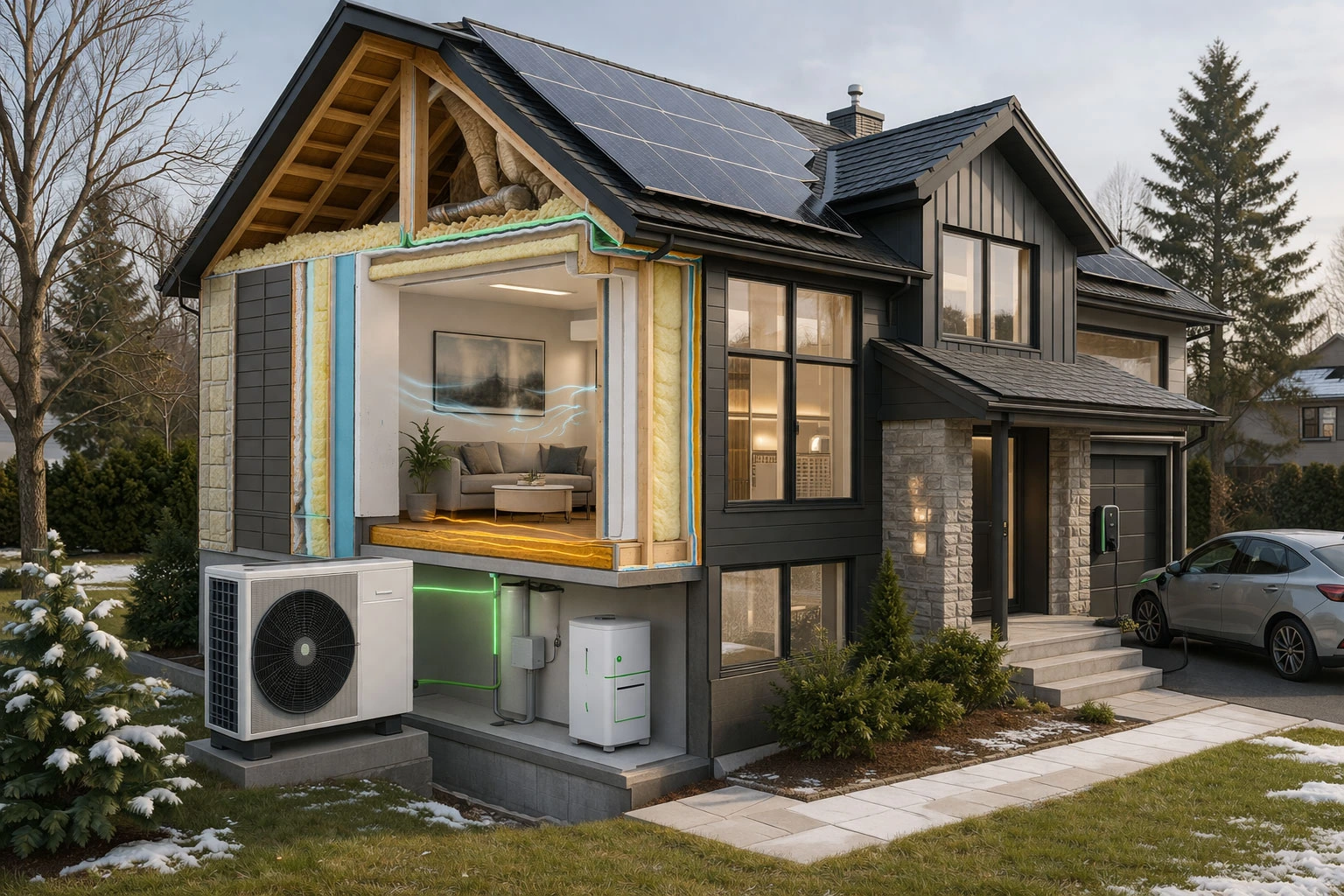
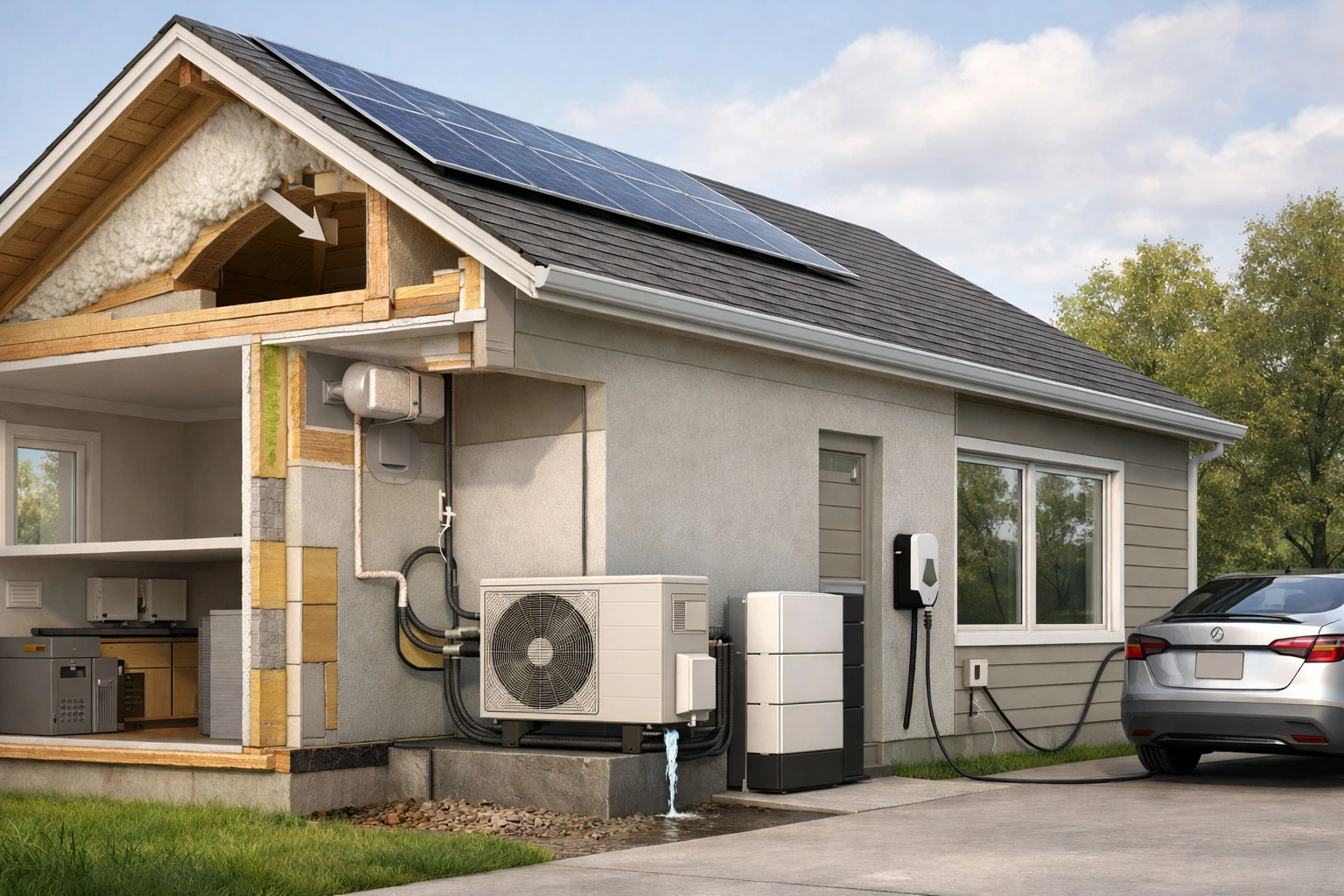
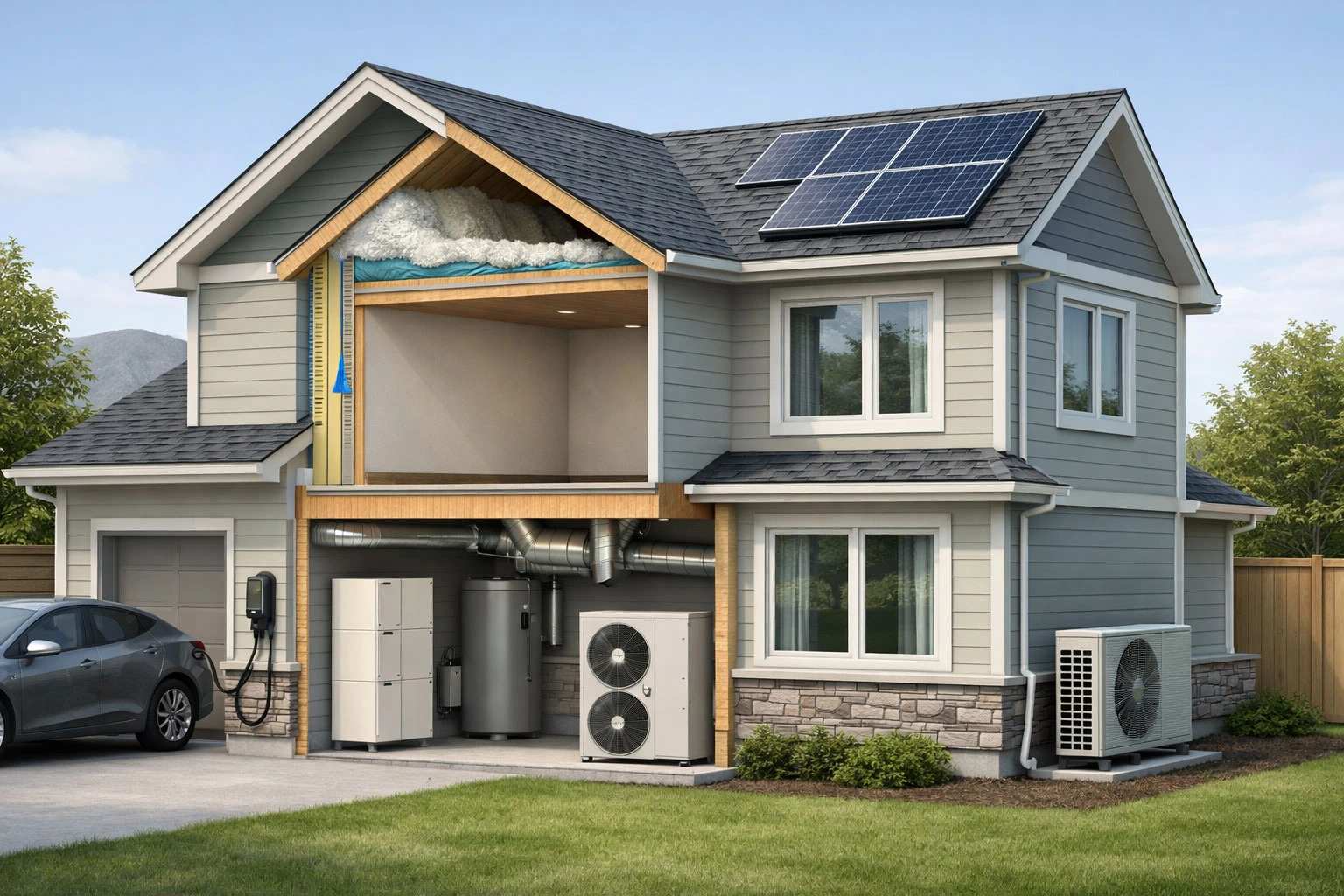
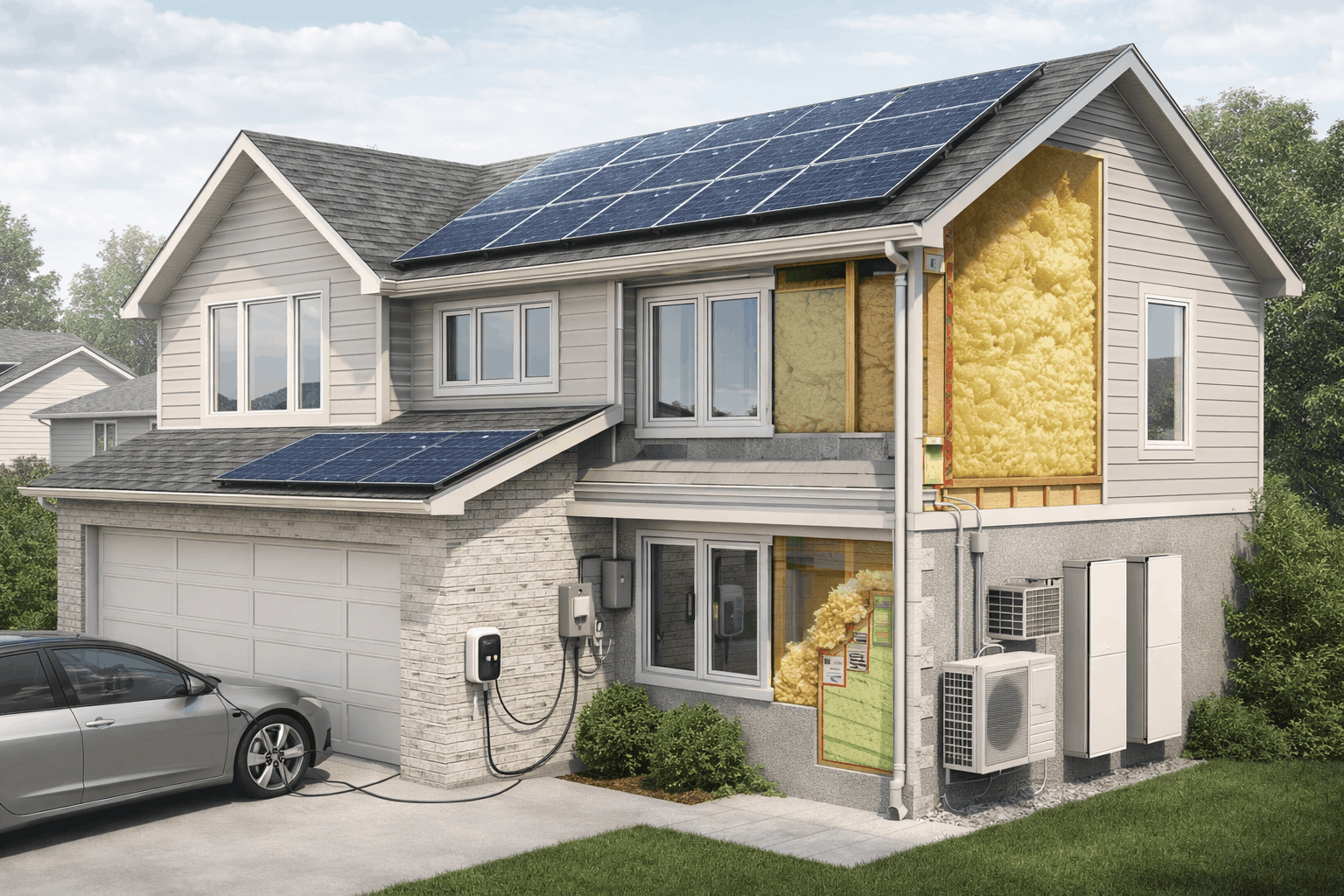
Solar as Part of a Net Zero Roadmap
Solar alone does not create a net-zero home.
It is one component of a larger strategy:
Improve insulation and air sealing
Upgrade to high-performance windows
Install a cold-climate heat pump
Electrify hot water systems
Add EV charging capability
Integrate solar generation
The order matters.
For example, if you reduce heating demand first, you may need a smaller solar system later. That lowers capital cost.
Smart planning prevents overspending.
What About Maintenance?
Solar systems require minimal maintenance:
Occasional cleaning if debris accumulates
Monitoring system output
Inverter replacement after 10–15 years
Ontario’s climate is generally favourable. Snow typically slides off panels due to tilt and dark surface absorption.
Long-Term Energy Security
Electricity rates rarely decrease.
Installing solar in 2026 is less about immediate savings and more about:
Rate stability
Grid resilience
Environmental responsibility
Future electrification readiness
As more homeowners adopt EVs and heat pumps, demand on the grid will increase. Generating your own electricity reduces reliance on future rate volatility.
Final Thoughts
Solar panel cost in Ontario is not small. But it is predictable.
When evaluated correctly—with proper system sizing, energy forecasting, and integration into a broader efficiency plan—it can be one of the most strategic long-term upgrades you make.
The key is clarity.
Not sales pressure. Not rebate chasing. Not guessing.
Just a well-designed roadmap aligned with your home, your usage, and your long-term plans.
Ready to Explore Your Solar Options?
If you’re considering solar panels and want a clear, unbiased assessment of your home’s potential, book a consultation with Net Zero Homes Consulting.
We’ll help you understand your true solar ROI in Canada and design a customized upgrade roadmap that makes sense for your home—not someone else’s.
Let’s build your path toward smarter, more resilient energy use.