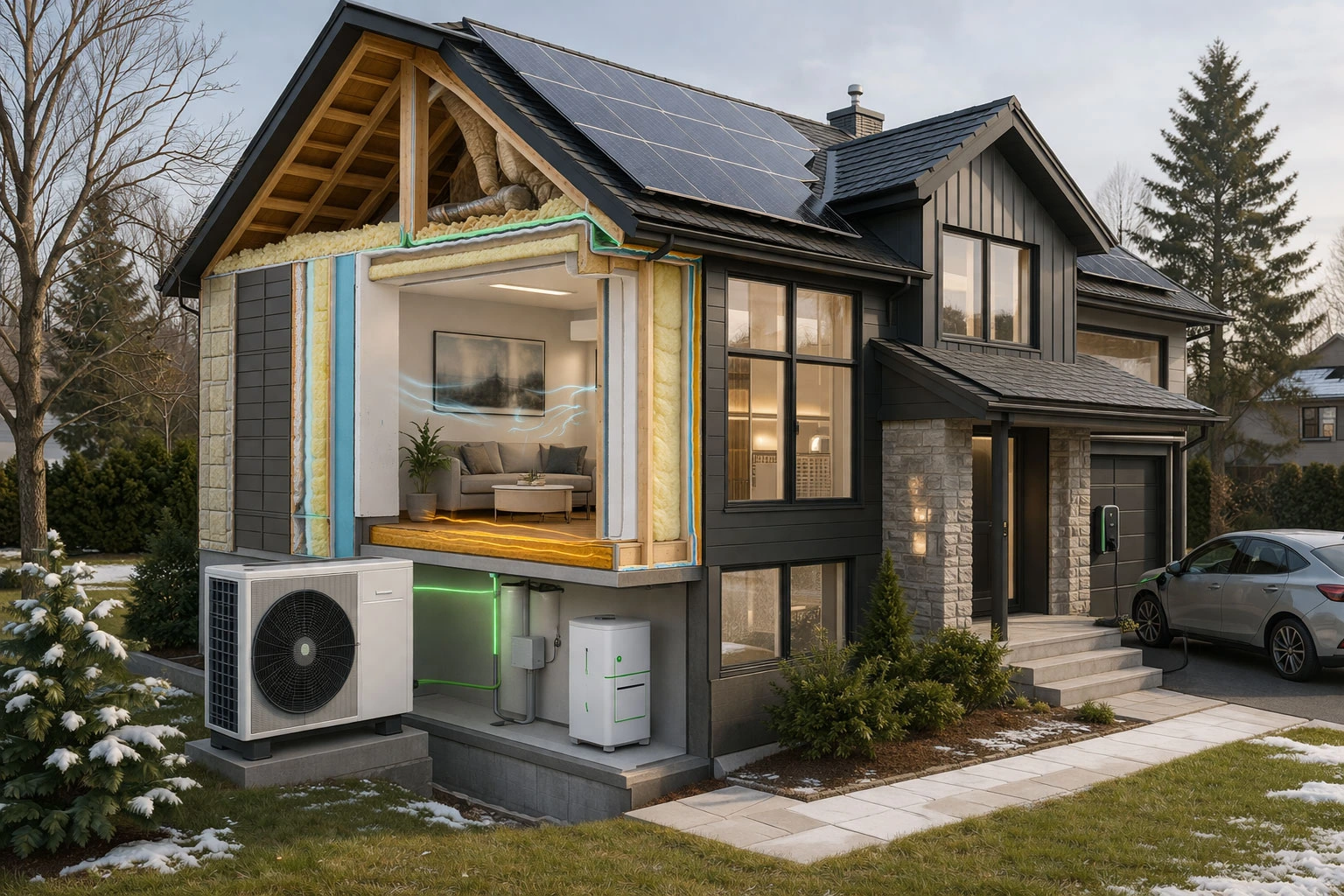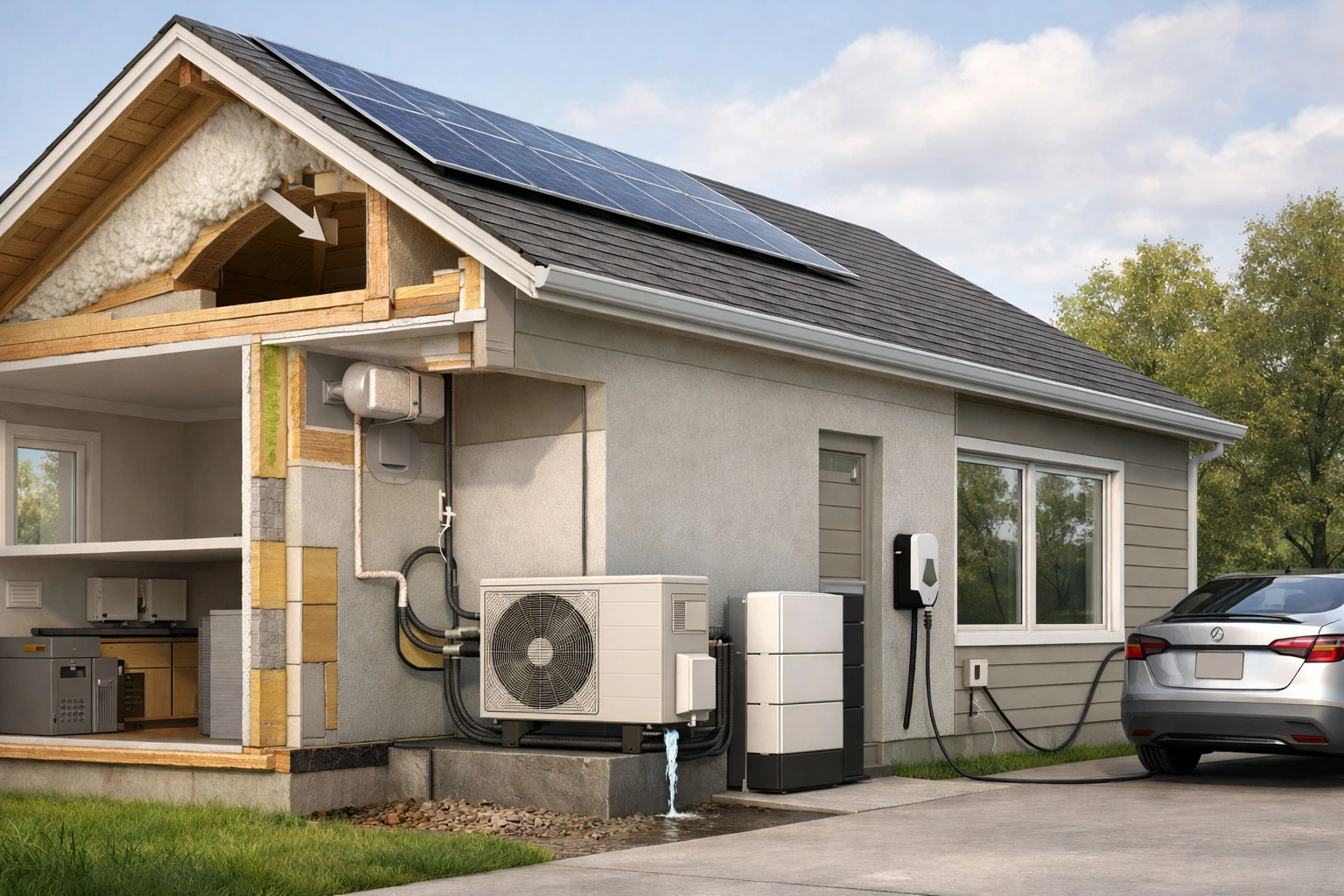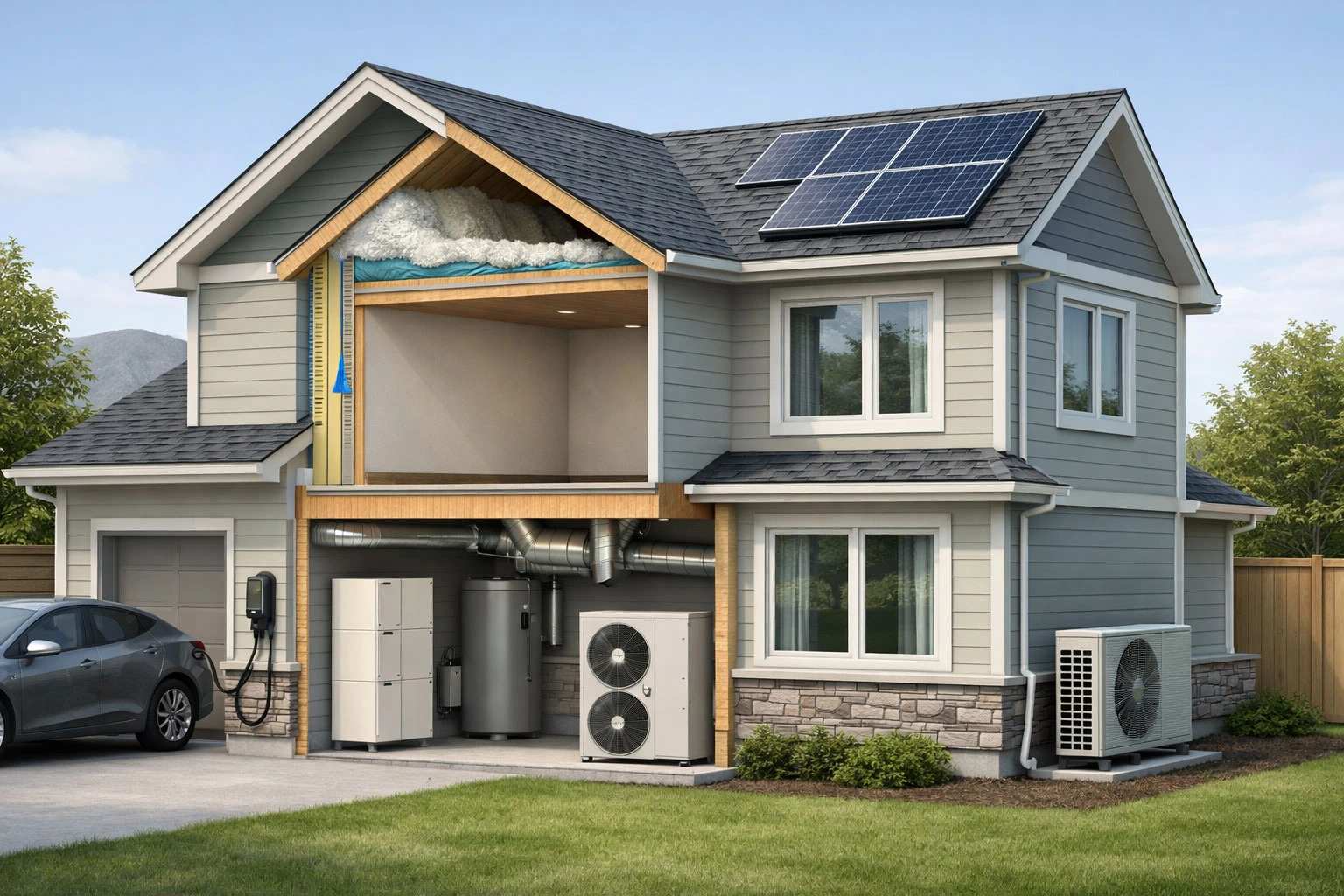
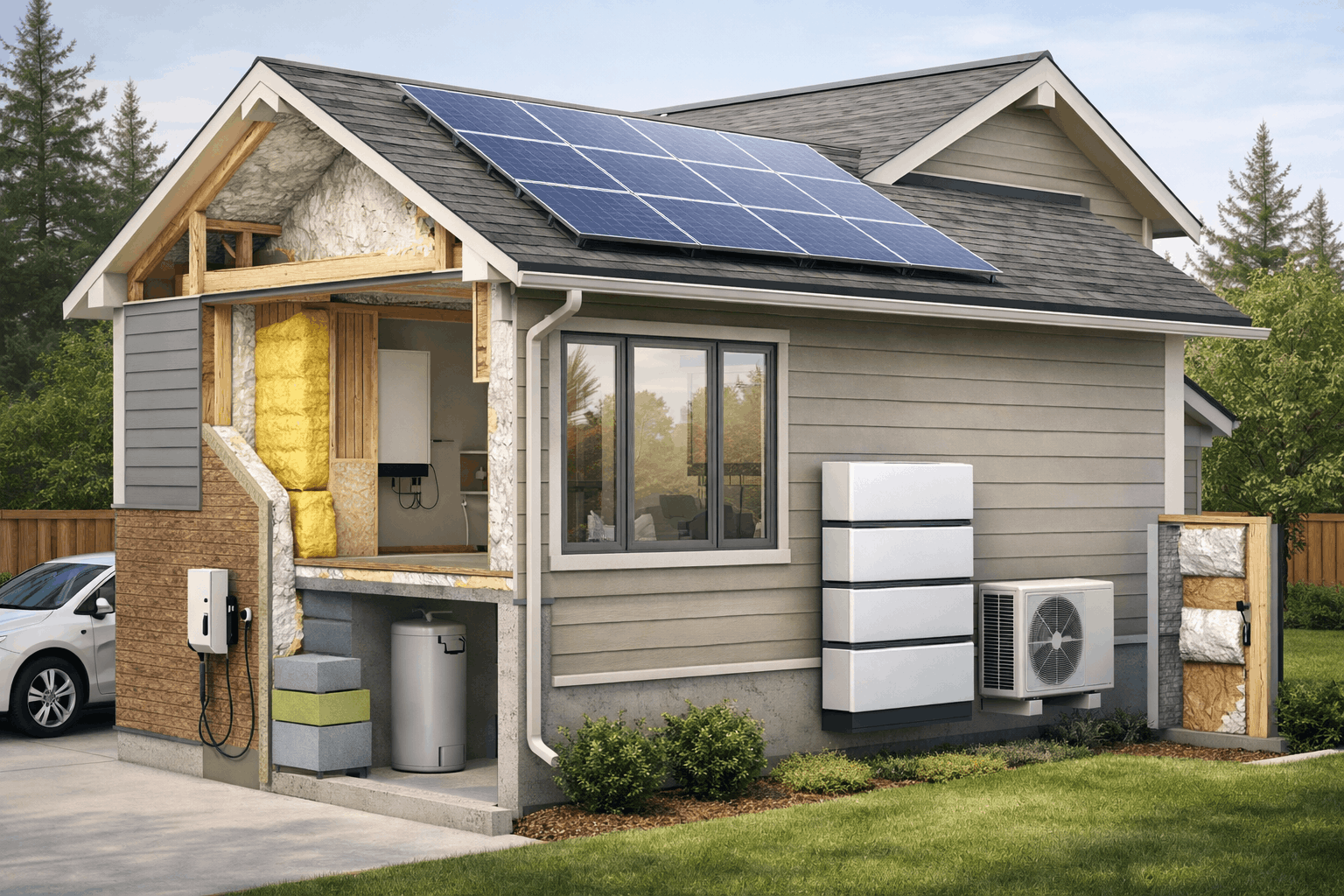

If you’ve installed solar panels or you’re seriously considering it you’ve probably asked the next logical question:
Should we add a battery?
Many Ontario homeowners reach this point after their first full summer of solar production. The panels generate beautifully during the day, but by evening, when the oven is on and the EV is charging, electricity is coming from the grid again. Add rising utility rates and increasing weather disruptions, and battery storage starts to look less like a luxury and more like a strategic upgrade.
But what is the real solar battery cost in Canada in 2026? And does it actually make financial sense?
Let’s break it down clearly.
What Is Solar Battery Storage and What Does It Actually Do?
A home battery stores excess electricity generated by your solar panels during the day so you can use it later — typically in the evening, overnight, or during a power outage.
In simple terms:
Solar panels produce electricity.
Your home uses what it needs in real time.
Extra power charges the battery.
The battery discharges when solar production drops.
For homeowners in Ontario, this can mean:
Using more of your own clean energy
Reducing grid reliance during peak hours
Having backup power during outages
Increasing long-term energy independence
It’s important to understand that a battery does not create electricity. It shifts when you use it. That distinction matters for ROI calculations.
Solar Battery Cost Canada (2026): What Homeowners Should Expect
When researching home battery storage price, most homeowners quickly notice a wide range.
In Canada in 2026, a fully installed residential battery system typically ranges between:
Mid five figures for smaller usable capacity systems
Higher five figures for larger systems designed for partial-home backup
The final energy storage cost depends on several variables:
1. Battery Capacity (kWh)
Small systems (5–10 kWh usable)
Medium systems (10–15 kWh usable)
Large systems (15+ kWh usable)
The more capacity, the higher the cost — but also the greater the backup potential.
2. Backup Scope
Are you backing up:
Just critical loads (fridge, lights, internet, sump pump)?
Or most of the home?
Or the entire home including heat pump and EV charger?
Full home backup significantly increases system size and cost.
3. Electrical Upgrades
Many older Ontario homes require:
Panel upgrades
Service capacity adjustments
Additional transfer equipment
These can meaningfully impact total project pricing.
4. Installation Complexity
Finished basements, detached garages, long conduit runs, and structural considerations all affect labour costs.
Solar Backup Battery Ontario: Does It Pay for Itself?
This is where things get nuanced.
Unlike solar panels which directly reduce energy purchases batteries primarily:
Increase self-consumption
Reduce peak-hour grid usage
Provide outage protection
Offer time-of-use optimization
ROI Drivers in Ontario
Ontario uses time-of-use electricity pricing. If you charge your battery during low rate periods and discharge during peak rates, you can create savings arbitrage.
However, the financial return depends on:
Your consumption pattern
Your solar production surplus
Time-of-use rate spread
Future electricity rate inflation
Battery cycle lifespan
For many homeowners, batteries are a moderate-return investment with resilience benefits, not a rapid payback upgrade.
A Realistic Example
Consider a family in Oakville:
9 kW solar array
Heat pump installed
Two electric vehicles
Evening-heavy usage pattern
Their battery allows them to:
Avoid peak pricing regularly
Maintain comfort during short outages
Charge EV partially from stored solar
In this scenario, the financial return improves compared to a smaller home with low evening demand.
Rebates and Incentives in Ontario and Canada
Battery incentives are evolving.
At the federal and provincial levels, programs periodically support:
Clean energy retrofits
Home electrification
Resilience upgrades
Interest-free financing programs
While incentive amounts and eligibility change over time, homeowners should:
Check current federal clean energy programs
Review Ontario-based retrofit incentives
Confirm whether batteries qualify standalone or only when paired with solar
Financing programs often play a major role in making battery systems feasible.
Common Mistakes Homeowners Make
Battery storage is not plug-and-play for most homes. Here are common pitfalls:
1. Oversizing the Battery
Bigger is not always better.
If your home doesn’t generate enough surplus solar energy, a large battery may sit underutilized.
2. Ignoring Load Analysis
Before choosing a battery, you should understand:
Average daily consumption
Evening usage spike
Critical load requirements
Seasonal variation (especially in Ontario winters)
3. Skipping Efficiency Upgrades
Improving insulation, air sealing, and heat pump performance often delivers better ROI than installing storage first.
4. Assuming Full-Home Backup Automatically
Many homeowners expect seamless whole-home operation during outages. In reality, system design matters significantly.
Step-by-Step: How to Decide If a Battery Is Right for You
If you’re evaluating solar battery cost Canada, follow this structured approach:
Step 1: Confirm Solar Optimization
Is your solar system properly sized?
Are you producing meaningful surplus energy?
If not, battery ROI may be limited.
Step 2: Analyze Time-of-Use Exposure
How much electricity do you consume during peak rates?
Can shifting that load create measurable savings?
Step 3: Assess Outage Risk
In some Ontario regions, outages are rare and short.
In others particularly rural areas resilience carries more value.
Step 4: Model LongTerm Electrification Plans
Are you planning to:
Install a heat pump?
Add an EV?
Convert gas appliances to electric?
Batteries often make more sense in fully electrified homes.
Step 5: Compare Against Alternative Upgrades
Would you get better financial performance from:
More insulation?
Air sealing improvements?
Window upgrades?
Solar expansion?
Storage should fit into a broader plan not replace it.
When Solar Battery Storage Makes Sense
Battery systems are typically a strong fit when:
You already have solar with excess generation
You want outage resilience
You have high evening consumption
You are fully or nearly fully electrified
You plan to stay in the home long-term
Electricity rates are rising in your region
They are also increasingly relevant for homeowners pursuing Net Zero or near-Net Zero performance targets.
When It Does Not Make Financial Sense
Battery storage may not be ideal if:
You do not have solar
Your utility offers strong net metering credits
Your electricity consumption is low
You plan to move within a few years
Your home still has major efficiency gaps
In many cases, envelope upgrades or HVAC improvements produce stronger returns.
How Battery Storage Fits Into a Net Zero Roadmap
A properly sequenced Net Zero strategy often looks like this:
Improve insulation and air sealing
Upgrade HVAC to high-efficiency heat pump
Install solar panels
Electrify transportation
Add battery storage for optimization and resilience
Storage is often one of the final steps not the first.
It enhances system performance but does not replace foundational upgrades.
For homeowners serious about long term energy independence, a battery can:
Smooth energy flow
Reduce grid dependency
Improve resilience
Complement EV charging
Support future smart-grid integration
But it works best when integrated into a whole-home strategy.
Final Thoughts: Is the Energy Storage Cost Worth It in 2026?
The honest answer: it depends on your goals.
If your primary objective is maximum short-term ROI, solar panels and efficiency upgrades usually deliver faster returns.
If your goals include:
Energy resilience
Long-term rate protection
Greater energy independence
A fully electrified lifestyle
Progress toward Net Zero
Then battery storage becomes much more compelling.
The key is not to view it as a standalone gadget. It’s part of a larger system.
And like any major home upgrade, it deserves careful planning.
Ready to Explore Your Options?
Every home is different. Usage patterns, solar production, electrical systems, and long-term plans all affect whether battery storage makes sense.
If you’re considering a solar backup battery in Ontario or want clarity on the real home battery storage price for your situation, the next step is a customized analysis.
Book a consultation with Net Zero Homes Consulting to receive a tailored upgrade roadmap and make informed decisions about your home’s energy future.