
Introduction: A Familiar Scenario for Ontario Homeowners
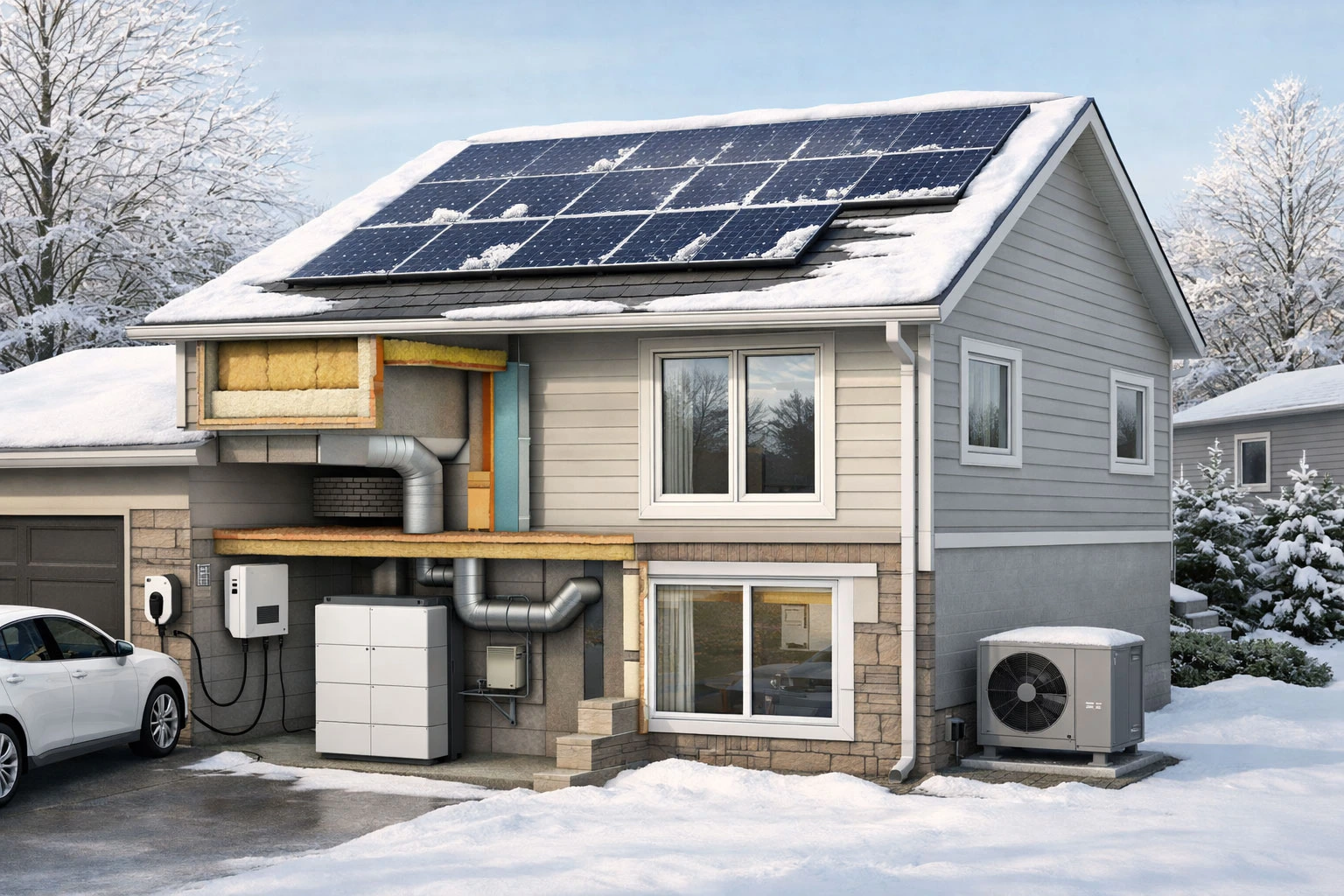
It’s a bright winter morning in Ontario. The sun is low, but it’s there reflecting off your roof as your furnace works steadily to keep the house warm. You open your latest electricity bill and pause. It’s higher than expected again.
You’ve heard about solar panels. Maybe your neighbour installed them last summer. Maybe you’ve seen government incentives mentioned online. But like many homeowners, you’re unsure where to start. How does residential solar power actually work in a Canadian climate? What does it cost? And most importantly does it make sense for your home?
This guide breaks it down in clear, practical terms so you can make a confident, informed decision.
How Residential Solar Power Works
At its core, residential solar power is straightforward. Solar panels capture sunlight and convert it into usable electricity for your home.
The Key Components
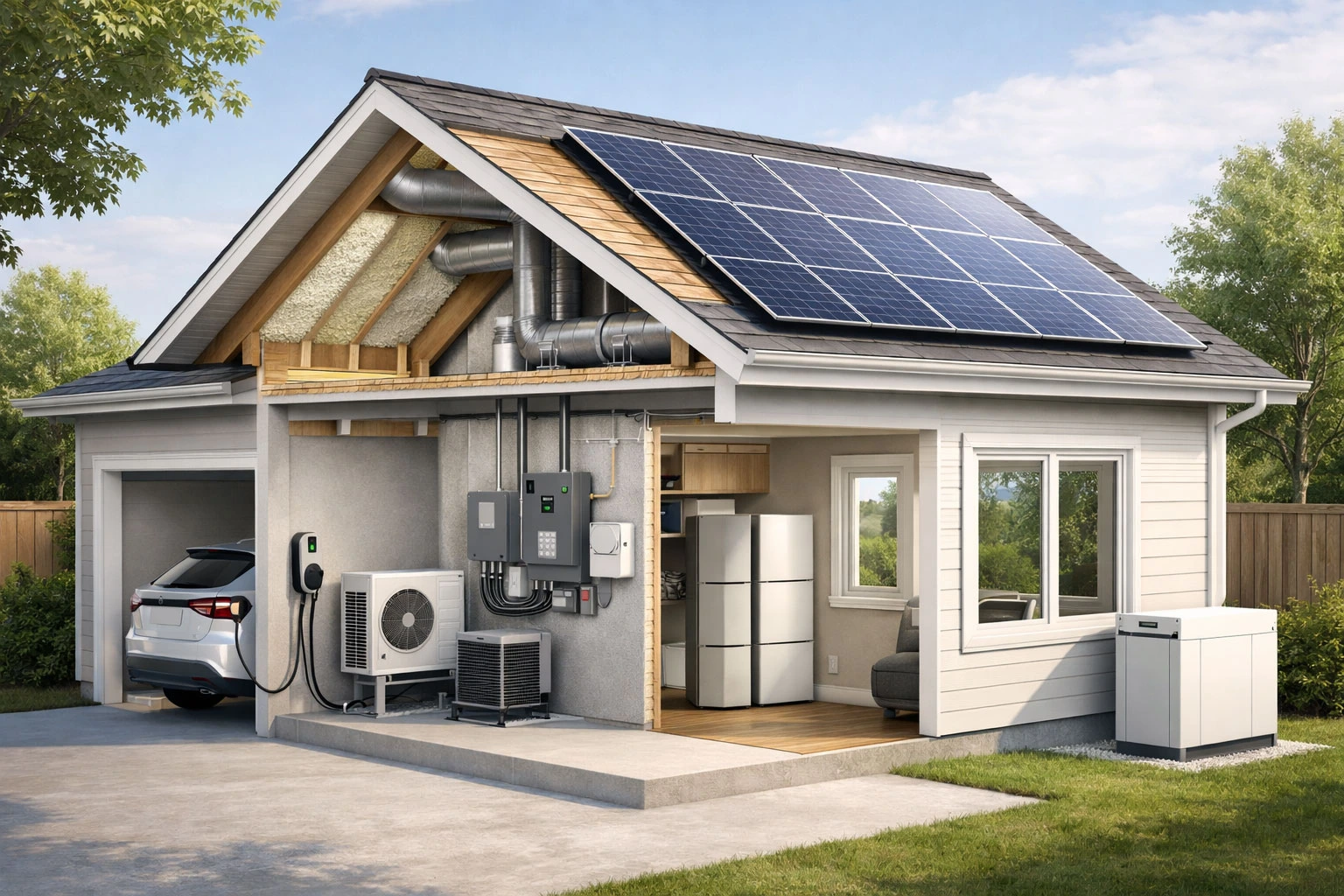
A typical residential solar system includes:
- Solar panels (photovoltaic modules): Installed on your roof, these capture sunlight and generate direct current (DC) electricity.
- Inverter: Converts DC electricity into alternating current (AC), which your home uses.
- Electrical panel connection: Distributes solar energy throughout your home.
- Bi-directional meter: Tracks energy sent to and drawn from the grid.
- Optional battery storage: Stores excess energy for later use.
What Happens During the Day?
When sunlight hits your panels:
- Electricity is generated.
- Your home uses this power first.
- Any excess is sent back to the grid.
In Ontario, most systems are connected to the grid through a net metering program. This means:
- You earn credits for excess electricity you export.
- You draw from those credits when your system isn’t producing (e.g., at night or in winter).
Does Solar Work in Canada’s Climate?
Yes and better than many expect.
Solar panels rely on light, not heat. In fact, they often perform more efficiently in cooler temperatures. While winter days are shorter, long summer days help balance annual production.
What Does Residential Solar Cost in Canada?
The cost of a solar system in Ontario depends on several factors:
- System size (measured in kilowatts, kW)
- Roof complexity and orientation
- Equipment quality
- Installation conditions
Typical Cost Range
For most homes:
- Small system (5 kW): Suitable for partial offset
- Medium system (8–10 kW): Covers a large portion of usage
- Larger systems (10+ kW): Designed for near full offset
Costs generally fall in the mid-to-high five-figure range before incentives.
What Affects Cost?
- Roof type (asphalt vs metal vs flat)
- Shading from trees or nearby buildings
- Electrical upgrades (if required)
- Inclusion of battery storage
Incentives and Rebates (Ontario/Canada)
While specific programs evolve, homeowners in Ontario can typically access:
- Federal clean energy programs
- Financing options designed for energy upgrades
- Local utility initiatives (in some areas)
These programs can significantly reduce upfront costs or improve cash flow through low-interest financing.
Energy Savings and Return on Investment
The financial value of solar comes from reducing how much electricity you buy from the grid.
What Impacts Your Savings?
- Your current electricity rate
- How much energy your system produces
- How much of that energy you use directly vs export
- Future electricity price increases
Typical Payback Timeline
For Ontario homeowners:
- Many systems reach payback within 8–15 years
- Panels typically last 25–30 years or more
That means a long period of reduced or near-zero electricity costs after payback.
Real-World Example
Consider a household in Southern Ontario:
- Moderate electricity usage
- South-facing roof with minimal shading
A properly sized system could offset a significant portion of annual electricity use. Over time, the savings add up especially as energy prices rise.
Common Mistakes Homeowners Make
Solar is a long-term investment. Avoiding these common pitfalls can make a significant difference.
1. Oversizing or Undersizing the System
Bigger isn’t always better. Net metering rules limit how much excess energy you can benefit from. A system should be sized based on your actual usage.
2. Ignoring Roof Condition
Installing solar on an older roof can lead to added costs later. If your roof needs replacement soon, address that first.
3. Focusing Only on Price
The lowest quote isn’t always the best value. Equipment quality, installer experience, and system design matter.
4. Not Improving Efficiency First
Solar works best when your home is already energy efficient. Upgrades like insulation and air sealing can reduce the system size you need.
5. Overlooking Orientation and Shading
Not all roofs are equal. South-facing roofs perform best, but east/west can still work. Heavy shading can reduce output significantly.
Step-by-Step: How to Decide if Solar Is Right for You
If you’re considering residential solar, here’s a practical approach:
Step 1: Understand Your Energy Use
Review your electricity bills for the past 12 months. Look at total annual consumption.
Step 2: Improve Efficiency First
Before installing solar:
- Upgrade insulation if needed
- Seal air leaks
- Consider high-efficiency HVAC systems
This reduces the size and cost of your solar system.
Step 3: Evaluate Your Roof
Ask:
- Is the roof in good condition?
- What direction does it face?
- Is there shading?
Step 4: Get a Professional Assessment
A qualified consultant can:
- Model your energy production
- Estimate system size and cost
- Identify any electrical or structural considerations
Step 5: Review Incentives and Financing
Look at available programs and determine:
- Upfront cost vs financed cost
- Monthly savings vs loan payments
Step 6: Compare Long-Term Value
Focus on:
- Lifetime savings
- System durability
- Warranty coverage
When Solar Makes Sense and When It Doesn’t
Solar Makes Sense If:
- You have a suitable roof with good sun exposure
- Your electricity bills are moderate to high
- You plan to stay in your home long-term
- You want protection against rising energy costs
Solar May Not Make Sense If:
- Your roof is heavily shaded
- Your electricity usage is very low
- You plan to move in the near future
- Your roof needs immediate replacement
How Solar Fits Into a Net Zero Home Strategy
Solar panels are just one piece of a bigger picture.
A Net Zero home produces as much energy as it consumes over a year. To get there, homeowners typically follow this sequence:
1. Reduce Energy Demand
- Insulation upgrades
- High-performance windows
- Air sealing
2. Improve Efficiency
- Heat pumps for heating and cooling
- Efficient appliances
- Smart controls
3. Generate Renewable Energy
- Solar panels offset remaining electricity use
4. Add Storage (Optional)
- Battery systems increase resilience and self-sufficiency
Solar becomes far more effective and affordable when it’s part of a coordinated plan.
Final Thoughts
Residential solar power in Ontario is no longer a niche upgrade. It’s a practical option for many homeowners looking to reduce energy costs and take control of their energy use.
But it’s not a one-size-fits-all solution.
The right system depends on your home, your energy usage, and your long-term goals. Taking the time to plan properly starting with efficiency and ending with the right-sized solar system can make the difference between a good investment and a great one.
Ready to Take the Next Step?
If you’re considering solar and want clear, expert guidance, the next step is a personalized plan.
Book a consultation with Net Zero Homes Consulting to get a customized upgrade roadmap tailored to your home, your budget, and your long-term energy goals.