

A Common Question for Canadian Homeowners
Imagine this situation.
A homeowner in Ontario opens their electricity bill in January. The heating system has been working hard during a cold snap, and the bill is noticeably higher than usual. Meanwhile, energy prices seem to rise every year, and the conversation around electrification, EVs, and Net Zero homes is everywhere.
Naturally, the question comes up:
“Is solar worth it in Canada?”
At first glance, it might seem surprising that solar power could make sense in a country known for long winters and shorter daylight hours. Yet thousands of Canadian homes are installing solar panels every year.
The real answer, however, isn’t simply yes or no. Solar economics vary significantly across provinces, electricity prices, and individual homes. To make a smart decision, homeowners need to understand costs, savings, incentives, and the solar payback period.
This guide breaks down how solar works in Canada, what kind of return on investment (ROI) homeowners can expect, and how solar fits into a long-term home energy strategy.
Understanding Solar Energy in Canada
Solar panels convert sunlight into electricity that your home can use. Any extra power can often be sent back to the grid through net metering programs, allowing homeowners to earn credits on their utility bills.
Even though Canada has cold winters, solar panels actually perform well in cooler temperatures. What matters most is total annual sunlight, not just warm weather.
In fact, cities like Toronto receive comparable solar potential to places such as northern U.S. states that already have strong solar adoption.
Several factors determine whether solar makes financial sense:
Electricity rates in your province
Roof orientation and shading
Solar installation costs
Available solar incentives Canada programs
Household electricity consumption
When these factors align, solar can significantly reduce energy bills and stabilize long-term energy costs.
Solar Installation Costs in Canada
The cost of installing solar panels varies by system size, roof complexity, and region.
For most Canadian homes, a typical residential system ranges between 5 kW and 10 kW, which is enough to offset a large portion of annual electricity use.
Typical cost considerations include:
Equipment
Solar panels
Inverter system
Mounting hardware
Monitoring software
Installation
Roof mounting and electrical work
Permits and inspections
Utility interconnection
Optional Add-Ons
Some homeowners choose to include additional technologies:
Smart energy monitoring
Electrical panel upgrades
While upfront costs can feel significant, homeowners should look at solar through a long-term cost-of-ownership lens rather than only the installation price.
A solar system typically operates for 25 years or more, spreading the cost across decades of energy production.
Solar Savings in Canada: What Homeowners Can Expect
The biggest driver of solar ROI is electricity prices.
Provinces with higher electricity rates tend to see shorter solar payback periods, while provinces with cheaper power take longer to break even.
Ontario
Ontario remains one of the stronger solar markets in Canada because of:
Moderate electricity prices
Net metering availability
Increasing electrification of homes
Many Ontario homeowners see meaningful solar savings Canada scenarios when solar offsets daytime electricity usage and reduces peak demand.
British Columbia
Hydroelectric power keeps electricity relatively affordable, which can extend the payback period. However, solar still makes sense for homeowners focused on energy independence and electrification.
Alberta
Alberta has strong solar potential due to high sunshine hours. Combined with rising electricity prices, solar installations can produce attractive returns.
Quebec
Low hydroelectric rates make pure financial ROI slower, but solar may still appeal to homeowners planning long-term electrification upgrades.
Atlantic Provinces
Higher electricity rates in parts of Atlantic Canada can make solar financially compelling, especially when paired with local incentives.
The Solar Payback Period
The solar payback period refers to the time it takes for energy savings to equal the initial investment.
In Canada, the typical payback window often falls between 8 and 15 years, depending on several variables:
System cost
Electricity prices
Incentives
Roof efficiency
Energy consumption
For example:
Ontario homeowner example
A homeowner installs a rooftop solar system designed to offset most annual electricity usage.
Over time, solar energy reduces reliance on grid electricity. As energy prices gradually rise, the value of those solar savings increases.
After the system pays for itself, the remaining years of operation effectively produce free electricity.
Since most solar panels carry 25-year performance warranties, the long-term financial benefits can be substantial.
Solar Incentives in Canada
Government programs and utility incentives can significantly improve solar ROI.
While specific amounts change over time, homeowners should explore:
Federal Programs
Canada has introduced programs supporting energy-efficient home upgrades, including solar installations.
These programs may include:
Grants
Low-interest loans
Retrofit incentives
Provincial Programs
Many provinces offer additional support through:
Solar rebates
Net metering policies
Energy retrofit programs
Municipal and Utility Programs
Some utilities provide incentives for renewable energy or grid integration.
A professional energy consultant can help identify current solar incentives Canada homeowners qualify for.
Common Mistakes Homeowners Make
Solar is a powerful technology, but poor planning can reduce its effectiveness.
Here are common mistakes homeowners should avoid.
Installing Solar Before Improving Efficiency
If a home wastes energy through poor insulation or air leakage, solar panels must work harder to compensate.
Energy efficiency upgrades often provide faster ROI.
Examples include:
Reducing energy demand first allows a smaller and more affordable solar system.
Oversizing the System
Some homeowners install more panels than their home actually needs.
Because net metering rules vary, excessive generation may not always translate into financial benefit.
A properly designed system should match realistic consumption patterns.
Ignoring Roof Condition
Solar panels last decades. If your roof needs replacement soon, installing solar beforehand can create unnecessary complications and costs.
Focusing Only on Upfront Cost
The cheapest installation is not always the best.
Important factors include:
Panel quality
Warranty coverage
Installer expertise
System design
Step-by-Step: How to Decide if Solar Is Worth It
For homeowners asking “Is solar worth it in Canada?”, a structured approach helps.
Step 1: Review Your Energy Use
Look at your electricity bills over the past year.
Understand:
Annual consumption
Seasonal spikes
Major energy loads
Step 2: Improve Energy Efficiency First
Address common energy losses:
Attic insulation
Drafty windows
Air sealing
HVAC efficiency
Lower energy demand improves solar ROI.
Step 3: Assess Your Roof
Ideal solar roofs typically have:
Southern or western exposure
Minimal shading
Good structural condition
Step 4: Evaluate Incentives
Check available solar incentives Canada programs, including federal and provincial options.
These can significantly reduce upfront costs.
Step 5: Model the Financials
A professional solar analysis can estimate:
Energy production
Solar savings Canada projections
Payback period
Long-term ROI
When Solar Makes the Most Sense
Solar often works best for homeowners who:
Plan to stay in their home long-term
Have moderate to high electricity usage
Own a suitable roof
Are electrifying their home (heat pump, EV, etc.)
Want predictable energy costs
Homes adding EV chargers or electric heating systems often benefit the most because electricity demand increases.
Solar helps offset those new loads.
When Solar Might Not Be the Right Choice
Solar may be less attractive when:
Electricity prices are extremely low
Roof shading is significant
The home requires major efficiency upgrades first
The homeowner plans to move soon
In these cases, improving building efficiency and electrification readiness may provide better initial returns.
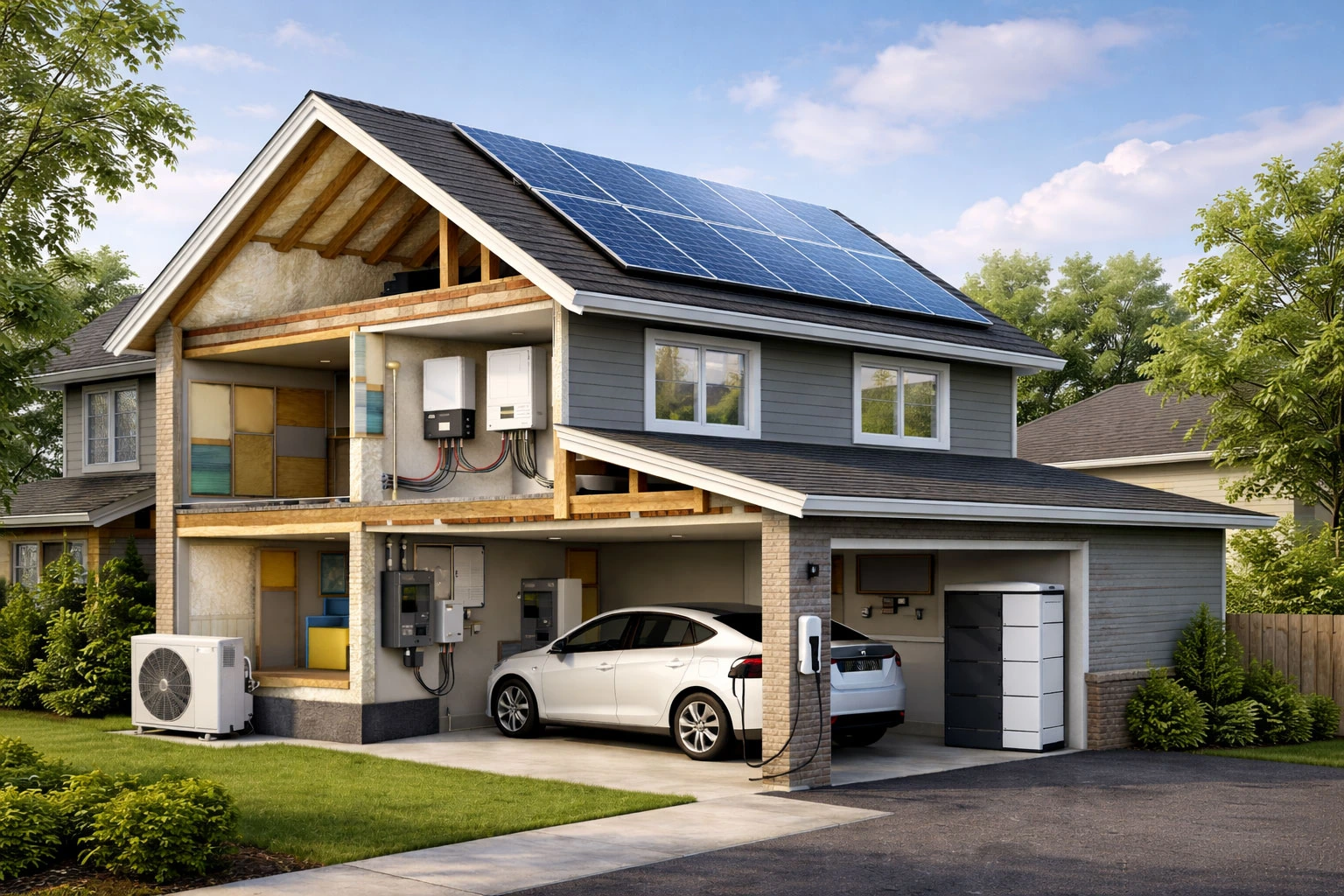
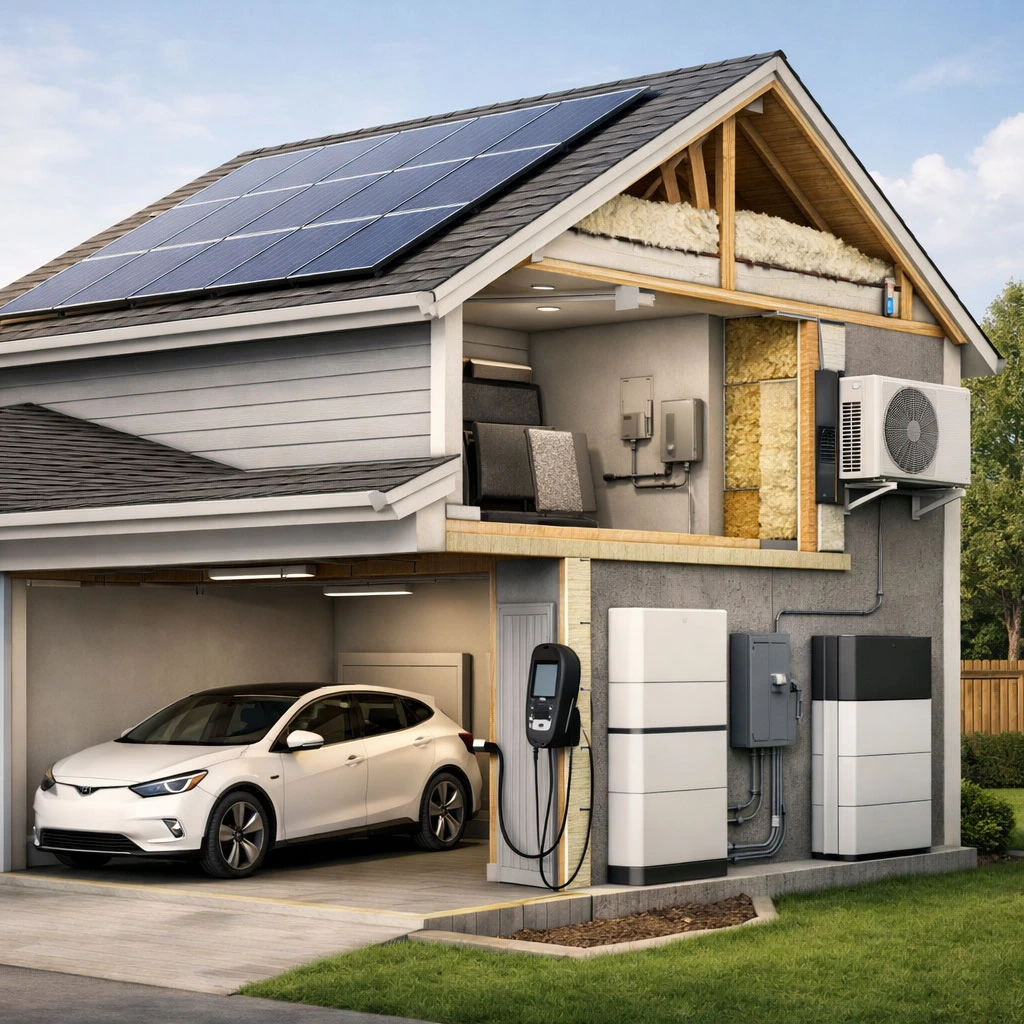
Solar as Part of a Net Zero Roadmap
Solar works best when integrated into a broader home energy strategy.
A typical Net Zero pathway often looks like this:
Improve insulation and air sealing
Upgrade heating systems to heat pumps
Install high-efficiency windows
Add smart energy controls
Install rooftop solar
Integrate EV charging and battery storage
This layered approach ensures each upgrade builds on the previous one.
Instead of simply generating energy, the home becomes dramatically more efficient overall.
Conclusion: Is Solar Worth It in Canada?
For many Canadian homeowners, the answer is increasingly yes.
Solar technology has become more reliable, incentives continue to evolve, and energy prices are gradually rising.
However, solar should never be evaluated in isolation.
The best results come when solar is part of a comprehensive home energy strategy that includes efficiency upgrades, electrification, and long-term planning.
Every home is different, and the true financial picture depends on location, energy usage, and available incentives.
If you’re considering solar and want to understand the real ROI for your home, the smartest next step is a professional evaluation.
Book a consultation with Net Zero Homes Consulting to receive a customized upgrade roadmap and discover how solar and other energy improvements can work together for your home.