
Introduction: A Familiar Winter Dilemma
It’s a typical January morning in Ontario. The temperature has dropped well below freezing overnight, and your furnace has been running almost nonstop. You notice the house feels comfortable but at what cost? The gas bill is climbing, and so is your concern about energy use and environmental impact.
Like many Canadian homeowners, you may be thinking about ways to reduce both your monthly expenses and your carbon footprint. You’ve likely heard about heat pumps but how exactly do they reduce carbon emissions? And more importantly, do they make sense for your home?
Let’s break it down in practical, real-world terms.
What Is a Heat Pump and How Does It Work?
At its core, a heat pump is not a traditional heating system it’s a heat transfer system.
Instead of generating heat by burning fuel (like a gas furnace), a heat pump moves heat from one place to another:
- In winter: it extracts heat from the outside air and brings it inside
- In summer: it reverses the process, acting like an air conditioner
Even in cold Canadian climates, modern cold-climate heat pumps can extract usable heat from outdoor air well below freezing.
Why This Matters for Carbon Emissions
Traditional systems especially natural gas, oil, or propane furnaces create heat through combustion. This process releases carbon dioxide (CO₂) directly into the atmosphere.
Heat pumps, on the other hand:
- Use electricity instead of fossil fuels
- Do not burn fuel onsite
- Can run on increasingly clean electricity grids (especially in Ontario)
This is the key shift: from combustion-based heating to electrified heating.
How Heat Pumps Reduce Carbon Emissions
1. Eliminating On-Site Fossil Fuel Combustion
A gas furnace burns natural gas to create heat. Every time it runs, it emits CO₂.
A heat pump:
- Produces no direct emissions at the home
- Relies on electricity, which in Ontario is relatively low-carbon (thanks to nuclear, hydro, and renewables)
This alone can significantly reduce a home’s carbon footprint.
2. Higher Efficiency = Less Energy Required
Heat pumps are incredibly efficient compared to traditional systems.
- A furnace might be 90–95% efficient
- A heat pump can deliver 2 to 4 units of heat for every 1 unit of electricity used
This is known as a high coefficient of performance (COP).
In simple terms:
You use less energy overall to heat your home.
Less energy use = fewer emissions at the system level.
3. Grid Decarbonization Over Time
One of the most powerful advantages of heat pumps is future-proofing.
As electricity grids become cleaner over time:
- Your heat pump automatically becomes lower-emission
- No equipment changes required
A gas furnace, by contrast, will always emit carbon as long as it operates.
4. Compatibility with Renewable Energy
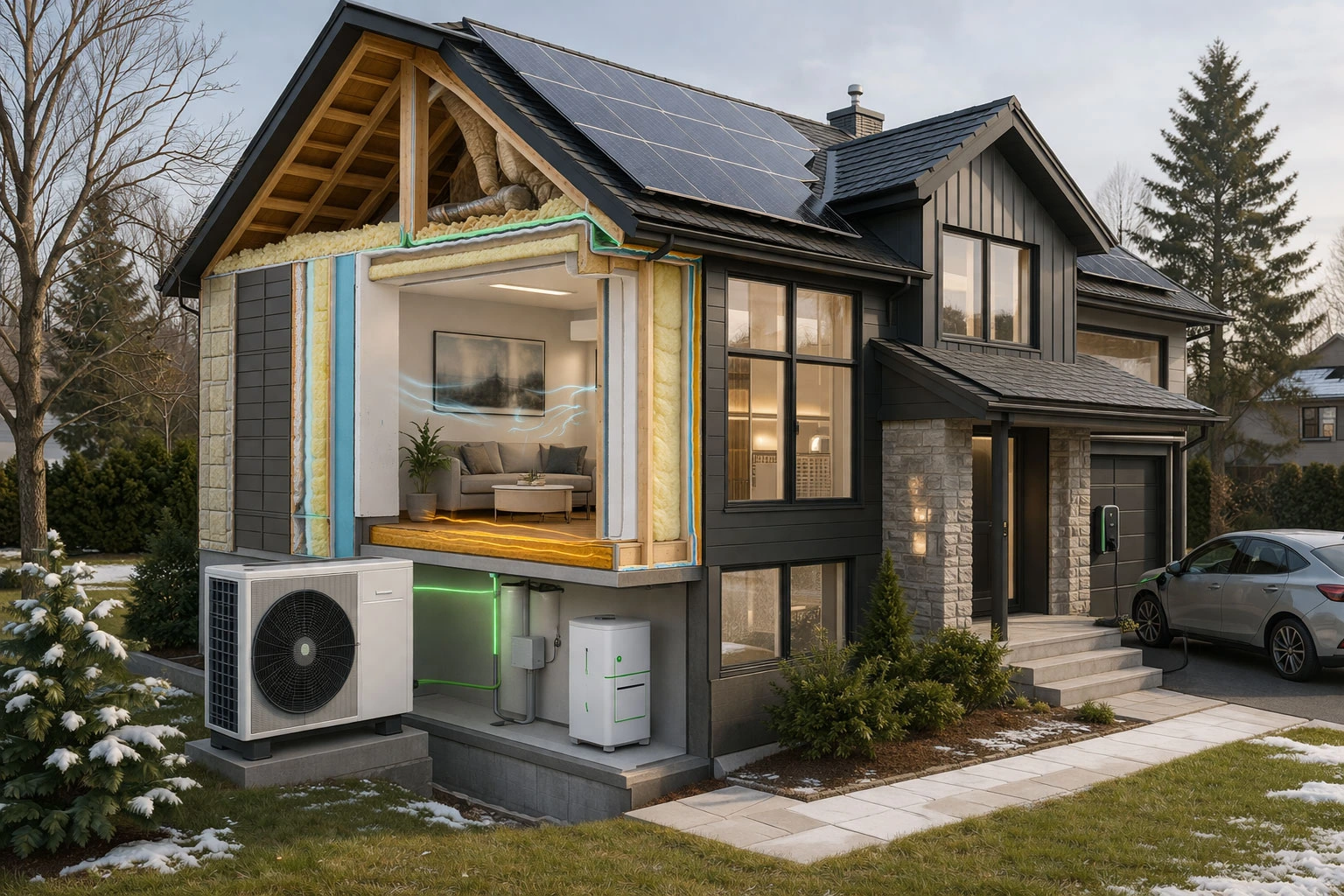
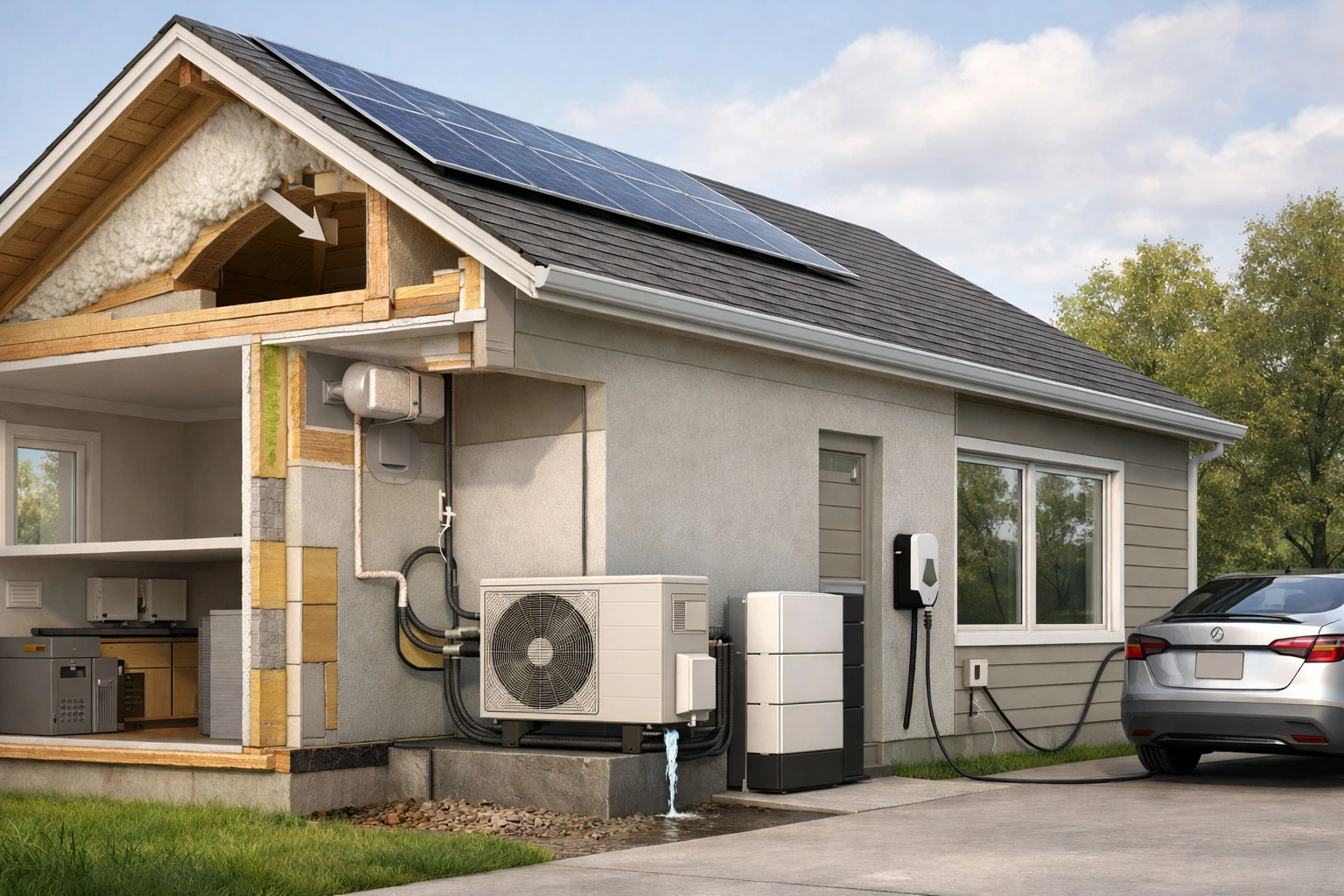
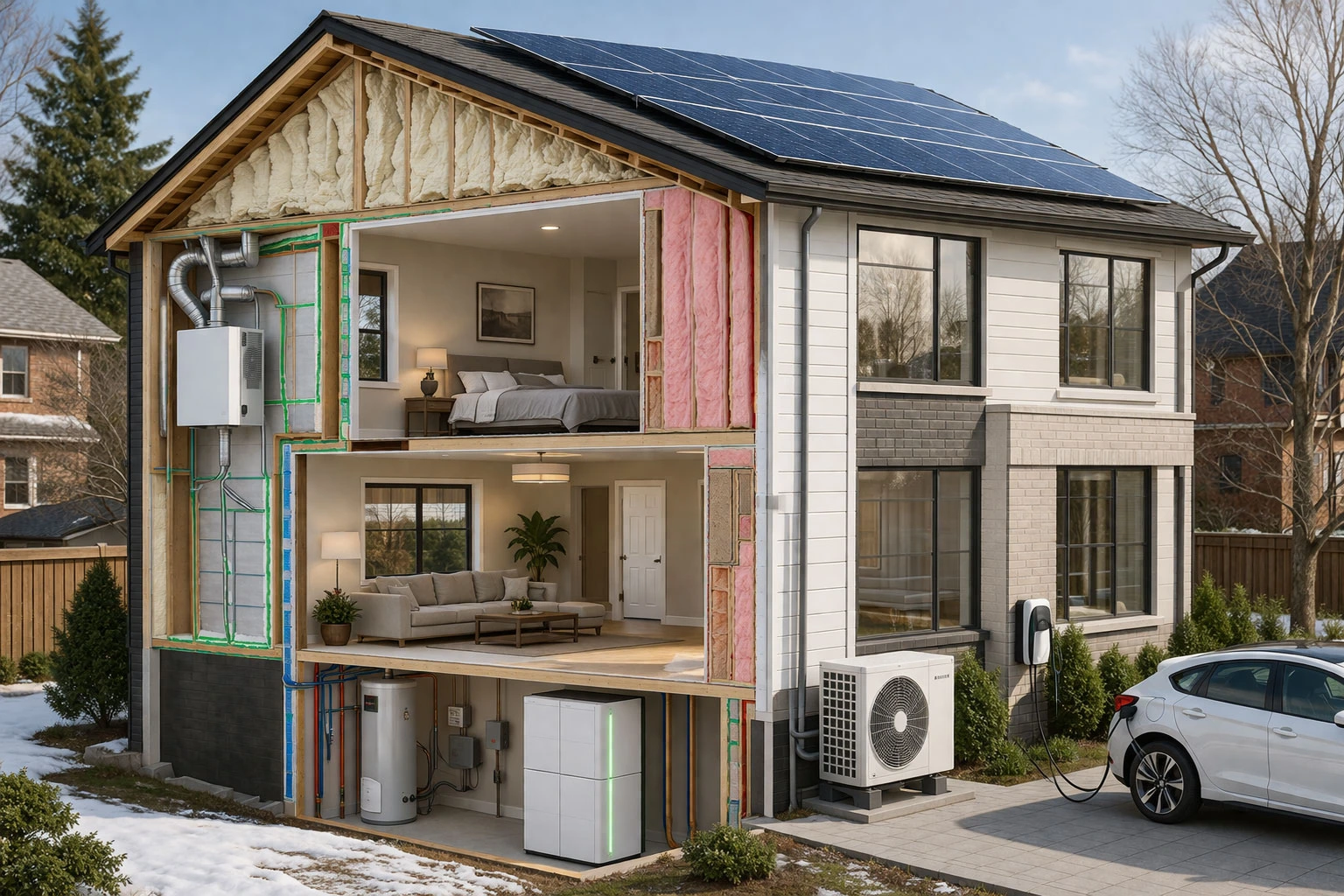
Heat pumps pair well with:
- Solar panel systems
- Battery storage
- Time-of-use electricity strategies
This allows homeowners to move closer to net-zero emissions over time.
Cost Considerations in Canada (Ontario Focus)
Upgrading to a heat pump is a meaningful investment, and cost is often the first concern.
Typical Cost Range
In Ontario, homeowners can expect:
- Ducted cold-climate heat pump systems: moderate to high upfront cost
- Ductless (mini-split) systems: more flexible, often lower cost per zone
Costs vary based on:
- Home size
- Insulation levels
- Existing HVAC system
- Electrical capacity
Rebates and Incentives
There are various federal, provincial, and utility-level programs that can help offset costs.
These may include:
- Home energy retrofit programs
- Electrification incentives
- Low-interest financing options
While amounts change over time, the direction is clear:
Governments are actively supporting low-carbon heating upgrades.
Energy Savings and ROI
Switching to a heat pump is not just about emissions it can also impact your operating costs.
Where Savings Come From
- Reduced reliance on natural gas or oil
- Improved efficiency (especially in shoulder seasons)
- Potential cooling savings (since heat pumps replace AC systems)
Realistic Expectations
Savings depend heavily on:
- Current fuel type (oil users often see the biggest savings)
- Electricity rates
- Home efficiency
For many Ontario homeowners:
- Payback periods are moderate, not immediate
- Long-term savings improve as energy prices shift
Common Mistakes Homeowners Make
When considering heat pumps, a few common missteps can reduce both performance and savings:
1. Skipping Proper Sizing
Bigger is not better.
An oversized system:
- Cycles on and off too frequently
- Reduces efficiency
- Impacts comfort
2. Ignoring Home Envelope Issues
Installing a heat pump in a poorly insulated home is like heating with the windows open.
Before upgrading:
- Address insulation
- Seal air leaks
- Upgrade windows if needed
3. Choosing the Wrong System Type
Not all heat pumps are designed for Canadian winters.
Look for:
- Cold-climate certified models
- Proven performance at low temperatures
4. Expecting Instant ROI
Heat pumps are a long-term investment:
- Comfort improves immediately
- Emission reductions are immediate
- Financial returns take time
Step-by-Step: How to Decide If a Heat Pump Is Right for You
If you’re feeling overwhelmed, here’s a practical path forward:
Step 1: Understand Your Current System
- Age and condition of your furnace or boiler
- Current energy bills
Step 2: Evaluate Your Home
- Insulation levels
- Air sealing
- Ductwork condition
Step 3: Get an Energy Assessment
A professional energy audit helps identify:
- Heat loss areas
- Upgrade priorities
- Potential rebate eligibility
Step 4: Compare System Options
- Hybrid systems (heat pump + furnace backup)
- Fully electric systems
Step 5: Plan for the Long Term
Think beyond immediate costs:
- Future energy prices
- Carbon reduction goals
- Home resale value
When a Heat Pump Makes Sense and When It Doesn’t
Ideal Scenarios
A heat pump is a strong fit if:
- Your current system is aging
- You use oil, propane, or electric baseboards
- Your home is reasonably well insulated
- You plan to stay in your home long term
Situations Where It May Not Be Ideal (Yet)
- Homes with major insulation issues
- Very limited electrical capacity
- Short-term ownership plans
In these cases, a phased approach may be more effective.
How Heat Pumps Fit Into a Net Zero Roadmap
A heat pump is rarely a standalone solution it’s part of a broader strategy.
Typical Net Zero Upgrade Path
- Air sealing and insulation improvements
- High-performance windows (if needed)
- Heat pump installation
- Solar panel integration
- Battery storage (optional)
This staged approach ensures:
- Maximum efficiency
- Lower system sizing requirements
- Better long-term ROI
The Bigger Picture: Comfort, Costs, and Carbon
Heat pumps do more than reduce emissions.
They also:
- Provide consistent, even heating
- Improve summer cooling efficiency
- Reduce reliance on fossil fuels
- Align your home with future energy standards
For many homeowners, it’s not just a technology upgrade it’s a shift in how the home operates.
Conclusion: A Smarter Way to Heat Your Home
Reducing carbon emissions at home doesn’t require radical change it requires smart, well-planned upgrades.
Heat pumps offer a practical, proven way to:
- Lower your environmental impact
- Improve comfort year-round
- Move toward a more energy-efficient home
The key is not rushing the decision. The best outcomes come from understanding your home, your goals, and your options.
Ready to Take the Next Step?
If you’re considering a heat pump or planning a broader home energy upgrade, the best place to start is with a clear, customized plan.
Book a consultation with Net Zero Homes Consulting to get a tailored roadmap that fits your home, your budget, and your long-term energy goals.