

Introduction: When the Lights Go Out
It’s a cold January evening in Ontario. The wind is picking up, snow is falling sideways, and suddenly everything goes dark. No lights. No internet. And most importantly, no heat.
For many homeowners, that moment raises a critical question: If I switch to a heat pump, what happens during a power outage?
It’s a fair concern. Heat pumps are becoming a cornerstone of energy-efficient homes across Canada, but they rely on electricity. And in a country where winter outages are not uncommon, understanding how your heating system performs when the grid goes down isn’t optional it’s essential.
This guide breaks it down clearly. No hype, no confusion. Just practical insights to help you make the right decision for your home.
How Heat Pumps Work and Why Power Matters
A heat pump doesn’t generate heat in the traditional sense. Instead, it moves heat from outside air into your home even in cold climates. That’s why it’s so efficient.
But here’s the key point:
Heat pumps run entirely on electricity.
This means:
- No electricity = no heating or cooling
- Unlike gas furnaces, there’s no combustion fallback
- Even high-efficiency systems stop completely during outages
Some homeowners assume that because heat pumps are modern and efficient, they might have built-in resilience. In reality, they are only as reliable as your electrical supply.
What Happens During a Power Outage?
When the power goes out, a heat pump system shuts down immediately. There’s no gradual decline it simply stops operating.
What this means in practical terms:
- Your home will begin losing heat, especially in winter
- Indoor temperatures can drop quickly in poorly insulated homes
- Backup systems become critical, not optional
Real homeowner example
A homeowner in Ottawa upgraded to a cold-climate heat pump and removed their old gas furnace entirely. During a winter storm, a 6-hour outage left the home without heat. The indoor temperature dropped from 21°C to 14°C uncomfortable, but manageable due to good insulation.
The takeaway?
Your home’s thermal performance matters just as much as your heating system.
Backup Options: Planning for Reliability
If you’re considering a heat pump in Canada, especially in Ontario, you need a backup plan. There’s no one-size-fits-all solution, but here are the most common options.
1. Dual-Fuel Systems (Hybrid Heating)
This setup combines a heat pump with a gas furnace.
- Heat pump handles most of the heating
- Furnace takes over in extreme cold or outages
Pros:
- Reliable during outages (if furnace has backup power for controls)
- Flexible and familiar for many homeowners
Cons:
- Still tied to fossil fuels
- Higher upfront system complexity
2. Backup Generators
A standby generator can power your heat pump during outages.
Options include:
- Portable generators (manual setup)
- Whole-home standby generators (automatic)
Pros:
- Keeps your home fully operational
- Supports other essentials (fridge, lights, sump pump)
Cons:
- Installation cost can be significant
- Requires fuel (natural gas, propane, or gasoline)
3. Battery Storage Systems
Battery systems are becoming more popular, especially when paired with solar panels.
How they work:
- Store electricity for use during outages
- Automatically supply power to critical loads
Pros:
- Clean, quiet, and low maintenance
- Aligns with Net Zero goals
Cons:
- May not support full heat pump operation unless sized properly
- Higher upfront investment
4. Keeping Your Existing Furnace
Some homeowners choose not to remove their furnace immediately.
- Use heat pump for most heating
- Keep furnace as emergency backup
This is often the most practical transitional approach.
Cost Considerations (Canadian Context)
Planning for outages adds cost but it also adds resilience.
Typical cost ranges (Ontario estimates):
- Heat pump system: $10,000–$20,000+
- Backup generator: $3,000–$15,000+
- Battery storage: $8,000–$25,000+
- Dual-fuel upgrade: varies depending on existing system
These are broad ranges, but they illustrate an important point:
Reliability planning is part of the investment not an afterthought.
Energy Savings and ROI
Heat pumps are still one of the most efficient ways to heat and cool a home.
Key benefits:
- Lower energy consumption compared to electric resistance heating
- Reduced carbon emissions
- Potential savings on utility bills over time
However, when you factor in backup systems, your return on investment depends on:
- How often outages occur
- Your home’s insulation and airtightness
- Energy prices (electricity vs. gas)
- Available rebates and incentives
In most cases, homeowners still see long-term value but it’s important to evaluate the full system, not just the heat pump.
Common Mistakes Homeowners Make
Switching to a heat pump without thinking about outages is more common than you might expect.
Avoid these pitfalls:
- Removing all backup heat too early
Especially risky in colder regions - Undersizing battery systems
Not all batteries can run a heat pump - Ignoring insulation upgrades
A leaky home loses heat fast during outages - Assuming outages are rare
Climate events are becoming more unpredictable - Not planning electrical capacity
Panels and circuits must support backup solutions
Step-by-Step Decision Guidance
If you’re evaluating a heat pump, here’s a practical approach:
Step 1: Assess Your Risk
- How often do outages happen in your area?
- How long do they typically last?
Step 2: Evaluate Your Home Envelope
- Insulation levels
- Air sealing
- Window performance
A better envelope = slower heat loss.
Step 3: Choose Your Heating Strategy
- Full electrification (heat pump only + battery)
- Hybrid system (heat pump + furnace)
- Transitional approach (keep existing furnace)
Step 4: Plan Backup Power
Decide what you want to power during an outage:
- Just essentials?
- Whole home?
- Heating included?
Step 5: Budget Realistically
Include:
- Equipment
- Installation
- Electrical upgrades
- Backup systems
Step 6: Look Into Rebates
Homeowners in Ontario and across Canada can access programs such as:
- Canada Greener Homes Initiative
- Enbridge Gas Home Efficiency Rebate
These programs can significantly offset costs, especially when combining heat pumps with other upgrades like insulation.
When This Upgrade Makes Sense and When It Doesn’t
Makes sense if:
- You want to reduce carbon emissions
- Your home is reasonably well insulated
- You’re planning a long-term upgrade strategy
- You’re willing to invest in backup solutions
May not make sense if:
- You experience frequent, long outages without backup options
- Your home is poorly insulated and not being upgraded
- Budget constraints limit proper system design
- You expect a heat pump to work without electricity
How It Fits Into a Net Zero Roadmap
Heat pumps are a cornerstone of Net Zero homes but they’re not the whole picture.
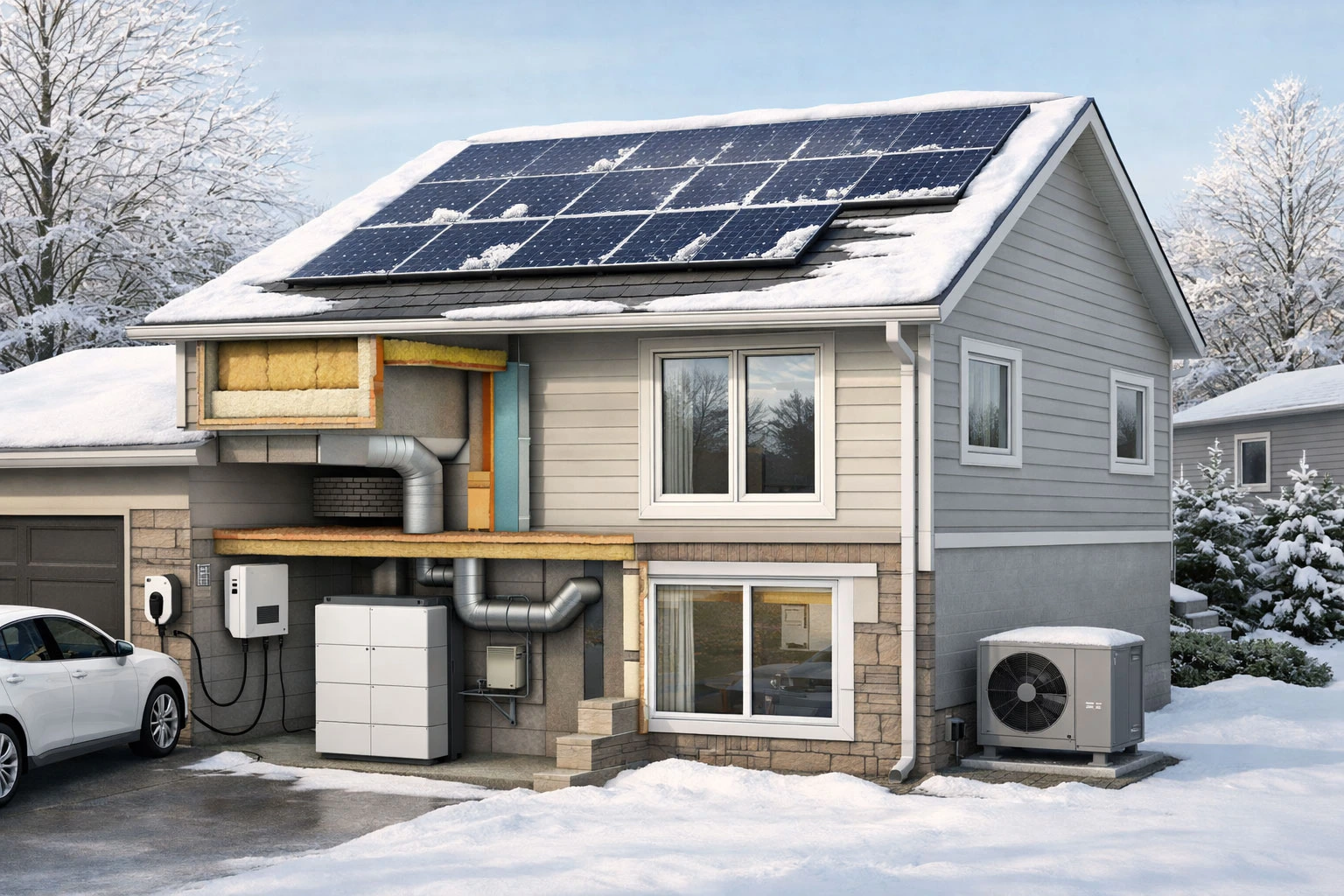
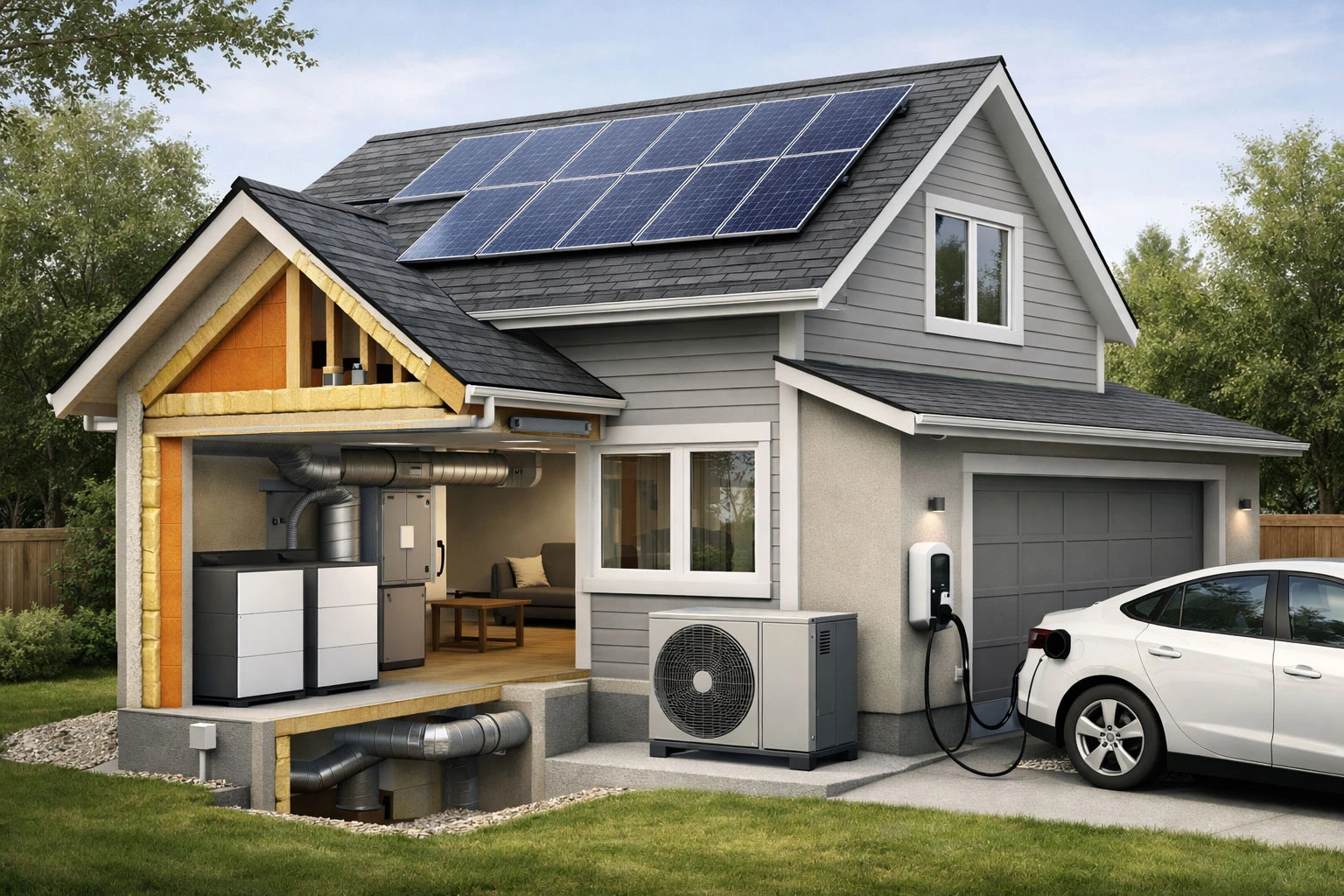
A resilient, low-carbon home typically includes:
- High-performance insulation
- Airtight construction
- Heat pump heating and cooling
- Solar panels
- Battery storage
- Smart energy management
When combined, these systems:
- Reduce energy demand
- Lower emissions
- Improve comfort
- Increase resilience during outages
In other words, the goal isn’t just efficiency it’s reliability and independence.
Conclusion: Plan for Efficiency and Resilience
Heat pumps are a smart, forward-looking investment for Canadian homeowners. They offer comfort, efficiency, and a clear path toward lower emissions.
But they also change how your home responds to power outages.
The key is not to avoid heat pumps it’s to design your system thoughtfully. With the right backup strategy, a well-insulated home, and a clear plan, you can enjoy the benefits of electrification without sacrificing peace of mind.
Ready to Plan Your Upgrade?
If you’re considering a heat pump and want a clear, customized plan that accounts for outages, energy savings, and long-term performance, it helps to get expert guidance.
Book a consultation with Net Zero Homes Consulting to create a tailored upgrade roadmap for your home designed for comfort, efficiency, and resilience in every season.