
Introduction: A familiar homeowner dilemma
You’ve made the decision to switch to an electric vehicle. It feels like the right move lower fuel costs, fewer emissions, and a step toward a more future-ready home. But then reality sets in.
Where do you charge it?
Public chargers are fine occasionally, but relying on them daily quickly becomes inconvenient. So naturally, your attention turns to installing a home EV charger. And that’s when the questions start:
- How much does it actually cost in Ontario?
- Is a Level 2 charger worth it?
- Will it increase my electricity bills?
- Does this fit into a bigger energy efficiency plan?
If you’re feeling unsure, you’re not alone. This guide breaks down EV charger installation cost in Ontario in practical terms so you can make a confident, informed decision.
Understanding Home EV Charging
Before getting into numbers, it helps to understand what you’re actually installing.
Level 1 vs Level 2 Charging
Most EVs come with a basic Level 1 charger that plugs into a standard 120V outlet. It’s slow adding roughly 5–8 km of range per hour.
A Level 2 charger, on the other hand, uses a 240V connection (similar to a dryer or stove) and can add 30–60 km of range per hour.
For most homeowners, especially in Ontario’s climate where range can drop in winter, a Level 2 charger is the practical choice.
EV Charger Installation Cost in Ontario: What to Expect
The total home EV charging station cost depends on two main components:
- The charger itself
- The installation (electrical work)
1. Level 2 Charger Price in Canada
A typical Level 2 charger price in Canada ranges from:
- $700 to $1,500 CAD for the unit
Higher-end models may include:
- Smart app controls
- Energy monitoring
- Load management features
- Weather-resistant builds for outdoor use
2. Installation Costs
This is where costs can vary significantly.
In Ontario, installation typically ranges from:
- $800 to $3,000+ CAD
The wide range depends on your home’s electrical setup.
Key factors that affect installation cost:
- Distance from electrical panel to charger location
- Panel capacity (100A vs 200A service)
- Need for panel upgrades
- Garage vs outdoor installation
- Permits and inspections
Typical Total Cost
For most Ontario homeowners:
- Basic installation: $1,500 – $2,500 CAD
- More complex setup: $2,500 – $4,500+ CAD
Real Homeowner Examples
Example 1: Newer Home in Suburban Ontario
A homeowner in a relatively new home with a 200A panel installs a charger in their garage, right beside the panel.
- Charger: $900
- Installation: $900
- Total: ~$1,800 CAD
Example 2: Older Home with Panel Upgrade
Another homeowner in an older property needs to upgrade from a 100A to a 200A panel.
- Charger: $1,200
- Panel upgrade: $2,500
- Installation: $1,200
- Total: ~$4,900 CAD
The difference is substantial and highlights why a site-specific assessment matters.
Energy Costs and Savings: What Changes?
Installing a charger doesn’t just add convenience it changes how you spend on transportation.
Charging Cost at Home (Ontario Average)
- Roughly $2–$4 per 100 km depending on time-of-use rates
Compare that to:
- Gasoline vehicle: $10–$15 per 100 km
Annual Savings Example
If you drive 20,000 km/year:
- EV charging: ~$600
- Gas equivalent: ~$2,400
Estimated savings: ~$1,800/year
ROI Timeline
Depending on your installation cost:
- Payback period: 1.5 to 3 years (purely on fuel savings)
That doesn’t even include:
- Increased home value
- Convenience factor
- Reduced maintenance costs
Ontario Rebates and Incentives (What to Know)
Rebates for EV chargers in Ontario change periodically, but homeowners should be aware of:
- Utility-based incentive programs
- Federal clean energy initiatives
- Time-of-use pricing advantages
Even when direct rebates aren’t available, off-peak electricity pricing can significantly reduce operating costs.
It’s worth checking current programs before installation this alone can shift your ROI.
Common Mistakes Homeowners Make
Installing an EV charger seems straightforward, but there are a few costly missteps to avoid.
1. Underestimating Electrical Capacity
Many homeowners assume their panel can handle it. It often can’t especially in older homes.
2. Poor Charger Placement
Installing too far from your parking spot increases wiring costs unnecessarily.
3. Ignoring Future Needs
You might have one EV today but what about two in a few years?
Planning for scalability can save thousands later.
4. Skipping Permits
Unpermitted work can create insurance and resale issues.
5. Choosing the Cheapest Option
A low-cost charger without smart features may limit energy optimization later especially if you plan to integrate solar.
Step-by-Step Decision Guide
If you’re considering a home EV charging station, here’s a practical path forward:
Step 1: Assess Your Driving Needs
- Daily commute distance
- Charging frequency
- Future vehicle plans
Step 2: Evaluate Your Electrical Panel
- 100A or 200A service?
- Available capacity?
Step 3: Choose the Right Charger
- Basic vs smart charger
- Indoor vs outdoor rated
- Cable length and mounting
Step 4: Get a Professional Assessment
An electrician or energy consultant can:
- Confirm panel capacity
- Estimate installation cost
- Identify upgrade needs
Step 5: Compare Quotes
Look beyond price consider:
- Experience with EV installations
- Warranty
- Permit handling
Step 6: Plan for the Future
Consider:
- Solar integration
- Battery storage
- Load management systems
When Installing an EV Charger Makes Sense
A home EV charger is a strong investment if:
- You drive daily
- You plan to keep your EV long-term
- You want convenience and time savings
- Your electrical system can support it (or can be upgraded reasonably)
When It Might Not Make Sense
In some cases, it may not be the right time:
- You rely mostly on public charging
- You live in a condo without dedicated parking
- Your panel upgrade cost is extremely high
- You plan to move soon
In these situations, a temporary solution (like Level 1 charging) may be more practical.
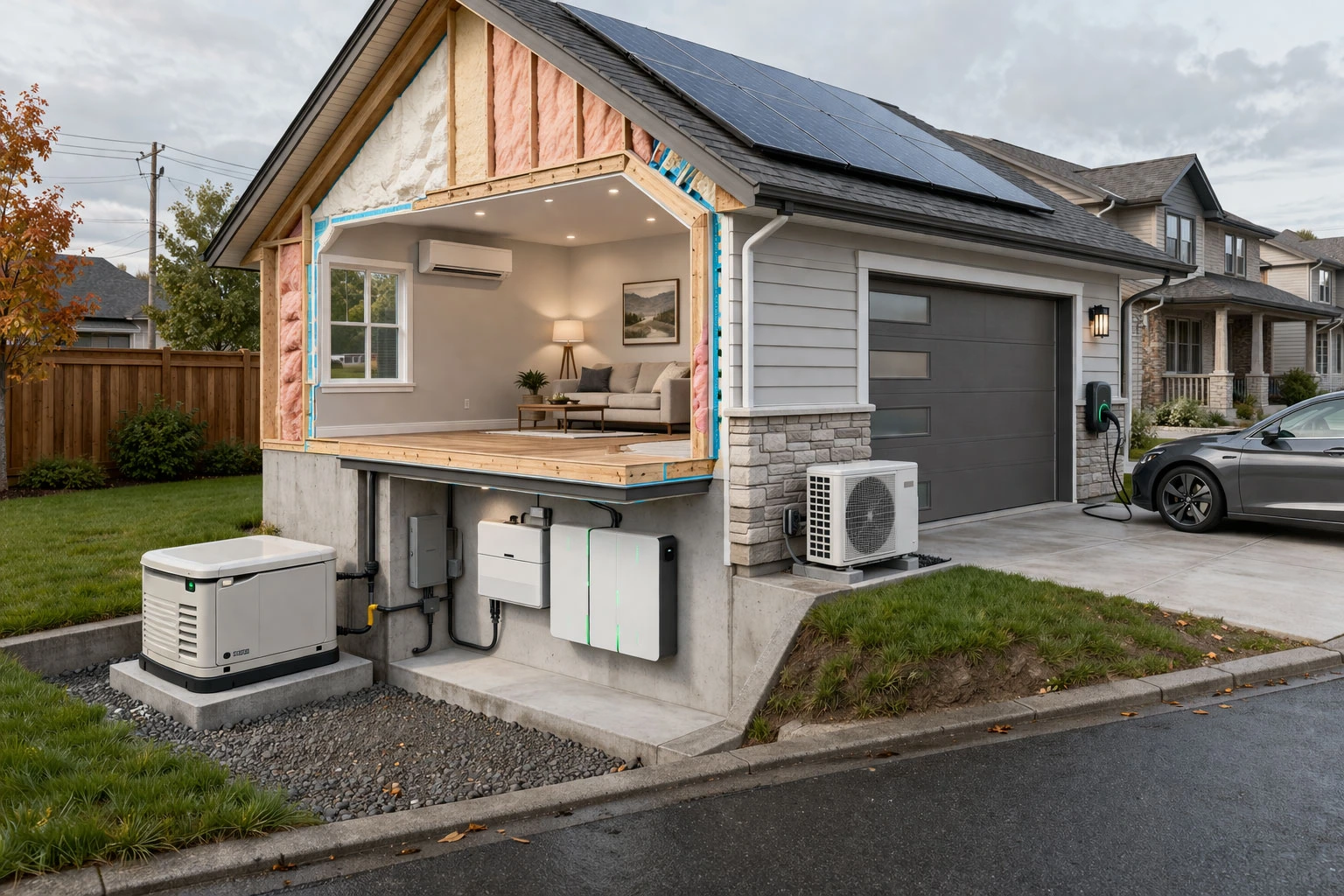
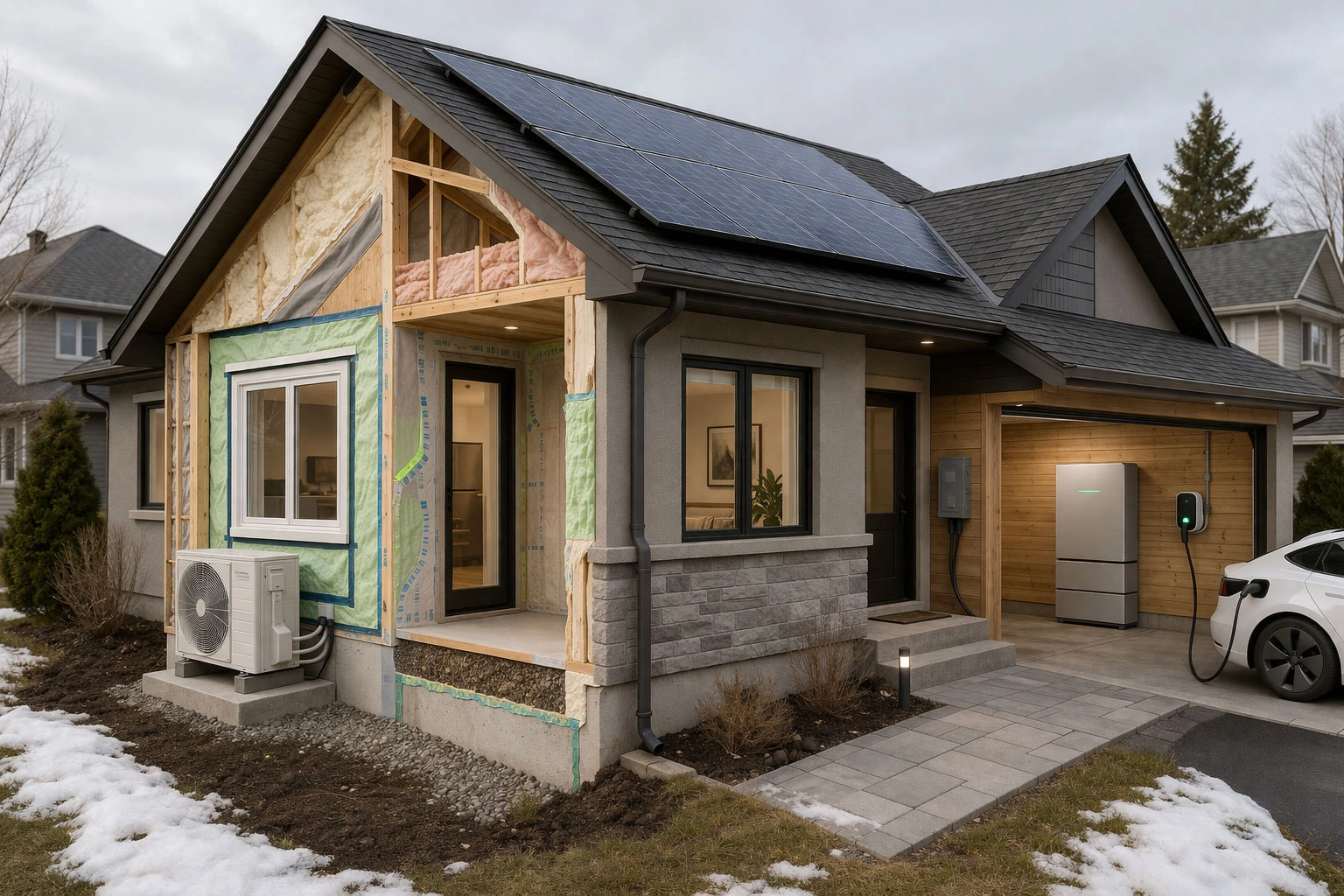
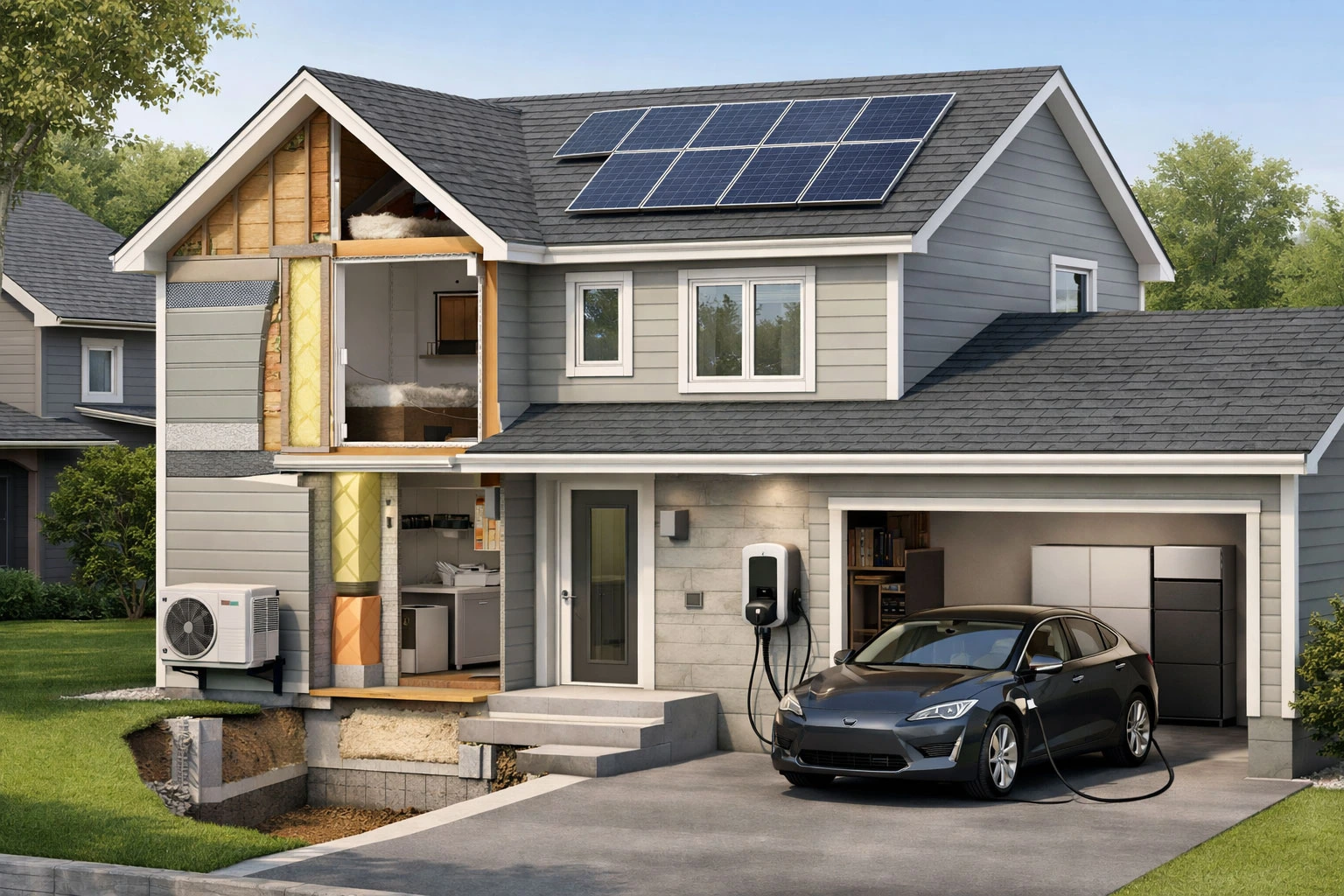
How EV Charging Fits Into a Net Zero Home Strategy
Installing an EV charger isn’t just about your car it’s part of a larger energy ecosystem.
In a Net Zero roadmap, it connects with:
- Solar panels: Charge your EV using your own electricity
- Battery storage: Store energy for overnight charging
- Heat pumps: Electrify your entire home efficiently
- Load management systems: Balance energy use intelligently
When planned together, these upgrades create:
- Lower overall energy costs
- Reduced grid dependency
- A future-ready home
An EV charger is often one of the first steps toward this transition.
Final Thoughts
The EV charger installation cost in Ontario can range widely, but for most homeowners, it’s a manageable and worthwhile investment.
The key is understanding your home not just your vehicle.
A properly planned installation avoids surprises, reduces long-term costs, and fits seamlessly into a broader energy strategy.
Ready to Plan Your Upgrade?
If you’re considering a home EV charging station and want to understand how it fits into your home’s long-term efficiency plan, a tailored approach makes all the difference.
Book a consultation with Net Zero Homes Consulting to get a customized upgrade roadmap based on your home, your energy use, and your future goals.