
The Draft You Can’t Ignore
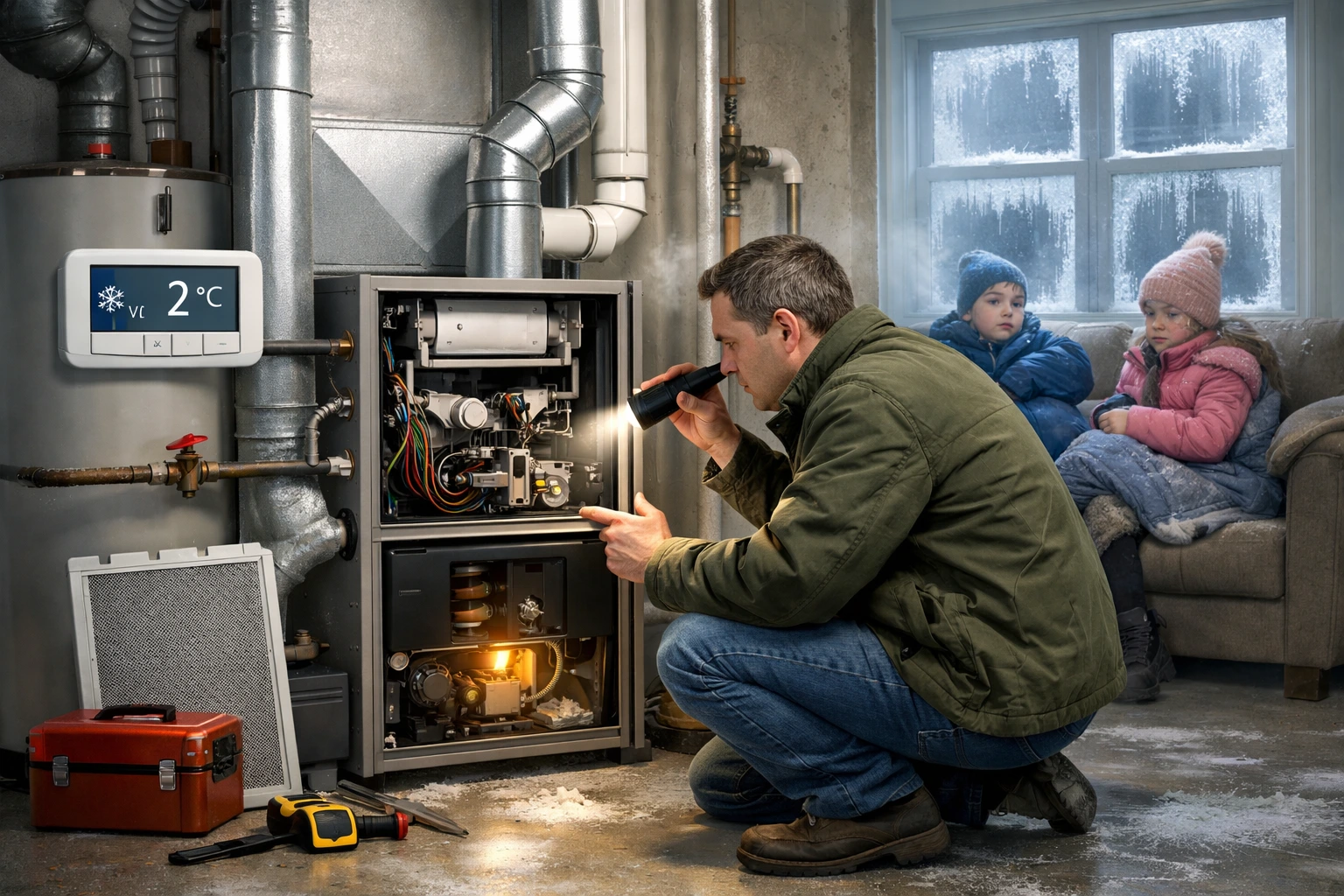
It’s -18°C in January. You’re sitting near the living room window, and even though the furnace is running, you feel a steady chill on your shoulder. You move to the couch. The floor near the window feels cold. By morning, there’s condensation pooling at the bottom of the glass.
You start wondering:
Are these windows costing me money every single month?
For many Ontario homeowners, windows are one of the most visible and misunderstood energy upgrades. Replacing them isn’t cheap. Quotes vary wildly. One contractor pushes triple pane. Another says double pane is enough. You search “Energy efficient windows cost Ontario” and get numbers all over the map.
This guide breaks it down clearly. What energy efficient windows actually do. What they cost in Ontario in 2026. When they make financial sense. And how they fit into a smart, long-term Net Zero strategy.
What Makes a Window “Energy Efficient”?
Not all new windows are high performance. And not all old windows are energy disasters.
Energy efficient windows are designed to reduce:
Heat loss in winter
Heat gain in summer
Air leakage
Condensation
Key Components That Affect Performance
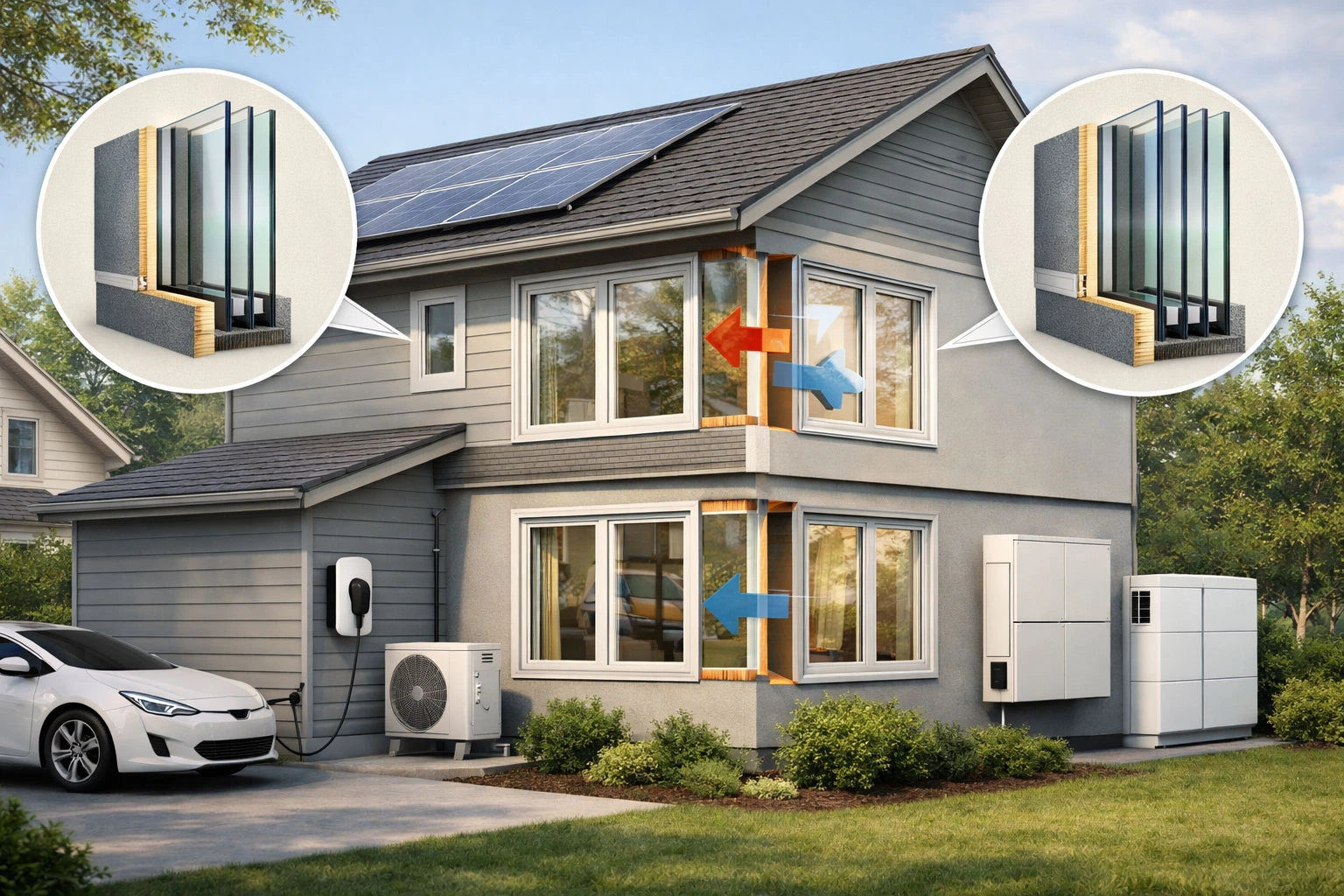
1. Number of panes
Double pane (two layers of glass)
Triple pane (three layers of glass)
2. Gas fill
Argon or krypton gas between panes slows heat transfer.
3. Low-E coatings
Microscopic metallic coatings reflect heat back into the home in winter and block solar heat in summer.
4. Frame material
Vinyl (most common in Canada)
Fiberglass (stronger, more stable)
Wood-clad (higher cost, aesthetic appeal)
5. Installation quality
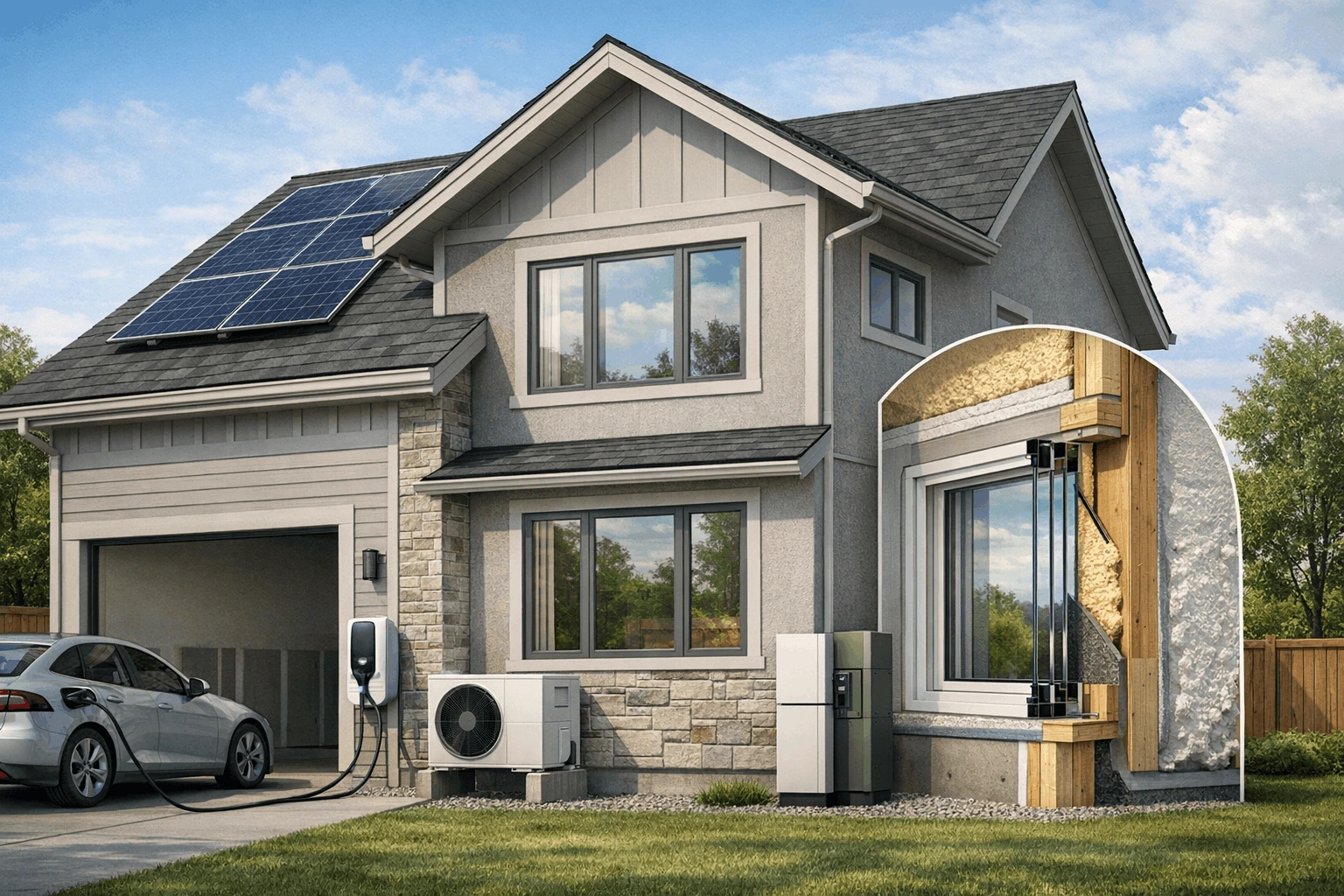
Even the best window performs poorly if it’s not air sealed properly.
When people ask about window replacement cost Canada, they’re often comparing very different products without realizing it.
Energy Efficient Windows Cost Ontario (2026 Estimates)
Let’s talk real numbers.
In Ontario, installed window costs in 2026 typically fall within:
Per Window (Fully Installed)
Standard double pane vinyl: $900 – $1,400
High-performance double pane: $1,200 – $1,800
Triple pane windows price range: $1,500 – $2,500+
Large custom units, bay windows, or structural modifications can exceed $3,000–$5,000 per opening.
Whole Home Replacement
For a typical detached home with 15–20 windows:
Double pane replacement: $18,000 – $30,000
Triple pane upgrade: $25,000 – $45,000+
Costs vary based on:
Window size and shape
Accessibility (second floor scaffolding increases cost)
Brick removal vs retrofit installation
Interior trim finishing
This is why Energy efficient windows cost Ontario searches return such a wide range. Homes differ dramatically.
How Much Energy Do New Windows Actually Save?
Here’s where expectations need calibration.
In most Ontario homes, windows account for 10–25% of total heat loss. The attic and air leakage usually cause more energy waste.
If your home already has early 2000s double-pane windows in decent shape, the energy savings from replacement may be modest.
However, if you have:
Original 1980s aluminum sliders
Single-pane glass
Failed seals with condensation
Noticeable drafts
The improvement can be significant.
Typical Annual Savings
For a standard Ontario detached home:
Heating savings: 5–15%
Dollar value: often $150–$400 per year depending on energy source
On energy savings alone, the payback period is long often 20+ years.
So why do homeowners still replace them?
Because energy savings are only part of the equation.
Comfort, Condensation, and Noise: The Hidden ROI
Homeowners don’t call consultants because of U-values. They call because:
Bedrooms are cold in winter
There’s ice buildup on frames
Street noise is disruptive
AC struggles in summer
Triple pane windows significantly improve interior surface temperature. That means:
Less draft feeling
Reduced condensation
More consistent room comfort
For homes near busy roads, triple pane can noticeably reduce noise transmission.
The triple pane windows price premium is often justified more by comfort than strict financial ROI.
Common Mistakes Homeowners Make
1. Replacing Windows Before Air Sealing
If your attic is under-insulated or your home leaks air badly, upgrading windows first may not solve your main problem.
A blower door test often reveals air leakage around:
Attic hatches
Top plates
Basement rim joists
Fixing those can deliver better returns per dollar.
2. Choosing Triple Pane Everywhere Without Strategy
Not all sides of the house need identical performance.
North-facing windows benefit most from triple pane.
South-facing windows may benefit from controlled solar gain.
Smart design beats blanket upgrades.
3. Focusing Only on Glass, Ignoring Installation
Poor flashing and sealing can cause:
Water damage
Mold
Installation quality is as important as product selection.
4. Assuming Windows Alone Will Make the Home “Net Zero Ready”
Windows are one piece of the puzzle not the entire solution.
Step-by-Step Decision Guidance
If you’re feeling overwhelmed, use this framework.
Step 1: Assess Your Current Windows
Ask:
Are they drafty?
Is there seal failure?
Are frames deteriorating?
Is condensation excessive?
If the answer is no, replacement may not be urgent.
Step 2: Evaluate the Whole Home
Before spending $30,000+:
Check attic insulation levels
Assess air leakage
Review heating system efficiency
In many Ontario homes, upgrading insulation delivers higher ROI first.
Step 3: Define Your Goal
Are you aiming for:
Lower bills only?
Improved comfort?
Noise reduction?
Net Zero transition?
Your goal determines whether double or triple pane makes sense.
Step 4: Compare Quotes Properly
Ensure quotes specify:
U-value
SHGC (solar heat gain coefficient)
Frame type
Installation method
Don’t compare based on price alone.
Ontario & Canada Rebates (General Overview)
Rebate programs in Ontario have evolved in recent years.
Federally and provincially supported programs have typically required:
Pre- and post-upgrade energy audits
ENERGY STAR® certified products
Documentation of installation
While rebate amounts fluctuate, window upgrades are sometimes eligible when part of broader energy retrofit programs.
Important:
Windows alone rarely unlock the highest incentives. Comprehensive upgrades (insulation + air sealing + mechanical systems) tend to qualify for more meaningful support.
Always confirm program details at the time of planning.
When Window Replacement Makes Sense
Window upgrades are most justified when:
Existing windows are 25+ years old
There is seal failure or rot
Comfort issues are significant
You’re already renovating siding or exterior
You’re pursuing deep energy retrofits
They also make sense when replacing electric resistance heating with heat pumps. Better windows reduce peak load, potentially allowing smaller equipment sizing.
When It May Not Make Sense
It may not be the right time if:
Your windows are under 15 years old and functional
Attic insulation is below R-40
Air sealing has not been addressed
Budget constraints require highest ROI upgrades first
In many cases, insulating and air sealing can deliver better cost-to-savings performance.
How Windows Fit into a Net Zero Roadmap
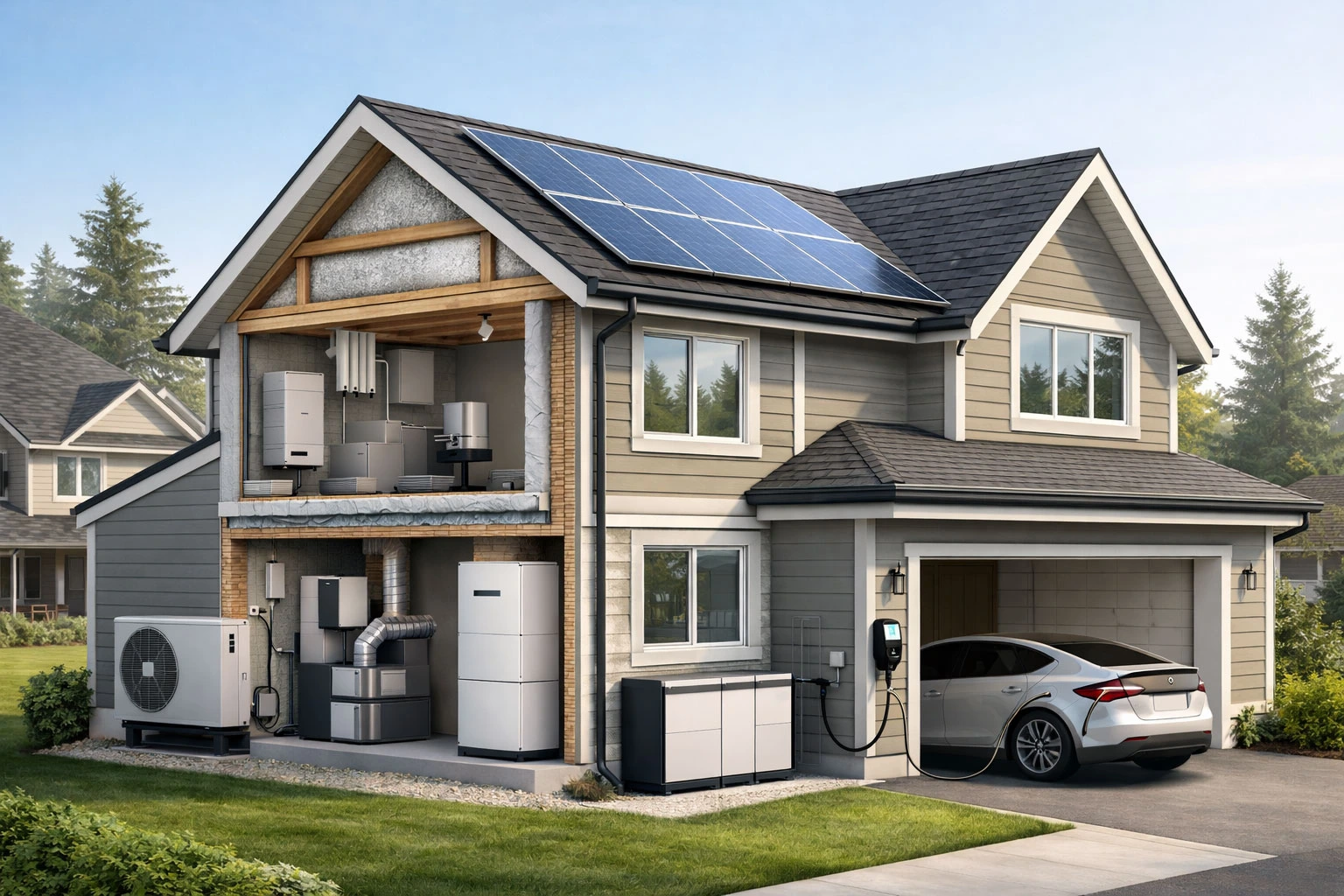
A Net Zero-ready Ontario home typically includes:
Windows reduce heating demand, which:
Lowers heat pump sizing
Reduces electricity consumption
Improves resilience during extreme cold
They are a supporting upgrade not the starting point in most cases.
Think of them as part of the envelope optimization stage.
Real Example: Toronto Suburban Home
A 1990s detached home in the GTA had:
Double-pane builder-grade windows
R-30 attic insulation
Gas furnace
Instead of replacing windows first, the homeowner:
Air sealed attic
Upgraded to R-60 insulation
Installed a cold-climate heat pump
Energy bills dropped meaningfully.
Two years later, they replaced north-facing windows with triple pane for comfort and condensation control.
Total result: smarter spending, staged properly.
Final Thoughts: A Smart, Balanced Approach
Energy efficient windows cost Ontario homeowners a significant investment. For a full home, you may be looking at $25,000 to $40,000 or more.
They can improve comfort, reduce drafts, cut noise, and contribute to long-term energy goals. But they are rarely the first upgrade that delivers maximum financial return.
The smartest approach isn’t “replace all windows immediately.”
It’s “replace windows strategically within a whole-home plan.”
Every house is different. Age, insulation levels, heating system, and renovation timing all matter.
If you want clarity before committing to a major investment, book a consultation with Net Zero Homes Consulting. We’ll help you build a customized upgrade roadmap that prioritizes comfort, energy savings, and long-term value in the right order.