
Why Some Homes Feel Drafty No Matter What
Imagine it’s a cold January evening in Ontario. The heat is running, but the living room still feels chilly. You check the thermostat again. It’s set correctly. The furnace is working. Yet somehow, cold air still creeps into the house.
Many homeowners assume the problem is insulation, windows, or an aging furnace. Sometimes those things matter. But often, the real issue is air leakage tiny gaps and cracks throughout the home where heated air escapes and cold air enters.
This is where a blower door test comes in.
A blower door test measures how airtight your home really is. It identifies hidden air leaks that waste energy and reduce comfort. If you’re considering an energy retrofit or a home energy audit, understanding the blower door test cost in Ontario is an important first step.
In this guide, we’ll walk through how blower door testing works, typical pricing in Ontario, potential energy savings, and how it fits into a long-term Net Zero strategy.
What Is a Blower Door Test?
A blower door test is a diagnostic tool used during a home energy audit to measure how much air leaks in and out of a house.
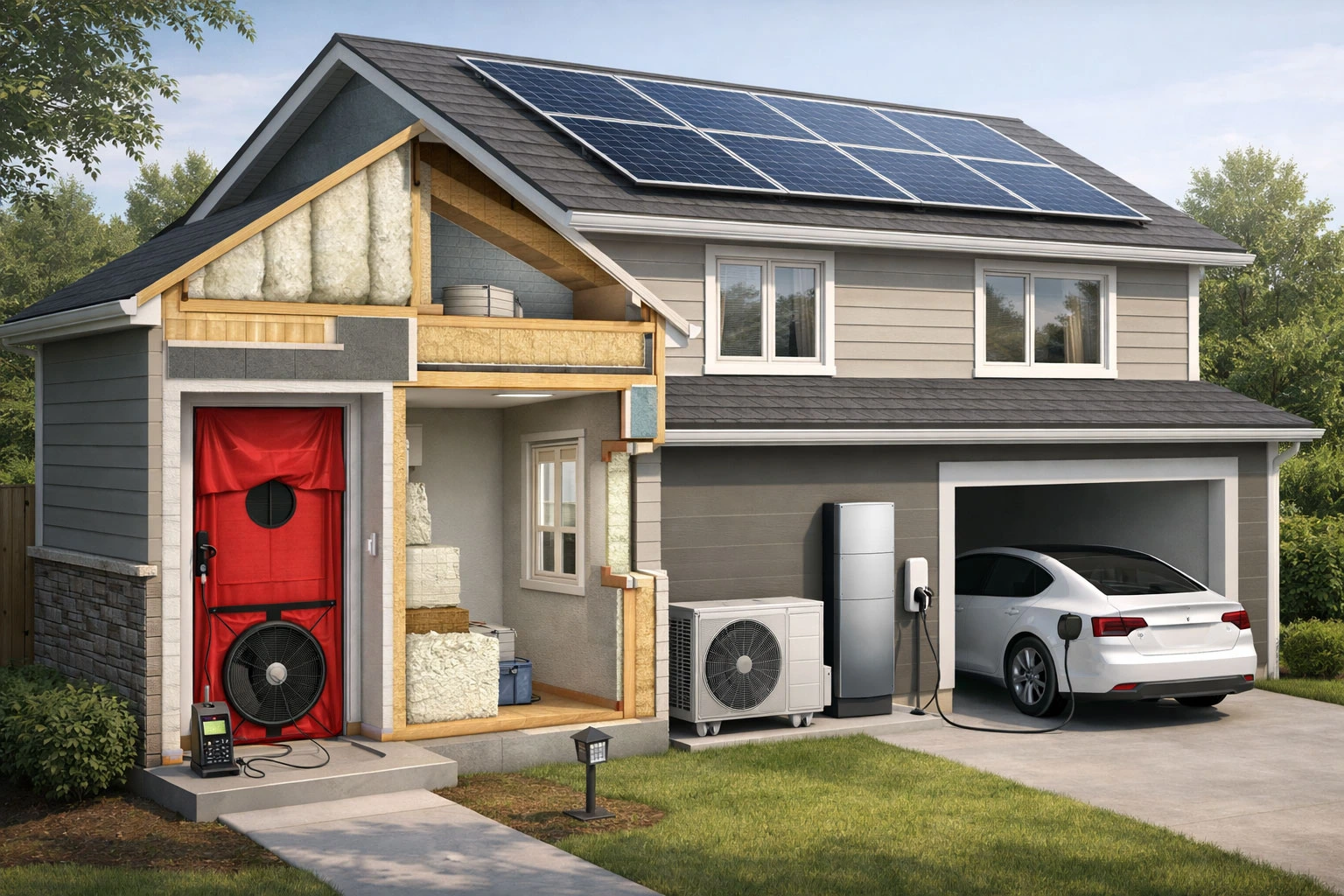
During the test, an energy advisor installs a powerful fan into an exterior doorway using a temporary sealed frame. The fan depressurizes the home, pulling outside air through any leaks in the building envelope.
As air rushes through cracks and gaps, technicians can locate problem areas such as:
Attic hatches
Electrical outlets on exterior walls
Basement rim joists
Plumbing penetrations
Ductwork leaks
Poorly sealed insulation areas
Special instruments measure the airflow required to maintain pressure, which reveals how airtight the home is.
This measurement is typically reported as ACH50 (air changes per hour at 50 Pascals) essentially how many times the entire volume of air inside your home is replaced in one hour under test conditions.
For homeowners trying to reduce heating costs, this test provides critical insight.
Blower Door Test Cost in Ontario
One of the most common questions homeowners ask is simple: How much does a blower door test cost in Ontario?
The answer depends on how the test is performed and whether it’s part of a broader energy audit.
Typical Price Range
In Ontario, a standalone blower door test usually costs:
$200 – $400
However, most homeowners encounter it as part of a home energy audit, where the price typically ranges from:
$400 – $700 for a full audit including blower door testing.
The audit usually includes:
Blower door test
Infrared thermal imaging
Insulation assessment
HVAC system evaluation
Detailed energy report
Upgrade recommendations
Prices vary depending on:
Home size
Location
Complexity of the building
Testing requirements (new construction vs existing home)
For example, a large detached house in suburban Ontario may cost more than a small townhouse due to the time required to evaluate the entire building envelope.
Why Air Leakage Matters More Than Most Homeowners Think
Many homeowners focus on insulation when trying to improve energy efficiency. While insulation is important, air leakage can often cause even greater energy losses.
Think of insulation like a winter jacket. If the jacket is unzipped, the insulation doesn’t do much.
The same concept applies to your home.
Common problems caused by air leakage include:
Higher heating and cooling costs
Drafty rooms
Uneven temperatures between floors
Moisture issues in walls and attics
Reduced HVAC efficiency
Poor indoor comfort
A blower door test helps identify these hidden issues before investing in upgrades.
Potential Energy Savings and Return on Investment
For many homes in Ontario, air sealing improvements can reduce energy use by 10–25%.
Savings depend on the age and condition of the house.
Older homes built before modern air sealing practices often show the greatest improvements.
Example Scenario
Consider a typical 1990s detached home in Ontario:
Annual heating cost: $2,200
Significant air leakage discovered during blower door test
Air sealing upgrades reduce heating demand by 15%
Estimated annual savings:
~$330 per year
If the blower door test cost is $350 as part of an energy audit, the diagnostic portion alone can pay for itself relatively quickly when it leads to targeted improvements.
More importantly, the test helps ensure homeowners invest in the right upgrades first.
Common Mistakes Homeowners Make
When homeowners begin researching energy upgrades, several common mistakes appear repeatedly.
1. Upgrading Equipment Before Fixing Air Leaks
Some homeowners replace furnaces or install heat pumps without addressing air leakage.
If the building envelope is inefficient, even the best equipment struggles to perform optimally.
2. Guessing Instead of Testing
Without a blower door test, it’s easy to assume the problem is insulation when the real issue is air leakage.
Testing provides objective data.
3. Focusing Only on Windows
Windows often get blamed for drafts, but in many homes they account for a relatively small portion of energy loss.
Attics, basements, and wall penetrations usually matter more.
4. Skipping the Energy Audit
Some homeowners try DIY improvements without a full assessment. This can lead to spending money on upgrades that deliver limited results.
Step-by-Step: How to Decide If You Need a Blower Door Test
If you’re unsure whether a blower door test makes sense for your home, consider this simple decision process.
Step 1: Identify Comfort Issues
Ask yourself:
Are some rooms colder than others?
Do you feel drafts near walls or outlets?
Does the furnace run frequently?
These symptoms often point to air leakage.
Step 2: Consider the Age of Your Home
Older homes built before the 2000s typically have more air leakage than newer buildings.
If your home is several decades old, testing can reveal significant opportunities.
Step 3: Plan Future Upgrades
Blower door testing is especially useful before:
Net Zero retrofits
It ensures upgrades are designed correctly.
Step 4: Schedule a Professional Energy Audit
In Canada, blower door testing is commonly performed by certified energy advisors as part of an official home energy evaluation.
This process also unlocks potential rebates.
Rebates and Energy Programs in Ontario
Energy efficiency programs change frequently, but many Canadian initiatives require a home energy audit with blower door testing.
Programs may include:
Federal home efficiency initiatives
Provincial retrofit programs
Utility incentives
Municipal energy programs
These programs often require:
Pre-retrofit energy audit
Recommended upgrades
Post-retrofit audit
The blower door test is used both times to measure improvements in airtightness.
Even when rebates vary, the audit process remains a key step.
When a Blower Door Test Makes Sense
A blower door test is particularly valuable when:
Your home feels drafty
Energy bills seem unusually high
You are planning insulation upgrades
You are installing a heat pump
You want to pursue Net Zero renovations
You want objective energy performance data
It’s also required for new high-performance homes, including many energy-efficient building standards.
When It May Not Be Necessary
There are situations where a blower door test may not provide much value.
Examples include:
Recently built homes already tested during construction
Minor cosmetic renovations unrelated to energy performance
Short-term home ownership without retrofit plans
However, even newer homes sometimes reveal surprising air leakage levels.
How Blower Door Testing Fits Into a Net Zero Roadmap
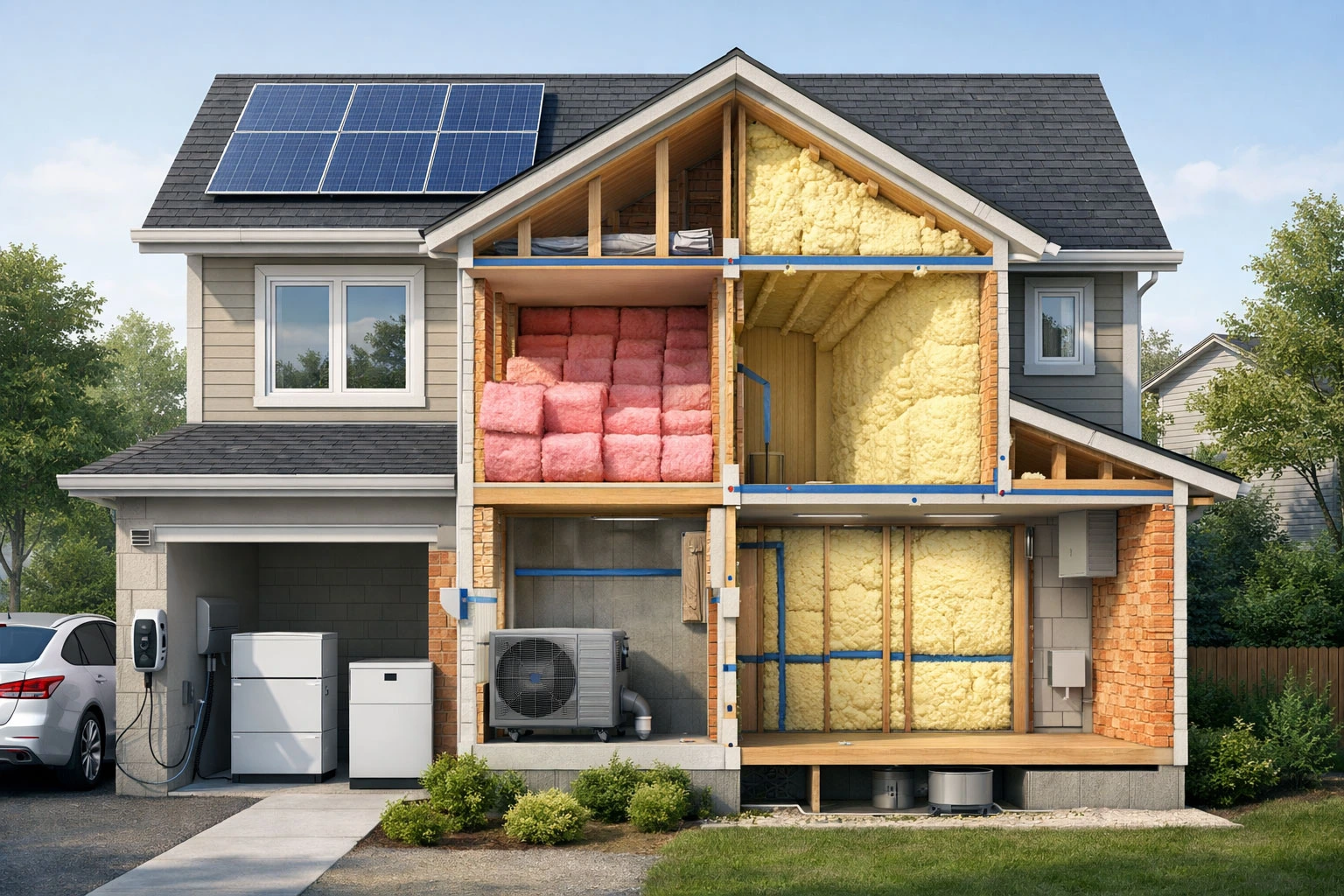
For homeowners considering a long-term energy strategy, blower door testing is an early step toward Net Zero homes.
A typical roadmap looks like this:
1. Energy Audit
Includes blower door test and energy modeling.
2. Air Sealing Improvements
Seal gaps around attic, basement, and penetrations.
3. Insulation Upgrades
Improve attic and wall insulation once leaks are sealed.
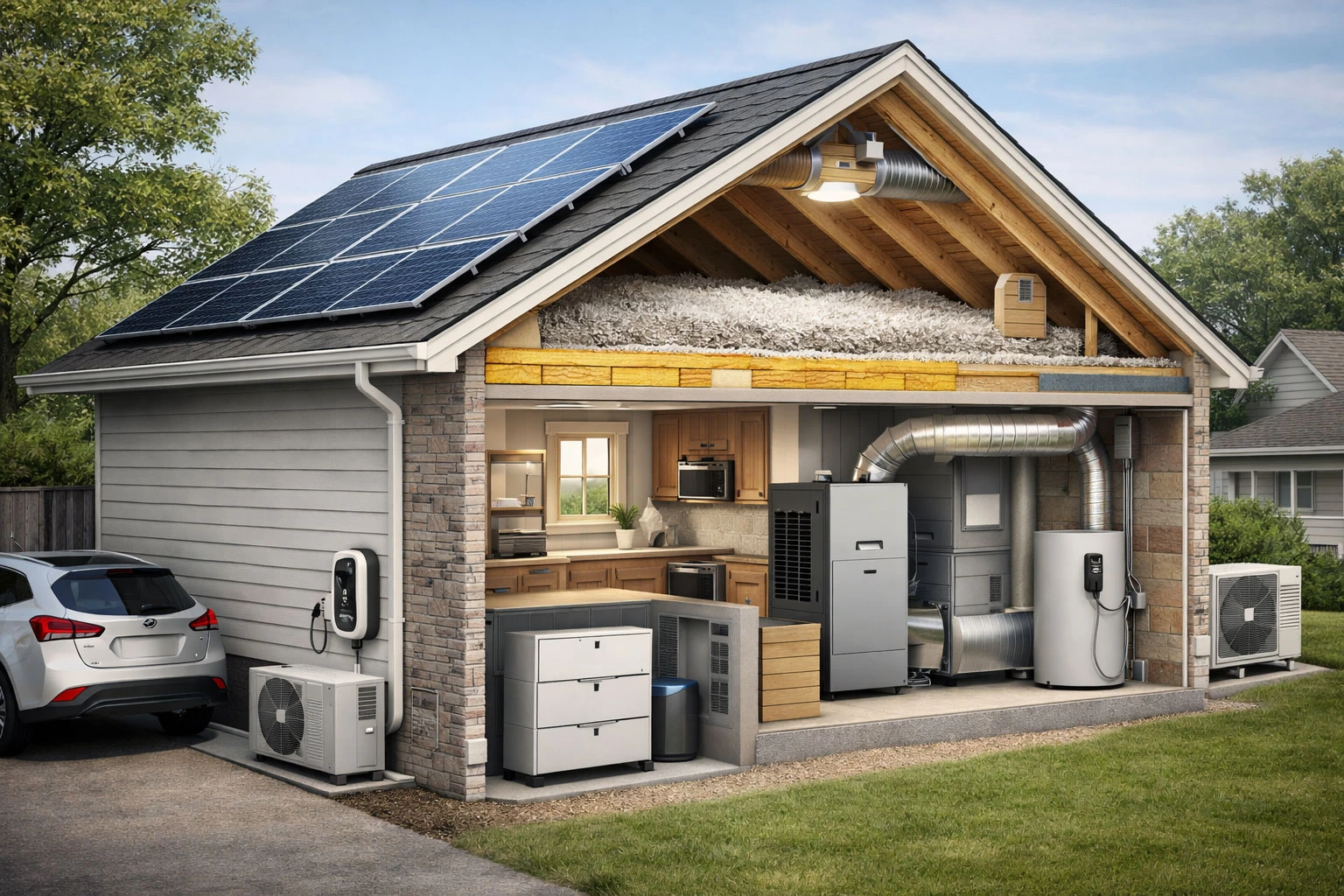
4. High-Efficiency HVAC
Install cold-climate heat pumps or efficient systems.
5. Renewable Energy
Add solar panels once energy demand is reduced.
6. Energy Storage and EV Integration
Battery systems and EV charging can further support electrification.
Without understanding air leakage, homeowners risk oversizing equipment or missing the most cost-effective upgrades.
Final Thoughts
For many homeowners in Ontario, the biggest energy problem is invisible.
Air leakage quietly increases heating costs, reduces comfort, and undermines expensive upgrades.
A blower door test provides clear answers.
With a typical blower door test cost in Ontario ranging from $200 to $400, or included within a home energy audit price of roughly $400 to $700, it’s often one of the most valuable diagnostic tools available.
More importantly, it helps homeowners make smarter decisions prioritizing upgrades that actually improve efficiency, comfort, and long-term energy performance.
Book a Net Zero Upgrade Consultation
If you’re considering energy upgrades and want a clear roadmap, Net Zero Homes Consulting can help.
Our team works with homeowners to interpret energy audit results, prioritize the most impactful upgrades, and design a practical path toward a high-performance home.
Book a consultation today to create a customized Net Zero upgrade strategy for your home.