
The Winter Reality Most Homeowners Worry About
It’s January in Ontario. The temperature has dropped below -15°C overnight. Snow blankets the roof. The furnace has been running steadily, and the hydro bill you opened last week is still sitting on the kitchen counter.
You’ve been thinking about solar panels for months. Maybe years. But one question keeps stopping you:
Do solar panels actually work in a Canadian winter?
It’s a fair concern. Canada isn’t California. We deal with snow loads, freezing temperatures, shorter daylight hours, and ice buildup. The good news is this: properly designed systems using the right cold climate solar panels can perform exceptionally well in Canadian conditions — and in some cases, even more efficiently than in hot climates.
This guide will help you understand which panels are best suited for cold weather, what they cost in Canada, how solar snow performance really works, and how to decide if solar makes sense for your home.
Why Solar Panels Can Perform Well in Cold Climates
There’s a common misconception that solar panels need heat to work. They don’t.
Solar panels need sunlight — not warmth.
In fact, high efficiency solar panels often perform better in cold weather because:
Cold air improves electrical conductivity
Panels operate more efficiently at lower temperatures
Snow reflection can increase light exposure
Clear winter skies can produce strong output
What matters most in Canada isn’t heat — it’s temperature coefficient, snow shedding ability, structural durability, and system design.
When evaluating the best solar panels Canada homeowners should consider, cold-weather performance specifications matter more than brand recognition alone.
Key Features to Look for in Cold Climate Solar Panels
1. Low Temperature Coefficient
The temperature coefficient tells you how much efficiency drops as panel temperature rises. In Canada, we care about this because:
Panels still heat up under sunlight
Better coefficients mean more stable year-round output
Look for panels with a temperature coefficient around -0.3% per °C or better.
2. High Efficiency Ratings
High efficiency solar panels (20%+ efficiency) are especially valuable in Ontario because:
Winter daylight hours are shorter
Roof space may be limited
Snow accumulation can reduce active surface area
More efficiency means more production per square foot.
3. Strong Snow Load Ratings
Canadian building codes require panels to withstand significant snow loads. Look for:
Snow load ratings above 5,000 Pascals
Reinforced frames
Durable glass construction
This ensures long-term durability.
4. All-Black or Smooth Surface Design
Panels with smoother surfaces tend to shed snow faster. Proper tilt angle also improves solar snow performance.
What Do Solar Panels Cost in Ontario?
Costs vary depending on:
Roof size and orientation
Electrical upgrades required
Panel brand and efficiency
Battery storage inclusion
Installation complexity
In Ontario, a typical residential system ranges broadly depending on size and equipment quality. While prices have steadily declined over the last decade, high-efficiency panels and battery systems will increase upfront investment.
Important Canadian cost considerations include:
Structural assessments for snow load
Potential electrical panel upgrades
Scaffolding or winter installation logistics
Permit and inspection fees
The good news: Canada and Ontario periodically offer rebates, grants, and financing programs to support residential solar adoption. These programs change over time, so homeowners should verify current options through official provincial and federal sources.
Energy Savings and ROI in a Canadian Context
Ontario electricity rates have steadily increased over time. Solar acts as a hedge against future utility inflation.
How ROI Typically Works
Your return on investment depends on:
Current hydro usage
Time-of-use rate exposure
System size
Financing structure
Net metering policies
Ontario’s net metering framework allows homeowners to send excess electricity back to the grid for future credits, improving financial returns over the year.
Most homeowners see:
Reduced summer hydro bills
Partial winter bill offsets
Long-term savings over 20–30 years
Solar is not an instant payback strategy. It is a long-term infrastructure investment.
When properly sized, the best solar panels Canada homeowners install can generate consistent returns while increasing property value and improving energy independence.
Common Mistakes Homeowners Make
After working with many Canadian households, several patterns appear.
1. Choosing Panels Based Only on Price
Cheaper panels often have:
Lower efficiency
Poorer snow performance
Shorter warranties
Higher degradation rates
In cold climates, durability matters more than saving a few hundred dollars upfront.
2. Ignoring Roof Orientation and Shading
A north-facing roof in Ontario may not justify a large system. Trees and nearby homes can significantly reduce output.
3. Oversizing or Undersizing the System
Many homeowners install systems based on guesswork. Proper load analysis is critical.
4. Skipping Electrical Planning
If you’re planning to add:
A heat pump
An EV charger
An electric water heater
Your solar system should be sized with those future upgrades in mind.
Step-by-Step Decision Guide
If you’re feeling overwhelmed, here’s a structured way to evaluate your situation.
Step 1: Review Your Last 12 Months of Electricity Bills
Understand:
Total annual kWh usage
Seasonal spikes
Peak consumption patterns
Step 2: Evaluate Your Roof
Ask:
Is it south, southeast, or southwest facing?
What is the pitch?
Are there shading obstacles?
Is the roof nearing replacement age?
Step 3: Consider Future Electrification
Are you planning to:
Switch to a cold climate heat pump?
Buy an electric vehicle?
Add battery storage later?
Solar should align with your broader electrification roadmap.
Step 4: Compare Panel Specifications — Not Just Brands
Focus on:
Efficiency rating
Temperature coefficient
Snow load rating
Warranty length (product + performance)
Step 5: Understand Incentives and Financing
Ontario and federal programs periodically provide grants or financing tools. Even if rebates change, financing options can improve cash flow impact.
When Solar Makes Sense — And When It Doesn’t
Solar Makes Strong Financial Sense If:
You have high annual electricity consumption
Your roof has strong southern exposure
You plan to stay in your home long-term
You’re electrifying heating or transportation
Your roof is in good structural condition
Solar May Not Be Ideal If:
Your roof is heavily shaded
You plan to move within a few years
Your electrical panel cannot be upgraded affordably
You have very low annual electricity use
Every home is different. Blanket advice doesn’t work.
Solar Snow Performance: What Really Happens in Winter?
Snow does temporarily reduce production. But:
Panels are dark and absorb heat quickly
Tilted systems shed snow naturally
Wind often clears panels faster than homeowners expect
Production resumes as soon as panels are exposed
In many Ontario homes, winter output still meaningfully offsets consumption — especially during sunny, cold days.
The idea that solar is “useless” in Canadian winters simply isn’t supported by real-world data.
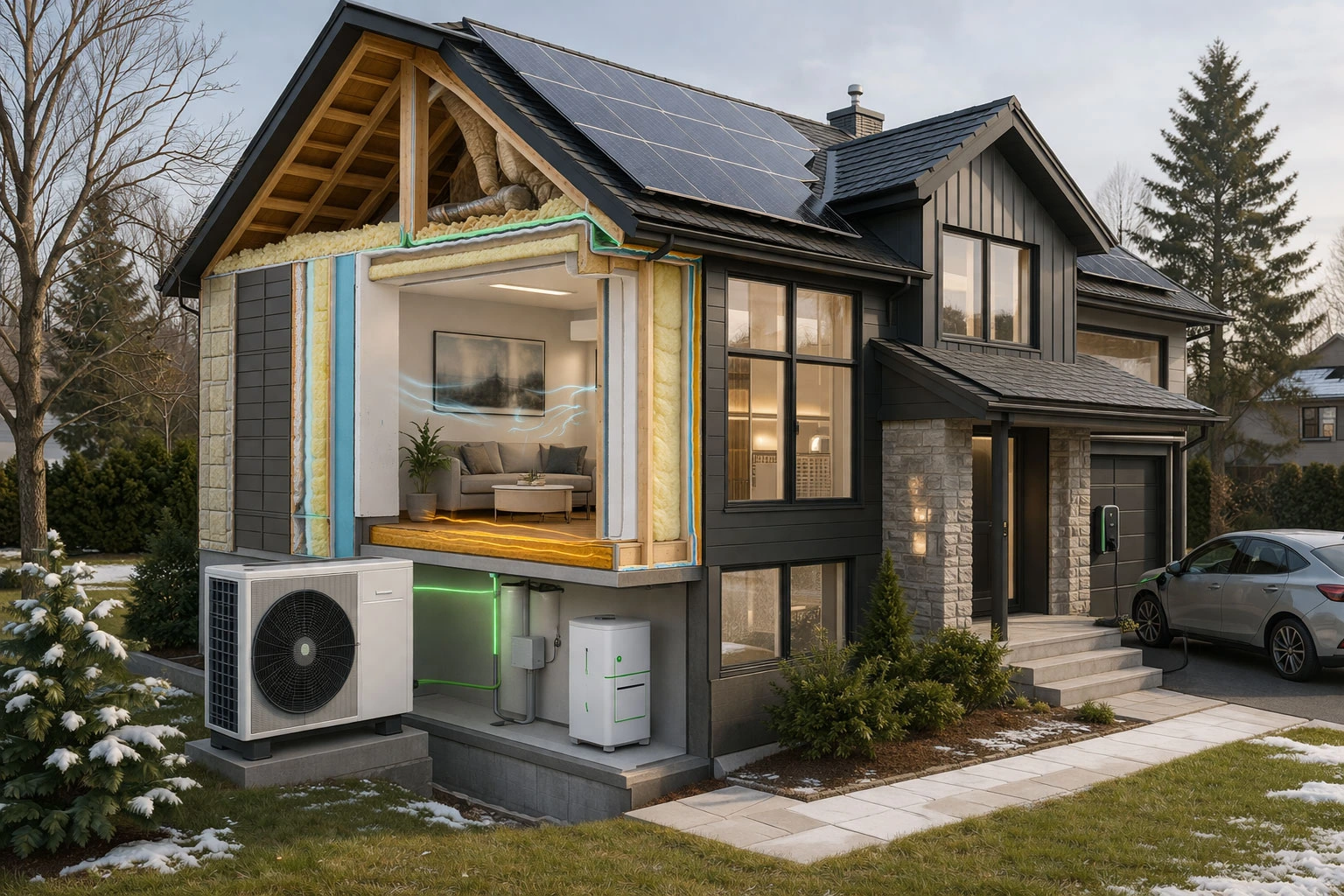
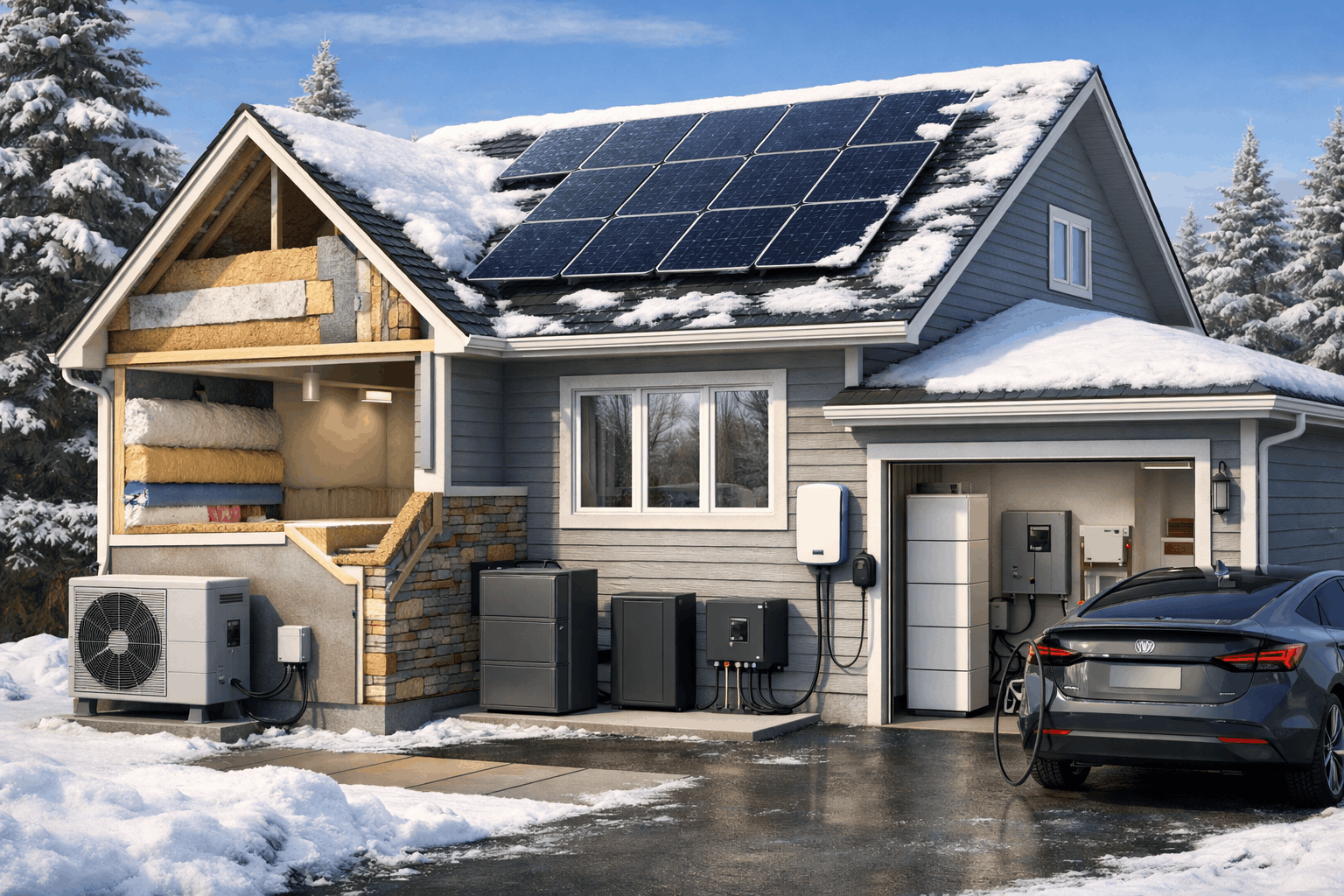
How Solar Fits Into a Net Zero Roadmap
Solar panels are rarely the first step.
In a proper Net Zero strategy, the order often looks like this:
Air sealing and insulation upgrades
High-performance windows
Heat pump installation
Smart load management
Solar panels
Battery storage
Solar works best when the home itself is energy efficient.
If your house leaks heat, adding solar is like installing a larger gas tank instead of fixing fuel inefficiency.
The best solar panels Canada homeowners install are part of a coordinated strategy — not a standalone upgrade.
Final Thoughts
Choosing the right solar panels for cold climates isn’t about chasing the most advertised brand. It’s about:
Matching equipment to Canadian weather
Designing for snow and seasonal variation
Planning around future electrification
Evaluating long-term ROI realistically
Solar in Ontario can be a smart, durable investment — but only when approached thoughtfully.
If you’re considering solar and want clarity on whether it fits your home, roof, and long-term goals, a customized roadmap makes all the difference.
Book a consultation with Net Zero Homes Consulting to develop a tailored upgrade strategy that aligns solar, electrification, and efficiency into one practical plan for your home.