
The Moment Many Canadian Homeowners Are Facing
It often starts with a simple realization.
You’ve just bought an electric vehicle or you’re planning to. The car itself makes perfect sense: lower fuel costs, fewer emissions, and fewer trips to the gas station during Ontario’s cold winters.
Then the question comes up: How will I charge it at home?
Many Canadian homeowners initially assume they can plug their EV into a standard wall outlet. Technically, that works. But after a few weeks of painfully slow overnight charging, most people start researching something better: a Level 2 home EV charger.
Suddenly, the options feel overwhelming.
There are dozens of brands, different amperage ratings, smart features, installation requirements, and varying costs. Some chargers integrate with solar panels or energy monitoring systems. Others are simpler but still effective.
This guide breaks down the best home EV chargers in Canada for 2026, what homeowners in Ontario should know before installing one, and how this upgrade fits into a larger net-zero home strategy.
Understanding Home EV Charging
Before comparing chargers, it helps to understand the basics.
Level 1 Charging (Standard Outlet)
A Level 1 charger uses a normal 120V household outlet.
Typical performance:
Adds 6–8 km of range per hour
Full charge may take 24–48 hours
For drivers with short commutes, this may work temporarily. But for most households, it quickly becomes inconvenient.
Level 2 Charging (The Homeowner Standard)
A Level 2 charger in Ontario uses a 240V electrical circuit, similar to an electric dryer or stove.
Typical performance:
Adds 35–70 km of range per hour
Fully charges most EVs overnight
This is why most EV owners install a dedicated Level 2 charger in their garage or driveway.
Level 2 charging is widely considered the best EV charger setup for Canadian homes.
Best Home EV Chargers in Canada for 2026
Several chargers consistently rank highly among homeowners, electricians, and EV professionals.
1. Tesla Universal Wall Connector
Tesla’s newest universal charger works with both Tesla and non-Tesla vehicles, making it more flexible than earlier versions.
Key advantages:
Supports NACS and J1772 connectors
Up to 48 amps charging
Built-in WiFi for smart monitoring
Reliable cold-weather performance
For homeowners planning to switch EV brands in the future, this charger offers long-term flexibility.
2. ChargePoint Home Flex
The ChargePoint Home Flex remains one of the most popular chargers in Canada.
Why homeowners choose it:
Adjustable amperage (16–50 amps)
Excellent smartphone app
Real-time energy monitoring
Compatible with most EV models
It’s also widely recommended by electricians for smart EV charger installation because it integrates easily with existing electrical systems.
3. Flo Home X5
Flo is a Canadian company, and their chargers are designed specifically for harsh winter climates.
Strengths include:
Rugged aluminum construction
Reliable operation below freezing
Weatherproof outdoor installation
30-amp charging output
Many Ontario homeowners prefer Flo chargers for outdoor driveway installations where durability matters.
4. Emporia Smart EV Charger
For homeowners focused on energy monitoring and smart home integration, Emporia is gaining attention.
Highlights:
Up to 48 amps
Integrates with whole-home energy monitoring
Competitive price
Solar charging compatibility
This charger is particularly useful for homes planning solar panels or battery storage in the future.
Typical Cost of Home EV Charger Installation in Canada
The cost of installing a Level 2 charger varies depending on the electrical setup of your home.
In Ontario, homeowners typically spend:
EV Charger Hardware
$600 – $1,200 for most smart chargers
Installation
$800 – $2,500 depending on:
Electrical panel capacity
Distance to the garage
Permit requirements
Trenching for outdoor setups
Electrical Panel Upgrades (if needed)
$2,000 – $4,500+
Older homes may require panel upgrades to safely support EV charging.
A professional electrician will usually perform a load calculation to confirm capacity.
Energy Savings Compared to Gasoline
One of the main reasons homeowners invest in EV charging is operating cost.
A typical Ontario comparison looks like this:
Gas vehicle:
8–10 L/100 km
Annual fuel cost: $2,500 – $3,500
Electric vehicle:
18–22 kWh/100 km
Annual electricity cost: $600 – $1,000
Charging at home during off-peak electricity hours can lower costs even further.
Over time, a home EV charger contributes to significant household energy savings.
Common Mistakes Homeowners Make
Many EV charger installations go smoothly. But some homeowners run into avoidable issues.
Choosing the Cheapest Charger
Lower-cost chargers may lack:
Cold-weather durability
Smart charging features
Long-term reliability
Since the charger may last 10–15 years, reliability matters.
Ignoring Electrical Panel Capacity
Older Canadian homes sometimes have 100-amp electrical panels.
Adding EV charging without proper evaluation can:
Overload circuits
Trigger breaker trips
Require expensive retrofits later
A licensed electrician should assess capacity before installation.
Installing in the Wrong Location
Some homeowners install chargers in awkward locations, such as:
Too far from parking spots
On the wrong wall of the garage
Without cable reach for future vehicles
Planning for future EVs saves money later.
Skipping Smart Features
Smart EV chargers allow:
Scheduling off-peak charging
Tracking energy use
Integrating with solar or battery systems
These features often improve long-term efficiency.
How to Choose the Right EV Charger for Your Home
If you’re comparing options, a simple decision process helps.
Step 1: Confirm Electrical Capacity
Ask an electrician to evaluate:
Panel size
Available breaker space
Circuit capacity
This determines whether you can install a 40-amp or 48-amp charger.
Step 2: Choose Charger Amperage
Most homes install:
40-amp chargers (common and sufficient)
48-amp chargers (faster charging if panel allows)
For overnight charging, both work well.
Step 3: Decide on Smart Features
Consider chargers that offer:
WiFi connectivity
Energy monitoring
Off-peak scheduling
Solar compatibility
These features help reduce electricity costs.
Step 4: Plan the Installation Location
Think about:
Current vehicle parking
Future EVs
Outdoor vs garage installation
Cable length
A small planning step prevents costly repositioning later.
Rebates and Incentives in Ontario
Government programs occasionally offer support for EV infrastructure.
While specific amounts change frequently, Canadian homeowners should monitor:
Federal EV infrastructure incentives
Ontario energy efficiency programs
Utility-based rebates
Municipal sustainability programs
Some programs also support:
Smart charging
Solar integration
Battery storage
Energy consultants can help identify which incentives apply.
When Installing a Home EV Charger Makes Sense
For most EV owners, home charging is essential.
It makes the most sense if you:
Drive daily or commute regularly
Own or plan to own an EV long term
Have a garage or dedicated parking space
Want lower operating costs than gasoline
For many homeowners, installing a Level 2 charger is the first step toward electrifying the home.
When It Might Not Be Necessary
In some cases, homeowners can delay installation.
Examples include:
Short daily driving distances
Reliable workplace charging
Condo buildings with shared chargers
Temporary EV ownership
But most homeowners eventually find that home charging provides the most convenience.
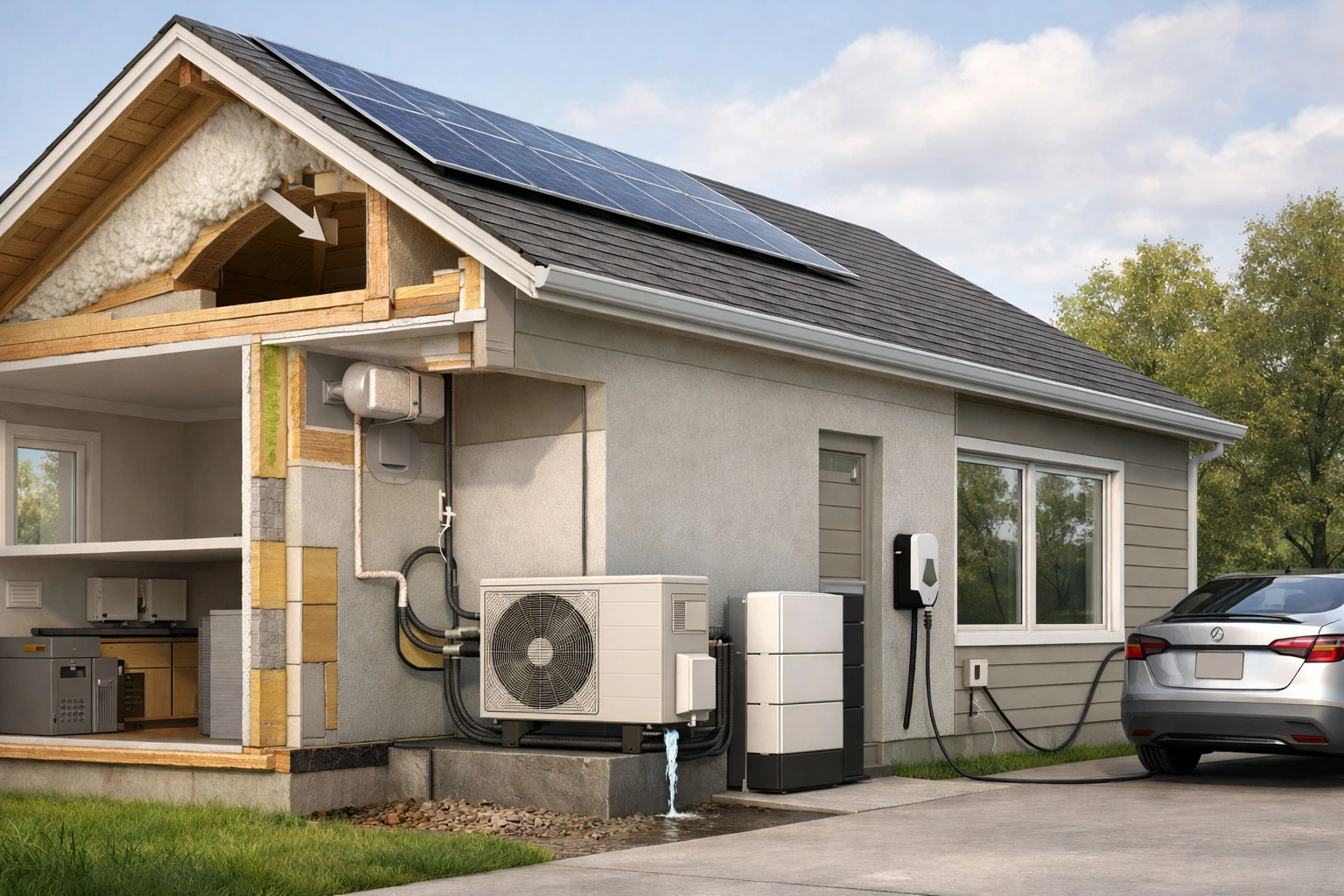
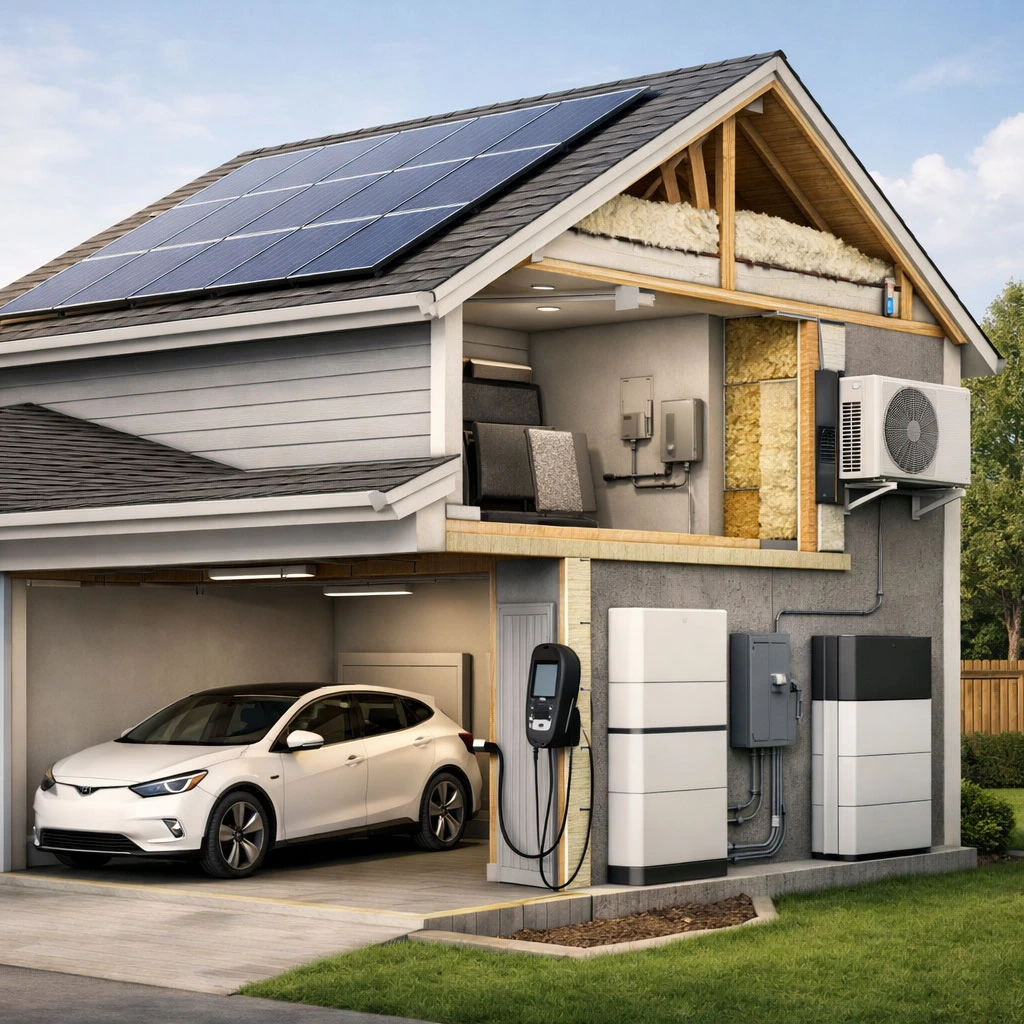
How EV Chargers Fit Into a Net Zero Home Strategy
Installing an EV charger is often part of a larger energy transition.
Many Canadian homeowners follow a path like this:
When combined, these upgrades reduce both energy costs and emissions.
For example:
Solar panels can offset EV charging electricity
Smart chargers can prioritize solar energy
Battery systems can shift charging to off-peak hours
Over time, the goal is a net-zero energy home where annual energy production equals consumption.
Final Thoughts
Electric vehicles are becoming a normal part of Canadian households. But the real convenience comes when you can charge at home.
A well-chosen Level 2 EV charger in Ontario delivers faster charging, lower operating costs, and greater flexibility as your home electrifies.
The key is choosing equipment that fits your electrical system, your driving habits, and your long-term energy goals.
With thoughtful planning, a home charger becomes more than a convenience it becomes part of a smarter, more efficient home.
Book a Net Zero Upgrade Consultation
If you’re considering smart EV charger installation, it helps to look at the bigger picture.
Net Zero Homes Consulting helps homeowners evaluate EV charging, heat pumps, solar, insulation, and other upgrades as part of a complete energy strategy.
Book a consultation with Net Zero Homes Consulting to receive a customized roadmap for reducing energy costs and future-proofing your home.