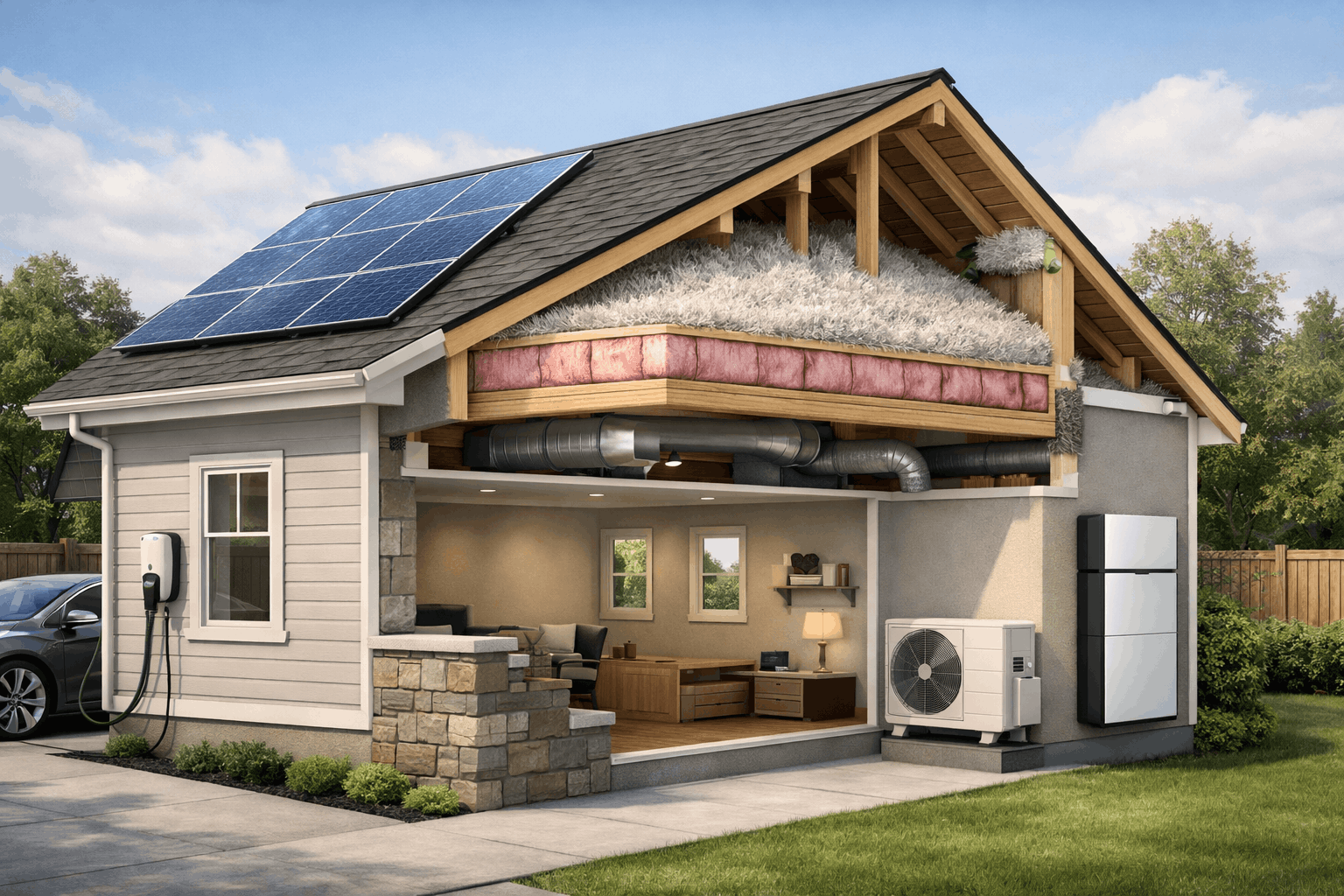

If your upstairs feels like a sauna in July and a freezer in January, you’re not alone.
Many Ontario homeowners tell us the same story. The furnace runs constantly. The bedrooms over the garage are uncomfortable. Ice dams form along the roof edge. Energy bills keep climbing. And yet, the attic is often the last place they look.
Understanding attic insulation cost Canada homeowners can expect in 2026 is the first step toward fixing those comfort and efficiency issues without overcapitalizing on the wrong upgrade.
This guide breaks it down clearly: what it costs, what affects pricing, how much you can save, common mistakes, rebates to consider, and how attic insulation fits into a Net Zero plan.
Why Attic Insulation Matters in Canadian Homes
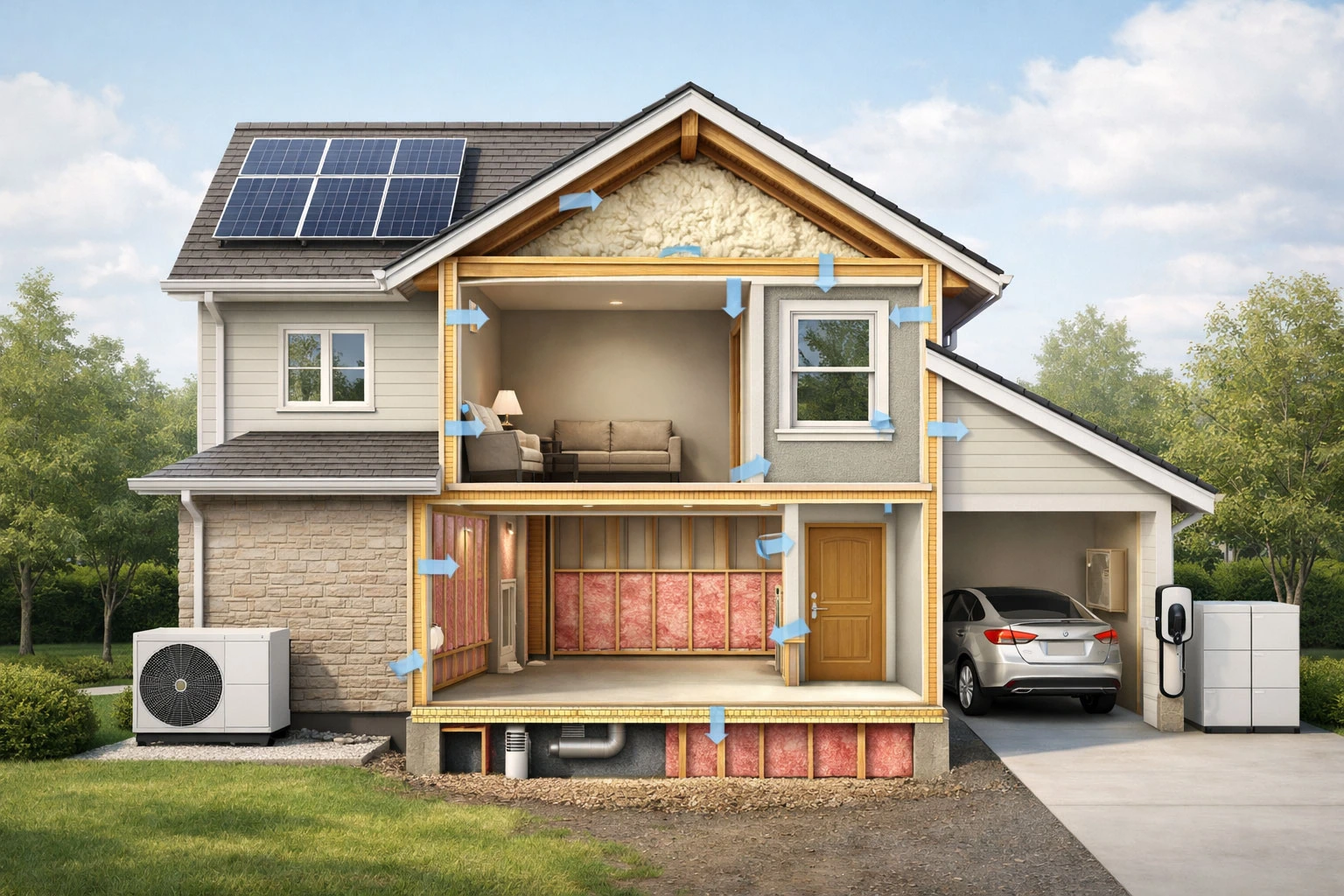
Heat rises. In winter, that warm air you’ve paid to produce naturally moves upward. If your attic isn’t properly insulated and air sealed, it escapes through the roof.
In Ontario’s climate long heating seasons, temperature swings, humid summers that matters.
An under insulated attic can:
-
Increase heating and cooling costs
-
Create uneven temperatures between floors
-
Contribute to ice dams
-
Cause moisture and condensation issues
-
Overwork HVAC equipiment
Many homes built before the mid 2000s still have attic insulation levels well below modern standards.
What R-Value Do You Need in Ontario?
When discussing insulation, the key metric is R-value a measure of thermal resistance.
In Ontario, recommended attic R-value levels typically fall in the range of:
-
R-50 to R-60 for optimal performance in most climates
-
Some colder regions aim even higher
Older homes often have:
-
R-20 to R-30 (common in 1970s–1990s construction)
-
Compressed or settled insulation reducing effective performance
If you only have 6–8 inches of older fiberglass batts, you’re likely under insulated by today’s standards.
Attic Insulation Cost Canada (2026 Estimates)
Let’s talk numbers.
Average Cost Range
For a typical detached Ontario home (1,500–2,500 sq. ft.):
-
$2,500 – $6,500 for adding blown-in insulation
-
Larger homes or complex attic layouts may exceed this range
Per square foot, most homeowners can expect:
-
$1.50 – $3.50 per sq. ft. for blown-in insulation upgrades
These are broad 2026 market estimates and vary by region, access, and prep work required.
Blown-In Insulation Price Breakdown
Blown-in cellulose or fiberglass is the most common upgrade method.
Typical blown-in insulation price includes:
-
Material cost
-
Labour
-
Equipment
-
Basic attic hatch sealing
However, additional work can increase pricing:
-
Air sealing (recommended before adding insulation)
-
Baffle installation for proper ventilation
-
Removing old contaminated insulation
-
Mold remediation
-
Upgrading attic hatch insulation
-
Electrical or recessed lighting adjustments
The cheapest quote is rarely the most complete solution.
What Drives the Cost?
Several variables affect your final attic insulation cost in Canada:
1. Current Insulation Level
If your attic already has R-30 and only needs a top-up, costs will be lower.
If insulation must be removed due to moisture, pests, or contamination, expect higher pricing.
2. Air Sealing Work
Proper air sealing before adding insulation significantly improves performance. This may include:
-
Sealing plumbing stacks
-
Sealing top plates
-
Weatherstripping attic hatches
-
Addressing recessed lighting penetrations
Skipping this step reduces return on investment.
3. Attic Accessibility
Low pitch roofs, tight spaces, and complex layouts increase labour time.
4. Square Footage
Larger homes obviously cost more in total, but cost per square foot may decrease slightly.
Energy Savings and ROI
Attic insulation offers one of the best returns among building envelope upgrades.
In Ontario’s heating dominant climate, homeowners often see:
-
10–20% reduction in heating energy use (varies widely by starting condition)
-
Improved comfort immediately
-
Reduced HVAC runtime
Example Scenario
A homeowner in the GTA with R-25 insulation upgrades to R-60:
-
Investment: ~$4,500
-
Annual heating/cooling savings: $400–$800 (depending on fuel type)
-
Simple payback: 6–10 years
The ROI improves when:
-
Heating is electric or propane
-
Energy prices increase
-
Rebates apply
And unlike solar panels or HVAC systems, insulation has no moving parts. It quietly performs for decades.
Insulation Rebate Ontario Programs
Home energy upgrades often qualify for government-supported incentives.
While programs change over time, homeowners in Ontario should:
-
Look for federal and provincial efficiency initiatives
-
Check local utility rebate offerings
-
Complete a home energy audit when required
Many programs require:
-
Pre and post-upgrade energy assessments
-
Meeting minimum R-value targets
-
Using certified contractors
Searching for current insulation rebate Ontario options before starting work can reduce net cost significantly.
Always verify current program details, as funding cycles change.
Common Mistakes Homeowners Make
Attic insulation seems simple. In reality, mistakes are common.
1. Adding Insulation Without Air Sealing
Air leakage undermines insulation performance. Warm air bypasses insulation entirely.
2. Blocking Ventilation
Improper installation can block soffit vents, causing moisture problems.
3. Ignoring Moisture Issues
If your attic has condensation, mold, or roof leaks, insulation alone won’t solve it.
4. Focusing Only on Thickness
More insulation isn’t always better if ventilation and air sealing aren’t addressed.
5. Skipping Professional Assessment
A quick visual check isn’t enough. Infrared scanning or blower door testing provides better insight.
Step-by-Step: How to Decide If You Should Upgrade
If you feel overwhelmed, follow this structured approach:
Step 1: Check Your Current Depth
Measure insulation thickness safely. Compare to R-50/R-60 targets.
Step 2: Book an Energy Assessment
This provides a baseline and identifies air leakage.
Step 3: Evaluate Comfort Issues
Are upper floors consistently uncomfortable?
Do you see ice dams?
Are energy bills rising faster than expected?
Step 4: Review Budget and Rebates
Factor in available incentives.
Step 5: Prioritize Within a Bigger Plan
If you’re considering:
-
Heat pump installation
-
Solar panels
-
Window upgrades
Improving insulation first often reduces required equipment size and overall system cost.
When Attic Insulation Makes Sense
This upgrade makes strong financial and practical sense when:
-
Your attic R-value is below R-40
-
You experience significant heat loss
-
You plan to stay in your home 5+ years
-
Energy prices are a concern
-
You’re planning other electrification upgrades
It’s especially impactful in older Ontario homes built before modern energy codes.
When It Might Not Be a Priority
Attic insulation may not be urgent if:
-
Your attic already meets R-60 standards
-
Major roof replacement is imminent (coordinate timing)
-
Moisture problems haven’t been addressed
-
Basement or wall insulation issues are more severe
In some homes, air sealing or basement upgrades deliver higher impact first.
How Attic Insulation Fits Into a Net Zero Roadmap
If your long-term goal is Net Zero performance, insulation is foundational.
Before investing in:
-
Solar PV systems
-
Home batteries
-
Air-source heat pumps
-
EV charging infrastructure
You reduce demand first.
A well insulated attic:
-
Lowers heating load
-
Reduces required heat pump size
-
Improves solar ROI
-
Enhances overall building resilience
Think of insulation as reducing the size of the bucket before trying to fill it with renewable energy.
Real Homeowner Example
A family in Ottawa planned to install a cold climate heat pump. During their assessment, they discovered their attic was only R-28.
Instead of immediately upgrading HVAC, they:
-
Air sealed the attic.
-
Upgraded to R-60 blown in insulation.
-
Re-tested energy performance.
Result:
-
Heating load dropped significantly.
-
Required heat pump capacity decreased.
-
Equipment cost reduced.
-
Comfort improved immediately.
This is strategic sequencing.
Final Thoughts: Is It Worth It?
For many Canadian homeowners, the answer is yes.
Attic insulation is:
-
Relatively affordable
-
Technically straightforward
-
High impact
-
Low maintenance
-
Long lasting
But it should be done properly. With air sealing. With ventilation protection. And ideally as part of a larger home performance plan.
Upgrading insulation isn’t about chasing rebates or trends. It’s about reducing waste, improving comfort, and preparing your home for electrification and rising energy costs.
Ready to Plan Your Upgrade?
If you’re unsure whether your attic insulation is adequate or how it fits into your broader energy goals book a consultation with Net Zero Homes Consulting.
We’ll assess your current performance, identify priority upgrades, and build a customized roadmap that aligns comfort, cost, and long-term efficiency.