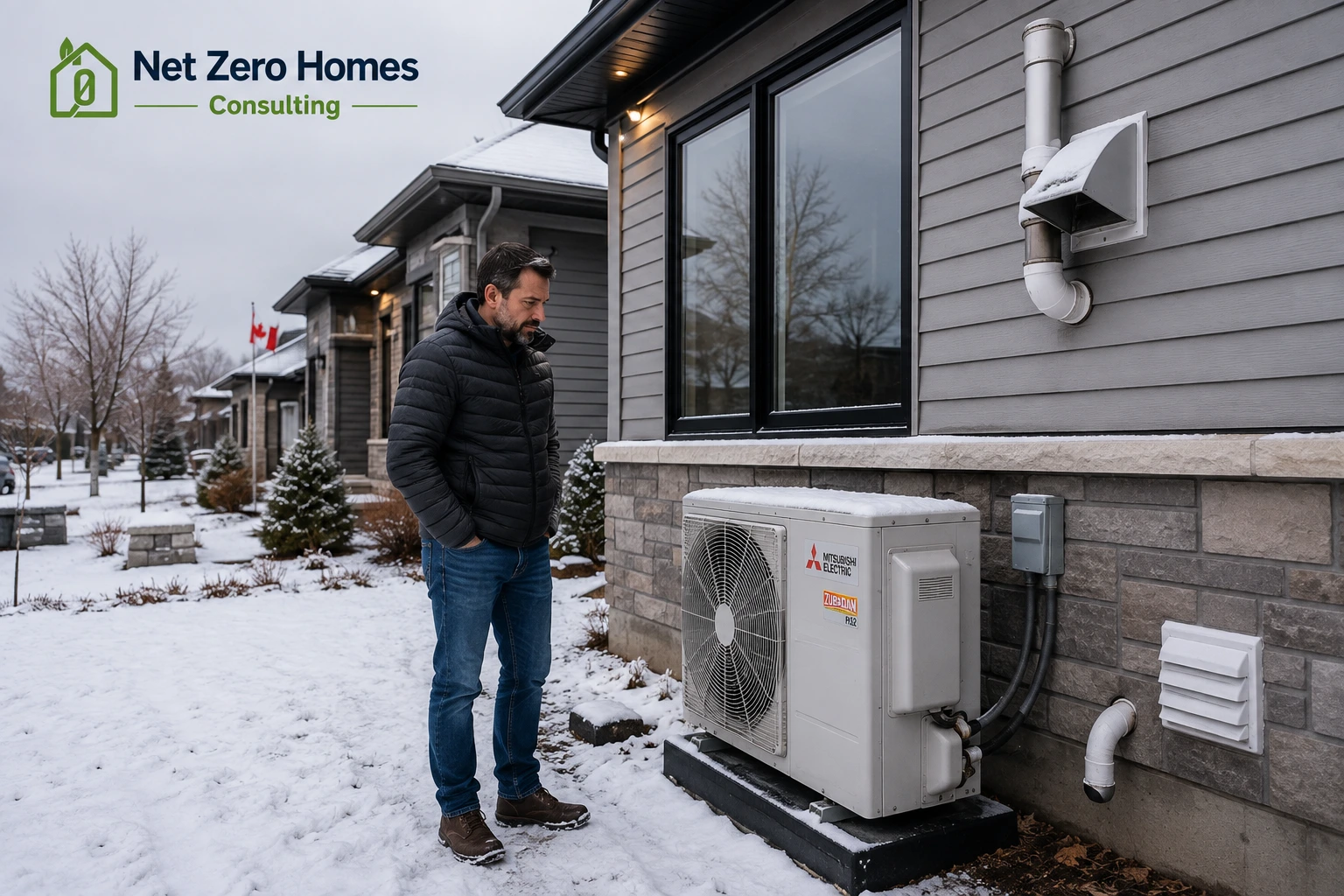
Most efficient heating cooling systems for cold climate matter hugely in Ontario, where winters regularly dip below -15°C and homeowners seek reliable, cost-effective solutions for year-round comfort. As a vendor-neutral Net Zero Homes resource, we compare two popular options: Midea and Daikin ducted heat pumps.
Both use inverter technology for strong performance, but they differ in efficiency, pricing, cold-weather resilience, and long-term value for Ontario’s variable climate (from southern mild winters to northern extremes).
Quick Answer
For most Ontario homes with existing ductwork, Daikin ducted heat pumps (like FIT or DZ series) edge out as the better overall choice due to proven reliability, strong dealer support, excellent cold-climate performance (rated to -25°C with high capacity retention), and solid warranties. Midea offers competitive efficiency and lower upfront costs, making it a strong value option for budget-conscious homeowners in milder southern Ontario areas.
The “best” depends on your home’s size, insulation, budget, and priorities—proper Manual J sizing and professional installation are essential for either. Expect 30–50%+ utility savings versus older systems, plus eligibility for Ontario rebates up to $7,500
Why Ducted Heat Pumps Matter for Ontario Homeowners
Ontario’s climate demands systems that deliver efficient cold climate heat pump performance without relying heavily on expensive backup heat. Ducted (central) systems integrate with existing forced-air ducts, providing even wholehome heating and cooling ideal for replacing aging furnaces and ACs.
Variable-speed inverters adjust output precisely, improving comfort and efficiency (measured by SEER2 for cooling, HSPF2 for heating, and COP). They reduce carbon emissions, support home electrification, and pair well with solar, batteries, and smart thermostats for Net Zero Home goals.
Midea Ducted Heat Pumps: Features, Benefits & Drawbacks
Midea, a major global manufacturer, offers affordable inverter-driven ducted systems with strong cold-climate credentials. Models often use R-454B (low-GWP) refrigerant and are ENERGY STAR certified.
Key Features:
- Cold-climate performance: Continuous operation to -30°C in many models; strong capacity at -15°C (e.g., ~100%+ rated output with COP ~1.9).
- Efficiency: Up to ~19–23 SEER2 (cooling), 10+ HSPF2 (heating) in premium lines.
- Variable-speed compressors for quiet, efficient operation.
- High-static options for larger homes or complex ductwork.
Benefits:
- Lower purchase and installed costs—often 20–30% less than premium brands.
- Good value for southern Ontario (GTA, where extremes are less severe).
- ENERGY STAR Cold Climate eligibility for rebates
Drawbacks:
- Newer to some Canadian markets; dealer/support network may be less widespread than Daikin’s.
- Potentially shorter real-world track record in extreme Ontario cold vs. established Japanese brands.
- Warranty typically 10–12 years (parts/compressor) with registration.
Daikin Ducted Heat Pumps: Features, Benefits & Drawbacks
Daikin, a Japanese leader and one of the world’s largest HVAC makers, excels in ducted solutions like the FIT (side-discharge for tight spaces) and DZ/Aurora series.
Key Features:
- Cold-climate excellence: Rated to -25°C, with models maintaining high capacity (e.g., 100% at -15°C in Aurora/FIT lines).
- Efficiency: Up to 19–22+ SEER2, 8.8–10+ HSPF2; advanced inverter tech.
- Quiet operation, robust build, R-32 or similar refrigerants.
- Excellent integration with existing ducts.
Benefits:
- Proven reliability and strong Ontario dealer network.
- Superior warranties (up to 12 years parts/compressor on registered units).
- Great for whole-home comfort, dehumidification, and variable Ontario weather.
Drawbacks:
- Higher upfront cost than Midea.
- Some models may require careful sizing for peak northern cold snaps.
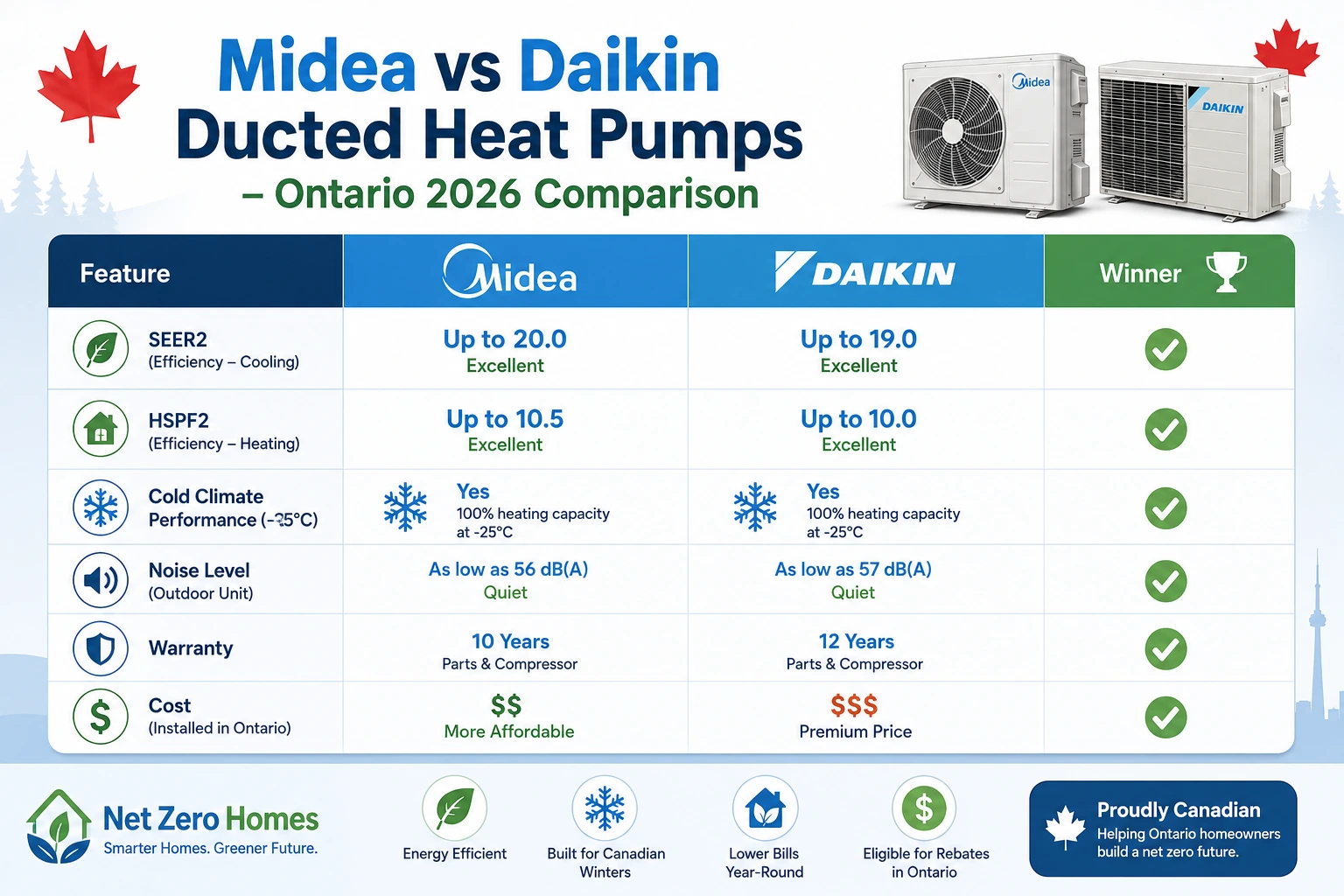
Head-to-Head Comparison Table
| Feature | Midea Ducted | Daikin Ducted (FIT/DZ) | Winner for Ontario |
|---|---|---|---|
| Cold Performance | To -30°C, strong COP | To -25°C, excellent retention | Daikin (proven) |
| SEER2 / HSPF2 | Up to 19–23 / 10+ | Up to 19–22 / 8.8–10+ | Tie / Midea edge |
| Noise Level | Competitive | Often quieter | Daikin |
| Installed Cost (3-ton) | $8,000–$13,000 | $10,000–$16,000+ | Midea |
| Warranty | 10–12 years | 12 years (registered) | Daikin |
| Dealer Support Ontario | Growing | Strong & established | Daikin |
| Rebate Eligibility | Yes (Cold Climate) | Yes | Tie |
| Best For | Budget, value | Reliability, long-term | Depends |
Efficiency & Performance in Ontario’s Cold Climate
Both brands use variable-speed inverter technology for better COP in cold weather than single-stage units. Ontario Climate Zone 6/7 requires systems that retain capacity at -15°C for rebates.
Daikin often shines in real-world Ontario testing with consistent output and lower defrost needs. Midea delivers impressive lab specs (e.g., high capacity at low temps) and suits well-insulated homes. Pair either with proper heat pump sizing via Manual J load calculation—oversizing wastes energy; undersizing forces backups.
Backup Heating: Hybrid setups (heat pump + high-efficiency gas furnace) are common in colder areas for peak loads.
Cost Considerations & ROI in Ontario
- Equipment: Midea lower; Daikin premium.
- Installation: $8k–$18k total (varies by home/ductwork; Ontario averages).
- Operating Costs: Expect significant savings on electricity vs. gas/oil, especially with time-of-use rates. Annual savings $500–$1,500+ possible.
- Rebates: Ontario Home Renovation Savings: up to $7,500 (higher for non-gas homes); stack with utility incentives. Check IESO/NRCan.
- Payback: 5–12 years, faster with rebates and solar integration. 10–20 year ROI strong due to lower bills and home value boost.
Actual costs vary, get multiple quotes and an energy audit.
Installation, Maintenance & Lifespan
Hire licensed Ontario contractors familiar with HVAC installation best practices, building codes, and NRCan/ENERGY STAR guidelines. Proper airflow, refrigerant charging, and duct sealing are critical.
Maintenance: Annual professional tune-ups (~$150–$300). Both last 15–20+ years with care. Daikin’s reputation for durability may yield fewer repairs.
Noise: Both quiet; Daikin often preferred outdoors.
Smart Home Compatibility & Net Zero Integration
Both work with smart thermostats (e.g., Ecobee, Daikin One+). Integrate with solar panels, battery storage, EV chargers, air sealing, enhanced insulation, and triple-pane windows for true Net Zero Homes. This minimizes carbon emissions and maximizes utility savings.
Net Zero strategy: Start with an energy audit, electrify heating, then add renewables.
Common Mistakes to Avoid
- Skipping professional Manual J sizing.
- Choosing solely on price.
- Poor installer selection (verify credentials/references).
- Ignoring home envelope (insulation, sealing).
- Neglecting rebates or maintenance.
- Overlooking hybrid options for extreme cold.
Conclusion
Daikin ducted heat pumps are often the stronger long-term pick for Ontario homes due to expertise, performance, and support aligning perfectly with most efficient heating cooling systems for cold climate. Midea excels as a budget-friendly alternative with impressive specs. Both advance Net Zero Home goals by slashing emissions and bills.
Contact Net Zero Homes for a vendor-neutral consultation. Our experts help compare options, navigate rebates, and plan your electrification journey.
Book your free virtual consultation today and take the first step toward lower energy bills and a more comfortable, sustainable home.