
Introduction: A Familiar Homeowner Question
You open your latest hydro bill and pause. It’s higher than expected again. Between rising electricity rates, unpredictable winters, and a growing interest in reducing your environmental footprint, you’ve probably asked yourself: Is solar worth it in Canada?
For many Canadian homeowners, especially in Ontario, solar panels feel like both an opportunity and a risk. You’ve heard success stories. You’ve also heard concerns long payback periods, high upfront costs, and uncertainty about performance in a northern climate.
The reality sits somewhere in between. Solar can absolutely make sense in Canada, but not for every home and not in the same way across every province.
This guide breaks it down clearly, focusing on real costs, realistic savings, and how to evaluate whether solar is a smart investment for your home.
What “Solar ROI” Actually Means
When people talk about solar, they often focus on the upfront cost. But the more important metric is return on investment (ROI) how long it takes for your system to pay for itself through energy savings.
In simple terms, your solar ROI depends on:
- How much your system costs to install
- How much electricity it generates
- What electricity costs in your area
- Available solar incentives in Canada
- How your utility handles excess energy (net metering)
The key concept is the solar payback period the number of years it takes for your savings to equal your initial investment.
In Canada, this typically ranges from 8 to 15 years, depending on location and home conditions.
Cost Considerations in Canada (Ontario Focus)
Let’s start with the numbers homeowners care about most.
Typical Solar Installation Costs
For a standard detached home in Ontario:
- System size: 5–10 kW
- Upfront cost: $15,000–$30,000 (before incentives)
Costs vary based on:
- Roof size, angle, and direction
- Electrical system upgrades
- Installation complexity
- Equipment quality
While prices have come down significantly over the past decade, solar is still a capital investment. That’s why understanding long-term savings is critical.
Solar Incentives Canada: What Helps Offset Costs
Canada doesn’t have a single nationwide rebate program, but there are federal and provincial initiatives that support solar adoption.
Common forms of support include:
- Grants or rebates for energy upgrades
- Low-interest financing programs
- Net metering policies (crediting you for excess power)
In Ontario, net metering plays a major role in improving solar savings. You essentially “bank” excess electricity generated during sunny months and use those credits later.
Other provinces offer different advantages:
- Alberta: High solar potential and competitive electricity rates
- British Columbia: Lower electricity costs but strong environmental alignment
- Quebec: Lower ROI due to cheap hydro power
The takeaway: incentives don’t always come as direct cash rebates but policy structures still heavily influence ROI.
Solar Savings Canada: What You Can Expect
Now let’s talk about savings the real driver behind the decision.
Annual Savings Range
For a typical Ontario home:
- Annual electricity savings: $800–$2,000+
- System lifespan: 25+ years
Over time, that adds up significantly especially as electricity rates continue to rise.
Real Example: Ontario Homeowner Scenario
Consider a homeowner in suburban Ontario:
- Annual electricity bill: $2,400
- Solar system covers 80% of usage
- Annual savings: ~$1,900
If the system cost $22,000 after incentives:
- Payback period: ~11–12 years
- Lifetime savings: $30,000–$40,000+
That’s where solar starts to make sense not as a quick win, but as a long-term financial strategy.
ROI Breakdown by Province
Solar performance and ROI vary across Canada more than most homeowners expect.
Ontario
- Moderate solar production
- Rising electricity costs
- Strong net metering
Result: Balanced ROI, typically 10–13 years
Alberta
- Highest solar potential in Canada
- Competitive installation market
- Deregulated electricity pricing
Result: Faster payback, often 8–11 years
British Columbia
- Lower electricity rates
- Good solar potential in southern regions
Result: Longer payback, around 12–15 years
Quebec
- Very low electricity costs (hydro-based)
Result: Financial ROI is weaker, but environmental benefits remain strong
Atlantic Canada
- Mixed solar conditions
- Higher electricity costs in some areas
Result: ROI varies widely, but can be favorable in certain regions
Common Mistakes Homeowners Make
Solar can be a great investment but only if done right. Here are some common pitfalls:
1. Oversizing or Undersizing the System
Bigger isn’t always better. A system that produces more than you can use may not deliver additional financial benefit.
2. Ignoring Roof Condition
Installing solar on an aging roof can lead to costly removal and reinstallation later.
3. Focusing Only on Price
The cheapest quote often cuts corners on equipment or installation quality.
4. Not Considering Energy Efficiency First
Improving insulation, air sealing, or upgrading HVAC systems can reduce your energy needs making your solar system more effective.
5. Misunderstanding Payback Expectations
Solar is not a short-term flip. It’s a long-term asset.
Step-by-Step: How to Decide If Solar Is Worth It
If you’re unsure whether solar makes sense for your home, use this simple framework:
Step 1: Review Your Energy Usage
Look at your last 12 months of electricity bills.
Step 2: Assess Your Roof
- South-facing is ideal
- Minimal shading
- Good structural condition
Step 3: Estimate System Size and Cost
Get a preliminary quote or consultation.
Step 4: Evaluate Incentives and Net Metering
Understand how your province handles excess energy.
Step 5: Calculate Payback Period
Divide net system cost by annual savings.
Step 6: Consider Long-Term Plans
Will you stay in your home for 10+ years?
If the answer is yes and your payback is reasonable solar likely makes financial sense.
When Solar Makes Sense (And When It Doesn’t)
Solar Makes Sense If:
- You have high electricity costs
- Your roof has good sun exposure
- You plan to stay long-term
- You want predictable energy expenses
- You’re working toward a Net Zero home
Solar May Not Make Sense If:
- Your electricity rates are very low
- Your roof is heavily shaded or poorly oriented
- You plan to move within a few years
- Your home has major efficiency issues not yet addressed
In many cases, solar should come after improving insulation, air sealing, and heating systems.
Solar’s Role in a Net Zero Roadmap
Solar isn’t just about saving money it’s part of a bigger picture.
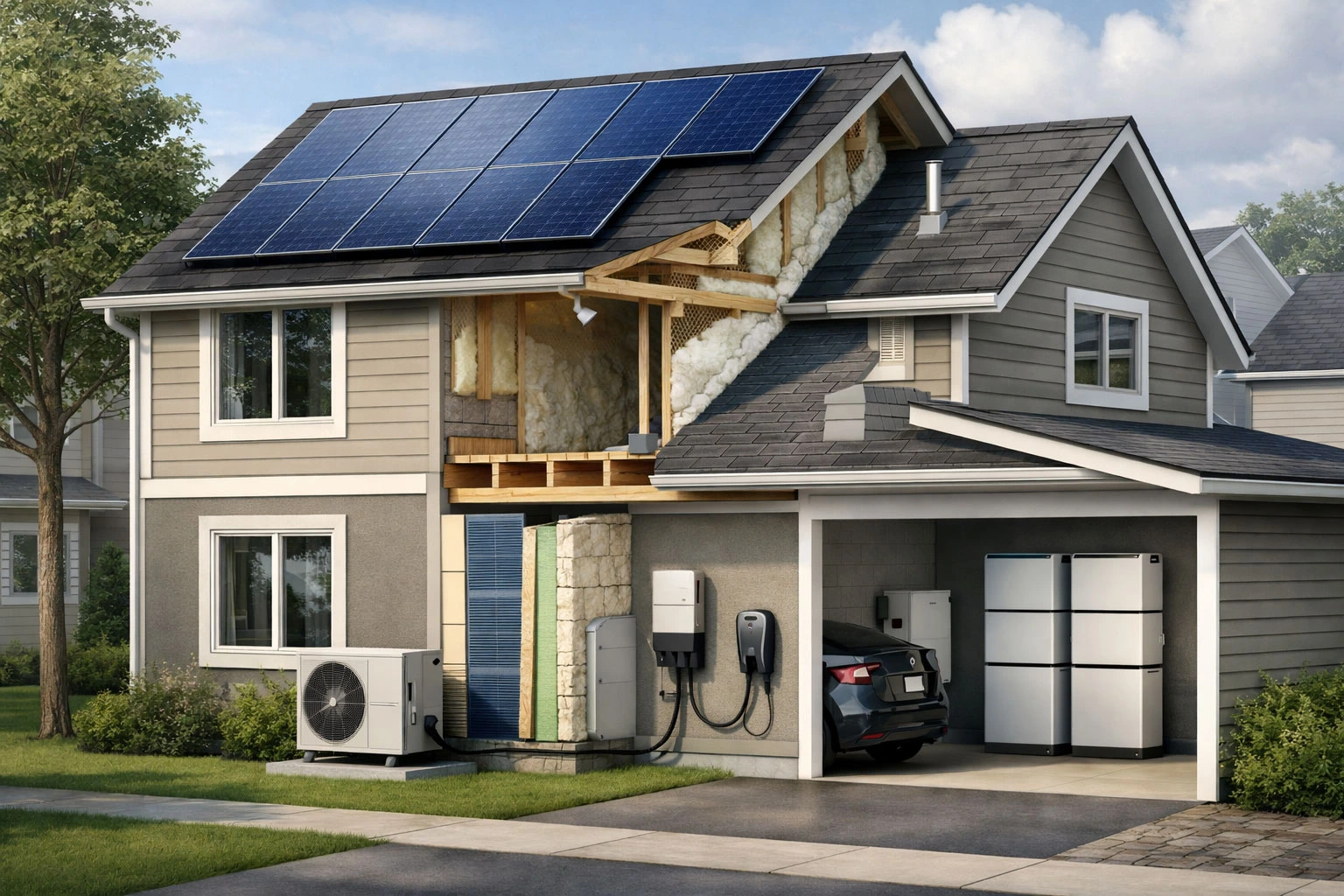
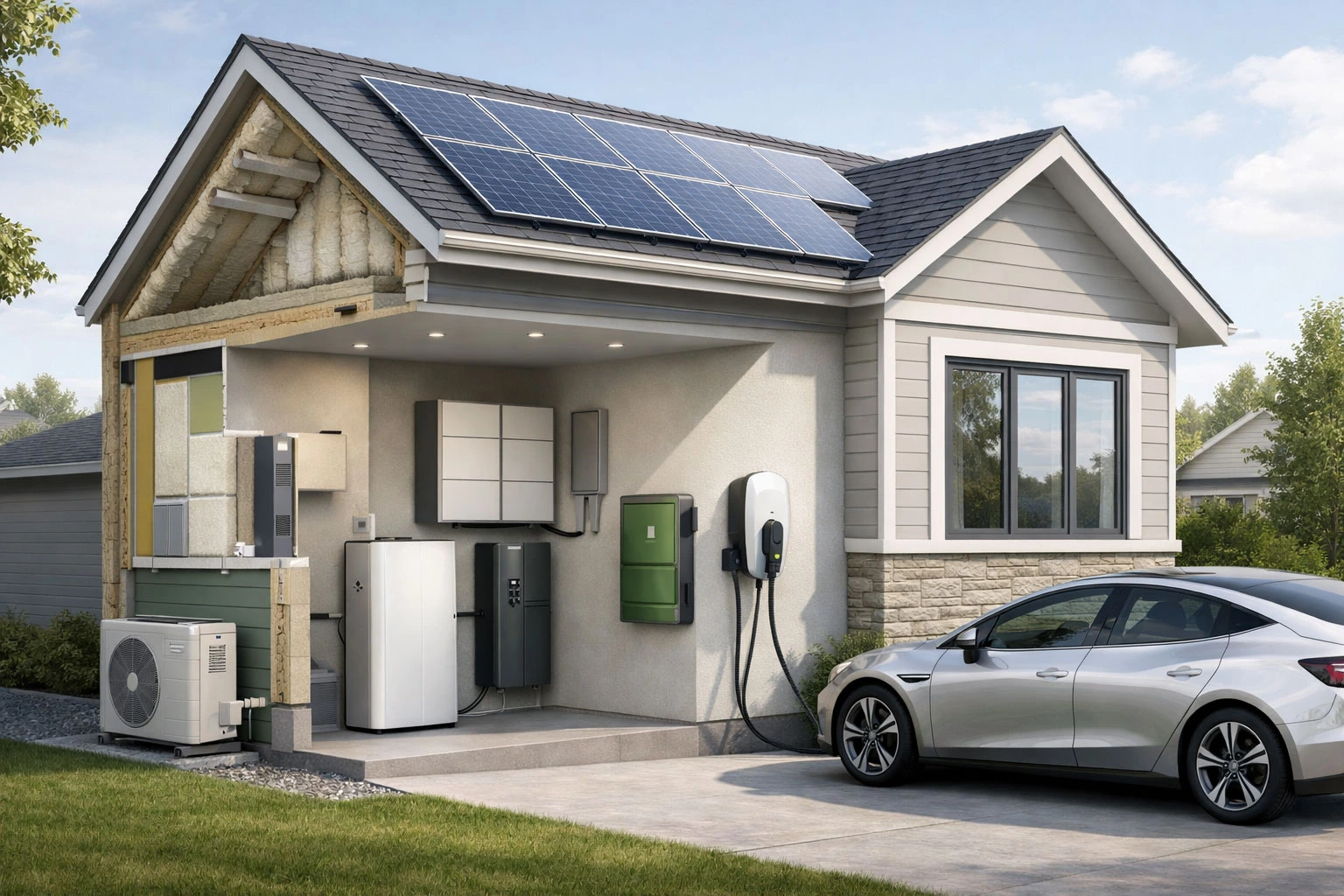
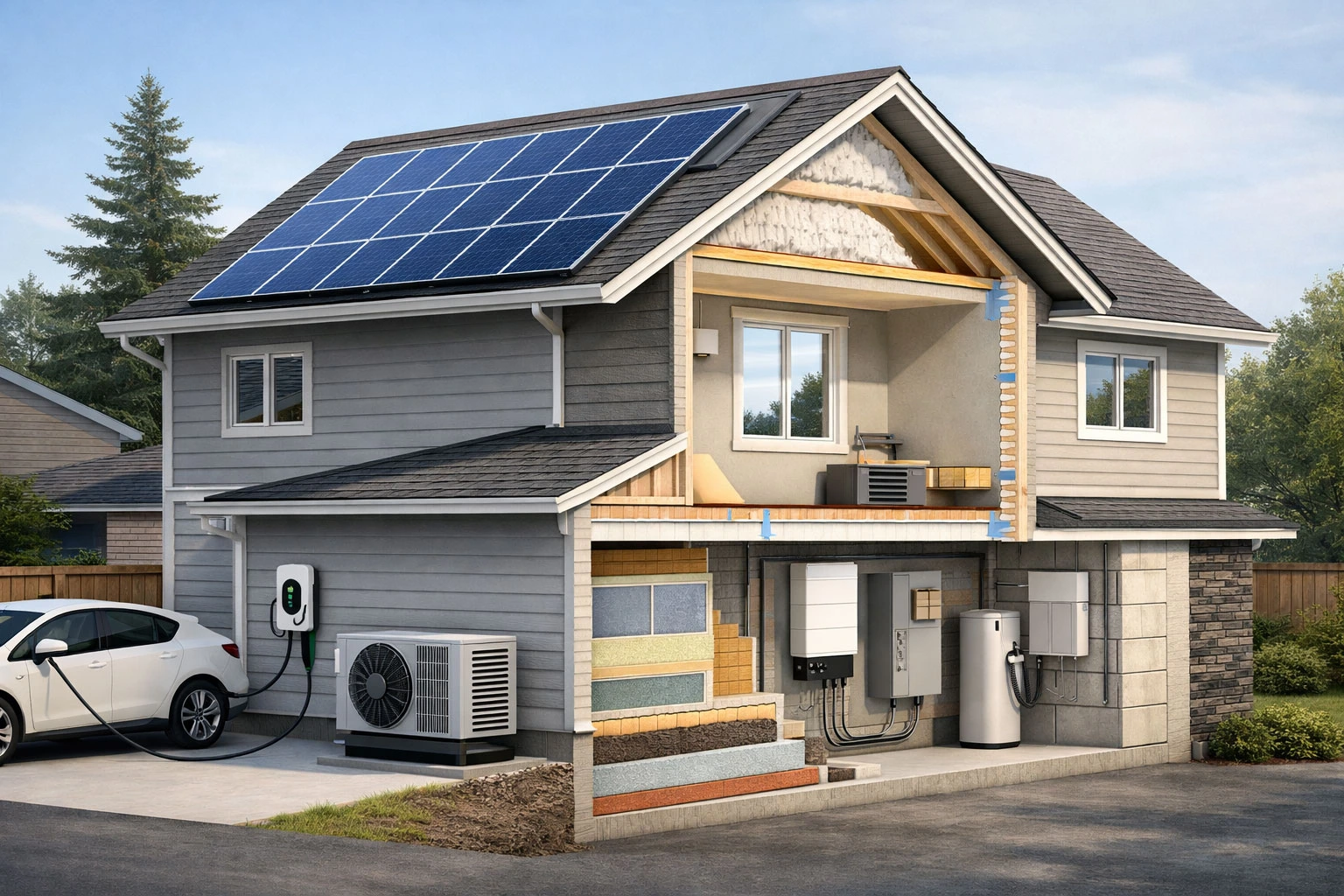
For homeowners aiming for Net Zero, solar works alongside:
- Heat pumps
- High-performance insulation
- Airtight construction
- Energy-efficient windows
- EV charging systems
Think of solar as the final layer generating clean energy after you’ve reduced your home’s overall demand.
A well-planned approach ensures you don’t overspend on generation when efficiency upgrades could deliver better returns.
Final Thoughts: Is Solar Worth It in Canada?
So, is solar worth it in Canada?
For many homeowners especially in Ontario the answer is yes. But it depends on your home, your energy usage, and your long-term goals.
Solar is not a one-size-fits-all solution. It’s a strategic upgrade that works best when integrated into a broader plan for energy efficiency and home performance.
If you approach it thoughtfully, the benefits are clear:
- Lower energy bills
- Greater energy independence
- Increased home value
- Reduced environmental impact
Ready to Take the Next Step?
If you’re considering solar but want a clear, personalized answer not guesswork the best place to start is with a professional assessment.
Book a consultation with Net Zero Homes Consulting to get a customized upgrade roadmap tailored to your home, your budget, and your long-term goals.