
Introduction: A Familiar Scenario for Canadian Homeowners
You’ve made the switch or you’re seriously considering it. Maybe your neighbour in Ontario just installed an EV charger, or your next vehicle is likely electric. You like the idea of lower fuel costs and fewer emissions, but the details feel overwhelming.
Do you need a Level 2 charger? Will your electrical panel handle it? Is a smart EV charger installation worth the extra cost? And how do you make sure you’re not overspending on something you’ll outgrow in a few years?
These are common questions. The good news is that choosing the best EV charger in Canada doesn’t have to be complicated. With a clear understanding of your home, your driving habits, and the available options, you can make a decision that fits both your budget and long-term energy goals.
Understanding Home EV Charging in Canada
At a basic level, EV charging at home comes down to two main options:
Level 1 Charging (Standard Outlet)
- Uses a regular 120V outlet
- Adds roughly 5–8 km of range per hour
- No installation cost
This works for low-mileage drivers, but for most households, especially in Ontario where winters impact battery efficiency, it’s not enough.
Level 2 Charging (Recommended)
- Uses a 240V connection (similar to a dryer)
- Adds 30–80 km of range per hour
- Requires professional installation
For most homeowners, a Level 2 charger in Ontario is the practical choice. It ensures your vehicle is fully charged overnight, even during cold weather.
Smart EV Chargers vs Basic Units
Modern EV chargers come in two categories:
Basic Chargers
- Plug-and-charge simplicity
- Lower upfront cost
Smart Chargers
- Wi-Fi connectivity
- Scheduling and off-peak charging
- Energy monitoring
- Integration with solar or home energy systems
In 2026, smart EV charger installation is becoming the standard not because it’s flashy, but because it gives you control over energy use and long-term savings.
Cost Considerations in Canada
The cost of installing a home EV charger varies depending on your home’s electrical setup and charger choice.
Typical Cost Breakdown
Charger Unit
- $500 to $1,200 for most Level 2 chargers
Installation
- $800 to $2,500+ depending on:
- Distance from electrical panel
- Panel capacity
- Wall mounting vs detached garage
Electrical Panel Upgrade (if needed)
- $2,000 to $5,000+
For many Ontario homes, especially older ones, the panel capacity is the biggest variable. A 100-amp service may need upgrading to support EV charging alongside other electrification upgrades like heat pumps.
Energy Savings and Return on Investment
One of the biggest reasons homeowners switch to EVs is cost savings but the charger plays a role too.
Charging at Home vs Public Charging
Charging at home, especially during off-peak hours, is significantly cheaper than relying on public fast chargers.
- Home charging (off-peak Ontario rates): lower cost per kWh
- Public fast charging: often 2–3x higher
A smart charger allows you to:
- Schedule charging overnight
- Avoid peak electricity pricing
- Track energy usage
Real-World Example
A homeowner in the Greater Toronto Area drives about 50 km daily. By installing a Level 2 charger and scheduling overnight charging:
- Annual fuel savings compared to gasoline: substantial
- Charging cost remains predictable
- Payback period for installation: often within a few years
The ROI improves even further if paired with solar panels or time-of-use optimization.
Common Mistakes Homeowners Make
Installing an EV charger seems straightforward, but a few common mistakes can lead to unnecessary costs.
1. Choosing the Cheapest Charger
Not all chargers are equal. Lower-cost units may lack:
- Load management
- Smart scheduling
- Future compatibility
A slightly higher upfront investment can prevent replacement costs later.
2. Ignoring Electrical Capacity
Many homeowners install a charger without considering:
- Existing panel load
- Future upgrades (heat pumps, induction stoves, etc.)
This often leads to expensive retrofits later.
3. Poor Placement
Installing the charger too far from where you park:
- Increases installation cost
- Reduces convenience
Planning placement early can save both money and frustration.
4. Skipping Professional Guidance
DIY planning without understanding electrical requirements can lead to:
- Code compliance issues
- Inefficient system design
Step-by-Step: How to Choose the Best EV Charger in Canada
Making the right choice comes down to a few clear steps.
Step 1: Understand Your Driving Needs
- Daily commute distance
- Frequency of long trips
- Number of EVs in the household
Step 2: Assess Your Electrical Panel
- 100A vs 200A service
- Available capacity
- Need for load management
Step 3: Decide on Smart vs Basic
Choose a smart charger if you want:
- Energy tracking
- Off-peak scheduling
- Integration with future upgrades
Step 4: Plan for the Future
Think beyond today:
- Will you add solar panels?
- Will you electrify heating?
- Will you own multiple EVs?
Step 5: Work with a Qualified Installer
A professional ensures:
- Code compliance
- Safe installation
- Optimized system design
Rebates and Incentives in Ontario and Canada
While incentives change over time, there are often programs available that support EV adoption and home electrification.
These may include:
- Utility-based rebates for smart chargers
- Provincial or federal incentives tied to energy efficiency
- Programs encouraging load management or off-peak usage
For Ontario homeowners, it’s worth checking:
- Local utility programs
- Federal energy initiatives
Even when rebates are modest, they help offset upfront costs and improve ROI.
When Installing a Home EV Charger Makes Sense
A home EV charger is a strong investment when:
- You drive daily and need reliable overnight charging
- You want to reduce fuel costs
- You plan to stay in your home for several years
- You’re already considering other energy upgrades
It becomes especially valuable when combined with:
- Solar panels
- Smart home energy systems
- Time-of-use electricity plans
When It Might Not Make Sense
There are situations where installing a charger may not be the best immediate step:
- You drive very infrequently
- You rely heavily on workplace or public charging
- Your home requires a major electrical upgrade you’re not ready for
- You’re planning to move soon
In these cases, a temporary Level 1 setup or delayed installation might be more practical.
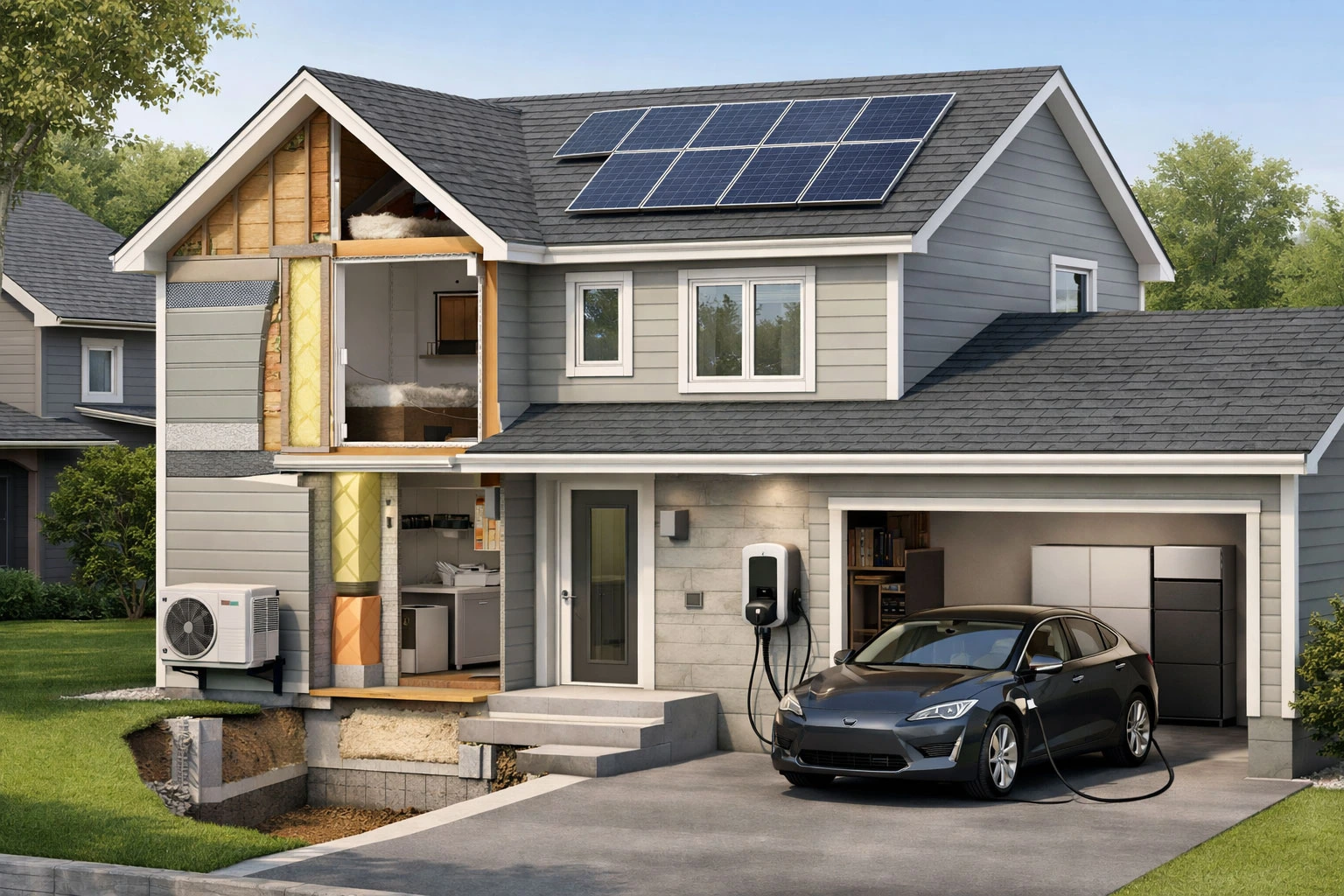
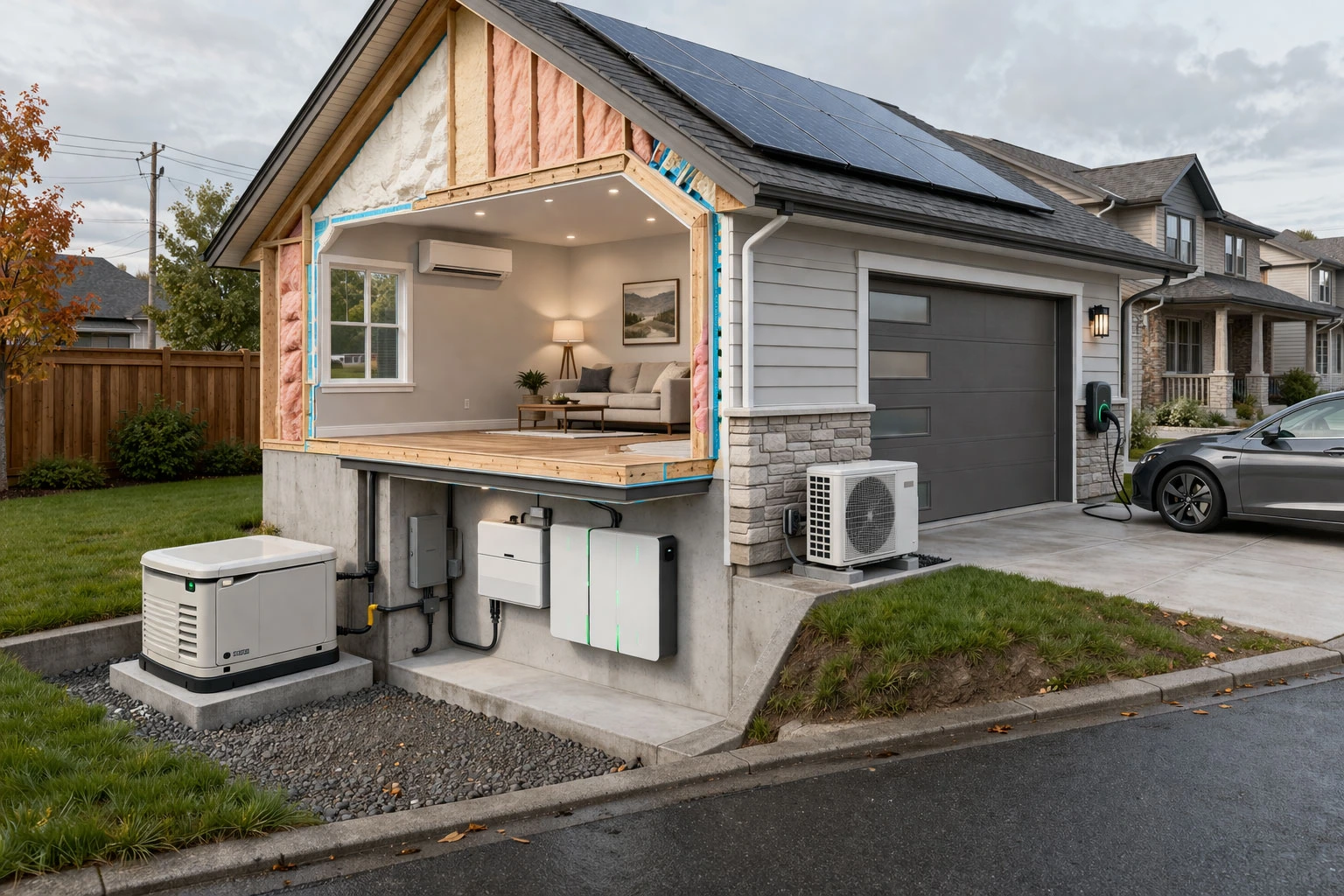
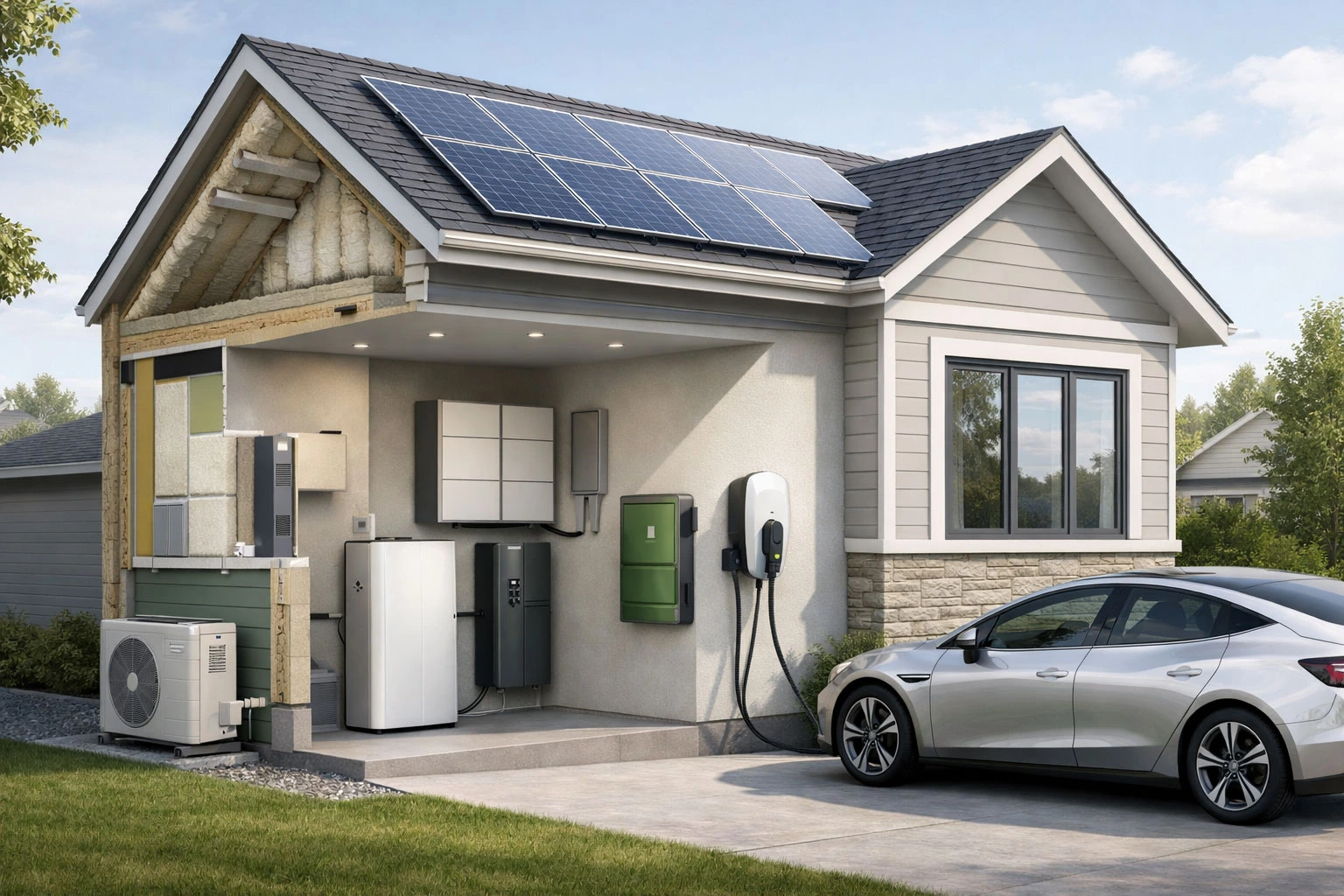
How EV Chargers Fit Into a Net Zero Home Strategy
An EV charger is not just a standalone upgrade it’s part of a larger energy transition.
Integrated Home Electrification
In a Net Zero roadmap, your EV charger connects with:
- Heat pumps replacing gas heating
- Solar panels generating clean electricity
- Battery storage managing energy use
- Smart panels balancing electrical loads
Why Planning Matters
If installed thoughtfully, your EV charger can:
- Work with solar production
- Avoid panel upgrades through load management
- Support future energy independence
If installed in isolation, it can:
- Strain your electrical system
- Increase costs later
This is why a coordinated approach is key.
Conclusion: A Practical Step Toward a Smarter Home
Choosing the best EV charger in Canada isn’t about picking the most expensive or most advanced model. It’s about finding the right fit for your home, your lifestyle, and your long-term plans.
For most Ontario homeowners, a Level 2 charger with smart capabilities offers the best balance of convenience, efficiency, and future readiness. When installed properly and integrated into a broader energy strategy, it becomes more than just a charger it becomes part of a smarter, more resilient home.
Ready to Plan Your Upgrade?
If you’re considering a home EV charger and want to make sure it fits into a bigger energy strategy, it’s worth getting expert guidance.
Book a consultation with Net Zero Homes Consulting to receive a customized upgrade roadmap tailored to your home, your budget, and your long-term goals.